Hair Porosity and Heat Styling: Cuticle Health, Thermal Science, and Breakage Prevention
9 min read ·
Understand how Hair Porosity and Heat Styling interact, how thermal tools alter cuticle structure, and how to protect fragile, high-porosity strands.
Quick answer: Hair Porosity and Heat Styling are fundamentally intertwined because your hair cuticle controls both moisture exchange and thermal vulnerability. High heat rapidly degrades the protective cuticle, artificially driving hair from low or medium porosity into high porosity. Conversely, existing high-porosity hair absorbs thermal energy faster and suffers internal protein denaturation at lower temperatures. While heat tools can temporarily reshape keratin bonds, thermal damage permanently alters cuticle structure, meaning you cannot restore heat-degraded porosity to its original virgin state through conditioning alone.
Key takeaways
- Hair porosity describes how easily your hair fibre absorbs and retains water, lipids, and chemical products through the cuticle layers.
- Thermal tools operated above 150°C break structural hydrogen bonds and permanently damage the 18-methyleicosanoic acid (18-MEA) lipid layer, driving up porosity.
- High-porosity hair loses moisture rapidly and heats up faster internally, making it significantly more susceptible to fibre snapping and structural protein loss.
- Wet heat styling (such as flat-ironing damp hair) triggers bubble hair deformity, a severe structural defect causing immediate breakage.
- Heat protectants containing silicones, quaternary polymers, and hydrolysed proteins reduce thermal transfer, but they do not make hair impervious to high heat.
Hair Porosity and Heat Styling: what the evidence shows
The scientific relationship between Hair Porosity and Heat Styling centres on how thermal energy modifies the physical architecture of the hair shaft. Hair consists of three primary layers: the outermost cuticle, the structural cortex, and the central medulla. The cuticle consists of 5 to 10 overlapping cellular scales cemented by the cell membrane complex (CMC). In virgin, low-porosity hair, these scales lie flat, tightly bound by an external lipid coating called 18-MEA.
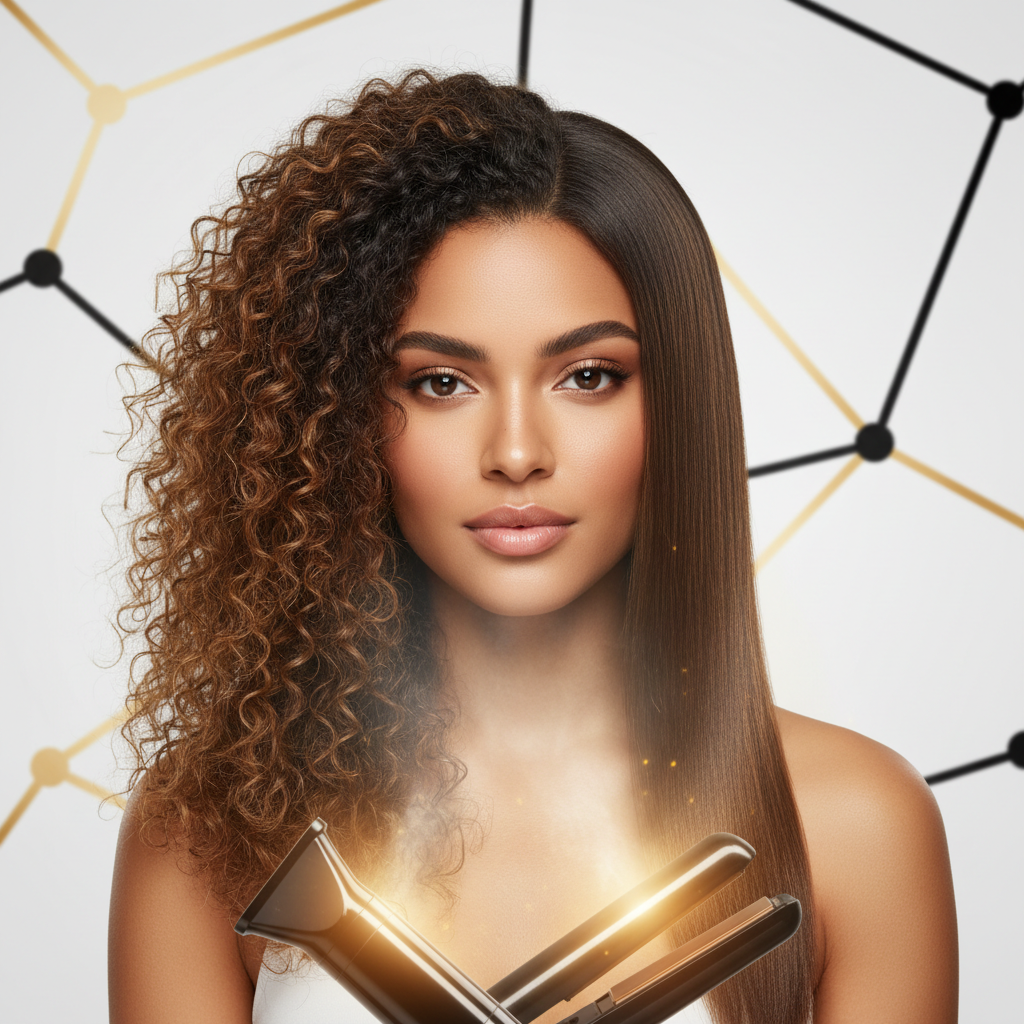
When you apply heat tools like hair dryers, curling tongs, and straightening irons, you introduce temperatures ranging from 120°C to over 230°C. Research published in the Journal of Cosmetic Science confirms that thermal exposure above 160°C causes physical lifting, cracking, and eventual loss of cuticle scales. As the protective scales chip away, gaps form along the shaft.
This cuticle erosion directly increases hair porosity. Hair that once possessed low or medium porosity becomes high porosity through cumulative heat exposure. High-porosity hair takes in water rapidly because the protective seal is gone, but it loses that hydration just as fast. Furthermore, because the cortex is left exposed, routine styling causes cortical proteins (alpha-keratin) to melt and denature, turning flexible strands into brittle, snap-prone fibres.
The thermal mechanism: how heat reshapes and damages porosity
Heat styling relies on breaking temporary hydrogen bonds within the cortex. When heat softens these bonds, you can manipulate the hair into a straight or curled pattern. As the hair cools, the bonds reform in their new configuration.
However, the temperature thresholds required to alter keratin also trigger thermal degradation:
- 100°C to 140°C: Free moisture inside the hair shaft evaporates. If heat is applied evenly to dry hair, this range causes minimal structural damage.
- 140°C to 180°C: The surface lipid layer (18-MEA) degrades. The hair loses its natural hydrophobicity (water-repelling nature), leading directly to elevated porosity and increased friction between fibres.
- 180°C to 215°C: Cuticle scales buckle and melt. The internal alpha-keratin helical structure begins an irreversible phase transition into beta-keratin, causing a measurable drop in tensile strength.
- Above 220°C: Severe protein denaturation occurs. Cortical cells fuse, melanin oxidises, and the hair fibre suffers profound structural breakdown, leading to snapping.
When wet or damp hair encounters temperatures above 100°C, the moisture inside the cortex boils instantly. The resulting steam expands violently within the shaft, blowing microscopic cavities into the hair fibre. Dermatologists refer to this clinical condition as "bubble hair". Bubble hair leaves the fibre exceptionally porous, rough, and so fragile that light combing snaps it off entirely.
Signs that heat has altered your hair porosity
Identifying heat-induced porosity changes helps you intervene before irreversible breakage occurs:
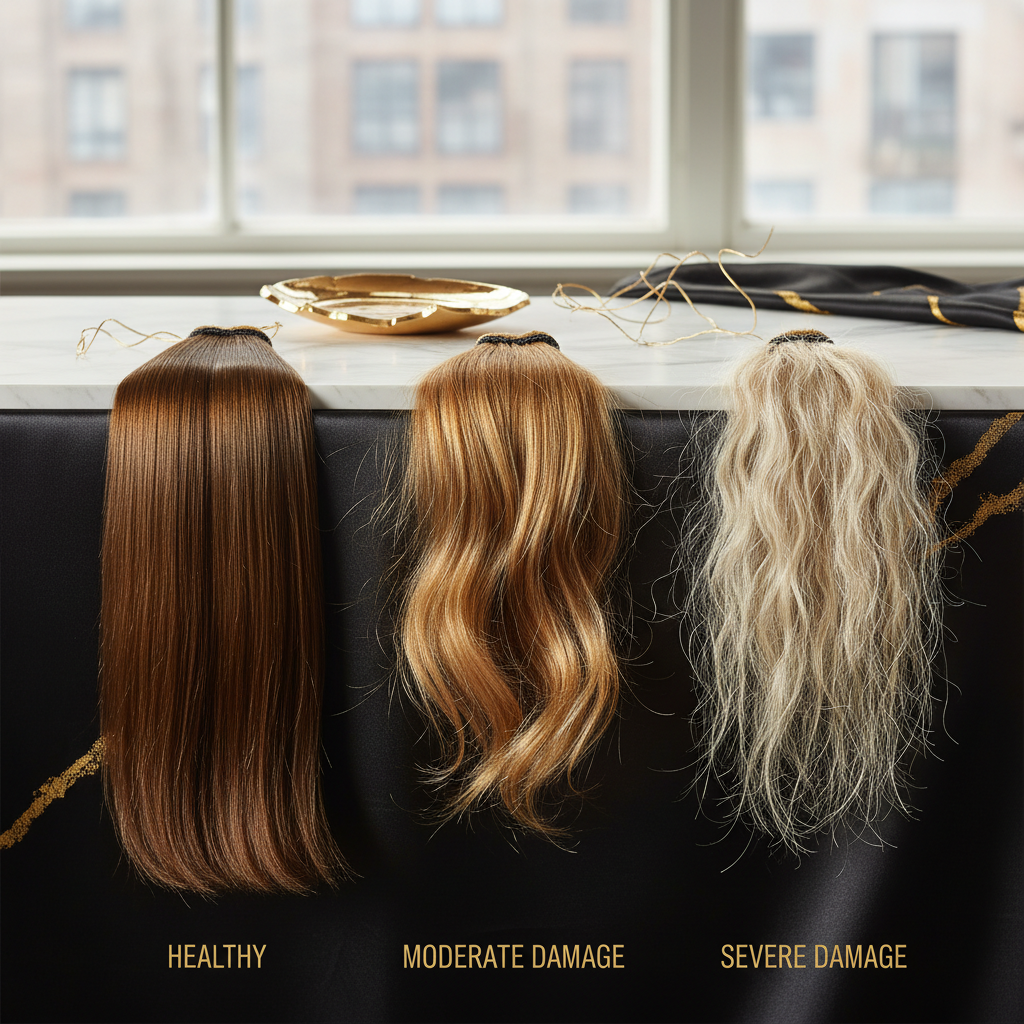
- Rapid drying and rapid wetting: Your hair becomes saturated within seconds under the shower, yet dries unnaturally fast because it cannot retain moisture.
- Chronic tangling and roughness: The lifted, cracked cuticle edges catch against neighbouring hairs like velcro, creating constant knots.
- Lack of elasticity: When gently stretched while damp, a strand snaps immediately instead of stretching slightly and bouncing back.
- Dull, matte appearance: Intact cuticles create a smooth, light-reflective surface. Blistered cuticles scatter light, leaving the hair looking flat and lacklustre.
- Split ends and mid-shaft fractures: Cuticle loss leaves the cortex unprotected, causing the fibre to unravel longitudinally into split ends or snap clean through the middle.
Porosity levels compared under thermal stress
| Porosity Level | Cuticle Condition | Response to Heat Styling | Recommended Temperature Range | Primary Styling Risk |
|---|---|---|---|---|
| Low Porosity | Tightly packed, flat scales; intact 18-MEA lipid layer | Resists heat penetration; styling takes longer to set | 150°C to 175°C | Thermal shock from over-compensating with excessive heat |
| Medium Porosity | Uniform scales; stable lipid barrier; optimal elasticity | Responds predictably; retains style efficiently | 160°C to 185°C | Gradual transition to high porosity from daily, unprotected use |
| High Porosity | Chipped, lifted, or missing scales; depleted lipids | Heats up too fast internally; loses cortex integrity rapidly | Below 150°C (diffuse or air-dry preferred) | Immediate fibre snapping, bubble hair, and protein melting |
What you can do to manage heat and porosity
You do not necessarily have to abandon thermal styling entirely, but you must tailor your technique to your hair's porosity status.
1. Always apply verified heat protection
Heat protectant sprays and serums work by slowing the rate of heat transfer into the hair fibre. Ingredients such as dimethicone, amodimethicone, and polyquaternium polymers create a thermal barrier that dissipates heat evenly across the surface. Hydrolysed vegetable or wheat proteins temporarily plug microscopic gaps along a high-porosity cuticle, shielding the vulnerable cortex underneath.
2. Never heat style damp hair
Ensure your hair is 100% dry before touching it with a flat iron or curling wand. Use a blow dryer on a warm (never scorching) setting with a nozzle attachment pointing downward down the hair shaft to encourage cuticles to lie flat. Ironing hair while damp is the direct trigger for bubble hair deformity.
3. Lower your tool settings
Most modern styling irons reach temperatures up to 230°C, which was originally intended only for specific salon chemical processes. For daily or weekly styling, 150°C to 180°C is sufficient to reshape hydrogen bonds. For existing high-porosity hair, keep temperatures strictly at or below 150°C.
4. Incorporate lipid and protein treatments
High-porosity hair lacks both structural integrity and lubricating surface lipids. Incorporate deep-conditioning treatments that deliver hydrolysed keratin, ceramides, and fatty acids. While these cannot permanently resurrect dead cells, they patch the porous cuticle, smooth the shaft, reduce combing friction, and slow moisture loss between washes.
When the cause is something else
If your hair feels excessively dry, porous, or prone to snapping despite zero heat tool usage, the underlying culprit may lie elsewhere:
- Chemical processing: Bleaching, permanent hair dyes, relaxers, and perms break the structural cystine (disulphide) bonds within the cortex and strip away surface lipids far more aggressively than heat alone.
- UV radiation and environmental wear: Chronic sun exposure degrades keratin proteins and photochemically oxidises melanin, driving up porosity on outer canopy layers.
- Mechanical damage: Aggressive backcombing, brushing wet hair with fine-toothed combs, and tight elastic bands mechanically shear off cuticle scales.
- Water mineral deposits: Hard water leaves calcium and magnesium deposits on the cuticle, mimicking the rough, tangled texture of high-porosity hair even when the underlying cortex is sound.
When to seek professional advice
Cosmetic conditioning can manage mild to moderate heat damage, but severe fibre deterioration requires professional assessment. If your hair breaks off near the roots, shows signs of extensive mid-shaft snapping, or feels gummy and stretches like wet chewing gum when damp, visit a qualified trichologist or experienced hair stylist.
A stylist can prune irreversibly split ends to prevent the tear from traveling up the shaft, or perform professional bond-multiplying treatments. A trichologist can analyse the hair under dermoscopy or optical microscopy to distinguish between thermal bubble hair, chemical trauma, or an underlying hair shedding disorder such as telogen effluvium.
Supporting hair condition with Watermans
When managing hair that has become porous and fragile from frequent styling, supporting the scalp environment and preserving fibre integrity is essential. Watermans Grow Me Shampoo and Condition Me Conditioner are formulated to nourish the scalp and condition compromised lengths. The gentle, sulphate-free shampoo cleanses without stripping away fragile surface lipids, while Condition Me delivers hydrolysed lupin protein, cholesterol, and natural oils to coat the cuticle, reduce combing friction, and help protect vulnerable, high-porosity strands against ongoing styling stress.
Frequently asked questions about Hair Porosity and Heat Styling
Can heat styling permanently change my hair's natural porosity?
Yes. Your genetic porosity is determined by how tightly your cuticle scales grow naturally. However, high heat physically breaks, curls, and melts cuticle scales off the hair fibre. Once these dead cells are chipped away, they cannot regrow. Heat styling permanently shifts virgin, low-porosity hair into a chemically and physically high-porosity state until new, untreated hair grows from the scalp.
What is the safest temperature for Hair Porosity and Heat Styling?
For low to medium porosity hair, the safest working temperature is between 150°C and 180°C. For hair that is already high porosity, brittle, or chemically treated, keep temperatures strictly below 150°C. Exceeding 185°C initiates rapid protein breakdown and accelerates moisture loss across all hair types.
Does high-porosity hair take longer to style with heat?
No, high-porosity hair generally changes shape quickly under heat because it lacks the protective, dense cuticle barrier that shields low-porosity strands. However, it also burns and loses internal moisture significantly faster, making it far more vulnerable to severe heat damage and snapping during the process.
Can a heat protectant completely prevent porosity damage?
No cosmetic product offers 100% protection against extreme thermal energy. Quality heat protectants reduce heat conduction, minimise surface lipid degradation, and prevent moisture flash-off by approximately 30% to 50%. They are risk-reduction tools, not a licence to use maximum heat settings on vulnerable hair.
A balanced approach to styling and porosity
Mastering the connection between Hair Porosity and Heat Styling allows you to achieve polished styles without sacrificing the structural integrity of your hair fibre. Thermal tools are undeniably effective for temporary restyling, but their relentless heat will steadily erode the protective cuticle, shifting even the most resilient hair into a compromised, high-porosity state. By recognising your hair's porosity, keeping tool temperatures under 180°C, always working on dry hair, and applying protective barrier products, you preserve the strength and moisture retention of your strands for the long term.
Sources and references
- Journal of Cosmetic Science, "Thermal degradation of hair proteins during heat styling," 2011.
- International Journal of Trichology, "Bubble hair: A unique heat-induced hair shaft deformity," 2010.
- Journal of the Society of Cosmetic Chemists, "Surface architecture of human hair and cosmetic treatments," 1993.
- British Journal of Dermatology, "Cuticle damage and lipid loss from thermal appliance usage," 2017.