Hair Breakage Causes and Treatments: An Evidence-Based Guide
8 min read ·
Learn the real Hair Breakage Causes and Treatments with this evidence-based guide to shaft damage, heat trauma, split ends, and restorative routines.
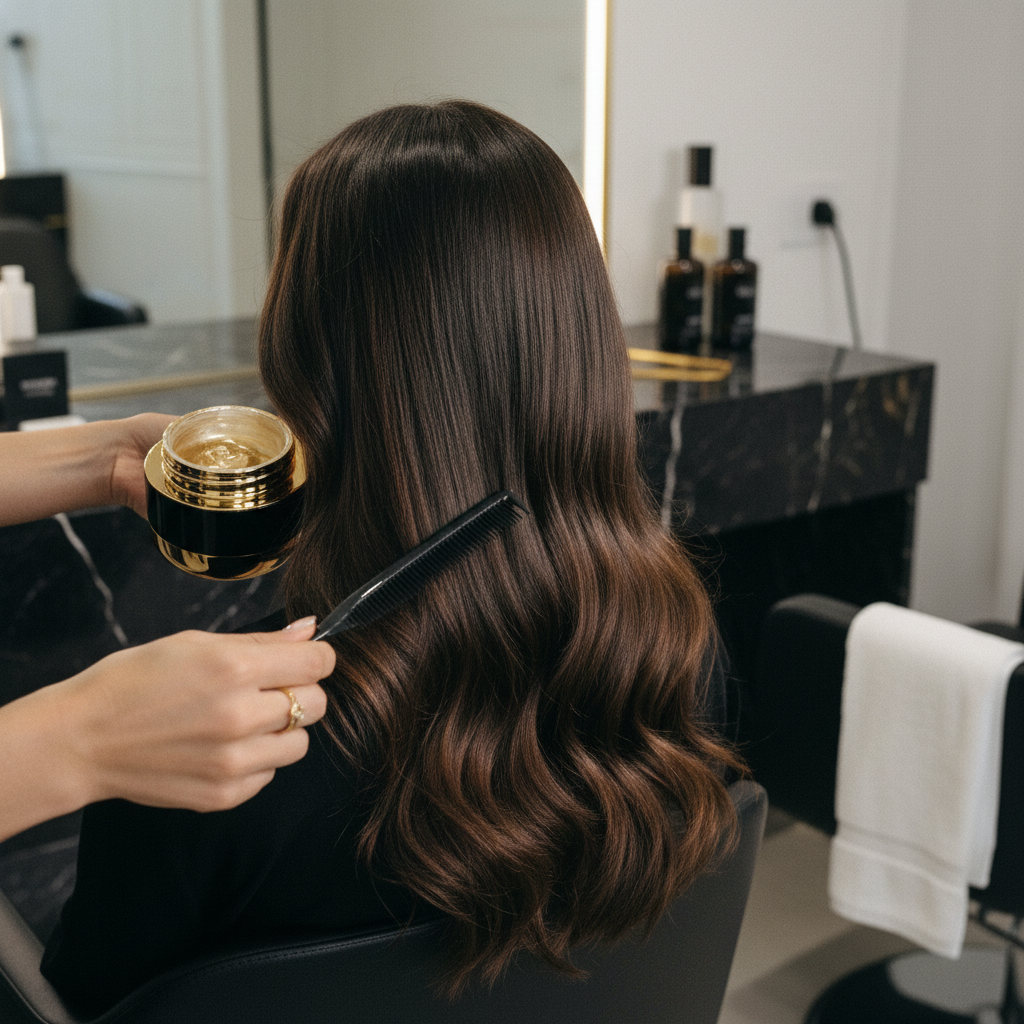
Quick answer: Hair breakage occurs when structural damage compromises the hair shaft, causing strands to snap rather than fall naturally from the follicle. Understanding Hair Breakage Causes and Treatments requires separating physical or chemical damage from true biological hair loss. Primary triggers include heat styling, chemical processing, environmental stressors, and mechanical friction. Effective cosmetic treatments rely on replenishing structural lipids, balancing moisture and hydrolysed proteins, and reducing mechanical friction, though severely fractured fibres must ultimately be trimmed away.
Key takeaways
- Hair breakage is a structural failure of the hair fibre, completely distinct from follicular hair shedding (telogen effluvium) or genetic thinning (alopecia).
- Chemical processing such as bleaching and relaxing permanently alters the hair's protective cuticle layer and breaks internal disulphide bonds, leaving the cortex vulnerable.
- Wet hair is far more susceptible to mechanical snapping because hydrogen bonds are temporarily disrupted and elasticity increases while tensile strength drops.
- Cosmetic treatments can coat, smooth, and temporarily reinforce the fibre, but split or fully fractured ends cannot be permanently repaired and require trimming.
- Maintaining an optimal hair pH between 4.5 and 5.5 helps keep the cuticle scales lying flat, dramatically reducing friction and breakage.
Hair Breakage Causes and Treatments: what the evidence shows
Research into Hair Breakage Causes and Treatments demonstrates that breakage occurs when external stress exceeds the tensile strength of the hair cortex. The hair shaft consists of three main zones: the outermost cuticle (composed of overlapping scales sealed with 18-methyleicosanoic acid, or 18-MEA), the cortex (packed with keratin filament bundles bonded by disulphide, hydrogen, and ionic bonds), and in thicker hairs, a central medulla.
When the cuticle sustains damage, it lifts, cracks, and chips away. Without this outer shield, the cortex loses internal moisture and structural integrity. Evidence indicates that mechanical trauma (aggressive brushing, tight elastics), thermal stress (irons exceeding 180°C), and chemical altering (alkaline perms, relaxers, peroxide bleaches) are the primary culprits behind fractured fibres.
The core mechanism of hair fracture
To grasp how breakage develops, consider the hierarchy of the hair fibre:
[ Cuticle Layer (18-MEA & Keratin Scales) ]
 ↓ (Damaged by heat/chemicals)
[ Cortex (Keratin intermediate filaments & Disulphide bonds) ]
 ↓ (Loss of hydration & structural elasticity)
[ Fibre Fissure (Trichoptilosis / Split ends or Trichorrhexis nodosa) ]
 ↓ (Snap under mechanical tension)
Healthy hair can stretch roughly 20 to 30 percent of its original length before breaking when dry, and up to 50 percent when wet. However, chemical treatments like bleaching strip away the hydrophobic 18-MEA lipid layer, turning the hair porous and water-absorbing.
When wet, porous hair swells excessively, lifting the cuticle further. If you brush hair in this fragile state, you stretch the cortex beyond its weakened yield point, causing microscopic fractures along the shaft known as trichorrhexis nodosa, which quickly lead to full fibre snapping.
What the evidence does not show
There is no scientific evidence that topical shampoos, conditioners, oils, or serums can genuinely "fuse" a broken or split hair shaft back together on a permanent basis. While certain cosmetic ingredients (such as polyquaterniums, silicones, and hydrolysed proteins) form temporary films that seal frayed fibres until the next wash, the underlying keratin structure remains broken. Only regular trimming removes damaged ends.
Furthermore, evidence does not show that hair breakage originates at the scalp follicle. While nutritional deficiencies can lead to weaker fibre formation as hair grows, standard breakage is an environmental and styling issue that happens post-emergence.
Identifying the signs of hair breakage
Distinguishing breakage from other common hair issues is vital for selecting the correct routine. Here are the visible and tactile signs:
- Short, snapped fragments: Finding tiny pieces of hair on your clothes, bathroom sink, or pillow without a white root bulb attached.
- Frayed, split ends: Visible forks at the hair tips (trichoptilosis) or white microscopic nodules along the shaft (trichorrhexis nodosa).
- Uneven, frayed perimeter: The ends of your hair look ragged or thin, even if your scalp density remains completely normal.
- Extreme tangling: Hair cuticles that have lost their smooth lipid coating catch on neighbouring strands, leading to persistent knotting.
- Loss of natural elasticity: Hair stretches under light tension and immediately snaps rather than bouncing back.
| Metric | Hair Breakage | Follicular Shedding (Telogen Effluvium) |
|---|---|---|
| Point of origin | Along the hair shaft | At the hair follicle (scalp) |
| Presence of white bulb | Absent (rough, blunt, or split end) | Present (distinct tiny keratin bulb) |
| Length of lost hair | Varied lengths, often short fragments | Full-length strands |
| Primary triggers | Heat, bleach, friction, mechanical force | Stress, systemic illness, hormonal shifts |
| Effective solution | Trims, pH-balanced care, bond-builders | Resolving systemic trigger, scalp support |
Practical interventions: how to treat and prevent breakage
Managing breakage requires a combined approach of stopping destructive habits and introducing protective cosmetic care.
Optimise your wash and conditioning routine
Use a shampoo and conditioner formulated near the natural pH of hair and scalp (pH 4.5 to 5.5). Alkaline cleansers cause the hair shaft to swell and the cuticle to lift, increasing friction. Conditioners containing fatty alcohols (such as cetyl or stearyl alcohol), cationic surfactants, and hydrolysed vegetable or keratin proteins help lubricate the surface, temporarily fill shaft imperfections, and reduce comb-drag forces.
Respect thermal limits
Styling tools should rarely exceed 150°C to 180°C. Applying a silicone- or polymer-based heat protectant before using blow-dryers or straighteners helps distribute heat evenly and limits keratin denaturation.
Manage mechanical tension
Switching to seamless wide-tooth combs or flexible detangling brushes drastically lowers friction. Detangle hair gently, working from the ends upward toward the roots. Avoid rough cotton bath towels; instead, gently press excess water out using a smooth microfibre towel. Replace abrasive cotton pillowcases with satin or silk alternatives to lower nightly friction.
Support the scalp environment with Watermans
While mechanical protection prevents shaft fracture, growing resilient, strong-feeling hair requires a healthy scalp environment. Watermans products are developed to support this balance without relying on harsh sulphates that strip essential lipids.
Using Watermans Grow Me Shampoo and Condition Me Conditioner delivers restorative ingredients such as biotin, rosemary extract, caffeine, and hydrolysed lupin protein directly to the hair and scalp. This regimen improves the feel and manageability of the fibre, smooths cuticle scales, and creates the ideal cosmetic foundation for hair to reach its full potential without premature snapped strands.
When the cause may be something else
If you observe full-length hairs accumulating in large numbers in your brush or shower drain, you are likely experiencing telogen effluvium rather than breakage. Telogen effluvium is triggered by systemic shocks such as illness, acute emotional stress, iron deficiency, thyroid dysfunction, or rapid weight loss.
Similarly, if you notice gradual widening of your parting or a receding hairline with miniaturised, baby-fine hairs, you may be experiencing androgenetic alopecia. In such situations, strengthening hair treatments will not resolve the underlying condition.
When to seek professional advice
Consult a dermatologist, trichologist, or registered medical professional if:
- Hair sheds in distinct patches, circles, or alongside scalp redness, scaling, or pain.
- You lose more than roughly 100 to 150 full-length hairs consistently each day for more than two months.
- Breakage is accompanied by severe nail changes, persistent fatigue, or unexplained weight shifts.
- Over-the-counter conditioning measures produce no improvement after 8 to 12 weeks of gentle handling.
Frequently asked questions about Hair Breakage Causes and Treatments
Can split ends ever be permanently repaired?
No cosmetic product can permanently reconnect a split hair shaft. While conditioning agents, hydrolysed proteins, and leave-in polymers can temporarily bind fractured tips together until your next wash, the physical fracture remains. The only permanent resolution for split ends is cutting them off with sharp shears before the tear travels further up the fibre.
What is the primary difference between hair loss and hair breakage?
Hair loss originates internally within the scalp follicle, causing whole hairs (complete with a white keratin bulb) to detach and fall out. Hair breakage is structural damage occurring anywhere along the visible shaft due to external mechanical, thermal, or chemical trauma, leaving behind fractured pieces without a root.
How often should I trim my hair to prevent severe breakage?
Most professional stylists and trichologists recommend a light dusting or trim every 8 to 12 weeks for hair prone to breakage. This interval removes microscopic splits before they migrate upwards into healthy regions of the cortex, preserving overall length and hair density.
What are the most effective Hair Breakage Causes and Treatments for bleached hair?
When evaluating Hair Breakage Causes and Treatments for chemically lightened hair, the priority is rebuilding internal hydrogen and ionic associations while sealing the porous cuticle. Use deeply lubricating acidic leave-in conditioners, introduce hydrolysed protein treatments to bolster tensile resilience, and avoid all high-heat styling tools until the hair regains healthy elasticity.
Does brushing wet hair cause it to snap?
Yes. When hair is saturated with water, its hydrogen bonds temporarily break, increasing its stretch capacity while reducing overall tensile strength. Pulling a stiff brush through wet, unconditioned hair stretches the cortex past its natural limit, causing immediate cuticle fractures and fibre breakage. Always use a wide-tooth comb or flexible wet-brush with plenty of conditioner.
Understanding long-term fibre preservation
Taking control of your hair requires recognising that every centimetre of visible hair is non-living tissue that cannot regenerate on its own. Successfully addressing Hair Breakage Causes and Treatments relies on preserving the delicate cuticle layer, using gentle handling techniques, and maintaining balanced structural care. By combining smart mechanical practices with nourishing formulas like those from Watermans, you can protect your hair shaft against daily friction, maintain fibre integrity, and enjoy strong, healthy-looking hair.
Sources and references
- British Association of Dermatologists. General Hair Loss and Fibre Fragility Guidelines. 2021.
- Robbins, C. R. Chemical and Physical Behavior of Human Hair. 5th edition. Springer-Verlag, 2012.
- Gavazzoni Dias, M. F. Hair Cosmetics: An Overview. International Journal of Trichology, 2015.
- Sinclair, R. D. Healthy Hair: What Is It? Journal of Investigative Dermatology Symposium Proceedings, 2007.
- Dawber, R. Hair: Its Structure and Response to Cosmetic Preparations. Clinics in Dermatology, 1996.