Hair Breakage and Porosity: Causes, Science, and Solutions
9 min read ·
Understand how Hair Breakage and Porosity are connected. Learn the science of cuticle health, protein-moisture balance, and how to stop brittle strands from snapping.
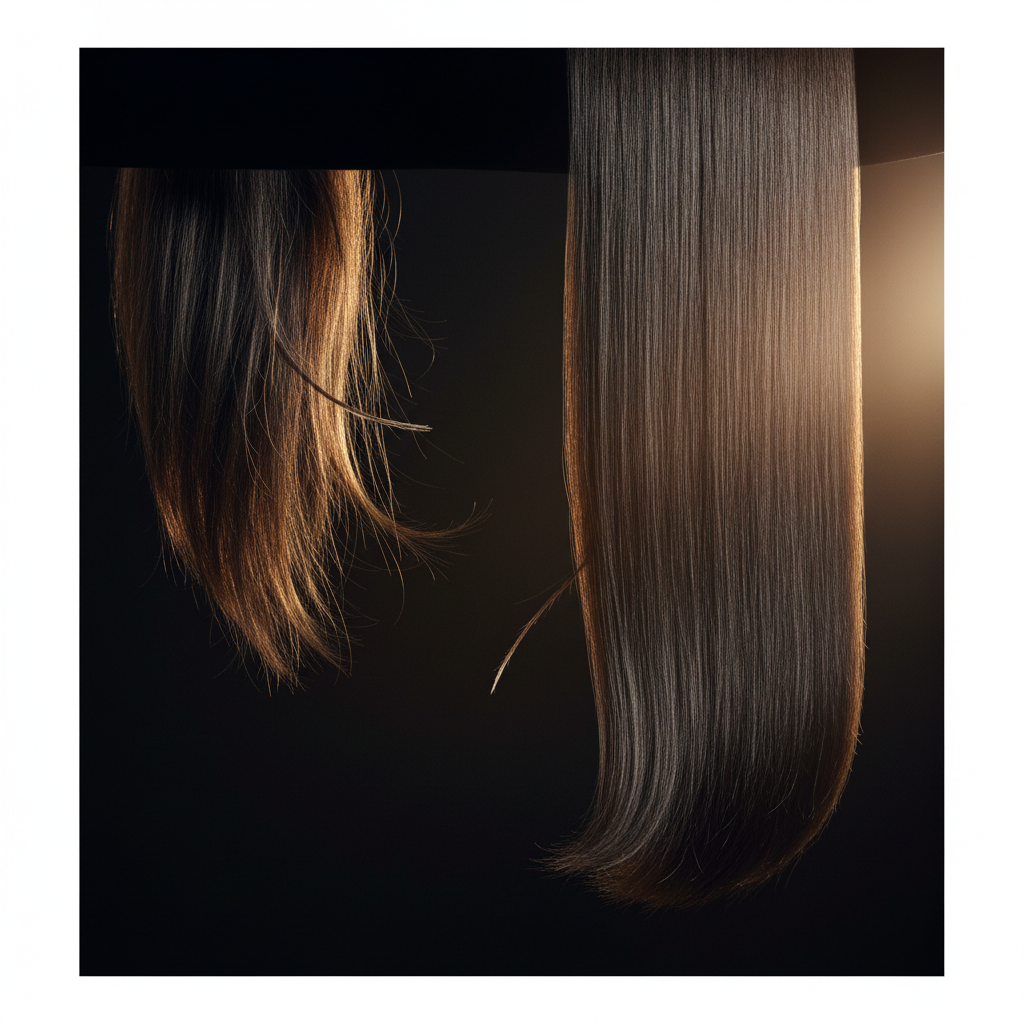
Quick answer: Hair Breakage and Porosity are fundamentally connected because a hair fibre's porosity level dictates its structural vulnerability to mechanical and chemical snapping. High porosity hair features a lifted, damaged cuticle layer that rapidly absorbs and loses moisture, leaving the inner cortex brittle and prone to fracture. Low porosity hair resists moisture, risking protein stiffness. Understanding Hair Breakage and Porosity helps you balance hydration and tensile strength, though cosmetic routines cannot repair fibres that have already split completely.
Key takeaways
- Porosity describes how easily water, lipids, and chemical agents pass through your hair cuticle into the cortex.
- High porosity hair is significantly more vulnerable to breakage due to cuticle degradation, chemical weathering, and moisture loss.
- Low porosity hair can snap when overloaded with heavy proteins or dehydrated by impermeable product buildup.
- True hair breakage is physical structural failure along the shaft, distinctly separate from follicular hair shedding or alopecia.
- Routine adjustments focusing on pH balance (ideal range 4.5 to 5.5), hydrolysed proteins, and emollient sealants can dramatically reduce fracture rates.
Hair Breakage and Porosity: what the evidence shows
Research in cosmetic dermatology confirms that a fibre's porous structure dictates its mechanical resilience. Your hair shaft consists of three primary regions: the outer protective cuticle (overlapping scales of keratinised cells), the internal cortex (the fibrous protein core providing tensile strength), and sometimes a central medulla.
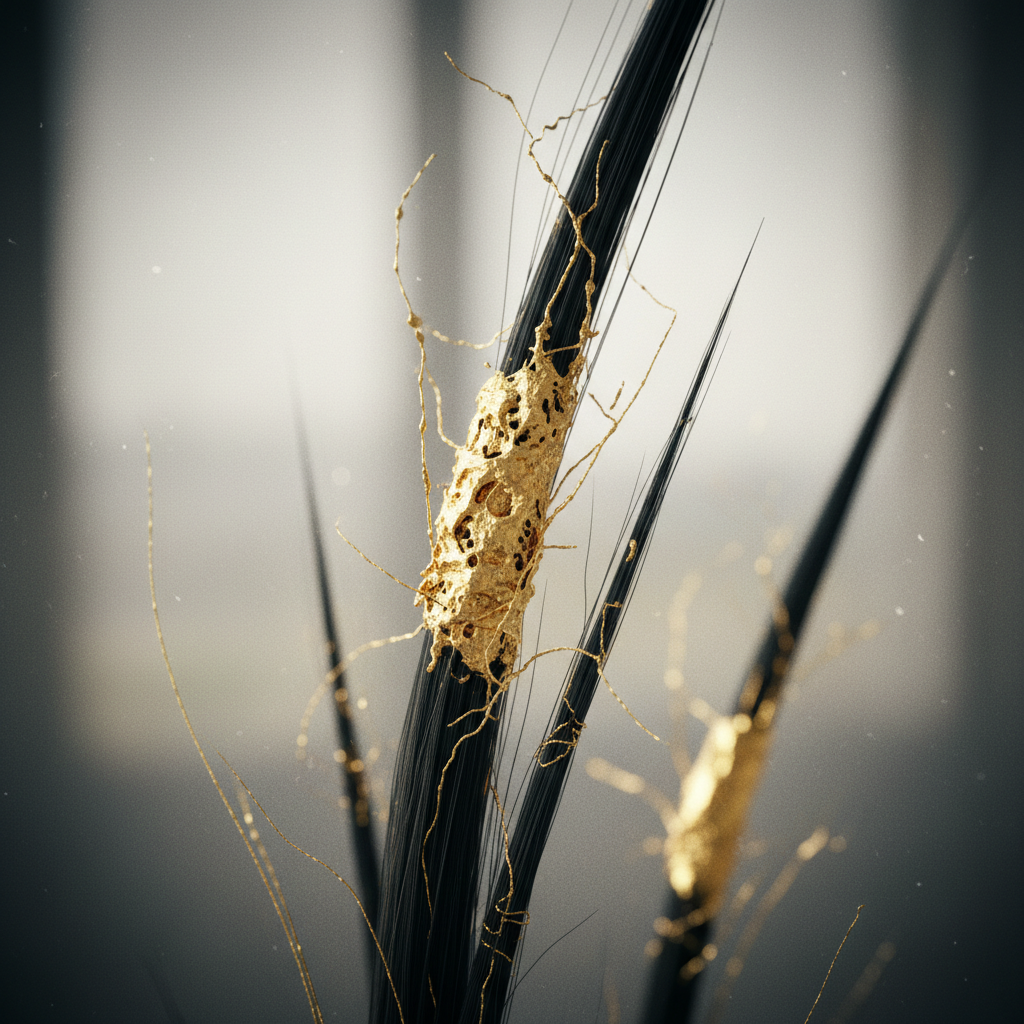
The cuticle acts as a hydrophobic barrier regulated by the 18-methyleicosanoic acid (18-MEA) lipid layer. When chemical treatments such as bleaching, permanent dyeing, or relaxers strip this lipid layer, the cuticle shingles lift or break away entirely. This state is defined as high porosity. In high porosity fibres, water rapidly enters the cortex, causing rapid swelling, followed by rapid desiccation when drying. This cycle of swelling and shrinking is known as hygral fatigue, and it destabilises the hydrogen and disulphide bonds within the cortex, making hair fracture under normal brushing or styling tension.
Low porosity hair, conversely, features tightly packed, flat cuticle layers. While structurally resilient against environmental stress, low porosity hair struggles to absorb water. When dehydrated, or when coated with excessive heavy silicones and unhydrolysed proteins that cannot penetrate the cuticle, the fibre becomes stiff. When bent, a rigid fibre snaps rather than flexes.
What the evidence does not show
Scientific trials do not support the idea that you can permanently alter your natural baseline porosity. Porosity is partly determined by genetics (such as natural curl patterns, where curvature points create natural cuticle gaps) and largely accelerated by physical and chemical wear. No deep conditioning treatment, oil, or mask can permanently "seal" or heal missing cuticles, because hair is non-living biological tissue. Cosmetic interventions provide a temporary, sacrificial protective coating that must be maintained continually.
Additionally, evidence does not show that hair breakage causes follicular hair loss. Breakage shortens the existing hair strand due to mechanical failure; it does not impede the follicular cycle in the scalp or cause shedding from the root bulb.
The physical mechanisms of fibre fracture
Hair breakage occurs when physical strain exceeds the tensile threshold of the cortex. Hair fibres can normally stretch by roughly 20 to 30 percent of their dry length before snapping, and up to 50 percent when wet. However, this elasticity depends directly on cuticle integrity and cortex hydration.
Cuticle erosion and protein loss
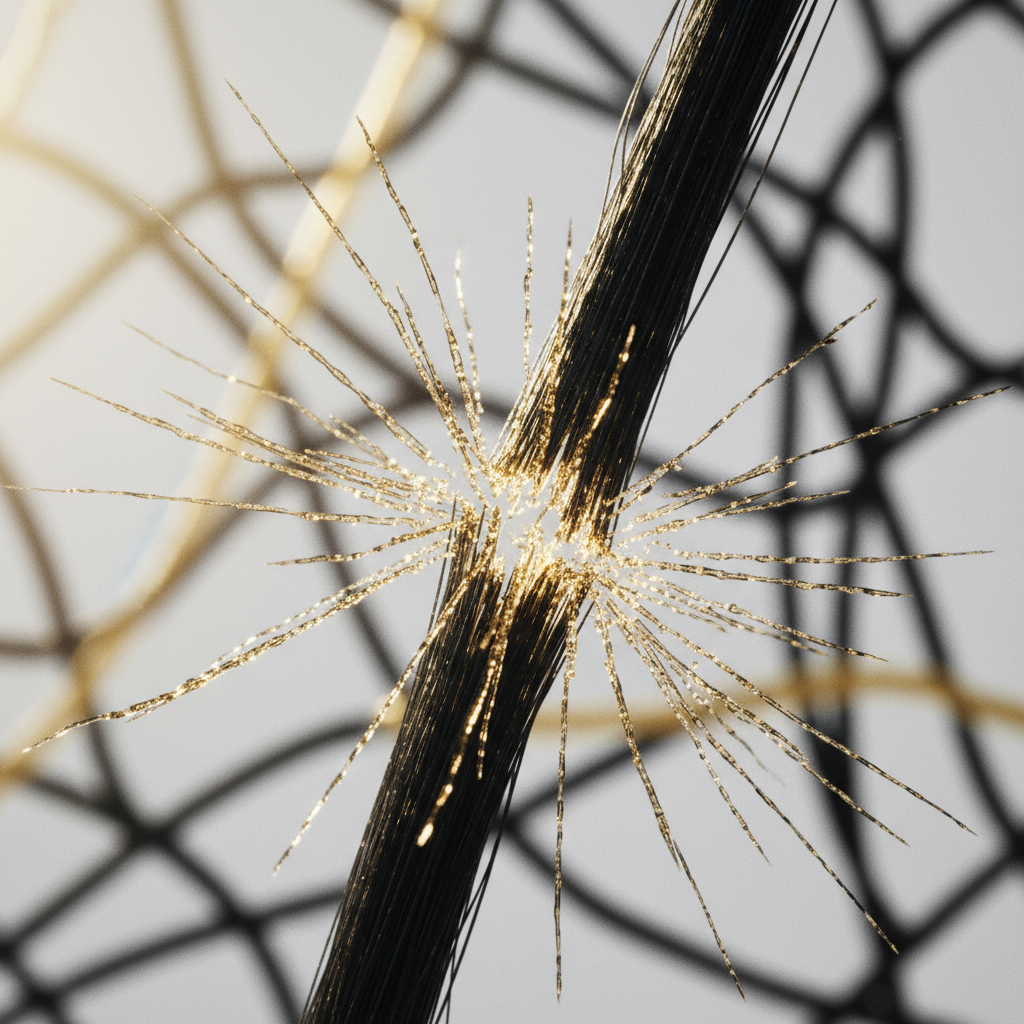
In high porosity hair, damaged cuticle scales expose the cortical cells to physical friction. Without the smooth cuticle to deflect friction, comb teeth and brush bristles create microscopic micro-fissures in the cortex. Over time, repeated grooming turns these fissures into full transverse fractures, resulting in visible breakage.
Hygral fatigue and moisture fluctuations
Water weakens temporary hydrogen bonds inside the cortex. Because high porosity hair absorbs up to 30 to 45 percent of its dry weight in water very rapidly, the cortex swells excessively. Repeated cycles of wetting, excessive swelling, and dry contraction weaken the macrofibrils inside the hair fibre, causing longitudinal splits (split ends) and snapping mid-shaft.
Protein-moisture imbalance in low porosity strands
Low porosity hair does not absorb water easily, so topical products often sit on the surface. When individuals apply concentrated protein treatments to low porosity hair without adequate humectants, the proteins harden on the exterior surface. This creates brittleness, reducing the fibre's natural bending modulus and causing the hair to snap under tension.
| Porosity Level | Cuticle State | Water Absorption | Primary Breakage Risk | Corrective Focus |
|---|---|---|---|---|
| Low Porosity | Tightly bound, flattened shingles | Very slow; water beads on surface | Rigidity, product buildup, dehydration snapping | Mild heat during conditioning, lightweight humectants, clarifying |
| Medium Porosity | Uniform, slightly raised shingles | Balanced; absorbs and retains moisture steadily | Normal mechanical wear and tear | Preventative maintenance, regular conditioning, gentle detangling |
| High Porosity | Lifted, chipped, or missing shingles | Rapid absorption and rapid moisture loss | Hygral fatigue, friction, structural cortex fracture | Hydrolysed proteins, acidic pH products (4.5 to 5.5), rich lipid sealants |
How to assess your hair porosity and breakage risks
You can determine your hair's vulnerability using observable structural cues rather than unreliable internet tests like the floating water glass test, which is easily distorted by surface tension and styling residues:
- The tactile slide test: Take a single shed strand and run your thumb and forefinger from the tip up toward the root. If the strand feels smooth, your cuticles are flat and you have low porosity. If it feels rough, bumpy, or catches on your skin, the cuticle scales are raised, indicating high porosity.
- The wetting rate: Spray clean, dry hair with a fine mist of water. If droplets bead up on the surface for several minutes, the porosity is low. If the water vanishes instantly into the fibre, the porosity is high.
- The breakage inspection: Examine snapped pieces of hair on your clothes or counter. If the snapped fragment has a white dot or flared tip with no root bulb attached, it is broken hair. If it has a tiny white bulb on the end, it is naturally shed hair from the follicle.
Practical steps to reduce breakage across porosity types
Targeted haircare strategies can protect vulnerable fibres and reinforce the shaft against premature snapping.
Regulating high porosity hair
- Restore an acidic pH: The natural pH of hair and the scalp is mildly acidic, sitting between 4.5 and 5.5. Alkaline water or high-pH shampoos force the cuticle wide open. Use shampoos and conditioning rinses formulated in the 4.5 to 5.5 range to compact the remaining cuticle scales.
- Apply hydrolysed proteins: Small-chain hydrolysed keratin, silk, or wheat proteins penetrate the gaps in damaged cuticles, temporarily reinforcing the weak cortex and restoring tensile strength.
- Layer with lipids: Follow water-based leave-in conditioners with natural oils or conditioning butters to create an occlusive film that prevents rapid water evaporation.
Managing low porosity hair
- Use indirect warmth: When applying deep conditioners, use a warm towel or steamer. Gentle heat gently expands the cuticle layer, allowing hydrating humectants (like glycerin and aloe) to enter the cortex.
- Avoid heavy coating agents: Minimise thick, non-water-soluble waxes and heavy unhydrolysed proteins that cannot enter the cortex and cause surface brittleness.
- Clarify regularly: Remove mineral and product deposits with an occasional clarifying wash to ensure hydration can penetrate the cuticle.
Supporting hair condition with Watermans
When managing hair fibre vulnerability, scalp environment and strand support go hand in hand. Watermans Grow Me Shampoo is formulated with hydrolysed lupin protein, biotin, niacinamide, and rosemary, providing a nutrient-rich wash that supports fuller-looking hair while respecting fibre resilience. Pairing it with Watermans Condition Me Conditioner introduces cholesterol and hydrolysed proteins that coat damaged cuticles, reduce friction during detangling, and improve hair's tensile feel across all porosity levels.
When the issue is not breakage
If you notice increased hair shedding where full-length hairs come out with a soft white bulb at the root, the issue is not fibre breakage. This points to telogen effluvium, androgenetic alopecia, or other follicular hair shedding conditions. Similarly, sudden diffuse hair loss, patchy circular bald spots (alopecia areata), or a burning scalp sensation require medical evaluation rather than cosmetic adjustments.
When to seek professional advice
Consult a certified trichologist or dermatologist if you experience:
- Excessive shedding that exceeds 100 hairs daily for more than eight weeks.
- Visible scalp thinning, widening parts, or bald patches.
- Scalp symptoms such as intense itching, redness, flaking, or pain.
- Unexplained hair fragility accompanied by brittle nails, fatigue, or unexplained weight shifts, which may indicate thyroid disorders or nutritional deficiencies like iron-deficiency anaemia.
Frequently asked questions about Hair Breakage and Porosity
Can low porosity hair break as easily as high porosity hair?
Yes. While high porosity hair snaps primarily from cuticle damage and hygral fatigue, low porosity hair snaps due to stiffness. When low porosity hair lacks internal water or becomes coated in heavy, unrinsed protein films, the fibres lose elasticity. Without elasticity, everyday detangling causes the rigid fibre to snap rather than bend.
How does bleach influence Hair Breakage and Porosity?
Bleaching alters Hair Breakage and Porosity by oxidising melanin and breaking disulphide bonds within the cortex. Alkaline bleaching solutions (often pH 9 to 11) force cuticle scales open and dissolve the protective 18-MEA lipid layer. This permanently increases porosity, leaving the inner cortex weakened and highly vulnerable to breakage.
Does the float test accurately measure hair porosity?
No. The popular glass-of-water float test is largely inaccurate. Surface tension of the water, product residue on the hair, or natural sebum can cause high porosity hair to float. Conversely, thick hair strands may sink regardless of cuticle health. Tactile examination and water absorption rates are much more reliable indicators.
Can split ends be repaired without cutting them off?
No cosmetic product can mend a split end permanently. Split ends represent a full structural rupture of the hair shaft. While conditioning products containing hydrolysed proteins and silicones can temporarily glue the split closed until your next wash, the only permanent remedy for structural breakage is trimming above the split.
Conclusion
Managing Hair Breakage and Porosity requires a precise understanding of your hair fibre's mechanical architecture. High porosity strands need structural reinforcement from hydrolysed proteins and acid-balanced products to limit moisture loss and hygral fatigue. Low porosity strands thrive on gentle warmth and lightweight humectants that prevent brittleness. By aligning your washing, conditioning, and styling habits with your porosity profile, you can protect the cuticle, preserve cortical elasticity, and keep breakage to a minimum.
Sources and references
- British Association of Dermatologists. Hair Loss and Hair Shaft Disorders. Bad.org.uk
- Robbins, C. R. (2012). Chemical and Physical Behavior of Human Hair. 5th ed. Springer-Verlag.
- Gavazzoni Dias, M. F. (2015). Hair cosmetics: An overview. International Journal of Trichology, 7(1), 2-15.
- Swift, J. A. (1999). The mechanics of human hair fracture. Journal of Cosmetic Science, 50(1), 23-47.
- National Institute for Health and Care Excellence (NICE). Alopecia: Management and Assessment. Nice.org.uk