Follicular Health and Hair Density: The Definitive Scientific Guide
8 min read ·
Understand the science of Follicular Health and Hair Density. Learn what governs follicular units, how miniaturisation occurs, and how to protect hair fullness.
Quick answer: Understanding Follicular Health and Hair Density is essential for distinguishing between cosmetic thinning, shedding, and true follicular loss. Hair density refers to the number of active follicles per square centimetre of scalp, which averages between 175 and 300 in healthy adults. Follicular health dictates whether those units produce thick, pigmented terminal fibres or miniaturise into fine vellus strands. While cosmetic treatments support scalp environment and fibre strength, they cannot regenerate permanently fibrosed or dead follicles.
Key takeaways
- Hair density is determined by the total number of follicular units per square centimetre and the number of hairs growing from each unit (follicular grouping).
- Follicular miniaturisation, driven by genetics, hormones such as dihydrotestosterone (DHT), or chronic inflammation, reduces hair density long before complete baldness appears.
- Hair breakage along the shaft reduces perceived volume, but true changes in density occur at the follicle level under the scalp surface.
- The average human scalp houses between 80,000 and 120,000 hairs, shedding roughly 50 to 100 telogen strands each day as part of the natural hair cycle.
- A healthy scalp environment (balanced sebum, controlled microbial flora, and unhindered microcirculation) is vital for sustaining active anagen growth.
Follicular Health and Hair Density: what the evidence shows
Clinical dermatology evaluates Follicular Health and Hair Density through the lens of follicular units. On a human scalp, hairs do not emerge as isolated, single strands. Instead, they naturally grow in anatomical clusters termed follicular units, each typically containing 1 to 4 terminal hairs, a sebaceous gland, an arrector pili muscle, and a dedicated neurovascular supply.
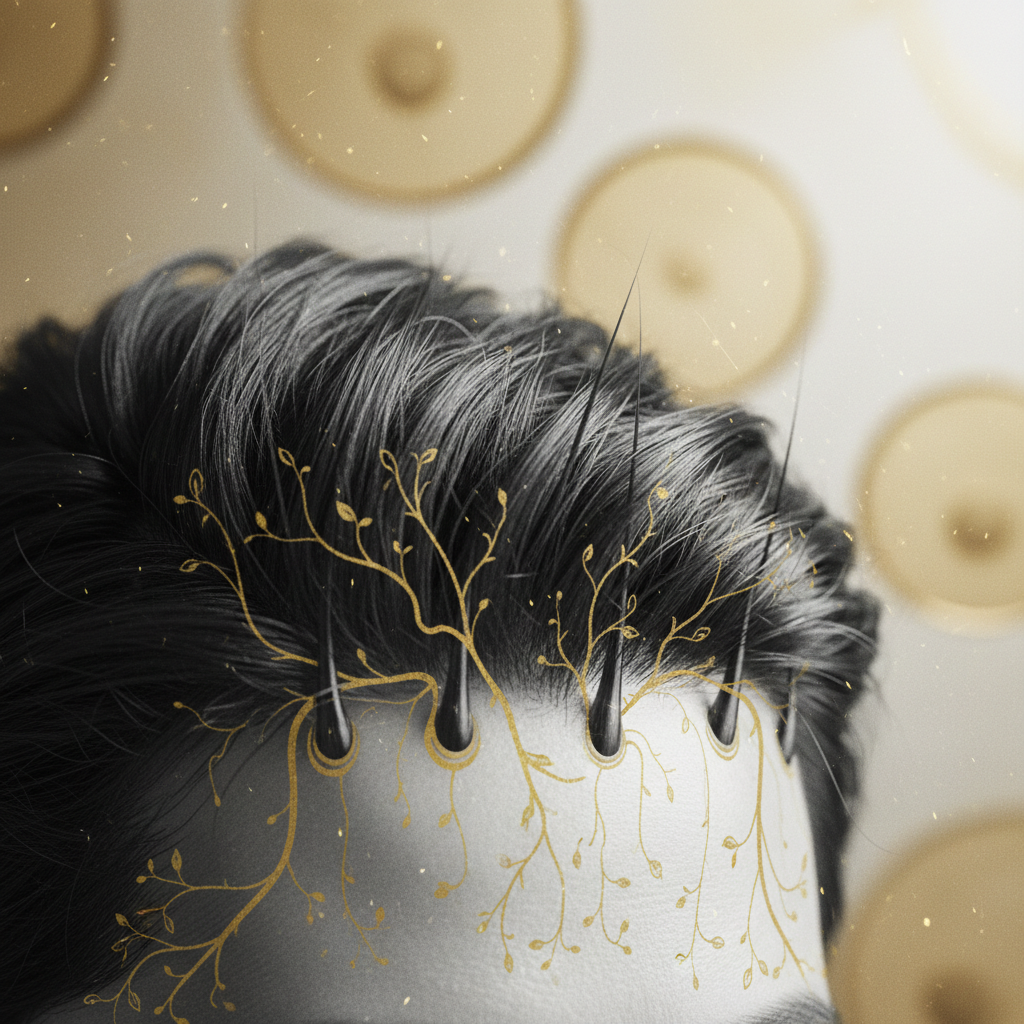
Published trichological data shows that an unaffected scalp exhibits a density of approximately 175 to 300 hairs per square centimetre, varying by biological heritage and age. When follicles are healthy, roughly 85 to 90 percent reside in the active growing phase (anagen), which lasts anywhere from 2 to 7 years. Around 10 to 15 percent sit in the resting phase (telogen), preparing to shed and renew.
Evidence demonstrates that true loss of hair density occurs primarily through two pathways:
- Follicular Miniaturisation: Under the influence of androgens (specifically dihydrotestosterone acting on sensitive dermal papilla cells) or chronic micro-inflammation, the anagen growth phase shortens. With each successive cycle, the hair matrix produces a thinner, shorter, and less pigmented fibre. Over time, robust terminal hairs become wispy vellus hairs, creating the visual appearance of thinning even if the follicle count remains technically unchanged.
- Prolonged Telogen Latency (Kenogen): Follicles that shed their club hair can enter an extended dormant phase where the hair pore remains empty for months before a new anagen fibre emerges. A high percentage of follicles in kenogen drastically lowers overall scalp coverage.
What the evidence does not show
The science of scalp biology does not support several common assumptions:
- Shampoo cannot revive scar tissue: Once a follicle undergoes cicatricial (scarring) changes or complete fibrosis, topical cosmetics and shampoos cannot reactivate it. True destruction of the stem cell reservoir in the follicular bulge is permanent.
- Topicals cannot alter genetically predetermined follicle counts: The baseline number of follicular units on your head was determined in the womb by gestational week 22. No cosmetic formula, oil, or supplement can create new follicular units that never existed.
- Breakage is not loss of density: Snapping along the hair shaft due to heat styling, chemical bleaching, or rough handling makes the mid-lengths and ends look thin. However, the follicle in the scalp remains intact and continues to produce hair at normal density. Calling breakage "hair loss" confuses the problem and delays appropriate care.
Biological mechanisms of follicle decline and density loss
At the base of every hair follicle lies the dermal papilla, a cluster of specialised mesenchymal cells that instruct the surrounding epithelial cells to divide and build the hair shaft. Microcapillaries feed the dermal papilla with oxygen, amino acids, glucose, and micronutrients.
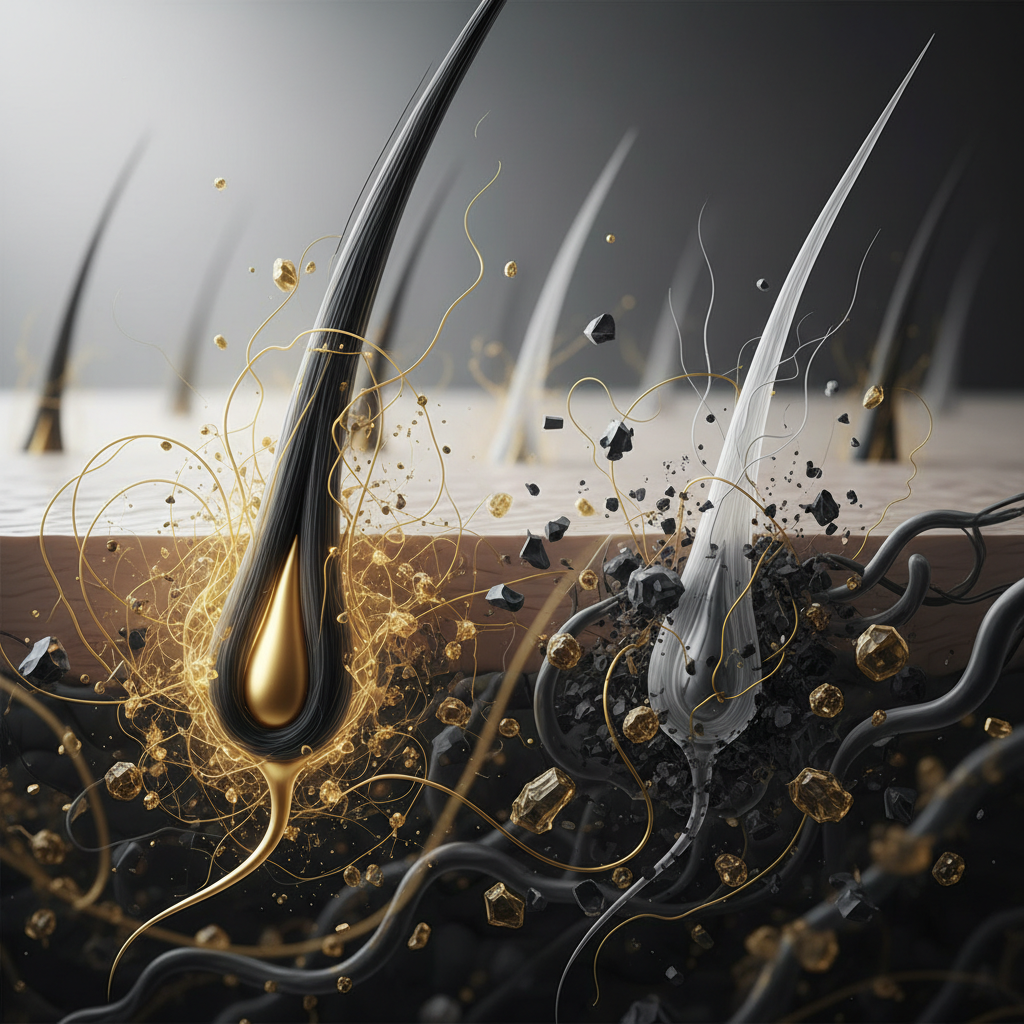
When follicular health declines, cellular communication breaks down:
- Androgen sensitivity: In individuals with androgenetic alopecia, 5-alpha reductase enzymes convert testosterone into DHT locally within scalp tissue. DHT binds to androgen receptors in the dermal papilla, triggering inhibitory signalling factors like TGF-beta (transforming growth factor beta), which suppress matrix cell proliferation.
- Perifollicular inflammation: Excess sebum oxidation, overgrowth of Malassezia yeasts, or oxidative stress from environmental pollutants can provoke immune activity around the upper follicle (the infundibulum). This low-grade inflammation damages stem cells in the bulge area, impairing normal regeneration.
- Vascular insufficiency: Chronic tension, fibrotic tissue stiffening, or systemic vascular issues can restrict capillary blood flow, starving matrix cells of the metabolic energy needed to sustain prolonged anagen production.
Comparing hair loss, hair shedding, and hair breakage
Understanding what is happening to your hair requires distinguishing between the root causes of reduced volume.
| Feature | Hair Loss (Alopecia) | Hair Shedding (Telogen Effluvium) | Hair Breakage |
|---|---|---|---|
| Site of problem | Deep follicular unit / dermal papilla | Follicle cycle timing | Fibre shaft (cuticle and cortex) |
| Root cause | Genetics, DHT, autoimmunity, scarring | Physiological stress, illness, nutritional deficit | Heat damage, chemical processing, friction |
| Visible sign | Miniaturised hairs, widening part, empty pores | High volume of full-length club hairs falling | Short, fractured hairs without a white bulb |
| Impact on density | Progressive reduction in true density | Temporary reduction in density | Apparent reduction in mid-length volume |
| Reversibility | Requires targeted clinical management | Usually self-correcting once trigger clears | Repaired by mechanical care and trim |
Signs of declining follicular health
You can monitor early indicators of follicular changes before noticeable bald patches appear:
- Altered hair texture: Hair emerging near the crown or hairline feels noticeably softer, finer, or lacks the tensile strength of hair at the back of the head.
- Shift in follicular groupings: Dermatoscopy reveals a shift from units housing 3 or 4 hairs down to units housing single, isolated hairs.
- Scalp discomfort or sebum imbalances: Persistent itching, tenderness, redness, or waxy, yellowish scaling around the base of the hair indicates an inflammatory scalp environment that compromises follicular vitality.
- Increased daily fall of varying lengths: Shedding fine, short hairs alongside long terminal hairs points toward miniaturisation rather than uniform telogen shedding.
Practical steps to support follicular vitality
Maintaining optimal conditions for existing follicles involves targeted daily care and scalp hygiene:
- Maintain scalp microbiome balance: Cleanse regularly with a pH-balanced cleanser (pH 4.5 to 5.5) to clear oxidised sebum, atmospheric pollutants, and styling residues without stripping the epidermal moisture barrier.
- Encourage microcirculation: Gentle mechanical scalp stimulation or massage for 4 minutes daily has been shown to increase dermal blood flow and upregulate mechanical stress genes in the dermal papilla cells.
- Optimise nutritional intake: Matrix cells divide rapidly and require adequate supplies of ferritin (iron stores), zinc, vitamin D, and essential amino acids (such as L-cysteine and L-methionine) to synthesise structural keratin.
- Minimise physical traction: Avoid tight ponytails, extensions, or severe braiding that apply continuous tension to the follicle, which can trigger traction alopecia and mechanical destruction of the follicular root.
Watermans approaches to scalp conditioning
Cosmetic care plays an important supporting role in maintaining an optimal scalp environment. Watermans products, such as the GrowMe Shampoo and ConditionMe Conditioner, are formulated with cosmetic actives including caffeine, biotin, rosemary extract, niacinamide, and argan oil.
While topical cosmetic formulations do not treat medical conditions such as androgenetic alopecia or cicatricial alopecia, caffeine and niacinamide in topical preparations are widely studied for their ability to condition the scalp surface, refresh the follicular opening, and improve the feeling of hair density. These formulas help minimise fibre breakage and keep the hair looking thicker and fuller throughout daily styling.
When to seek professional advice
If you observe sudden, patchy hair loss, rapid shedding exceeding several hundred hairs per day, or persistent scalp pain, burning, and redness, consult a qualified trichologist or dermatologist. Clinical assessment using a dermatoscope can evaluate follicular ostia, detect early signs of miniaturisation, rule out scarring alopecias, and outline targeted medical therapies (such as minoxidil or anti-androgen treatments) where indicated.
Frequently asked questions about Follicular Health and Hair Density
Can dead hair follicles be brought back to life?
No. If a hair follicle has undergone complete fibrosis, atrophy, or scarring, it can no longer produce a hair fibre. However, if a follicle is merely miniaturised or dormant in an extended kenogen phase, improving follicular health through targeted treatments may help it produce a thicker, healthier terminal fibre once again.
How does daily washing affect Follicular Health and Hair Density?
Daily washing with a gentle, pH-balanced cleanser does not cause hair loss or lower hair density. Hairs shed during washing were already detached in the telogen phase and ready to fall. In fact, washing removes inflammatory sebum and debris that could otherwise impair follicular health.
What is the normal rate of hair shedding per day?
Losing between 50 and 100 hairs per day is considered physiologically normal for an adult scalp containing approximately 100,000 hairs. This shed rate reflects the typical turnover of follicles completing their resting phase before cycling back into anagen growth.
Can poor diet directly lower hair density?
Yes. Severe caloric restriction or deficiencies in iron, zinc, protein, and essential fatty acids can trigger telogen effluvium, forcing active anagen follicles prematurely into the resting phase. While this causes a noticeable temporary loss of density, the follicles typically recover once nutritional status is corrected.
Supporting long-term density
Preserving your hair's natural fullness requires consistent attention to Follicular Health and Hair Density. By understanding that hair density is an expression of what happens inside the follicular unit rather than merely a cosmetic issue on the hair shaft, you can make informed choices about your routine. Protecting your follicles from chronic inflammation, nourishing your body, and managing mechanical stress ensures that your active growth phases remain long, productive, and resilient.
Sources and references
- British Association of Dermatologists. Androgenetic Alopecia Guidelines. 2021.
- National Institute for Health and Care Excellence (NICE). Alopecia: Clinical Knowledge Summaries. 2022.
- Journal of Investigative Dermatology. Morphometric analysis of human scalp hair follicles and follicular units. 2018.
- Dermatology and Therapy. The Role of Vitamins and Minerals in Hair Loss: A Review. 2019.
- International Journal of Trichology. Standardized Scalp Massage Results in Increased Hair Thickness by Inducing Stretching Forces to Dermal Papilla Cells in the Subcutaneous Tissue. 2016.
Find these ingredients in Watermans products
- Zinc: you will find this ingredient in our Hair Vitamins.
- Niacinamide: you will find this ingredient in our Hair Mask.