Effects of Bleaching on Hair Cuticles: Anatomy, Chemistry, and Recovery
9 min read ·
Understand the structural effects of bleaching on hair cuticles, including lipid depletion, raised scales, and breakage, with evidence-based hair care advice.
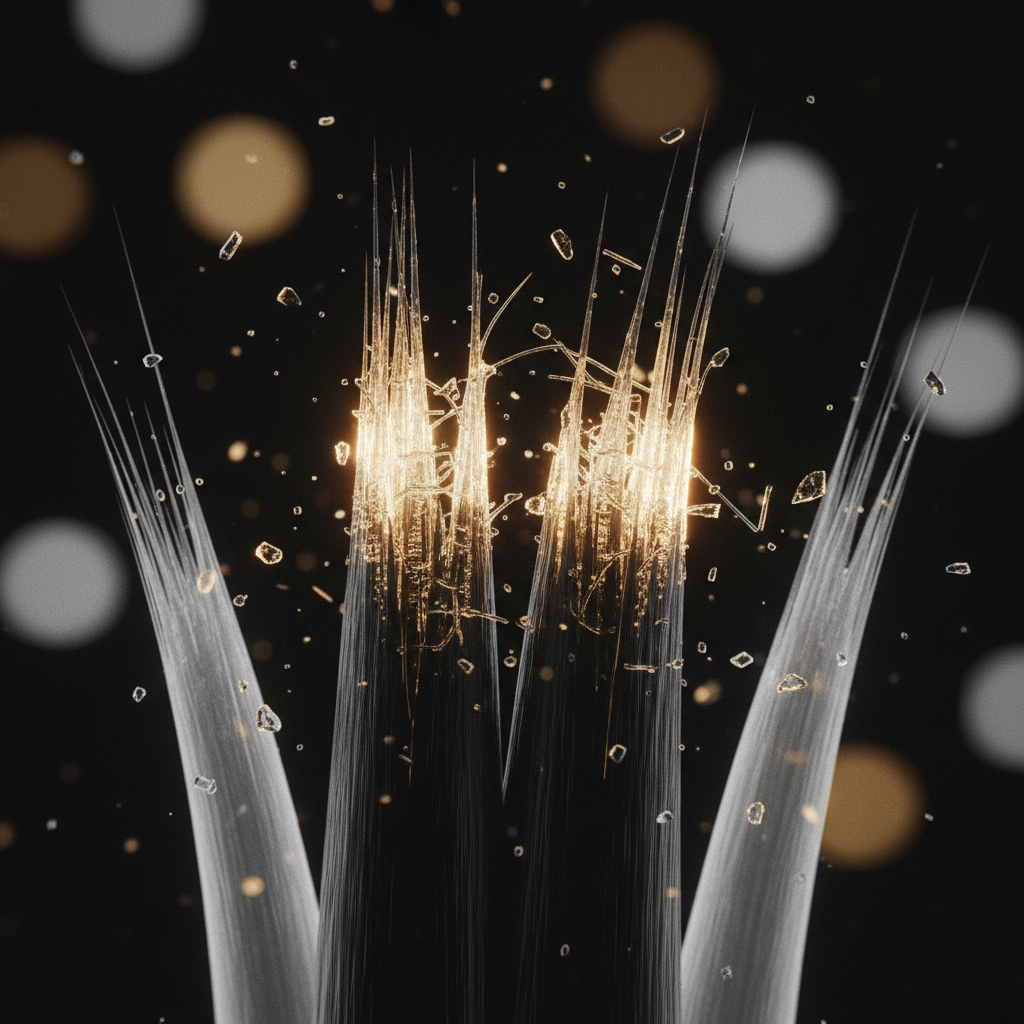
Quick answer: The primary effects of bleaching on hair cuticles involve the chemical lifting, erosion, and eventual stripping of the protective outer scale layers. Alkaline bleaching agents (typically pH 9 to 11) force cuticle scales open, dissolve the natural 18-methyleicosanoic acid (18-MEA) lipid layer, and oxidise structural disulfide bonds. While modern conditioning agents can temporarily smooth the fibre surface, cosmetic treatments cannot regrow or biologically regenerate destroyed cuticle scales once chemical oxidation dissolves them.
Key takeaways
- Bleach formulations use an alkaline agent (such as ammonium hydroxide) to swell the shaft and raise cuticle scales, followed by hydrogen peroxide to oxidise melanin.
- The protective, hydrophobic lipid layer (18-MEA) is permanently stripped during bleaching, turning hair from water-repellent to highly porous and hydrophilic.
- Bleaching oxidises cystine bonds within the cuticle and cortex into cysteic acid, significantly weakening fibre tensile strength and leading to mechanical breakage.
- Damaged cuticle scales fail to lie flat, resulting in friction, tangling, loss of shine, and moisture fluctuations.
- Professional bond-building additives and lipid-replacing leave-in treatments can patch surface defects and reduce friction, but they do not reverse anatomical cuticle loss.
Effects of Bleaching on Hair Cuticles: what the evidence shows
Research published in cosmetic and dermatological literature demonstrates that the effects of bleaching on hair cuticles represent an irreversible physical and chemical alteration of the hair fibre.
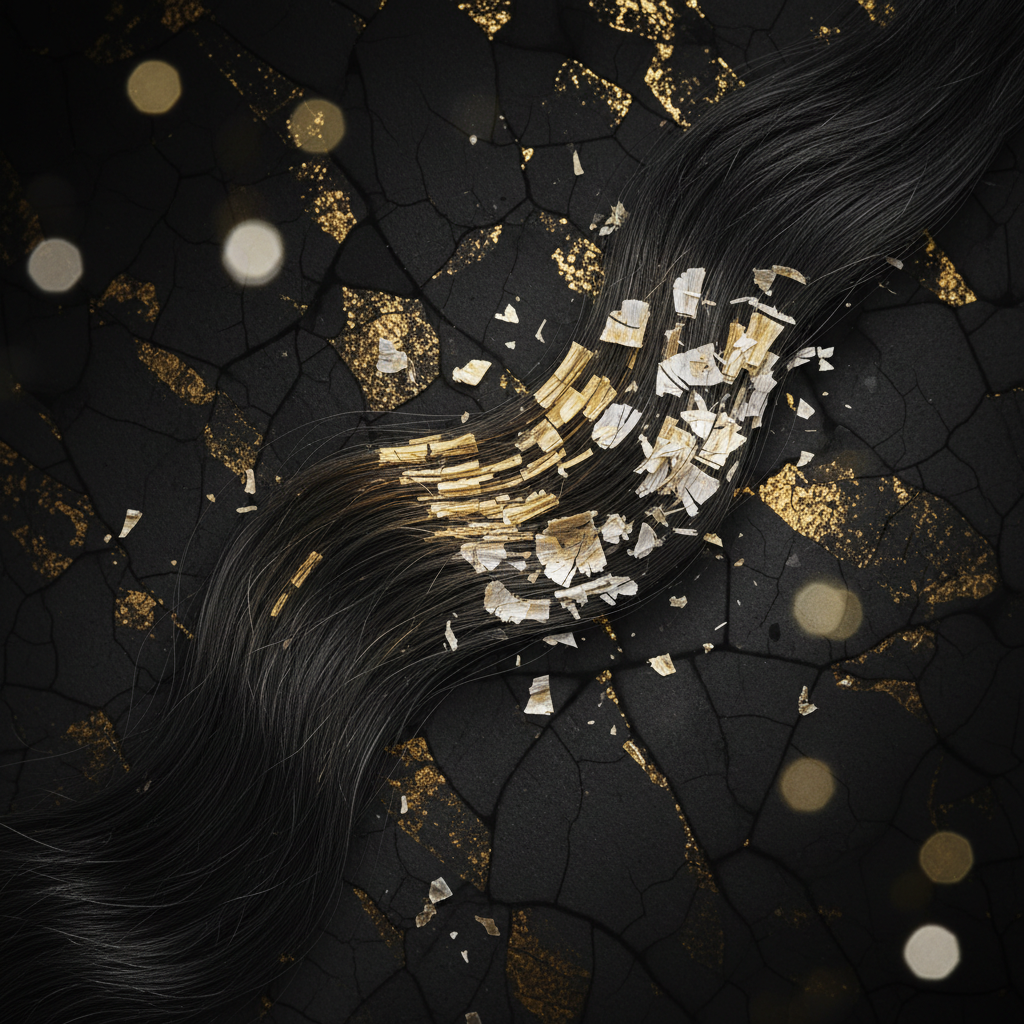
Under scanning electron microscopy (SEM), virgin hair displays smooth, regular cuticle scales that overlap neatly like roof tiles, roughly 5 to 10 layers deep. Following chemical lightening, the edges of these scales curl upward, crack, and break away. With repeated bleaching or high-volume developers, large sections of the cuticle layer are completely abraded, exposing the underlying fibrous cortex.
Virgin Fibre: [Lipid Layer (18-MEA)] -> [Compact Cuticles] -> [Intact Cortex]
Bleached Fibre: [Lipids Stripped] -> [Lifted/Broken Cuticles] -> [Porous Cortex]
The oxidation reaction is non-selective. While the objective of bleaching is to decolourise melanin granules located inside the cortex, the oxidising mixture must first penetrate the cuticle. In doing so, hydrogen peroxide reacts with the amino acids that form the cuticle's tough structural proteins. Cystine, the sulfur-rich amino acid that gives the cuticle its mechanical rigidity, is degraded into cysteic acid. Studies show that a single bleaching process can reduce cystine levels in the hair shaft by 15% to 45%, depending on the concentration of peroxide, processing time, and starting condition.
The biological and chemical mechanism of bleaching
Understanding how bleach compromises the cuticle requires looking at the physical chemistry of the hair shaft. Hair consists of three concentric layers: the medulla (central core), the cortex (structural bulk), and the cuticle (outer protective barrier). The cuticle itself consists of multiple layers: the epicuticle, the exocuticle, the endocuticle, and the cell membrane complex (CMC).
- Alkaline swelling: Bleaching mixtures combine hydrogen peroxide with an alkaline booster (such as ammonium persulfate or potassium persulfate). This raises the formulation's pH to between 9.0 and 11.0. Human hair has an isoelectric point around pH 3.67. Exposing hair to high alkalinity causes the shaft to swell by up to 15% to 20% in diameter, forcing the tightly bound cuticle scales outward.
- Dissolution of the F-layer: The outermost surface of the epicuticle is coated in a monomolecular layer of fatty acids, predominantly 18-methyleicosanoic acid (18-MEA). This is known as the F-layer. The alkaline oxidiser hydrolyses the thioester bonds anchoring 18-MEA to the protein matrix, stripping this protective lipid shield in the first few minutes.
- Oxidation of the Cell Membrane Complex: Bleaching chemicals dissolve the intercellular cement (lipids and proteins) that glues adjacent cuticle cells together. Once the CMC is compromised, individual cuticle cells lose their structural cohesion and chip off during routine combing or washing.
- Cysteine conversion: Peroxide oxidises the disulfide bridges (-S-S-) in keratin proteins, converting them to sulfonic acid groups (-SO3H, or cysteic acid). This drastically increases the hair's negative electrical charge, leading to high static electricity, cuticle flaring, and elevated water absorption.
| Feature | Virgin Cuticle | Lightly Bleached Cuticle | Heavily / Repeatedly Bleached Cuticle |
|---|---|---|---|
| Surface Lipid (18-MEA) | 100% intact (hydrophobic) | Mostly degraded (<20% intact) | Completely absent |
| Cuticle Morphology | Flat, overlapping, sealed margins | Lifted edges, minor chipping | Extensive scale loss, cortex exposed |
| Porosity | Low (resists water uptake) | Moderate to high | Extreme (sponge-like absorption) |
| Frictional Coefficient | Low (smooth glide, minimal tangling) | Moderate (requires conditioning) | High (drags, severe knotting) |
| Isoelectric Charge | Mildly negative at neutral pH | Strongly negative (high static) | Highly anionic (damaged protein matrix) |
| Tensile Resistance | High elasticity before snapping | 10% to 20% reduction in strength | 30% to 50%+ reduction; snaps under tension |
What the evidence does not show
It is important to separate genuine cosmetic damage from common misconceptions about hair lightening:
- Bleach does not cause biological hair loss: Bleaching damages the dead, non-living hair fibre above the skin. It does not cause follicular miniaturisation or medical alopecia unless severe chemical burns cause scarring to the scalp tissue itself. What people often describe as hair loss after bleaching is actually acute fibre breakage along the weakened shaft.
- Bleach cannot be washed away to reverse damage: Once the chemical reaction breaks disulfide bonds and oxidises 18-MEA, the biological structure cannot be reset. Rinsing or using deep conditioners restores softness by coating the strand, but it does not re-fuse missing scales back into place.
- "Bond builders" do not rebuild original cuticles: Bond-multiplying additives create artificial synthetic cross-links within the cortex and deposit conditioning polymers on the cuticle. While clinically shown to reduce breakage during the service, they do not regrow missing cuticle cells or restore the native 18-MEA layer.
Observable signs of cuticle degradation
When the effects of bleaching on hair cuticles take hold, the hair exhibits distinctive physical symptoms:
- Velcro-like texture: Because the cuticle edges are raised and jagged, individual fibres catch on one another. Hair tangles instantly, particularly when wet.
- Dullness and lack of light reflection: A smooth cuticle acts as a flat mirror, reflecting light uniformly to produce natural shine. A rough, bleached cuticle scatters light in all directions, making the hair look matte and lifeless.
- Extreme wet elasticity and snapping: Healthy hair stretches up to 30% of its dry length when wet and returns to its original shape. Bleached hair with destroyed cuticles stretches excessively (like wet chewing gum) and snaps under low mechanical tension because the internal cortex lacks outer structural reinforcement.
- Rapid drying followed by dryness: Bleached hair absorbs water instantly because it lacks its hydrophobic lipid layer, but it cannot retain moisture. Water evaporates rapidly, leaving the strand brittle.
Managing and mitigating cuticle damage
Because hair is non-living tissue, you cannot "heal" a bleached cuticle. Management focuses entirely on friction reduction, mechanical reinforcement, and lipid replacement.
- Lower the pH after bleaching: Bleaching leaves hair in an expanded, alkaline state. Using an acidic rinse or conditioner (pH 3.5 to 4.5) helps contract the fibre and flatten any remaining cuticle scales against the cortex.
- Replace missing surface lipids: Since the 18-MEA layer is gone, you must coat the fibre with bio-compatible lipids. Look for formulations containing behentrimonium chloride, cetyl alcohol, ceramides, and light plant oils (such as argan or jojoba) that reduce combing friction.
- Minimise wet mechanical stress: Hair cuticles are softest and most vulnerable when wet. Never brush bleached hair roughly straight out of the shower. Use a wide-toothed comb or a flexible wet brush, starting from the ends and moving upward.
- Reduce thermal styling: Without an intact cuticle, heat penetrates the cortex too rapidly, causing structural keratin to denature at lower temperatures. If blow-drying or straightening, keep tools below 180°C and always apply a film-forming heat protectant.
When breakage stems from another issue
If you notice significant fibre thinning, snapping, or shedding, bleaching may only be part of the equation.
- Mechanical traction: Tight ponytails, extensions, or rough detangling exacerbate cuticle loss, snapping hair that might otherwise survive chemical processing.
- True shedding (Telogen Effluvium): If whole hairs are coming out with a small white bulb at the root, the cause is scalp-level shedding triggered by stress, nutritional deficiencies, hormonal shifts, or illness, rather than bleaching.
- Prior heat damage: Regular high-heat flat ironing creates micro-fissures in the cuticle before bleach is even applied, making catastrophic structural collapse far more likely during lightening.
Supporting bleached hair with Watermans
When managing hair compromised by chemical processing, maintaining a calm, nourished scalp environment and reducing mechanical fibre strain are essential. Watermans GrowMe Shampoo is formulated with gentle, sulfate-free cleansers that wash away impurities without stripping the delicate remains of the hair's surface lipids. Paired with Watermans ConditionMe Conditioner, which incorporates hydrolysed lupin protein, cholesterol, and natural oils, it coats lifted cuticle margins, replenishes slip, and softens bleached strands to defend against daily combing breakage.
Frequently asked questions about Effects of Bleaching on Hair Cuticles
Can you permanently repair the effects of bleaching on hair cuticles?
No. Hair fibres are biologically dead, meaning damaged cuticle scales cannot regenerate or heal. While bond-building treatments and lipid-rich conditioning masks temporarily coat the shaft, smooth down lifted edges, and fill micro-voids, these improvements are cosmetic and wash out over time. The only permanent solution for heavily abraded cuticles is trimming the damaged length as healthy hair grows in.
Why does bleaching make hair turn so frizzy?
Bleaching strips the natural 18-MEA lipid layer from the cuticle. Without this hydrophobic barrier, the hair becomes intensely porous and absorbs atmospheric moisture easily. When environmental humidity enters the cortex, it causes the internal hydrogen bonds to rearrange irregularly, making the cuticle scales flare outward and producing visible frizz.
Does toner cause the same cuticle damage as bleach?
Toners generally cause less damage because they use lower volumes of developer (typically 5 to 10 volume peroxide) and feature lower alkalinity or semi-permanent, non-ammonia bases. However, toners still open the cuticle to deposit pigment. If the cuticle is already heavily compromised from bleaching, even low-strength toners require careful monitoring to prevent further mechanical weakness.
How long does it take for cuticles to close after bleaching?
Cuticle scales do not automatically "close" on their own without chemical intervention. Because bleaching leaves the hair alkaline, applying an acidic post-bleach treatment or conditioner (pH 3.5 to 5.0) causes the swollen fibre to shrink and flattens remaining scales within a few minutes. Scales that have broken off entirely, however, cannot be closed or replaced.
Conclusion
The effects of bleaching on hair cuticles represent a permanent structural compromise of the hair shaft's primary line of defence. From the dissolution of the 18-MEA hydrophobic lipid barrier to the loss of structural cystine bonds and physical chipping of scale margins, lightening changes how hair behaves on a microscopic level. While modern cosmetic science offers effective ways to cushion the blow, managing bleached hair requires adopting gentle handling habits, prioritising lipid replenishment, and respecting the biological limits of the fibre.
Sources and references
- Journal of Cosmetic Dermatology: "Chemical and physical changes in hair caused by bleaching", 2018.
- Robbins, C. R., Chemical and Physical Behavior of Human Hair, 5th ed., Springer, 2012.
- International Journal of Cosmetic Science: "The effect of chemical treatments on the hair cuticle and cortex", 2015.
- Society of Cosmetic Chemists: "Lipids of the human hair fibre and the effect of chemical treatments", 2017.
- Microscopy Research and Technique: "Scanning electron microscopy investigations of bleached human hair", 2020.