Understanding Hair Breakage vs Shedding: The Complete Diagnostic Guide
9 min read ·
Understanding Hair Breakage vs Shedding is essential for diagnosing thinning hair, identifying root bulbs, preventing fibre snap, and restoring overall strand health.
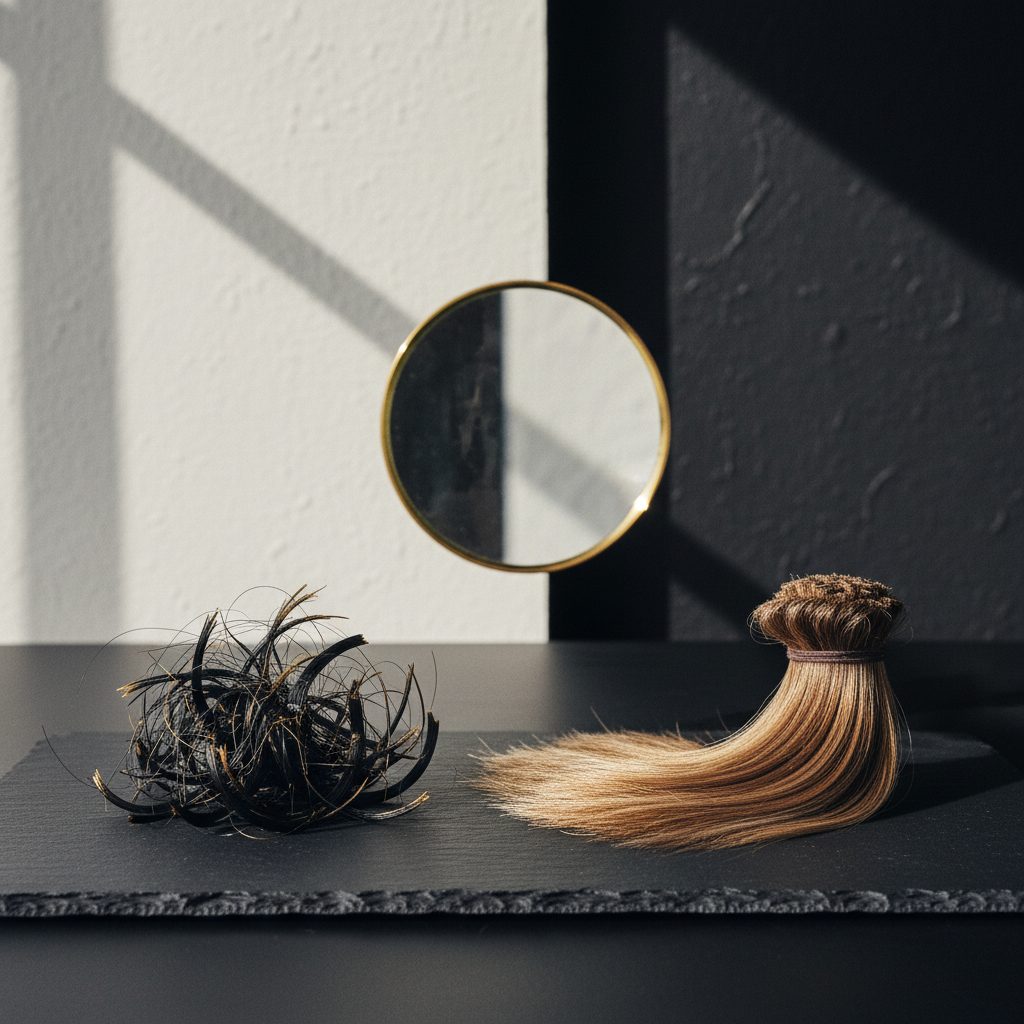
Quick answer: Understanding Hair Breakage vs Shedding comes down to identifying where the hair strand separates. Shedding occurs when a full-length strand releases naturally from the follicle at the end of its growth cycle, typically displaying a white bulb at the root. Breakage occurs when structural weakness causes the hair shaft to fracture into shorter pieces, leaving no root bulb attached. The main limitation of visual inspection is that severe shedding and chronic breakage can happen simultaneously, requiring distinct targeted treatments.
Key takeaways
- Shedding is a natural biological process where hairs release from the scalp follicle, typically averaging 50 to 100 strands per day.
- Breakage is physical or chemical structural damage occurring along the length of the hair shaft, producing uneven, shorter fragments.
- A tiny, firm white bulb at the end of a fallen strand confirms shedding, whereas blunt or frayed ends without a bulb indicate breakage.
- Shedding stems from internal shifts such as hormones, stress, systemic illness, or nutritional deficiencies.
- Breakage stems from external factors such as heat styling, chemical processing, environmental friction, or mechanical trauma.
- Treating breakage requires restoring shaft elasticity and reducing mechanical stress, while excessive shedding requires dermatological or trichological investigation.
Understanding Hair Breakage vs Shedding: what the evidence shows
Understanding Hair Breakage vs Shedding is fundamental to addressing hair thinning and changes in hair density. While both conditions lead to hair accumulating on brushes, clothes, and shower drains, they represent entirely separate physiological events.
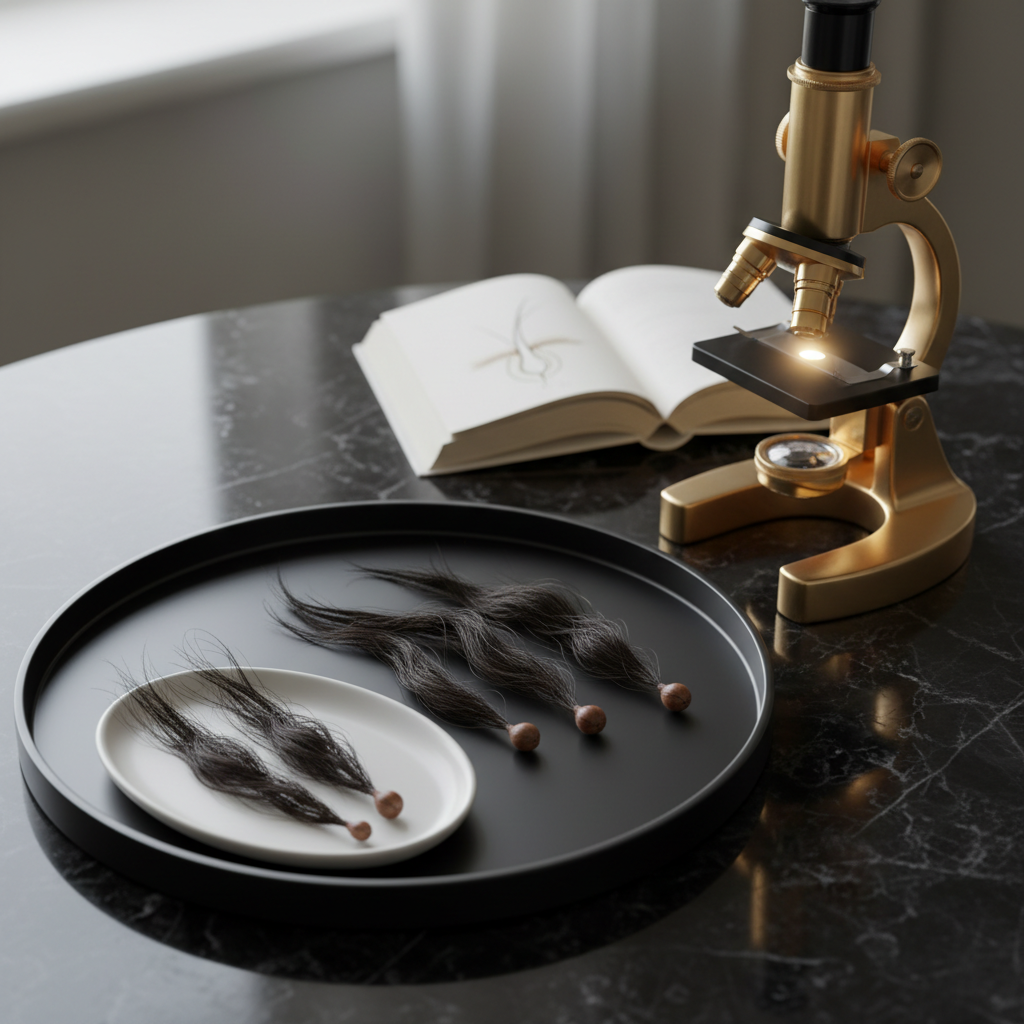
Hair shedding is governed by the follicular growth cycle, which comprises anagen (growth), catagen (transition), telogen (resting), and exogen (release). Dermatological literature confirms that at any given time, roughly 85 to 90 percent of scalp follicles are actively growing, while 10 to 15 percent rest in the telogen phase. As new anagen hairs emerge, they push older telogen hairs out through the exogen phase. Normal daily physiological shedding ranges between 50 and 100 telogen strands. When systemic events push a premature percentage of follicles into the resting phase, it triggers telogen effluvium, causing diffuse shedding of hundreds of full-length hairs per day.
Hair breakage, by contrast, is entirely independent of the hair cycle. It is a mechanical failure of the hair fibre. The hair shaft consists of an outer protective cuticle made of overlapping keratin scales, a dense cortex providing tensile strength, and an inner medulla. When chemical bleaching, alkaline relaxers, excessive heat, or aggressive brushing strip the cuticle's protective 18-methyleicosanoic acid (18-MEA) lipid layer, the cortical microfibrils become vulnerable. Without cuticle protection and moisture balance, the cortex loses its natural elasticity. When tension is applied, the hair snaps before it can stretch, leaving broken fragments scattered across styling surfaces.
| Feature | Hair Shedding | Hair Breakage |
|---|---|---|
| Point of origin | The scalp hair follicle | Anywhere along the hair shaft |
| Length of fallen strands | Full length (matches overall hair length) | Variable, often short, uneven pieces |
| Root bulb presence | White, keratinised bulb visible at the tip | No root bulb present; ends appear blunt or frayed |
| Primary drivers | Internal triggers (hormones, stress, illness, iron deficiency) | External triggers (heat tools, bleach, rough handling, friction) |
| Impact on scalp | Diffuse thinning, widening part line, reduced volume | Frizzy halo, thin ends, uneven layers, flyaways |
| Standard resolution | Internal rebalancing, time (3 to 6 months), medical review | Protein treatments, conditioning, reduced heat, gentle handling |
What the evidence does not show
Understanding Hair Breakage vs Shedding also requires dispelling common clinical and cosmetic myths. Scientific evidence does not support the idea that cosmetic shampoos, conditioners, or deep conditioning masks can prevent true follicular hair shedding. Shampoos operate on the scalp surface and hair fibre; they cannot alter internal hormonal cascades or reverse telogen effluvium.
Similarly, the evidence does not show that frequent haircuts cause hair to grow faster. Hair growth occurs at the follicle level beneath the scalp epidermis. Trimming the ends eliminates split ends and prevents shaft splitting from travelling upwards, which directly prevents breakage, but it has zero impact on the follicular growth rate or natural shedding cycles. Finally, while hard water minerals can coat the hair fibre and increase mechanical stiffness, evidence does not show that hard water causes follicular hair loss, though the resulting friction frequently accelerates fibre breakage.
The biological mechanisms behind both conditions
To tell them apart accurately, you need to examine the mechanisms governing each process.

The follicular shedding cycle
During the telogen phase, the dermal papilla detaches from the hair bulb, cutting off the blood supply. The base of the hair forms a solid keratinised club (the telogen bulb). This bulb anchors loosely in the follicular canal for roughly two to four months before the exogen phase ejects it. When systemic stressors occur, such as childbirth, rapid weight loss, severe fevers, or thyroid dysfunction, circulating signalling molecules trigger an abrupt shift from anagen to telogen. The resulting shedding spikes approximately two to three months after the initial stressor due to this natural biological lag.
The mechanics of shaft fracture
Human hair can normally stretch 20 to 30 percent of its dry length before breaking, and up to 50 percent when wet. However, chemical treatments like perm lotions and oxidative bleaches break disulphide bonds within the cortex. When these bonds are broken and not fully reformed, the cortex's tensile resistance drops significantly. Thermal tools operating above 185 degrees Celsius denature structural keratin proteins and boil water droplets inside the cortex, causing bubble hair deformity. When a comb encounters these weakened zones, the fibre fractures cleanly or splits into trichorrhexis nodosa (node-like breaks resembling interlocking paintbrushes).
Signs to look for: how to self-assess
Determining whether you are dealing with breakage, shedding, or both requires a simple structural inspection.
- Examine the length of fallen hair: Collect several strands from your brush or pillow. Compare their length to the rest of your hair. If the strands match your overall length, shedding is the primary culprit. If you find short, irregular pieces that are only a few centimetres long, you are witnessing hair breakage.
- Perform the bulb test: Look closely at the ends of the strand under bright light or against a dark surface. A rounded, pale or white bulb at one end confirms that the hair departed from the follicle (shedding). If both ends are flat, jagged, or split with no bulb, the fibre fractured along the shaft (breakage).
- Assess hair density distribution: Shedding typically results in an overall loss of volume, a wider central parting, or a lighter ponytail weight without a sudden change in hair length. Breakage, on the other hand, presents as uneven, thinned-out ends, a halo of short, unruly flyaways across the crown, or a perimeter that refuses to grow past a certain length despite healthy root growth.
What you can do to manage each condition
Because shedding and breakage stem from fundamentally different causes, they require targeted management strategies.
Addressing hair breakage
- Minimise thermal exposure: Limit heated styling tools to 180 degrees Celsius or lower, and always apply a heat protectant containing silicones or conditioning polymers that buffer heat transfer.
- Incorporate bond-builders and protein: Use products containing hydrolysed wheat or vegetable proteins to temporarily fill cortical defects and restore elasticity. Balance these with hydrating humectants to prevent protein overload, which can leave hair brittle.
- Reduce friction: Switch to silk or satin pillowcases to reduce mechanical friction during sleep. Use wide-tooth combs or flexible detangling brushes on damp, conditioned hair, working from the ends upward toward the roots.
- Trim damaged ends: Have a professional stylist remove split ends every 8 to 12 weeks to stop fractures from migrating up the shaft.
Addressing excessive hair shedding
- Evaluate nutritional intake: Ensure your diet contains adequate bioavailable iron, zinc, vitamin D, and high-quality protein. Ferritin levels below 50 micrograms per litre are frequently associated with increased telogen shedding in women.
- Manage acute stressors: Address chronic physiological and emotional stress, as elevated cortisol disrupts follicle transition cycles.
- Support the scalp environment: Keep the scalp clean and balanced. Avoid heavy, occlusive oils if you are prone to seborrhoeic dermatitis, as scalp inflammation can exacerbate hair release.
Supporting hair condition with Watermans
When managing overall hair quality, choosing targeted formulations helps support both a healthy-looking scalp and resilient hair fibres. Watermans Grow Me Shampoo is formulated with biotin, caffeine, rosemary extract, niacinamide, and argan oil. This combination cleanses the scalp environment thoroughly without stripping natural surface lipids, creating ideal conditions for healthy-looking hair.
Pairing it with Watermans Condition Me Conditioner supplies hydrolysed lupin protein and essential moisturising agents directly to the hair shaft. These ingredients smooth down raised cuticles, improve surface slip, and strengthen the hair fibre against everyday mechanical friction, actively reducing the risk of mid-shaft breakage.
When to seek professional advice
While everyday breakage can usually be reversed through updated haircare habits, certain presentations warrant clinical evaluation. You should consult a general practitioner, board-certified dermatologist, or registered trichologist if you notice:
- Sudden, patchy hair loss creating circular, completely bare spots (indicative of alopecia areata).
- Diffuse shedding lasting longer than six continuous months with no signs of deceleration.
- Persistent scalp itching, redness, burning, tenderness, or scaling.
- A rapidly widening central parting line or receding temporal margins.
- Systemic symptoms alongside hair changes, such as sudden weight fluctuations, extreme fatigue, cold intolerance, or irregular menstrual cycles.
Frequently asked questions about Understanding Hair Breakage vs Shedding
How can I tell if my hair is shedding or breaking?
Check the ends of the fallen strands. If the hair matches your natural length and has a tiny white or translucent bulb at one tip, it is shedding from the follicle. If the strands are short, broken fragments with blunt or split ends and no bulb, your hair is breaking along the shaft.
Does brushing wet hair cause breakage or shedding?
Brushing wet hair primarily causes breakage. When hair is wet, its hydrogen bonds temporarily break, increasing fibre elasticity but lowering structural strength. Brushing wet hair without adequate slip stretches the shaft beyond its elastic limit, causing it to snap. However, aggressive pulling can also mechanically pluck hairs from weak follicles.
Why is Understanding Hair Breakage vs Shedding important for hair growth?
Understanding Hair Breakage vs Shedding helps you treat the real issue instead of wasting time on ineffective solutions. If your hair is breaking, taking hair supplements will not stop the snapping ends, and if you are experiencing hormonal shedding, deep conditioning hair masks will not prevent follicles from releasing strands.
Can a person experience breakage and shedding at the same time?
Yes, it is very common. An individual can experience systemic telogen effluvium from an illness or nutritional deficiency while simultaneously suffering from severe breakage caused by bleach, heat tools, or rough styling. Evaluating strand length and the presence of root bulbs helps quantify how much of each is happening.
How much daily hair shedding is considered normal?
Losing roughly 50 to 100 strands per day is normal for most people. Scalps hold between 100,000 and 150,000 follicles, and because follicular cycles are asynchronous, a small percentage of resting telogen hairs naturally release each day during regular washing, combing, and styling.
Meaningful steps for healthier hair
Understanding Hair Breakage vs Shedding is the first step toward reclaiming hair density and length retention. When you separate biological shedding at the scalp from structural breakage across the fibre, you can tailor your daily routine with precision. Treat your hair shaft gently with proteins and moisture to prevent snaps, nurture your scalp to support healthy growth cycles, and seek medical guidance whenever shedding persists unexpectedly.
Sources and references
- British Association of Dermatologists. Telogen Effluvium: An Overview. 2021.
- American Academy of Dermatology. Do You Have Hair Loss or Hair Shedding? 2022.
- Robbins, C. R. Chemical and Physical Behavior of Human Hair. 5th ed., Springer, 2012.
- Sinclair, R. Healthy Hair: What Is It? Journal of Investigative Dermatology Symposium Proceedings, 2007.
- Trüeb, R. M. The Impact of Oxidative Stress on Hair. International Journal of Cosmetic Science, 2015.
Find these ingredients in Watermans products
- Niacinamide: you will find this ingredient in our Hair Mask.