Dry Scalp vs Dandruff Identification: The Definitive Clinical Guide
10 min read ·
Learn accurate Dry Scalp vs Dandruff Identification. Understand biological mechanisms, flake characteristics, barrier health, and effective, targeted treatments.
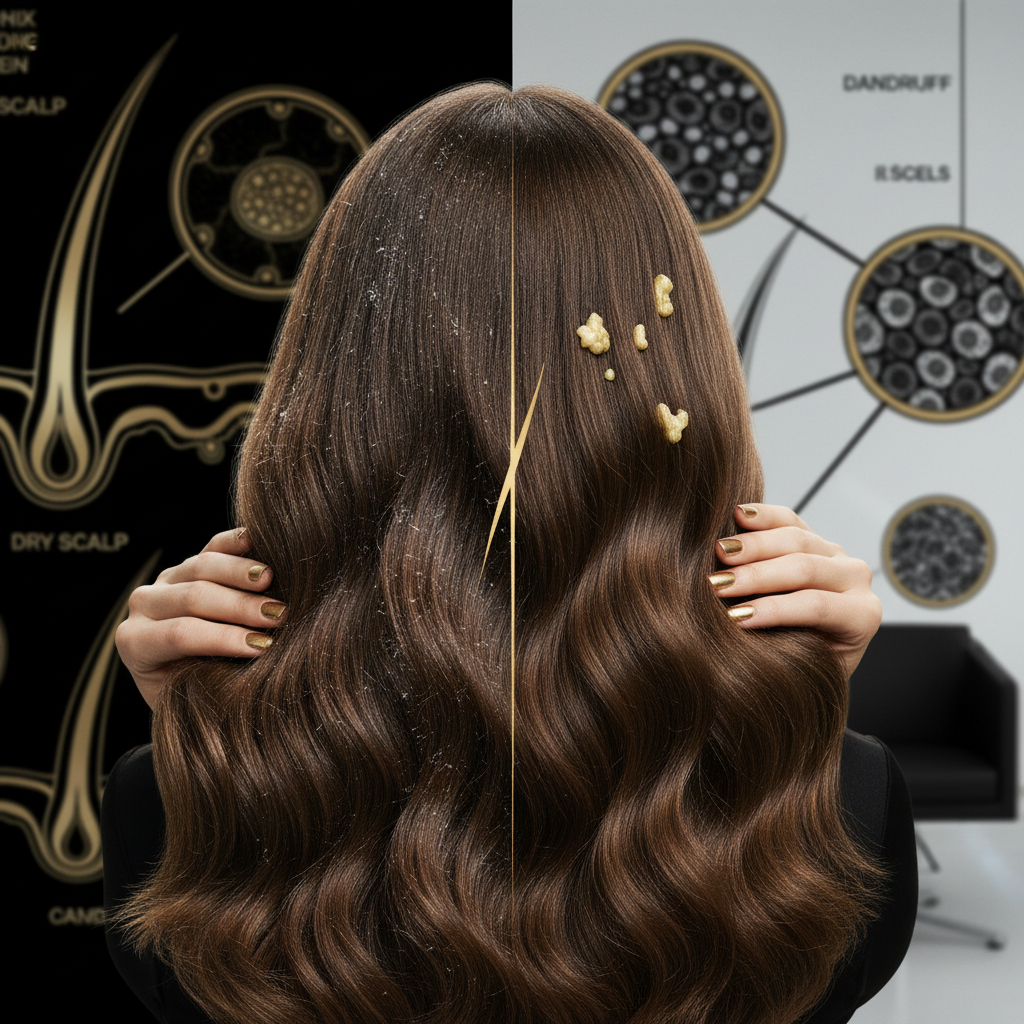
Quick answer: Precise Dry Scalp vs Dandruff Identification relies on checking flake size, oiliness, and scalp condition. Dry scalp stems from a damaged moisture barrier and insufficient sebum, producing tiny, dry, white flakes that fall freely like powder. Dandruff is an inflammatory, microbially driven condition linked to Malassezia yeast metabolising excess sebum, causing larger, oily, yellowish flakes that cling to hair shafts. The main limitation is that severe scaling may indicate underlying clinical dermatoses, such as seborrhoeic dermatitis or scalp psoriasis, which require prescription interventions.
Key takeaways
- Dry scalp is a hydration deficiency where the stratum corneum lacks water and natural lipids, leading to micro-flaking and skin tightness.
- Dandruff is an inflammatory scalp condition linked to excess sebum colonised by the yeast Malassezia restricta and Malassezia globosa.
- Flake appearance is diagnostic: dry scalp flakes are tiny, dry, and white, whereas dandruff flakes are larger, clumped, greasy, and yellow-tinted.
- Washing frequency impacts each differently: frequent harsh cleansing worsens a dry scalp, whereas infrequent cleansing accelerates dandruff by accumulating microbial food sources.
- Persistent erythema, thick silvery scales, or bleeding signify conditions beyond routine cosmetic flaking, requiring clinical evaluation.
Dry Scalp vs Dandruff Identification: what the evidence shows
Accurate Dry Scalp vs Dandruff Identification begins with understanding the distinct biological drivers behind scalp flaking. Dermatological research published in journals such as the British Journal of Dermatology reveals that while both conditions present with shedding epidermal cells, their pathophysiology is entirely different.
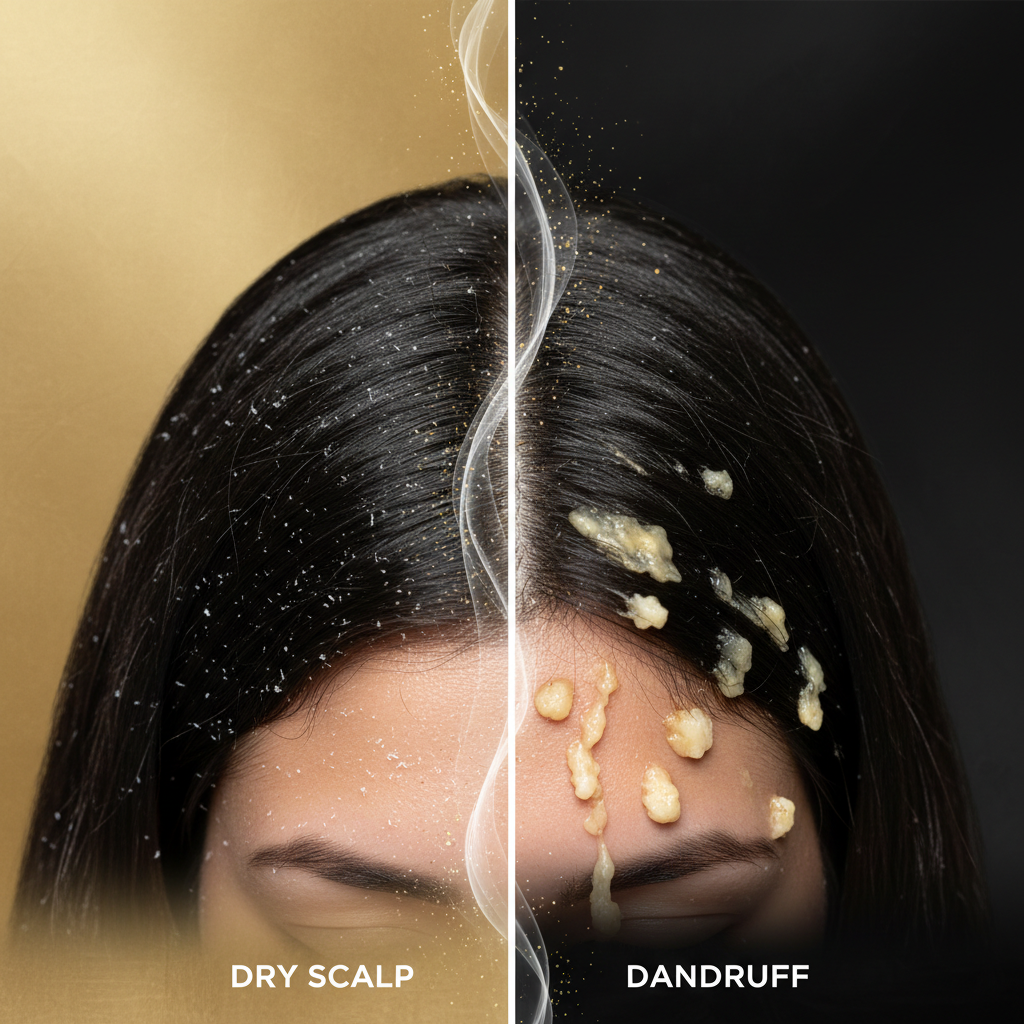
The stratum corneum, the outermost layer of the epidermis, typically undergoes an orderly, invisible cycle of desquamation every 28 days. In a healthy scalp, individual corneocytes detach microscopically without visible debris. In both dry scalp and dandruff, this shedding cycle accelerates, forcing incompletely differentiated cells to aggregate into visible sheets. The triggers driving this acceleration determine whether you are dealing with barrier dehydration or microbial inflammation.
+-----------------------------------------------------------------------------------+
| THE DESQUAMATION PATHWAYS |
+-----------------------------------------------------------------------------------+
| HEALTHY SCALP: Normal Sebum + Intact Barrier --> Invisible shedding |
| DRY SCALP: Low Sebum + Transepidermal Water Loss --> Small, dry flakes |
| DANDRUFF: High Sebum + Malassezia Overgrowth --> Oily, clumped flakes|
+-----------------------------------------------------------------------------------+
The mechanisms: why the scalp sheds visible flakes
Visible flaking is always a symptom of accelerated epidermal turnover, but the underlying mechanisms diverge into barrier failure versus microbial metabolism.
The mechanism of dry scalp
Dry scalp reflects impaired barrier integrity and elevated transepidermal water loss (TEWL). When the scalp's natural lipid matrix (ceramides, cholesterol, and free fatty acids) is depleted, moisture evaporates rapidly from viable epidermal layers. Environmental factors like low ambient humidity, central heating, and aggressive anionic detergents strip the intercellular cement.
Without adequate moisture, endogenous desquamatory enzymes (such as stratum corneum chymotryptic enzyme) function erratically. Corneocytes fail to detach cleanly as single cells. Instead, micro-fissures develop across the skin surface, shedding brittle, non-oily fragments of dehydrated stratum corneum. The scalp skin feels tight, sensitive, and dry to the touch, matching the skin profile across the rest of the body.
The mechanism of dandruff
Dandruff is a non-contagious, mild inflammatory presentation of seborrhoeic dermatitis confined to the scalp. Its development requires three interacting factors:
- Sebum production by active sebaceous glands.
- Colonisation by lipophilic yeasts, primarily Malassezia globosa and Malassezia restricta.
- Individual susceptibility and cutaneous sensitivity to microbial metabolites.
Malassezia species lack the genes necessary to synthesise their own fatty acids. They produce extracellular lipases that hydrolyse human sebum triglycerides, consuming saturated fatty acids and releasing unsaturated free fatty acids, notably oleic acid and arachidonic acid. In susceptible individuals, these unsaturated fatty acids breach the stratum corneum barrier, inducing mild, sub-clinical inflammation. In response, keratinocytes accelerate their turnover rate from 28 days down to 7 to 14 days. Cells reach the surface incompletely keratinised, retaining nuclei (parakeratosis), and clump together with excess sebum into oily, visible clusters.
The signs to look for: diagnostic characteristics
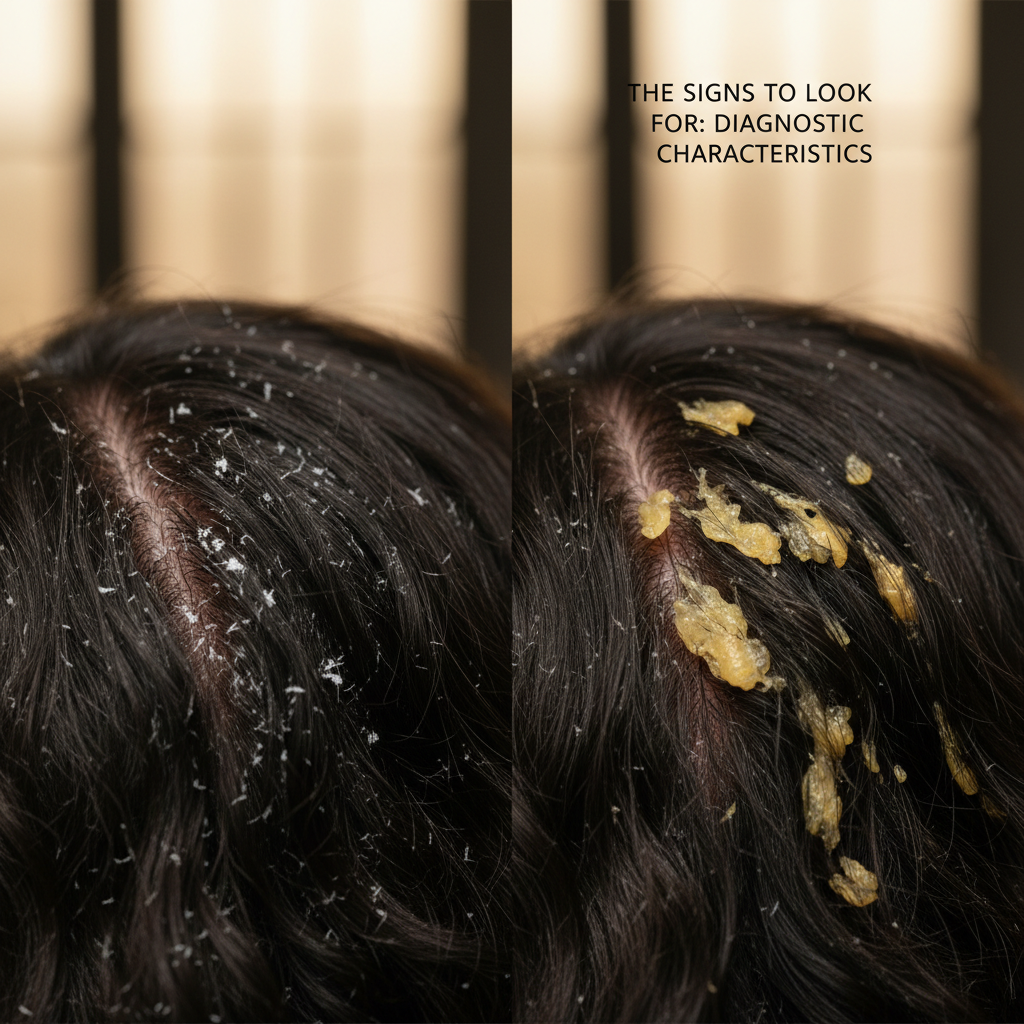
Clinical evaluation and home assessment rely on physical hallmarks across flake texture, scalp appearance, and wash responses.
| Characteristic | Dry Scalp | Dandruff (Pityriasis Capitis) |
|---|---|---|
| Flake colour | Pure white or translucent | Off-white, yellowish, or greyish |
| Flake texture | Small, fine, dry, powdery | Large, waxy, greasy, cohesive clumps |
| Attachment | Drops freely onto shoulders; rarely sticks | Clings to the scalp surface and hair fibres |
| Sebum level | Low; scalp feels dry, tight, and matte | High; scalp feels oily within 24 to 48 hours |
| Odour | Absent | Occasionally faint, sour, or yeast-like |
| Itch pattern | Prickling, mild tightness after washing | Persistent, intense itch relieved temporarily by washing |
| Other body areas | Dry skin often seen on arms, legs, or hands | Oily T-zone, eyebrows, or nasolabial folds |
| Response to washing | Worsens with frequent shampooing | Improves with frequent, targeted shampooing |
What the evidence does not show
Misconceptions complicate Dry Scalp vs Dandruff Identification, leading individuals to apply counterproductive treatments.
- Dandruff is not caused by poor hygiene: While irregular washing allows sebum and dead corneocytes to accumulate, dandruff is driven by Malassezia metabolism and individual barrier sensitivity, not an absence of cleanliness.
- Dandruff does not stem from "dryness": Treating dandruff with heavy plant oils (such as coconut, olive, or argan oil) is medically counterproductive. Malassezia feeds directly on specific lipid fractions found in vegetable oils, accelerating microbial proliferation and increasing inflammatory flaking.
- Dry scalp does not cause permanent hair loss: Neither condition directly damages the hair follicle or causes scarring alopecia. While severe mechanical scratching from pruritus can cause hair breakage or premature telogen shedding, visible flakes do not miniaturise follicles.
- Anti-dandruff shampoos do not cure dry scalp: Applying strong antimicrobial or keratolytic active agents to a dry scalp strips residual lipids, aggravating barrier breakdown.
What you can do: tailored management protocols
Effective resolution depends entirely on treating the identified mechanism.
Supporting a dry scalp
The priority for a dry scalp is replenishing the lipid barrier, reducing TEWL, and moderating surfactant exposure:
- Switch to mild surfactants: Avoid high concentrations of harsh sulfates. Opt for amphoteric or non-ionic cleansers formulated with coco-glucoside, decyl glucoside, or sodium cocoyl isethionate.
- Optimise water temperature: Wash your hair with lukewarm water (around 36°C to 38°C). Hot water emulsifies and removes natural surface sebum, accelerating barrier dehydration.
- Incorporate humectants and barrier lipids: Apply leave-on scalp serums containing glycerin, hyaluronic acid, panthenol (provitamin B5), and physiological ceramides to restore water-binding capacity.
- Space out cleansing: Unless you encounter heavy sweat or external pollution, washing every two to four days allows the acid mantle to recover.
Managing dandruff
The priority for dandruff is microbial reduction, sebum control, and keratolysis:
- Use targeted antimicrobial agents: Alternate cleansers featuring active ingredients validated by Cochrane reviews and dermatological guidelines, including:
- Zinc pyrithione (1% to 2%): Inhibits fungal transport mechanisms.
- Piroctone olamine (0.5% to 1%): Broad-spectrum antifungal and antioxidant that normalises the desquamation cycle.
- Ketoconazole (1% to 2%): An imidazole antifungal that inhibits fungal ergosterol synthesis.
- Selenium sulfide (1% to 2.5%): Suppresses both Malassezia growth and hyper-proliferation.
- Apply keratolytic agents: Salicylic acid (1.5% to 3%) helps dissolve the intercellular cement holding oily flakes together, facilitating their removal during rinsing.
- Observe contact time: Unlike regular shampoos, leave antimicrobial shampoos on the scalp for 3 to 5 minutes before rinsing to allow active molecules to penetrate the follicular infundibulum.
The Watermans approach to balanced scalp care
When performing routine Dry Scalp vs Dandruff Identification, many individuals discover their scalp is simply stressed, experiencing surface dehydration alongside product buildup rather than full clinical dandruff. In such cases, maintaining an optimal scalp environment without resorting to aggressive medicinal actives is the most balanced course.
Watermans GrowMe Shampoo is formulated to provide a balanced, revitalising cleanse that supports a healthy-looking scalp environment without stripping essential surface moisture. Formulated with premium botanical extracts and scalp-friendly nutrients including biotin, rosemary extract, caffeine, and niacinamide, it cleanses away surface buildup, sweat, and environmental residues. This clarifies the follicular openings, leaving the scalp feeling refreshed, clean, and nourished, while supporting hair that looks naturally thicker, stronger, and fuller from root to tip.
When the cause may be something else
If flaking fails to respond to targeted dry scalp moisturisation or antimicrobial dandruff shampoos, several distinct dermatological conditions may be present:
- Scalp psoriasis: An autoimmune condition characterised by well-demarcated, erythematous plaques covered by thick, silvery-white micaceous scales. Psoriasis frequently extends beyond the hairline to the retroauricular area and forehead, and can exhibit the Auspitz sign (pinpoint bleeding when scales are lifted).
- Severe seborrhoeic dermatitis: When dandruff progresses beyond mild scaling into marked cutaneous inflammation, displaying sticky yellowish crusts, erythema, and spreading to the eyebrows, glabella, and ear canals.
- Allergic contact dermatitis: A delayed-type hypersensitivity reaction to cosmetic ingredients such as fragrances, methylisothiazolinone, or hair dyes (p-phenylenediamine). Symptoms include intense burning, itching, and vesicular scaling.
- Tinea capitis: A superficial fungal dermatophyte infection (most common in children) causing localized scaling, broken "black dot" hairs, and potential inflammatory kerion formation.
When to get professional advice
Consult a GP, dermatologist, or qualified trichologist if you encounter any of the following red-flag presentations:
- Scaling accompanied by intense pain, burning, or visible skin swelling.
- Thick, adherent plaques that crack, bleed, or weep fluid.
- Flaking accompanied by focal or patchy hair loss (alopecia), distinct from diffuse breakage.
- Symptoms that fail to improve after 4 weeks of consistent, appropriate over-the-counter management.
- Spread of scaling, crusting, or erythema onto the face, neck, or body.
Frequently asked questions about Dry Scalp vs Dandruff Identification
What is the simplest test for Dry Scalp vs Dandruff Identification at home?
The most reliable test combines flake assessment with washing response. Rub a small amount of dark fabric against your scalp or shake your hair over dark paper. If the flakes are tiny, dry, and fall away like powdered sugar, you likely have a dry scalp. If the flakes are large, sticky, slightly yellow, and adhere to hair fibres or your fingernails when scratched, dandruff is the probable cause.
Can you have both dry scalp and dandruff at the same time?
Yes. It is entirely possible to experience a disrupted moisture barrier (dry scalp) alongside Malassezia sensitivity (dandruff). This often occurs when individuals use harsh, stripping clarifying shampoos in an attempt to wash away dandruff, leaving the deeper epidermal layers dehydrated while microbial imbalance triggers persistent, patchy flaking.
Does hard water cause dry scalp or dandruff?
Hard water, which contains elevated concentrations of dissolved calcium and magnesium carbonates, disrupts the scalp's protective acid mantle (which operates at a natural pH of 4.5 to 5.5). While hard water minerals do not directly cause dandruff, they form insoluble mineral films that dry the skin, aggravate barrier breakdown, and exacerbate dry scalp flaking.
Will applying oil fix a dry, flaking scalp?
Applying natural oils is only beneficial if the underlying issue is purely dry scalp, and even then, pure oils do not replace missing water. For dandruff, applying heavy vegetable oils feeds the Malassezia yeast and substantially worsens the condition. Humectant serums containing glycerin or hyaluronic acid are safer choices across both profiles.
Summary of identification principles
Mastering Dry Scalp vs Dandruff Identification ensures you apply the correct biological intervention rather than aggravating your symptoms. Dry scalp requires gentle cleansing, humectant hydration, and barrier protection to halt moisture loss. Dandruff requires antimicrobial regulation, controlled sebum removal, and keratolytic exfoliation to manage yeast activity. By evaluating the size, colour, oiliness, and physical behaviour of visible flakes, you can restore physiological balance and achieve a calm, clear, healthy scalp.
Sources and references
- British Association of Dermatologists. (2020). Seborrheic Dermatitis Patient Information Leaflet. BAD Guidelines.
- Dawson, T. L. (2007). Malassezia globosa and restricta: breakthrough understanding of the etiology and treatment of dandruff and seborrheic dermatitis through whole-genome analysis. Journal of Investigative Dermatology Symposium Proceedings, 12(2), 15-19.
- Borda, L. J., & Wikramanayake, T. C. (2015). Seborrheic Dermatitis and Dandruff: A Comprehensive Review. Journal of Clinical and Investigative Dermatology, 3(2), 10.
- National Institute for Health and Care Excellence (NICE). (2022). Seborrhoeic dermatitis: Clinical Knowledge Summaries. NICE UK.
- Harding, C. R., et al. (2002). Dandruff: a condition characterized by decreased levels of intercellular lipids in stratum corneum and impaired barrier function. Archives of Dermatological Research, 294(5), 221-230.
Find these ingredients in Watermans products
- Zinc: you will find this ingredient in our Hair Vitamins.
- Oleic Acid: you will find this ingredient in our Camellia & Black Castor Hair & Body Oil.
- Niacinamide: you will find this ingredient in our Hair Mask.
- Panthenol (Provitamin B5): you will find this ingredient in our Heat Protection Spray.