Seborrhoeic Dermatitis Management: Causes, Treatments, and Scalp Care
8 min read ·
Explore evidence-based Seborrhoeic Dermatitis Management, from antifungal agents and biological yeast mechanisms to effective flare-up prevention.
Quick answer: Effective Seborrhoeic Dermatitis Management relies on controlling lipid-feeding Malassezia yeast overgrowth, calming epidermal inflammation, and clearing stubborn scaling using targeted topical antifungal agents and gentle keratolytic cleansers. Because this common inflammatory condition is chronic and relapsing, successful Seborrhoeic Dermatitis Management does not deliver a permanent cure. Instead, it focuses on achieving remission through active topical treatment and sustaining clear skin with a consistent, low-irritation maintenance wash routine.
Key takeaways
- Seborrhoeic dermatitis is a chronic inflammatory skin condition driven by Malassezia yeast metabolising scalp sebum into irritating free fatty acids.
- Active management centres on topical antifungals (such as ketoconazole, ciclopirox olamine, or zinc pyrithione) paired with keratolytics like salicylic acid.
- Flaking from seborrhoeic dermatitis is oily and adherent, contrasting sharply with the dry, fine flakes of simple scalp xerosis.
- Heavy plant oils containing oleic and palmitic acids (such as olive oil or coconut oil) can feed Malassezia and worsen flare-ups.
- While the condition causes diffuse temporary hair shedding due to scalp inflammation, it does not cause scarring or permanent follicle destruction.
Seborrhoeic Dermatitis Management: what the evidence shows
Clinical guidelines from the British Association of Dermatologists and the National Institute for Health and Care Excellence (NICE) confirm that Seborrhoeic Dermatitis Management is most effective when treating the three prongs of the condition: fungal proliferation, sebum build-up, and local inflammation.
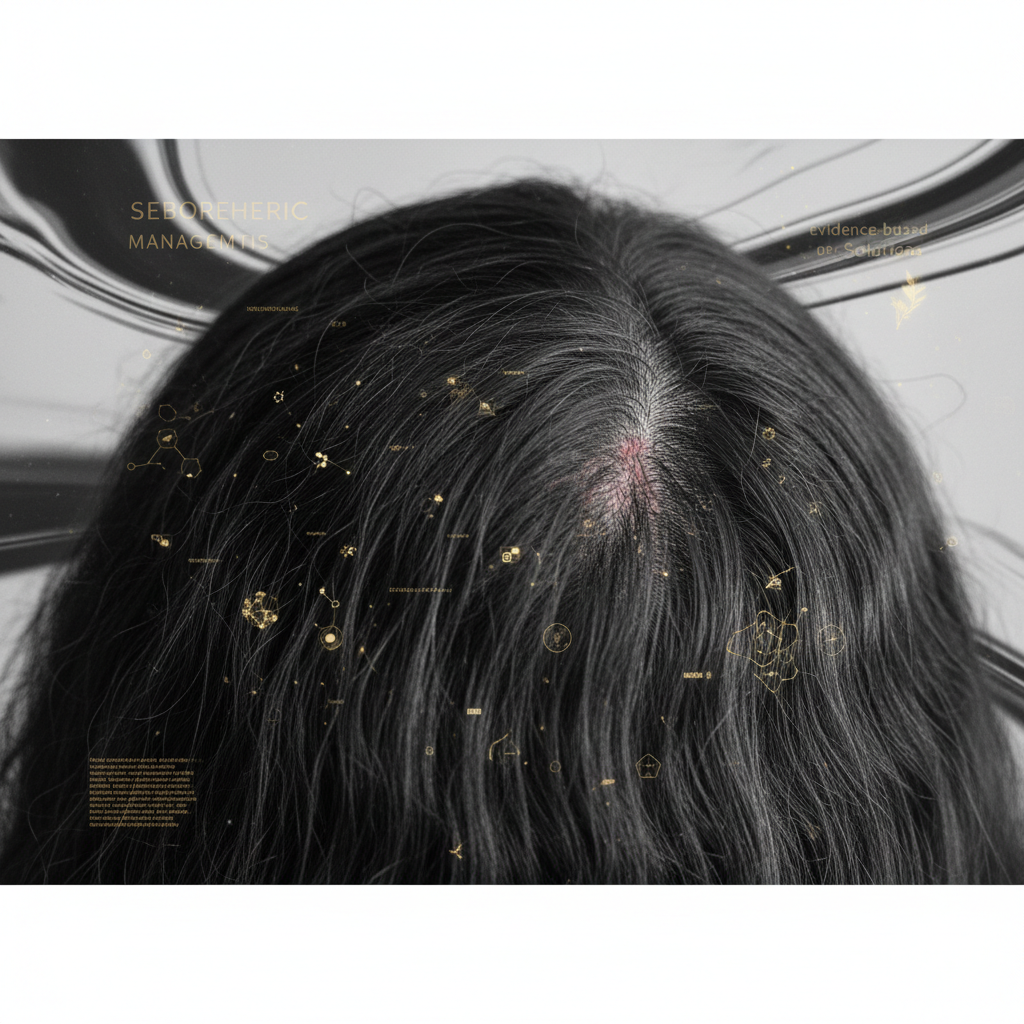
The primary target is the lipophilic yeast Malassezia (predominantly M. Restricta and M. Globosa). Randomised controlled trials demonstrate that topical antifungal shampoos containing 1% to 2% ketoconazole or 1% ciclopirox olamine reduce scaling, erythema, and pruritus significantly compared to placebo. Ketoconazole works by disrupting fungal cell membrane synthesis (inhibiting 14-alpha-demethylase), reducing the fungal burden within 2 to 4 weeks of consistent use (typically twice weekly).
Keratolytic agents like salicylic acid (usually 2% to 3%) or coal tar extracts assist by breaking down the intercellular desmosomes holding scale together. This allows thick crusts to lift away freely, improving penetration of active antifungal compounds. For acute, high-erythema flare-ups, short-term mild to moderate topical corticosteroids (such as 1% hydrocortisone or betamethasone valerate lotion) reduce inflammatory cytokine cascades, breaking the itch-scratch cycle before tapering down.
What the evidence does not show
Controlled research has not found that seborrhoeic dermatitis stems from poor hygiene, contagious transmission, or dietary food allergies. Washing your hair irregularly does not create the condition from scratch, although infrequent cleansing allows sebum and yeast metabolites to accumulate, worsening symptoms.
Furthermore, evidence does not show that seborrhoeic dermatitis directly destroys hair follicles or triggers permanent follicular miniaturisation (androgenetic alopecia). When people notice increased hair shedding during an active flare, it is almost universally telogen effluvium triggered by inflammatory microenvironments around the infundibulum, or physical hair breakage caused by vigorous scratching. Once inflammation subsides, normal hair cycling resumes.
Finally, clinical trials do not support the widespread folk remedy of applying kitchen oils like olive, almond, or unrefined coconut oil to remove scales. Malassezia species lack fatty acid synthase enzymes and rely on exogenous fatty acids with carbon chain lengths of C12 to C24. Applying heavy vegetable oils provides an abundant food supply, often exacerbating inflammatory cascades.
The underlying biological mechanism
Seborrhoeic dermatitis occurs in areas dense with sebaceous glands, such as the scalp, eyebrows, nasolabial folds, and chest. The biological progression follows a distinct three-step chain reaction:
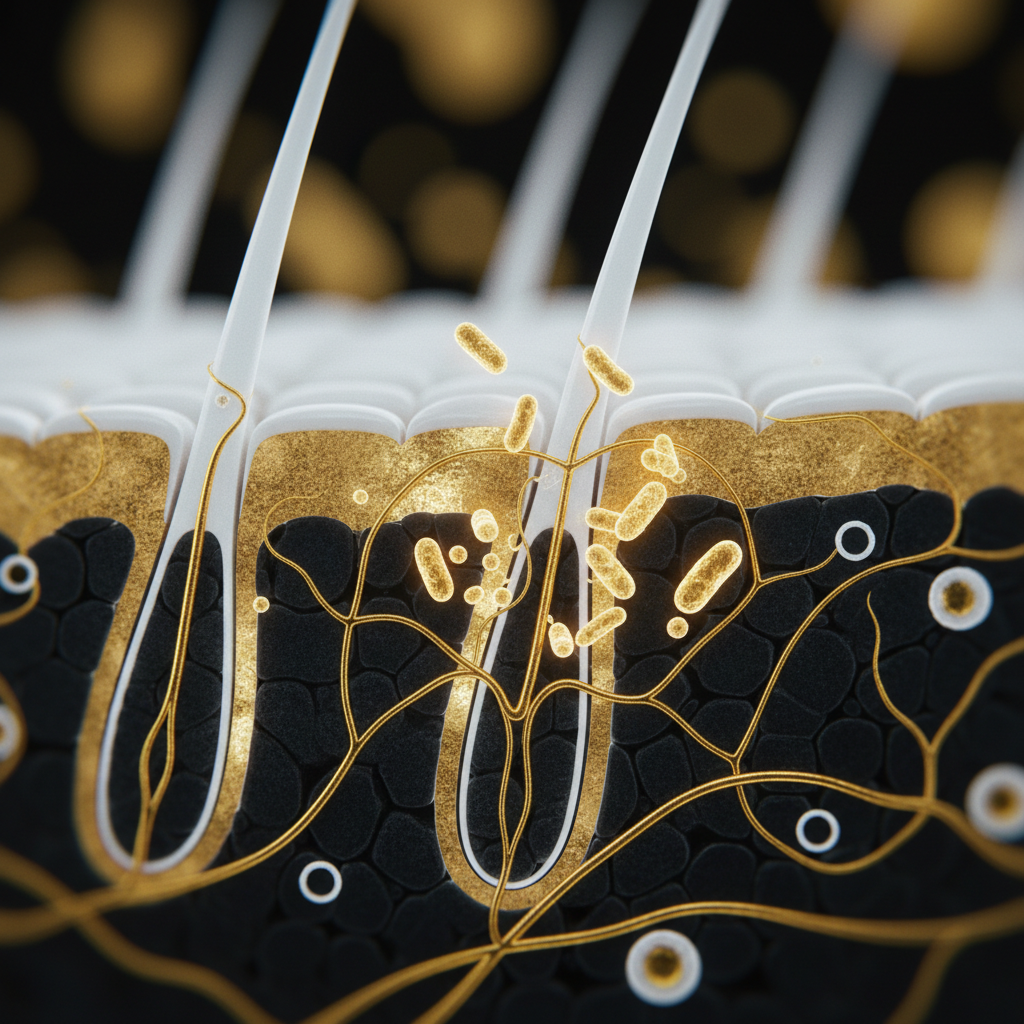
- Sebum secretion: Sebaceous glands produce sebum containing triglycerides, squalene, and wax esters. Androgenic hormones influence this output, which explains why the condition peaks during infancy, post-puberty, and around mid-life.
- Microbial lipase activity: Resident Malassezia yeasts secrete extracellular lipases that break down triglycerides into free fatty acids. They consume the saturated fatty acids they need to survive, leaving behind unsaturated fatty acids, primarily oleic acid and arachidonic acid.
- Barrier disruption and inflammation: In susceptible individuals, these leftover unsaturated fatty acids penetrate the stratum corneum. They disrupt the skin barrier lipid structure, triggering parakeratosis (incomplete keratinocyte differentiation) and releasing pro-inflammatory cytokines like interleukin-1 alpha (IL-1α), IL-8, and tumour necrosis factor-alpha (TNF-α). This causes cellular turnover to accelerate from the normal 28 days down to 7 to 10 days, presenting clinically as redness, itching, and greasy flakes.
Signs to look for: seborrhoeic dermatitis versus lookalikes
Seborrhoeic dermatitis presents with characteristic yellow-to-white, greasy, adherent scales over patches of mild to moderate erythema. Itching is common and can range from a mild prickle to severe discomfort.
Because several scalp conditions produce flaking, differential diagnosis is essential for choosing the right management plan:
| Condition | Scale Appearance | Scalp Erythema | Common Locations | Key Distinguishing Feature |
|---|---|---|---|---|
| Seborrhoeic Dermatitis | Greasy, yellowish, adherent, small to medium flakes | Mild to moderate, patchy pink or red | Scalp, eyebrows, nasolabial folds, sternum | Waxes and wanes; driven by yeast; responds to antifungals |
| Scalp Psoriasis | Thick, silver-white, micaceous, non-greasy plaques | Marked, sharply demarcated, beefy red | Scalp margins, occiput, elbows, knees | Auspitz sign (pinpoint bleeding when scratched); extends past hairline |
| Scalp Xerosis (Dry Scalp) | Fine, dry, white, non-adherent powdery flakes | Absent; skin looks pale or tight | Entire scalp surface | Improves rapidly with gentle, non-stripping hydration; no microbial drive |
| Atopic Eczema | Dry flakes accompanied by skin weeping or crusting | Diffuse, ill-defined redness | Flexural creases (behind ears, neck, joints) | Intense chronic pruritus; strong history of asthma or atopy |
Step-by-step management strategy
Managing seborrhoeic dermatitis requires shifting between an active flare phase and an ongoing maintenance phase.
Phase 1: Tackling active flare-ups (Weeks 1 to 4)
- Targeted antifungal cleansing: Use a medicated shampoo containing 2% ketoconazole, 1% ciclopirox olamine, or 1% to 2% zinc pyrithione 2 to 3 times per week. Leave the lather on the scalp for 3 to 5 minutes before rinsing thoroughly so the active ingredients can bind to the stratum corneum.
- Keratolytic scale removal: If scales are thick and crusted, use a targeted formulation containing 2% salicylic acid or mineral oil preparations overnight to soften crusts prior to washing.
- Calm the itch: Avoid aggressive mechanical scrubbing or fine-toothed combs, which abrade the epidermis and invite secondary bacterial infection.
Phase 2: Long-term maintenance (Ongoing)
- Weekly suppression: Once the scalp clears, reduce medicated shampoo application to once weekly or once every two weeks to keep Malassezia populations stable.
- Balanced everyday washing: On non-medicated days, wash with a mild, sulphate-conscious, pH-balanced (pH 4.5 to 5.5) shampoo that removes excess surface sebum without drying the scalp.
- Thermal moderation: Wash your hair with lukewarm water rather than hot water, which increases microvascular dilation and worsens pruritus.
The role of cosmetic scalp care (Watermans)
While medicated antifungals address microbial overgrowth during clinical flare-ups, cosmetic scalp care plays a supporting role during maintenance periods. Maintaining a balanced scalp environment between flare-ups helps keep hair fibres resilient and manageable.
Watermans GrowMe Shampoo is formulated to be a stimulating, daily-use cosmetic cleanser rather than a prescription medicine. It contains ingredients like biotin, rosemary extract, niacinamide, and allantoin, which support cosmetic hair vitality, scalp hydration, and fibre strength. If you are managing seborrhoeic dermatitis, use targeted antifungal treatments to clear active scale and inflammation first. A cosmetic formulation like GrowMe can then serve as an everyday cleanser between medicated washes, helping your scalp feel fresh and clean while reducing friction-induced breakage.
When to seek medical advice
Consult a GP, trichologist, or dermatologist if:
- The scalp does not improve after 4 weeks of consistent over-the-counter medicated shampoos.
- The erythema spreads onto your forehead, neck, or eyelids with severe swelling.
- Scales become thick, cracked, oozing, or weeping yellow fluid, which indicates a secondary Staphylococcus bacterial infection.
- Hair loss presents in smooth circular patches or accompanied by follicular scarring rather than general shedding.
Frequently asked questions about Seborrhoeic Dermatitis Management
Can Seborrhoeic Dermatitis Management completely cure my condition?
No. Seborrhoeic dermatitis is a chronic, relapsing condition tied to individual sebaceous activity and immune response to normal skin flora. Seborrhoeic Dermatitis Management focuses on bringing active flare-ups into remission and using weekly maintenance routines to keep symptoms under control, rather than eradicating the yeast permanently.
How often should I wash my hair during a flare-up?
Most dermatologists recommend washing your scalp every 1 to 2 days during a flare-up. Frequent washing physically removes excess sebum, lipid by-products, and dead skin cells that feed Malassezia. Allowing oils to build up on the scalp generally makes flaking and inflammation worse.
Does seborrhoeic dermatitis lead to permanent hair loss?
Seborrhoeic dermatitis does not cause permanent hair loss or scar the follicles. However, severe inflammation around the follicle and vigorous scratching can lead to temporary telogen effluvium (diffuse hair shedding) or hair breakage along the shaft. Hair density recovers once the scalp inflammation resolves.
Can I put natural oils on my scalp to loosen the flakes?
Avoid plant oils rich in oleic, linoleic, or palmitic acids, such as olive, coconut, or argan oil. The Malassezia yeast consumes these specific fatty acids, which can worsen the underlying inflammation. Instead, use formulated mineral oils or shampoos containing salicylic acid to soften and lift scales.
Why do symptoms often get worse in winter?
Low ambient humidity and indoor heating dry out the skin barrier, making the epidermis more susceptible to irritation from free fatty acids. Cold weather also reduces natural ultraviolet (UV) light exposure, which naturally exerts a mild immunosuppressive and antifungal effect on the scalp during sunnier months.
A realistic approach to long-term control
Achieving lasting scalp comfort requires consistency, gentle handling, and targeted ingredients. Successful Seborrhoeic Dermatitis Management is not about aggressive scrubbing or hunting for an overnight cure. By understanding the link between sebum, Malassezia, and skin barrier sensitivity, you can rotate medicated treatments with gentle cleansing to calm flare-ups, support your natural hair cycle, and keep your scalp clear and comfortable over the long term.
Sources and references
- British Association of Dermatologists. (2020). Seborrhoeic Dermatitis Patient Information Leaflet. BAD Guidelines.
- National Institute for Health and Care Excellence (NICE). (2022). Seborrhoeic dermatitis: Clinical Knowledge Summary. NICE CKS.
- Borda, L. J., & Wikramanayake, T. C. (2015). Seborrheic Dermatitis and Dandruff: A Comprehensive Review. Journal of Clinical and Investigative Dermatology, 3(2), 10.
- Dawson, T. L. (2007). Malassezia globosa and restricta: Breakthrough Understanding of the Etiology and Treatment of Dandruff and Seborrheic Dermatitis through Whole-Genome Sequencing. Journal of Investigative Dermatology Symposium Proceedings, 12(2), 15 to 19.
- Gupta, A. K., & Bluhm, R. (2004). Ciclopirox (Loprox) shampoo for treating seborrheic dermatitis. Skin Therapy Letter, 9(6), 4 to 5.
Find these ingredients in Watermans products
- Zinc: you will find this ingredient in our Hair Vitamins.
- Oleic Acid: you will find this ingredient in our Camellia & Black Castor Hair & Body Oil.
- Niacinamide: you will find this ingredient in our Hair Mask.