Disulfide Bonds in Hair: The Science of Hair Strength and Structure
9 min read ·
Understand how Disulfide Bonds in Hair dictate strength, texture, and elasticity, and learn what scientific evidence says about repairing chemical damage.
Quick answer: Disulfide Bonds in Hair are covalent chemical linkages formed between pairs of cysteine amino acid residues within keratin proteins. These durable covalent cross-links provide human hair fibres with their mechanical strength, curl pattern, elasticity, and resistance to environmental breakdown. Because Disulfide Bonds in Hair cannot simply be rebuilt by standard conditioning oils or washing, chemical alterations like bleaching, perming, and relaxing cause permanent structural breakage along the fibre shaft unless chemically repaired or grown out.
Key takeaways
- Disulfide bonds represent the strongest chemical cross-links in the hair fibre, formed by covalent sulfur-to-sulfur (S-S) bonds between cysteine molecules.
- Unlike hydrogen and salt bonds, disulfide cross-links do not break down in water or under mild everyday heat.
- Chemical services such as alkaline bleaching, permanent colouring, perming, and chemical relaxing intentionally or collaterally cleave these bonds.
- Severe breakage of disulfide linkages produces cysteic acid, leaving fibres porous, brittle, and prone to snapping.
- Cosmetic bond builders use reactive organic acids to bridge cleaved sulfur pairs, but severed hair cannot biologically regenerate alive tissue.
Disulfide Bonds in Hair: what the evidence shows
Disulfide Bonds in Hair account for the majority of the tensile strength and physical durability of the human hair shaft. Human hair consists of roughly 65% to 95% keratin and keratin-associated proteins. Keratin is rich in cysteine, an amino acid containing a reactive thiol (sulfur-hydrogen) side chain. When two cysteine units oxidise alongside one another within the intermediate filaments and matrix of the cortex, they create cystine, linked by a covalent sulfur-to-sulfur bond.
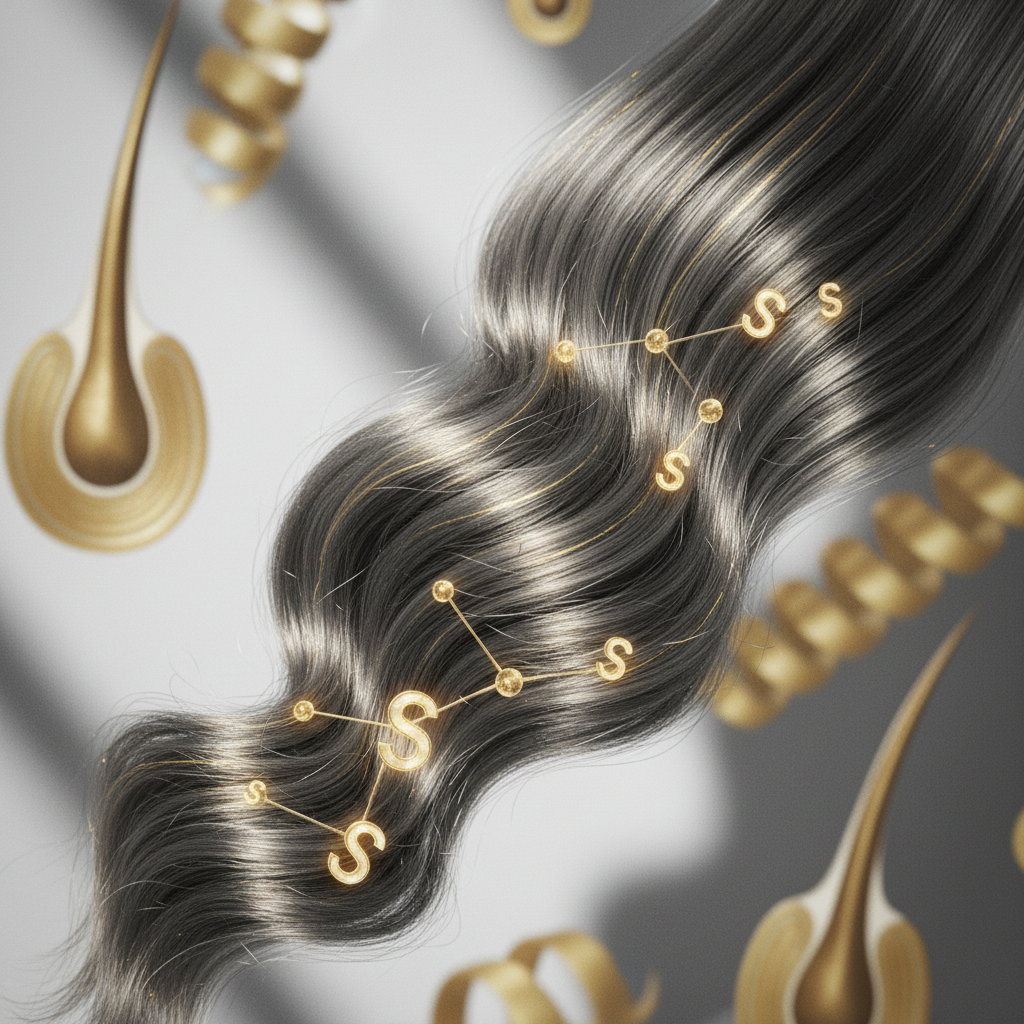
Cosmetic chemistry literature confirms that these cross-links give each strand its shape memory. Whether your hair emerges naturally straight, wavy, curly, or coily from the follicle, the spatial distribution of these covalent bonds locks that geometry in place. Research published in the Journal of Cosmetic Science shows that intact disulfide linkages resist mechanical stress, preventing the cortex from fraying under tension.
Because they are covalent bonds, they share electrons between sulfur atoms. This makes them significantly tougher than temporary hydrogen bonds. When hair gets wet, water easily disrupts hydrogen bonds, which is why styling with rollers or a round brush works until the next wash. In contrast, normal water exposure, humidity, and mild handling leave disulfide cross-links unaffected.
| Bond Type | Bond Mechanism | Relative Strength | Cleaved By | Reversible By |
|---|---|---|---|---|
| Disulfide Bonds | Covalent (S-S) cystine cross-links | Strongest (approx. 200 to 250 kJ/mol) | Bleach, alkaline relaxers, perm reducers, excessive heat (above 220°C) | Chemical oxidation (perms) or synthetic cross-linkers |
| Salt (Ionic) Bonds | Electrostatic attraction between charged amino acid groups | Intermediate | Extreme pH shifts (strong acids or bases) | Normalising hair pH to 4.5 to 5.5 |
| Hydrogen Bonds | Weak electrostatic attraction between hydrogen and oxygen/nitrogen | Weakest individually, abundant collectively | Water, moisture, standard thermal styling | Drying, cooling, humidity reduction |
The chemical mechanism of bond breakdown
The breakdown of disulfide linkages occurs primarily through reduction or destructive oxidation.
In controlled chemical services like perming, a reducing agent (such as ammonium thioglycolate) donates hydrogen atoms to break the cystine cross-link into two separate cysteine thiol (-SH) groups. The hair is mechanically reshaped around a rod, and a neutraliser (typically dilute hydrogen peroxide) oxidises the thiols back into new disulfide bonds in their altered positions. However, research indicates that this process rarely reforms 100% of the original bonds; roughly 10% to 15% remain permanently broken.
In destructive oxidation, such as high-lift bleaching with persulfates and high-volume hydrogen peroxide, the cleavage is an accidental side effect. The alkaline environment swells the cuticle, allowing oxidisers to reach the melanin granules in the cortex. Along the way, the oxidiser reacts aggressively with the disulfide bridges, converting them into cysteic acid residues. Cysteic acid carries a permanent negative charge and cannot naturally re-link. The more cysteic acid present in a fibre, the weaker its internal structure becomes.
Excessive dry thermal styling beyond 215°C to 230°C also induces thermal degradation. At these extreme temperatures, the alpha-keratin helices denature and sulfur cross-links break down directly, releasing sulfur dioxide gases and leaving scorched, hollowed cortical zones.
Signs of depleted disulfide cross-links
Recognising structural breakdown along the hair fibre helps differentiate true chemical damage from surface dehydration. Common indicators include:
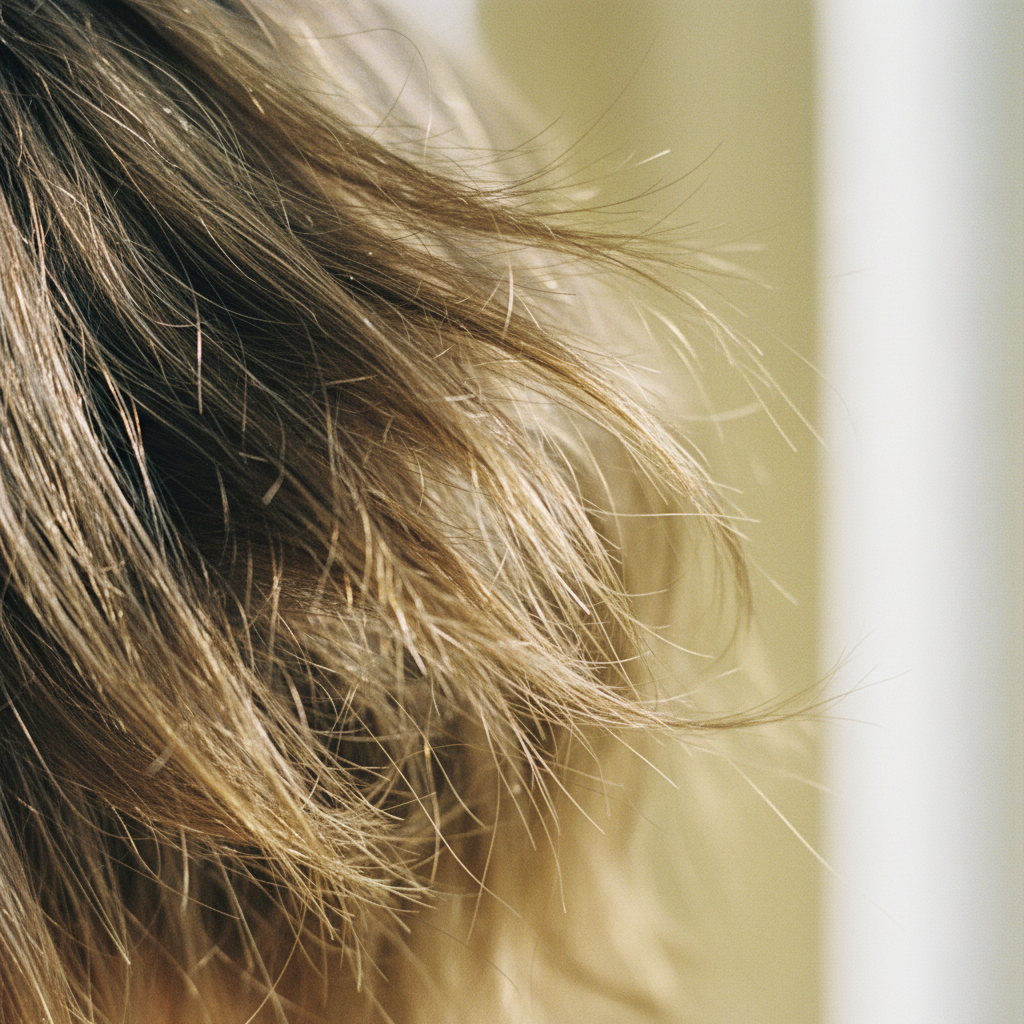
- Extreme wet elasticity followed by snapping: When wet, healthy hair stretches by roughly 30% and springs back. When Disulfide Bonds in Hair are extensively severed, the hair behaves like wet chewing gum, stretching far past normal limits without recovery before snapping abruptly.
- Loss of natural curl definition: Wavy, curly, or afro-textured hair that has suffered bond depletion loses its bounce, hanging in limp, uneven, stringy sections.
- High porosity and rapid water uptake: Without dense internal protein bridges, the cortex absorbs excessive water quickly (hygral stress) and takes exceptionally long to dry.
- Mid-shaft snapping: Rather than a full hair shedding from the scalp with a small white bulb attached, bond-compromised hair breaks off along the shaft in short, jagged fragments.
What the evidence does not show
It is critical to separate marketing claims from chemical reality. Scientific evidence does not support the claim that broken disulfide cross-links can ever be biologically healed. Hair fibres are dead, non-vascular biological structures. Once cysteic acid forms from aggressive oxidation, those specific sulfur atoms cannot naturally reunite.
Furthermore, superficial hair treatments (such as mineral oils, plant butters, or standard silicone conditioners) do not repair chemical bonds. Conditioning masks deposit a lubricating hydrophobic layer over the external cuticle to reduce friction and slow down moisture loss. While this surface coating helps mask rough textures and temporarily reduces mechanical snagging during brushing, it has zero impact on covalent cross-links inside the cortex.
Additionally, internal bond degradation does not cause scalp alopecia or follicular hair loss. Cleaving disulfide bonds causes hair breakage along the length of the shaft. It does not penetrate the living dermal papilla or halt the biological growth cycle beneath the scalp surface.
What you can do to protect and support fibre integrity
To minimise loss of internal cross-links and reinforce structurally vulnerable hair, cosmetic scientists suggest several evidence-based protocols:
- Manage chemical processing times: Avoid overlapping permanent bleaches or relaxers onto previously treated strands. Formulate colour services with lower developer volumes where possible.
- Control heat application: Keep thermal styling irons below 185°C. Always use a cosmetic heat protectant formulated with film-forming polymers that distribute thermal energy evenly.
- Incorporate targeted cross-linking agents: Dicarboxylic acids (such as maleic acid or succinic acid) and active bivalent cross-linkers can build synthetic bridges across broken cysteine residues, temporarily recovering tensile strength.
- Optimise hair pH: Wash and condition using products formulated within the acidic range of pH 4.5 to 5.5. An acidic environment keeps the cuticle scales tightly contracted, shielding the fragile cortex from swelling.
- Minimise wet mechanical stress: Hair with depleted bonds is at its weakest when saturated with water. Avoid vigorous towel-rubbing and detangle gently using a wide-toothed comb with ample leave-in conditioner slip.
When the cause may be something else
If you notice rapid thinning, widened partings, or strands falling out in large quantities with a visible white root bulb, the underlying issue is hair shedding or hair loss, not broken disulfide bonds.
Conditions such as telogen effluvium (triggered by illness, psychological stress, hormonal shifts, or nutritional deficiencies) and androgenetic alopecia (pattern hair loss driven by genetics and dihydrotestosterone) originate inside the follicle under the skin. Altering your chemical styling routine or applying bond-repair products will not address a follicular condition.
Similarly, external roughness without breakage may simply indicate hard water mineral buildup (calcium and magnesium salts binding to the cuticle surface) rather than internal cortex destruction.
When to seek professional advice
Seek guidance from a certified trichologist or dermatologist if you experience sudden patches of hair loss, scalp redness, itching, burning, or diffuse shedding exceeding 100 hairs daily for multiple weeks. These symptoms point toward scalp or systemic health conditions that require medical diagnosis.
Conversely, if your challenge is severe breakage, chemical melt after a salon service, or extreme loss of tensile strength, consult an experienced professional colourist. A skilled stylist can perform a strand test, adjust ongoing chemical formulations, and recommend professional-grade salon bond protocols or necessary trimming.
Watermans: supporting overall hair resilience
While covalent Disulfide Bonds in Hair determine the internal strength of the fibre shaft, growing robust, resilient hair begins at the scalp. Watermans focuses on topical formulations that support scalp vitality and improve the outward appearance of hair density.
Using cosmetic ingredients like biotin, rosemary, caffeine, and hydrolysed lupin protein, Watermans products nurture the scalp environment while coating the emerging fibre with lightweight conditioning agents. These ingredients help reduce unnecessary mechanical breakage during daily washing and styling, leaving fine, chemically stressed strands looking thicker, fuller, and healthier without heavy, dulling residues.
Frequently asked questions about Disulfide Bonds in Hair
What are Disulfide Bonds in Hair?
Disulfide Bonds in Hair are strong, covalent chemical linkages created when two sulfur-containing cysteine amino acids join to form cystine inside the hair's keratin cortex. They provide human hair with its structural strength, elasticity, shape memory, and resistance to environmental stress.
Can broken disulfide bonds in hair naturally heal?
No, broken disulfide bonds cannot naturally heal. Hair is a non-living biological fibre with no cellular repair mechanism. When bonds are cleaved into cysteic acid through severe oxidation, they cannot reconnect naturally, though specific cosmetic bond-building ingredients can chemically bridge the damaged sites.
Does water break Disulfide Bonds in Hair?
Water does not break Disulfide Bonds in Hair. Normal washing, humidity, and soaking disrupt only the weak, temporary hydrogen bonds in the fibre. Disulfide linkages are covalent and remain stable in water, requiring harsh chemical agents or extreme heat to break apart.
What is the difference between disulfide bonds and hydrogen bonds?
Disulfide bonds are strong, permanent covalent links between sulfur atoms that establish the hair's core structure and curl pattern. Hydrogen bonds are weak, temporary physical attractions between hydrogen and oxygen or nitrogen atoms that break easily when wet and reset when dry.
How do chemical relaxers affect Disulfide Bonds in Hair?
Chemical relaxers use high-alkaline formulations (often pH 12 to 14) to permanently break roughly one-third of the hair's disulfide cross-links. This allows tightly curled cortical structures to shift and flatten into a straight configuration, forming a different chemical residue called lanthionine.
Summary
Understanding Disulfide Bonds in Hair helps explain why chemical styling requires precision, care, and realistic expectations. These covalent sulfur bridges represent the fundamental architectural framework of the hair shaft, controlling everything from mechanical strength to natural curl geometry. Once heavily degraded through aggressive bleaching, over-relaxing, or extreme thermal abuse, they cannot biologically regenerate. By minimising chemical overlapping, protecting strands from excess heat, and caring for both the scalp and fibre, you can maintain the structural integrity and healthy look of your hair over the long term.
Sources and references
- Journal of Cosmetic Science, "The Chemical and Physical Properties of Human Hair", 2004.
- International Journal of Cosmetic Science, "Investigation of the effects of cosmetic treatments on hair protein structure", 2017.
- Robbins, C. R., Chemical and Physical Behavior of Human Hair, 5th edition, Springer, 2012.
- American Academy of Dermatology, "Hair Styling Without Damage", 2022.
Find these ingredients in Watermans products
- Biotin: you will find this ingredient in our Hair Growth Shampoo.