Detergent Induced Scalp Barrier Disruption: Causes, Biology, and Recovery
8 min read ·
Detergent Induced Scalp Barrier Disruption damages the stratum corneum, causing itching, flaking, and sensitivity. Learn the mechanisms, signs, and recovery steps.
Quick answer: Detergent Induced Scalp Barrier Disruption occurs when harsh cleansing surfactants strip the stratum corneum of its essential lipids, denature structural keratin proteins, and elevate the scalp's natural acidic pH. This process degrades the skin's physical barrier, triggering transepidermal water loss, micro-inflammation, and irritation. While switching to gentler cleansers restores balance for most individuals, persistent barrier damage can mimic or worsen chronic dermatological disorders like seborrhoeic dermatitis, requiring targeted clinical management rather than simple cosmetic adjustments.
Key takeaways
- Harsh anionic detergents strip protective intercellular lipids (ceramides, cholesterol, and free fatty acids) from the stratum corneum.
- Surfactant penetration denatures keratin filaments and increases transepidermal water loss (TEWL), leaving the scalp dry and reactive.
- Alkaline cleansers raise the scalp's natural pH (normally 4.5 to 5.5), disrupting the protective acid mantle and microbial balance.
- Detergent-induced irritation causes hair fibre breakage and shedding via secondary scratching, but it does not cause androgenetic alopecia or kill follicles.
- Barrier recovery typically takes between 3 to 14 days once you eliminate aggressive surfactants and reintroduce physiological lipids and humectants.
Detergent Induced Scalp Barrier Disruption: what the evidence shows
Detergent Induced Scalp Barrier Disruption is a well-documented phenomenon in dermatological research. The scalp features a specialised epidermal structure called the stratum corneum, often visualised as a "brick and mortar" wall. Corneocyte cells serve as the bricks, surrounded by a complex lipid matrix composed of approximately 50% ceramides, 25% cholesterol, and 15% free fatty acids.
When you wash your hair, surfactants lower the surface tension of water to dissolve sebum and wash away environmental debris. However, aggressive synthetic detergents do not differentiate between excess surface oils and the physiological lipids holding your barrier together.
Controlled clinical studies in the British Journal of Dermatology and the Journal of Investigative Dermatology show that prolonged or repeated exposure to harsh surfactants compromises this intercellular lipid matrix. Anionic detergents such as Sodium Lauryl Sulphate (SLS) penetrate the stratum corneum, bind to cellular proteins, and induce swelling in the skin's upper layers. This biochemical cascade compromises membrane fluidity, elevates TEWL, and allows external irritants or microbes to penetrate deeper epidermal layers, inciting erythema (redness) and pruritus (itching).
The biological mechanisms behind surfactant damage
The degradation of the scalp barrier occurs across three interrelated physiological pathways:
1. Lipid extraction and structural disorganisation
Surfactants possess amphiphilic properties, meaning they contain both water-attracting (hydrophilic) heads and oil-attracting (lipophilic) tails. When strong anionic detergents reach the scalp, their lipophilic tails insert themselves into the lipid bilayers of the stratum corneum. At critical micelle concentrations, they solubilise and wash away ceramides, fatty acids, and cholesterol. Without these cohesive lipids, the cellular structure becomes permeable and disorganized, accelerating moisture loss.
2. Protein denaturation and cell swelling
Beyond removing lipids, small-molecule surfactants penetrate directly into corneocytes. There, they interact with intracellular keratin filaments, disrupting the hydrogen and ionic bonds that maintain cellular rigidity. This denaturation leads to hyper-hydration and swelling of the corneocytes during washing, followed by rapid, irregular desiccation once dry. This cycle drives the micro-fissuring and visible flaking frequently mistaken for simple dry dandruff.
3. Acid mantle disruption
A healthy scalp maintains an acidic surface pH between 4.5 and 5.5. This "acid mantle" regulates desquamation enzymes (such as kallikreins) and supports beneficial microflora while repelling opportunistic pathogens like Staphylococcus aureus. Many conventional detergents, particularly high-pH soap bars or poorly buffered shampoos, register at pH 7.0 to 9.0. Washing with alkaline detergents neutralises this acid barrier for several hours, stalling natural enzymatic lipid synthesis and weakening skin defence mechanisms.
| Factor | Healthy Scalp Barrier | Disrupted Scalp Barrier |
|---|---|---|
| Surface pH | 4.5 to 5.5 | 6.0 to 8.0 |
| Transepidermal Water Loss (TEWL) | Low (controlled retention) | Elevated (rapid dehydration) |
| Stratum Corneum Lipids | Intact ceramides and cholesterol | Depleted intercellular matrix |
| Sensory Symptoms | None (comfortable, calm) | Tightness, itching, burning, tingling |
| Visual Appearance | Clear, pale skin, flexible tissue | Erythema, micro-cracking, fine powdery flakes |
| Follicle Environment | Balanced microbiome, supple ostia | Micro-inflammation, hyperkeratinisation |
Signs of a compromised scalp barrier
Recognising detergent-related irritation early prevents chronic, self-sustaining inflammation. Typical signs include:
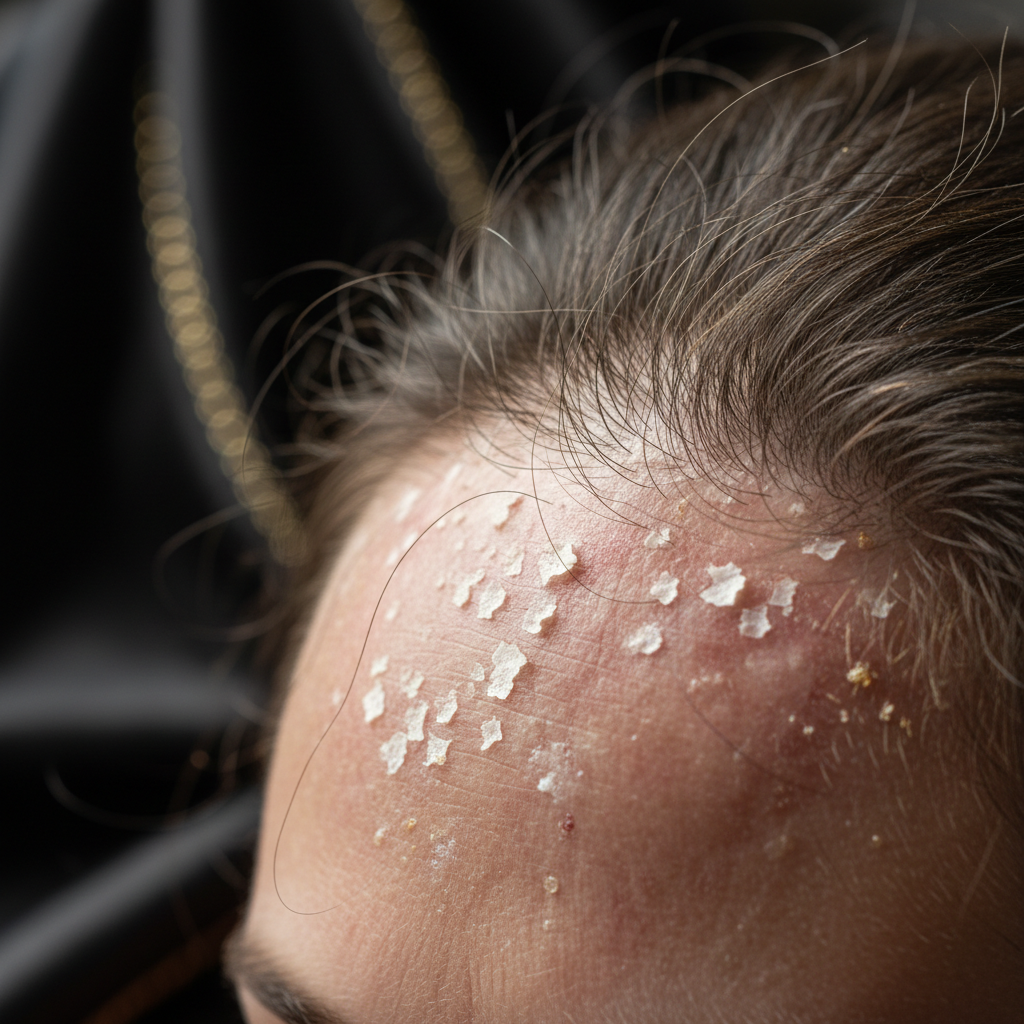
- Persistent tightness: A sensation of tautness or stretching across the crown, particularly within 30 minutes of washing.
- Pruritus and burning: An urgent itch or mild stinging sensation that flares during washing or after applying topical products.
- Fine, powdery flaking: Small white flakes that detach easily from the skin surface, caused by premature desquamation rather than fungal overgrowth.
- Diffuse erythema: Pink or red patches across the scalp, especially along the parting line or hairline where shampoo is applied directly.
- Increased sensitivity: Pain or tenderness when moving your hair, styling, or exposing your scalp to warm water.
What the evidence does not show: clarifying hair loss
It is critical to separate scalp barrier disruption from medical hair loss. Surfactants and detergents do not cause androgenetic alopecia (pattern baldness) or autoimmune conditions like alopecia areata. Cosmetic cleansers cannot alter genetically determined androgen receptor sensitivity or destroy hair follicles deep within the dermal layer.
However, a damaged scalp barrier can indirectly compromise hair quality in two specific ways:
- Mechanical breakage: Severe itching prompts vigorous scratching. Nails lacerate the scalp surface and scratch the hair cuticles, leading to snapped fibres and patchy breakage.
- Transient shedding: Prolonged, untreated micro-inflammation around the follicular infundibulum can trigger telogen effluvium, causing hairs to shift prematurely into the shedding phase. This shedding is reversible once the inflammatory insult resolves.
Practical steps to repair and protect the scalp
Restoring an impaired scalp barrier requires removing aggressive triggers while supplying the physiological materials needed for cellular repair:
- Switch to milder surfactant systems: Replace high-foaming anionic surfactants (such as Sodium Lauryl Sulphate) with gentler amphoteric, non-ionic, or amino acid-based alternatives like cocamidopropyl betaine, decyl glucoside, or sodium cocoyl isethionate.
- Maintain physiological pH: Use shampoos and treatments formulated between pH 4.5 and 5.5 to reinforce the acid mantle and support natural ceramide-producing enzymes.
- Incorporate humectants and barrier lipids: Look for topical formulations containing glycerin, hyaluronic acid, panthenol (provitamin B5), and skin-identical ceramides to hydrate and seal the stratum corneum.
- Moderate water temperature: Wash your hair with lukewarm water rather than hot water. High temperatures increase the solubilisation of natural lipids and accelerate barrier loss.
- Avoid aggressive scalp scrubbing: Massage the scalp using the pads of your fingers instead of your fingernails or hard silicone scrubbers, which physically abrade a fragile stratum corneum.
When the cause may be something else
Detergent-induced irritation can look identical to other common scalp conditions. If reducing detergent exposure fails to resolve symptoms within two weeks, consider these alternative possibilities:
- Seborrhoeic Dermatitis: Driven by an inflammatory reaction to Malassezia yeast metabolising sebum. It presents with greasy, yellowish, adherent scales rather than dry, powdery flakes.
- Allergic Contact Dermatitis: A true Type IV immune hypersensitivity triggered by specific preservatives (like methylisothiazolinone), fragrance compounds, or hair dyes (such as paraphenylenediamine). Patch testing by a dermatologist is necessary to confirm the allergen.
- Scalp Psoriasis: Characterised by well-demarcated, thick, silvery-white plaques and underlying vascular changes, often extending beyond the hairline.
- Atopic Dermatitis: A systemic barrier deficiency linked to filaggrin gene mutations, often accompanied by eczema on the flexural surfaces of the body.
Supporting scalp recovery with Watermans
When managing hair density alongside barrier sensitivity, formulation balance is essential. Many consumers experiencing thinning hair turn to harsh, clarifying formulas that inadvertently trigger Detergent Induced Scalp Barrier Disruption, leading to discomfort and shedding.
Watermans designs hair-density products with overall scalp health in mind. Formulated without aggressive, stripping sulphates, Watermans cleansers and topicals utilise balanced surfactant profiles alongside revitalising botanical complexes, rosemary extract, caffeine, and biotin. This approach respects the scalp's moisture balance while invigorating the follicle environment, ensuring you do not compromise your scalp barrier in the pursuit of fuller, thicker-looking hair.
When to seek professional advice
Consult a qualified trichologist or dermatologist if you notice:
- Severe, persistent redness, open sores, or skin weeping.
- Thick, adherent yellow or silver crusting that does not respond to gentle care.
- Sudden, unexplained diffuse hair shedding or localized bald patches.
- Intense burning or pain that interrupts your sleep.
Clinical practitioners can perform dermoscopy (trichoscopy) to inspect follicular openings and order targeted patch testing to isolate specific allergens.
Frequently asked questions about Detergent Induced Scalp Barrier Disruption
How long does it take to recover from Detergent Induced Scalp Barrier Disruption?
In most cases, early-stage barrier damage resolves within 3 to 14 days once you remove the offending detergent. The stratum corneum naturally sheds and replaces its cellular layers over approximately two weeks. Using humectants like glycerin and avoiding hot water helps accelerate this physiological healing window.
Can a damaged scalp barrier cause permanent hair loss?
No. Detergent damage is confined to the upper epidermal layers and does not reach or destroy the hair bulb, which sits deep in the dermis. While chronic inflammation and habitual scratching can cause temporary hair breakage and shedding (telogen effluvium), the follicles remain intact and resume normal growth once the barrier recovers.
Does Detergent Induced Scalp Barrier Disruption cause dandruff?
It causes flaking, but this is distinct from true dandruff. Detergent damage leads to dry, fine micro-flakes caused by dehydrated corneocytes peeling prematurely. True dandruff (pityriasis capitis) is driven by the proliferation of Malassezia yeast feeding on scalp sebum, producing larger, oilier flakes that require anti-fungal management.
Are all sulphates equally damaging to the scalp barrier?
No. Detergent severity depends on molecular structure and concentration. Sodium Lauryl Sulphate (SLS) is a small molecule that penetrates deeply and severely disrupts skin lipids; it is widely used in clinical research as an irritation benchmark. In contrast, Sodium Laureth Sulphate (SLES) has undergone ethoxylation, making it a larger, significantly milder molecule with lower irritation potential, particularly when blended with secondary surfactants.
Summary
Detergent Induced Scalp Barrier Disruption is a common, entirely preventable condition caused by the depletion of essential stratum corneum lipids and the elevation of scalp pH. By understanding the interaction between cleansing surfactants and epidermal biology, you can make informed choices about your hair-washing routine. Prioritising mild surfactants, physiological pH ranges, and hydrating care ensures a calm, resilient scalp foundation that supports healthy hair growth.
Sources and references
- British Association of Dermatologists. Guidelines for the management of contact dermatitis. 2017.
- Journal of Investigative Dermatology. Surfactant-induced changes in the skin barrier and stratum corneum lipids. 2012.
- International Journal of Cosmetic Science. Scalp condition impacts hair growth through oxidative stress and barrier alteration. 2018.
- National Institute for Health and Care Excellence (NICE). Eczema and dermatitis: clinical knowledge summary. 2021.
- World Academy of Cosmetic Dermatology. The role of mild surfactants in maintaining epidermal homeostasis. 2020.
Find these ingredients in Watermans products
- Panthenol (Provitamin B5): you will find this ingredient in our Heat Protection Spray.