Dealing with Seborrhoeic Dermatitis: Causes, Symptoms, and Effective Care
8 min read ·
Evidence-based guide on dealing with seborrhoeic dermatitis. Learn the causes, identify symptoms, compare scalp conditions, and build a lasting management routine.
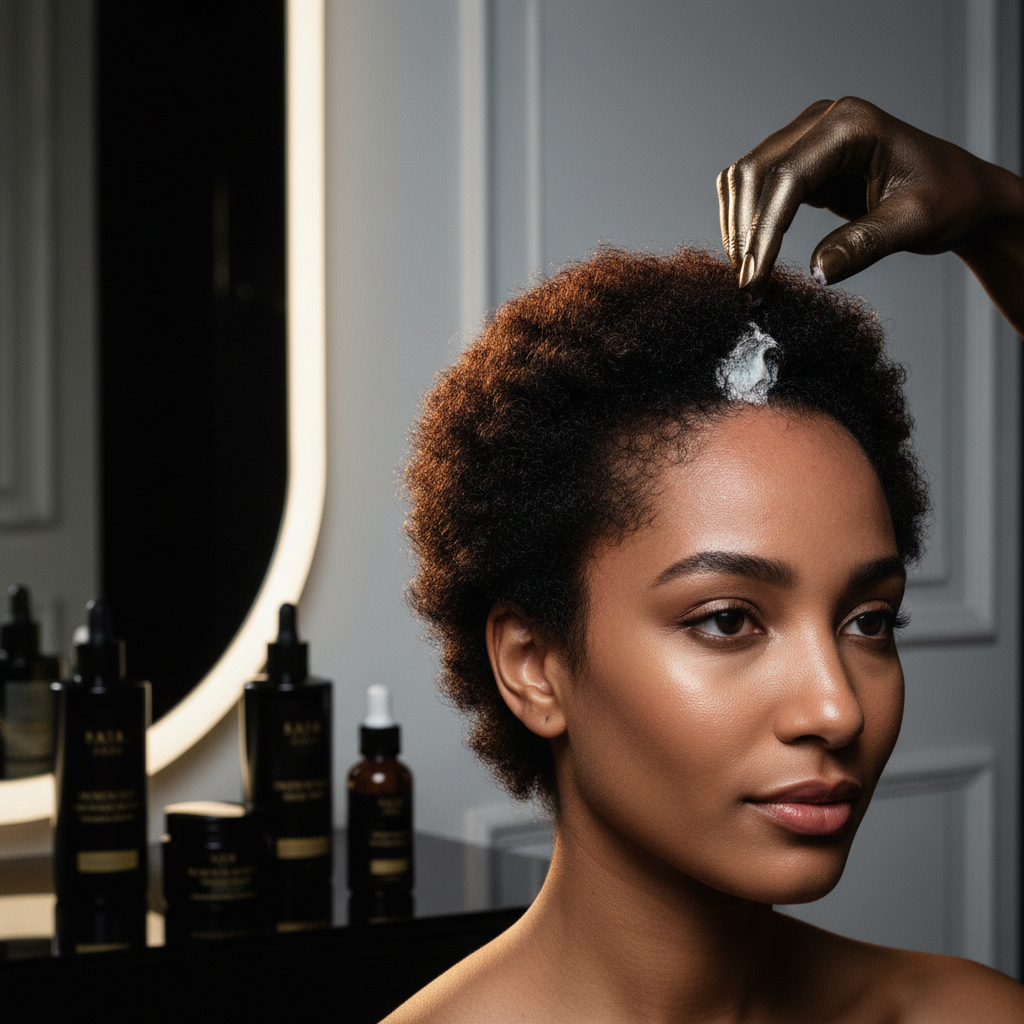
Quick answer: Dealing with Seborrhoeic Dermatitis requires managing an inflammatory scalp response driven by commensal Malassezia yeasts feeding on natural sebum. Effective management combines topical antifungal agents, mild keratolytic cleansers, and anti-inflammatory scalp care to reduce flaking, erythema, and pruritus. However, seborrhoeic dermatitis is a chronic, relapsing condition rather than a curable infection. Long-term control relies on consistent maintenance rather than permanent eradication.
Dealing with Seborrhoeic Dermatitis involves understanding that the condition sits at the intersection of sebum chemistry, microbial balance, and individual immune tolerance.
Key takeaways
- Seborrhoeic dermatitis is a chronic inflammatory skin condition, not an issue of poor hygiene or a contagious infection.
- The primary biological driver is the proliferation of Malassezia yeasts metabolising triglycerides into irritating free fatty acids.
- It differs from standard dry scalp: flakes are characteristically oily, yellowish, and accompanied by erythema and itching.
- First-line interventions include antifungal agents such as ketoconazole, ciclopirox olamine, and zinc pyrithione.
- Mechanical scratching can trigger temporary shedding or secondary bacterial infections, but the condition does not directly cause scarring alopecia.
Dealing with Seborrhoeic Dermatitis: what the evidence shows
Dealing with Seborrhoeic Dermatitis requires targeting the biological feedback loop between sebum production and cutaneous fungi. Clinical trials and dermatological consensus confirm that Malassezia globosa and Malassezia restricta play a central role. These yeasts lack the ability to synthesise their own fatty acids. They rely entirely on human sebum, particularly triglycerides, which they break down using extracellular lipases.
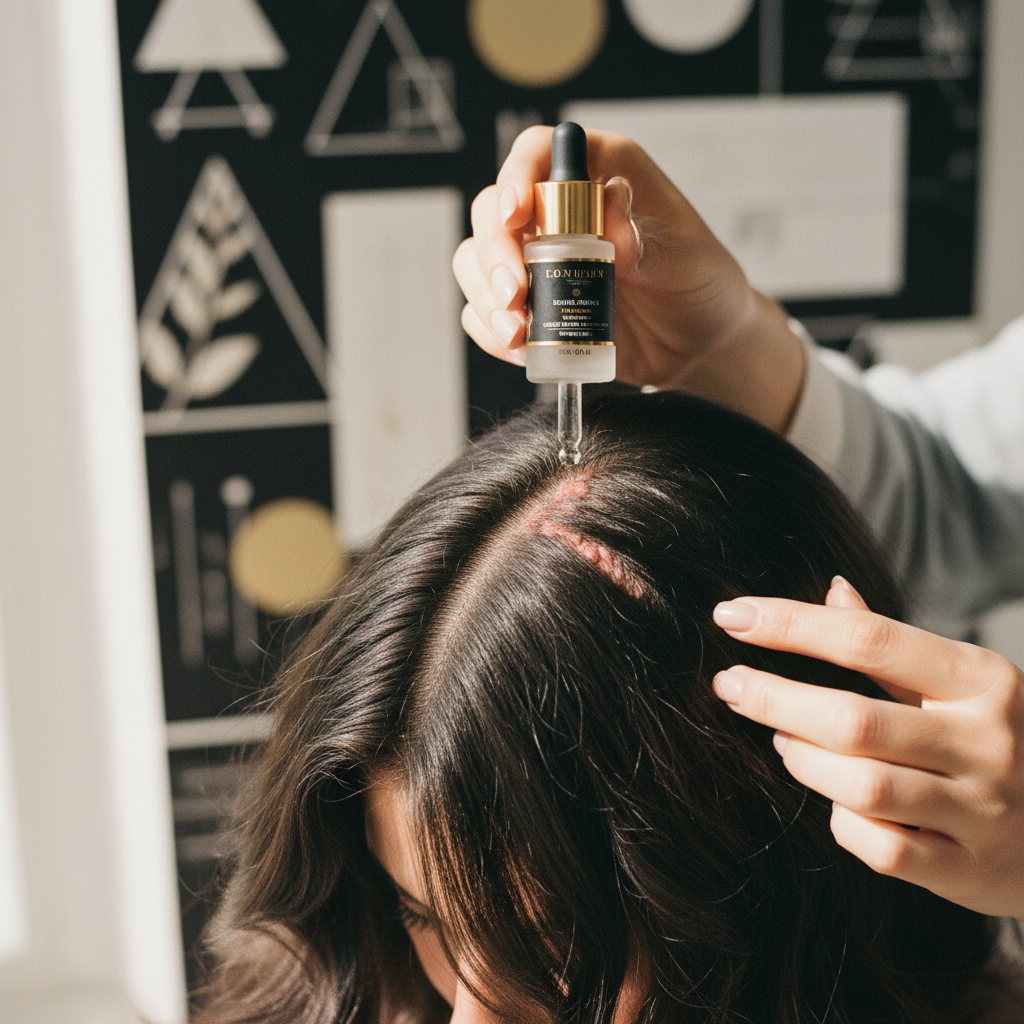
When Malassezia breaks down these lipids, it consumes specific saturated fatty acids and leaves behind unsaturated fatty acids, notably oleic acid and arachidonic acid. In susceptible individuals, these byproduct metabolites penetrate the stratum corneum. This breach triggers an inflammatory cascade, disrupting epidermal differentiation and causing hyperproliferation of keratinocytes. The result is incomplete cell maturation, leading to the large, greasy flakes and red patches typical of flare-ups.
Peer-reviewed studies indicate that topical antifungals consistently reduce both yeast density and clinical symptoms. A Cochrane Systematic Review evaluated topical treatments and determined that ketoconazole (typically at 2% concentration) and ciclopirox olamine significantly outperform placebos in achieving clearance. Coal tar, selenium sulfide, and zinc pyrithione also demonstrate measurable efficacy by reducing yeast colonies or slowing the rapid turnover of skin cells.
 Excess Sebum Secretion (Hormones, Genetics)
 │
 ▼
 Malassezia Yeasts Hydrolyse Lipids
 │
 ▼
 Release of Irritating Free Fatty Acids
 │
 ▼
 Stratum Corneum Disruption & Inflammation
 │
 ▼
 Rapid Keratinocyte Turnover (Flaking & Redness)
What the evidence does not show
Controlled research does not support several widespread assumptions regarding seborrhoeic dermatitis:
- It is not caused by poor hygiene. Frequent washing alone with non-targeted cleansers does not resolve the condition, as normal soap does not regulate Malassezia populations or normalise the inflammatory response.
- Dietary changes rarely cure it. While systemic metabolic health influences overall skin barrier function, evidence linking specific foods, sugar intake, or dairy to seborrhoeic dermatitis flare-ups remains largely anecdotal and unproven in clinical trials.
- It does not cause permanent hair loss. Seborrhoeic dermatitis does not destroy hair follicles. Severe pruritus can lead to vigorous scratching, which causes hair breakage along the shaft or temporary shedding (telogen effluvium) due to local inflammation. Once the inflammation subsides, normal follicular cycles resume.
- Natural oils are not universally beneficial. Applying heavy plant oils, such as olive oil or coconut oil, often worsens symptoms. Research shows that many vegetable oils contain fatty acids that directly feed Malassezia species, accelerating their growth.
The signs to look for
Seborrhoeic dermatitis presents with distinct clinical signs that differentiate it from simple physiological dandruff and other dermatoses:
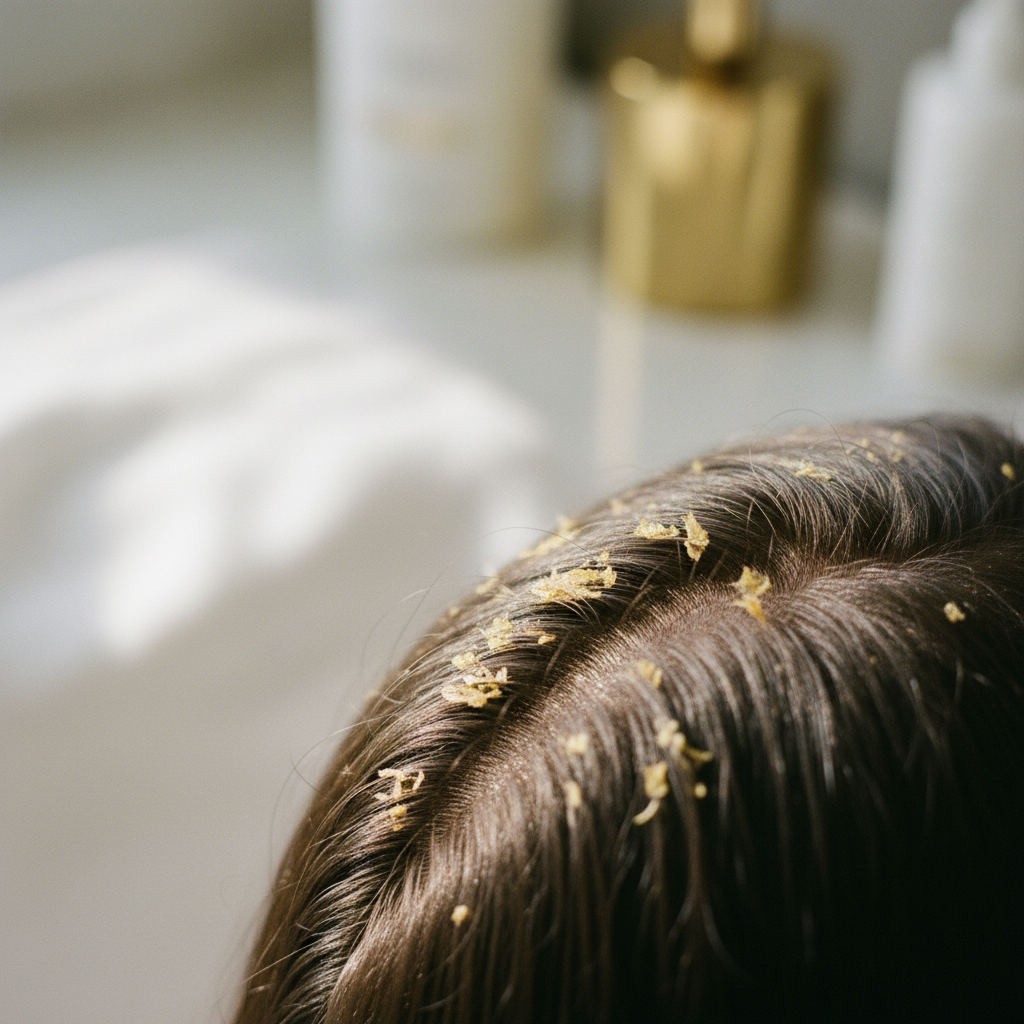
- Greasy, adherent scaling: Flakes range from white to yellowish, often clumping together on the scalp surface or around the hair shaft.
- Erythema: Pink to red patches appear beneath the flakes, commonly extending to the frontal hairline, eyebrows, nasolabial folds, and behind the ears.
- Pruritus and burning: Itching varies from mild irritation to intense discomfort, which worsens when sweating.
- Follicular plugging: Crusts can form around follicular openings, giving the scalp an uneven, sensitive texture.
Comparing scalp conditions
Because different scalp issues require distinct approaches, distinguishing seborrhoeic dermatitis from lookalike conditions is essential:
| Characteristic | Seborrhoeic Dermatitis | Dry Scalp (Pityriasis Simplex) | Scalp Psoriasis |
|---|---|---|---|
| Flake Appearance | Greasy, thick, yellowish to off-white | Small, dry, fine, white | Thick, silvery-white, mica-like scales |
| Underlying Skin | Erythematous (red, pink, or inflamed) | Normal colour, potentially taut or dry | Well-demarcated, raised red plaques |
| Primary Location | Scalp, hairline, ears, eyebrows, chest | Uniformly across the scalp | Often crosses hairline; elbows and knees |
| Sebum Levels | High or normal | Low | Variable |
| Primary Driver | Malassezia overgrowth and lipid reaction | Barrier dehydration, low humidity | Autoimmune hyperkeratosis |
| First-Line Care | Antifungals, mild keratolytics | Hydrating lotions, gentle surfactants | Topical corticosteroids, coal tar, vitamin D analogues |
What you can do: an evidence-based management routine
Successful management relies on active treatment during flares followed by a steady maintenance schedule.
1. Active flare management
During an active breakout, the objective is to lower fungal load and clear adherent scales:
- Antifungal washes: Use an active shampoo containing 1% to 2% ketoconazole, 1% ciclopirox olamine, or 1% selenium sulfide. Apply it directly to the damp scalp and leave it in contact with the skin for 3 to 5 minutes before rinsing thoroughly. Repeat two to three times per week.
- Keratolytic agents: If crusts are thick, shampoos containing 2% to 3% salicylic acid help loosen cohesive squames by dissolving the intercellular cement between dead corneocytes.
- Gentle mechanical cleansing: Massage the scalp using the pads of your fingers, never your fingernails. Avoid harsh scrubbing brushes that can cause micro-tears and introduce secondary bacterial infections.
2. Maintenance and prevention
Because the condition is relapsing, stopping all care once symptoms disappear often triggers a recurrence within weeks:
- Weekly maintenance: Reduce medicated washes to once per week or once every fortnight to keep Malassezia populations suppressed.
- Alternate with gentle cleansers: On non-treatment days, use a pH-balanced, sulphate-free cleanser (around pH 5.0 to 5.5) that maintains the skin's natural acid mantle without stripping moisture.
- Avoid lipid-heavy leave-on products: Eliminate rich hair oils, pomades, and butter-based stylers applied near the roots, as they provide metabolic fuel for yeasts.
Watermans approaches to balanced scalp care
Maintaining a calm, clean scalp environment is vital when managing chronic flaking. While active medical flares require approved antifungal pharmaceutical interventions, day-to-day maintenance benefits from formulas that respect the skin barrier.
Watermans Grow Me Shampoo provides a clarifying yet non-stripping cleanse suited for regular maintenance between targeted treatments. Formulated with biotin, rosemary, niacinamide, and allantoin, it supports scalp comfort without leaving heavy residues that weigh down the hair fibre or disrupt surface balance. Pairing this with a clean scalp hygiene routine helps maintain an optimal environment for healthy hair growth.
When the cause may be something else
If your scalp fails to respond to standard antifungal routines after three to four weeks, re-evaluate the diagnosis.
Scalp psoriasis closely mimics seborrhoeic dermatitis (a clinical overlap sometimes called sebopsoriasis). Psoriasis features thicker, more sharply demarcated plaques that may bleed when lifted (Auspitz's sign).
Contact dermatitis, caused by sensitivity to hair dyes, fragrances, or preservatives like methylisothiazolinone, can also manifest as intense redness, flaking, and itching.
Additionally, tinea capitis (a dermatophyte fungal infection) must be ruled out, particularly in children or if localized hair breakage occurs.
When to get professional advice
Consult a GP, dermatologist, or qualified trichologist if you notice any of the following:
- Symptoms that do not improve after four weeks of over-the-counter medicated shampoos.
- Severe inflammation, swelling, warmth, or purulence (oozing yellow fluid), which suggests a secondary bacterial infection such as Staphylococcus aureus.
- Widespread rash extending across the face, neck, or body.
- Noticeable patchy hair shedding or thinning accompanied by scalp pain.
A medical professional can prescribe short courses of topical corticosteroids or calcineurin inhibitors (such as tacrolimus) to calm acute, severe inflammation before returning you to a maintenance regimen.
Frequently asked questions about Dealing with Seborrhoeic Dermatitis
Can dealing with seborrhoeic dermatitis prevent hair loss?
Dealing with seborrhoeic dermatitis effectively prevents the secondary hair shedding and breakage caused by scratching and intense follicle-level inflammation. The condition does not damage the underlying stem cells of the follicle, meaning it does not cause androgenetic alopecia or permanent scarring hair loss. Controlling pruritus stops mechanical traction damage to the hair fibre.
How often should I wash my hair if I have this condition?
Most dermatologists recommend washing your hair two to four times weekly. Leaving the scalp unwashed allows sebum to accumulate, providing an abundance of lipids that fuel Malassezia proliferation. Regular washing with warm water and targeted cleansers keeps surface sebum within a controlled range.
Will changing my diet clear up seborrhoeic dermatitis?
There is no reliable clinical evidence showing that diet alone can cure the condition. While a balanced diet rich in micronutrients supports overall skin barrier repair, seborrhoeic dermatitis is primarily driven by skin-level yeast metabolism. Dietary adjustments cannot replace targeted topical antifungal and keratolytic management.
Can I use hair oil if my scalp is flaking?
It is best to avoid applying oils directly to the scalp. The yeasts responsible for seborrhoeic dermatitis consume fatty acids found in most plant oils, including olive and argan oil. If your hair lengths feel dry, apply oils strictly to the mid-lengths and ends, keeping the scalp clear.
Final thoughts on managing your scalp
Dealing with Seborrhoeic Dermatitis requires patience, structural consistency, and an understanding of your scalp's unique biology. Rather than pursuing an outright cure, aim for steady suppression of symptoms through proven antifungal agents, scalp-friendly hygiene, and barrier-respecting hair products. By adjusting your routine between active flare management and maintenance, you can keep flakes, redness, and discomfort under lasting control.
Sources and references
- British Association of Dermatologists. (2020). Seborrhoeic Dermatitis Patient Information Leaflet.
- Cochrane Database of Systematic Reviews. (2015). Topical antifungals for seborrhoeic dermatitis of the scalp and face in adults. DOI: 10.1002/14651858.CD008138.pub3.
- National Institute for Health and Care Excellence (NICE). (2022). Clinical Knowledge Summaries: Seborrhoeic Dermatitis.
- Journal of the European Academy of Dermatology and Venereology. (2017). Treatment of seborrhoeic dermatitis: a comprehensive review.
- Dawson, T. L. (2007). Malassezia globosa and restricta: Breakthrough Understanding of the Etiology and Treatment of Dandruff and Seborrheic Dermatitis through Whole-Genome Sequencing. Journal of Investigative Dermatology Symposium Proceedings.
Find these ingredients in Watermans products
- Zinc: you will find this ingredient in our Hair Vitamins.
- Oleic Acid: you will find this ingredient in our Camellia & Black Castor Hair & Body Oil.
- Niacinamide: you will find this ingredient in our Hair Mask.