Damaged Hair Cuticle Repair: Science, Structure, and Solutions
8 min read ·
Understand the limits of damaged hair cuticle repair. Learn how cosmetic science smooths raised scales, restores surface lipids, and reduces hair breakage.
Quick answer: True biological damaged hair cuticle repair is impossible because the hair shaft consists of non-living, keratinised tissue that cannot regenerate or heal itself. However, functional damaged hair cuticle repair is achievable through targeted cosmetic chemistry. By using hydrolysed proteins, biomimetic lipids, cationic conditioning agents, and pH-balanced formulations (around pH 4.5 to 5.5), you can smooth lifted scales, seal open gaps, and restore the fibre's protective hydrophobic barrier to dramatically reduce friction and prevent breakage.
Key takeaways
- Hair cuticles are dead cellular structures; they cannot biologically heal, regenerate, or grow back once worn away.
- Cosmetic repair works by smoothing raised scales, filling microscopic gaps with proteins, and replacing lost surface lipids.
- The natural 18-methyleicosanoic acid (18-MEA) lipid layer wears off easily under heat and chemical processing, turning hair hydrophilic and tangly.
- Maintaining an acidic surface pH between 4.5 and 5.5 helps keep remaining cuticle scales flat and tight against the cortex.
- Deep cuticle loss exposes the inner cortex, turning cosmetic management into damage containment where trimming split ends becomes necessary.
Damaged hair cuticle repair: what the evidence shows
When scientists evaluate damaged hair cuticle repair, they look at microscopic topography, surface friction, and moisture absorption rather than cellular regeneration. Under a scanning electron microscope (SEM), an intact hair shaft displays 6 to 10 overlapping cuticle layers that resemble tiles on a roof. These scales face toward the tip, presenting a smooth, hydrophobic (water-repelling) shield that protects the delicate inner cortex.
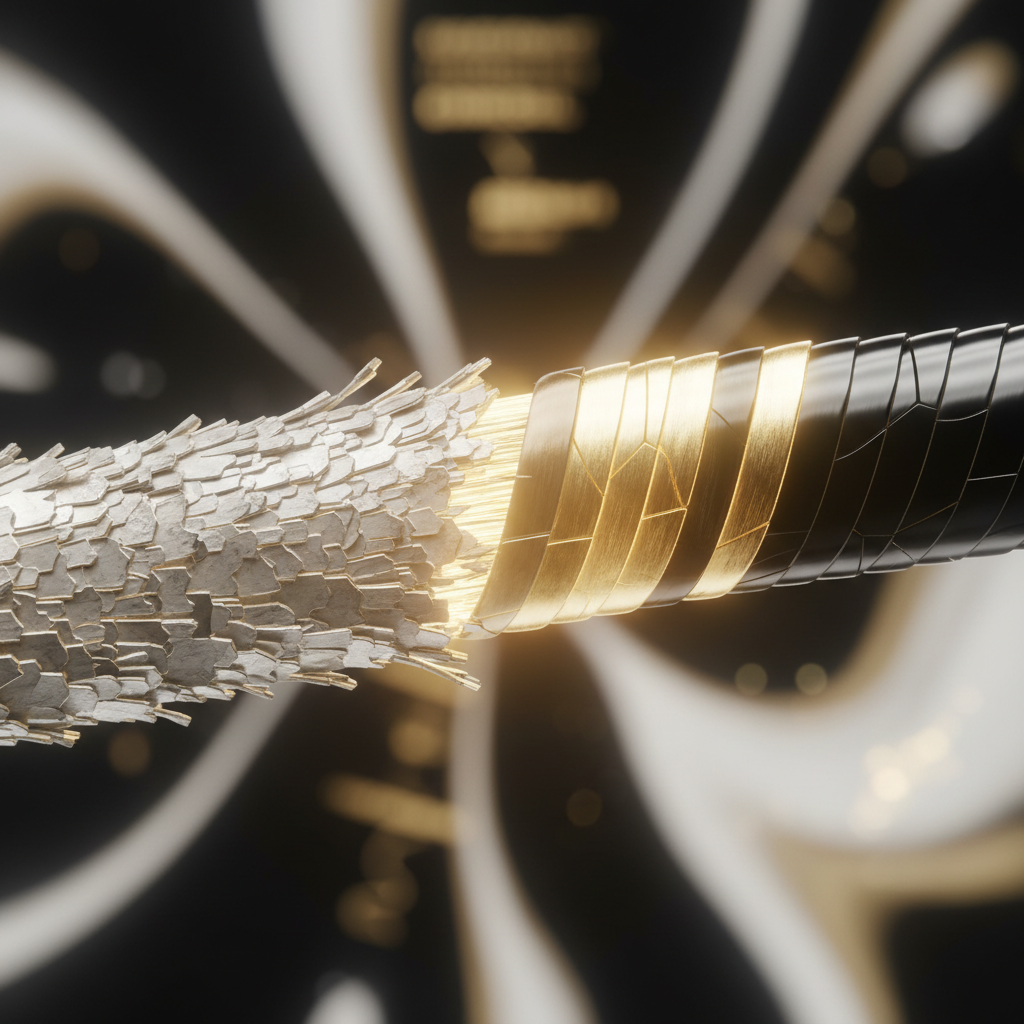
Physical weathering, alkaline chemical services (bleaching, permanent waving, relaxers), and excessive heat lift and chip these scales. Cosmetic science cannot regrow these dead keratin plates. Instead, evidence demonstrates that functional repair relies on coating the fibre, neutralising negative surface charges, and temporarily patching structural voids.
Peer-reviewed cosmetic dermatology studies confirm that cationic surfactants (such as behentrimonium chloride) electrostatically bind to damaged, negatively charged patches along the shaft. Similarly, hydrolysed wheat and keratin proteins penetrate small gaps beneath lifted scales, increasing the fibre's tensile resistance and reducing water uptake. This intervention provides mechanical stability and aesthetic recovery, though it washes away progressively and requires regular maintenance.
Understanding the cuticle structure and the mechanism of damage
To understand how repair strategies work, you need to understand the three distinct zones of an individual cuticle cell:
- The Epicuticle: The outermost semi-permeable membrane, covered in a thin, covalently bound lipid layer called 18-methyleicosanoic acid (18-MEA). This makes healthy virgin hair naturally water-resistant and slick.
- The Exocuticle: A layer rich in cystine (roughly 30% of the cuticle's protein content), providing rigid mechanical strength and cross-linked stability.
- The Endocuticle: The inner layer with low cystine content, which absorbs water readily and swells when wet.
When hair undergoes bleaching or high-lift dyeing, alkaline agents (typically ammonia or ethanolamine) raise the hair's pH above 9.0. This swelling forces the cuticle scales apart so chemicals can access the cortex. In the process, the alkaline environment strips away the protective 18-MEA lipid layer.
Once the 18-MEA barrier disappears, your hair becomes hydrophilic, absorbing environmental humidity rapidly and swelling unevenly. Thermal tools above 185°C denature cuticle proteins and boil trapped moisture inside the endocuticle, leading to severe chipping, cracking, and "bubble hair" deformities.
Signs your hair cuticle is compromised
Cuticle damage presents clear tactile and visual symptoms long before the shaft snaps entirely:
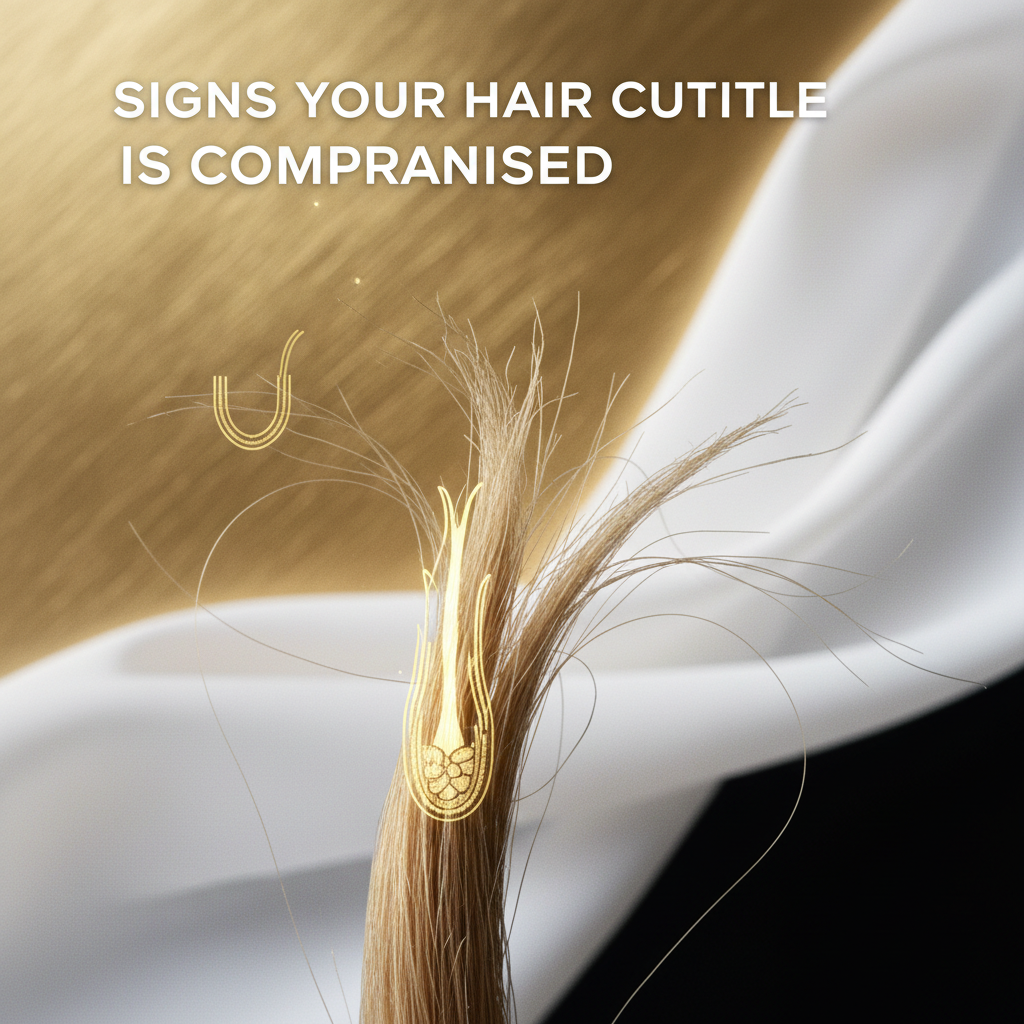
- High wet friction and severe tangling: Lifted cuticle scales act like microscopic barbs, catching on adjacent fibres when you comb or wash them.
- Lack of shine and dullness: A healthy, flat cuticle reflects light like a mirror. A rough, lifted cuticle scatters light, making hair look matte and dry.
- Rapid drying and rapid wetting: Damaged, porous hair absorbs water instantly in the shower but loses it just as quickly to the surrounding air, leaving it straw-like.
- Split ends and fraying: Once the cuticle wears away completely near the ends, the cortex splits into separate fibrils.
- Frizz in humid environments: Because stripped fibres are hydrophilic, moisture in the air easily forces open remaining cuticles, causing unruliness.
| Cuticle Condition | Surface State | Water Interaction | Typical Friction Level | Microscopic Appearance |
|---|---|---|---|---|
| Healthy Virgin Cuticle | Intact 18-MEA lipid layer, scales sealed | Hydrophobic (repels water droplets) | Very low; smooth slip | Uniform, tightly overlapping scales |
| Moderately Weathered | Partial lipid loss, slightly raised edges | Slightly hydrophilic | Moderate; occasional knots | Chipped edges, slight scale separation |
| Chemically Damaged | Complete 18-MEA loss, eroded exocuticle | Highly hydrophilic (swells rapidly) | High; catches easily wet or dry | Missing scale fragments, lifted plates |
| Severe / Stripped Cuticle | Cuticle completely worn away | Cortex fully exposed to environment | Extreme; snaps under light tension | Raw, fibrillar cortex visible; split tips |
Effective strategies for damaged hair cuticle repair
While you cannot reverse the clock on damaged fibres, you can mimic healthy cuticle function using proven haircare methods.
1. Re-acidify the hair fibre
Natural hair and scalp health thrive at an acidic pH between 4.5 and 5.5. Alkaline water or harsh cleansing agents cause the endocuticle to swell, lifting scale margins. Using a post-wash rinse or leave-in formula buffered to pH 4.0 to 5.0 contracts the keratin structure, encouraging scales to lie flat against the shaft and locking in light reflection.
2. Deposit biomimetic lipids and cationic agents
Because chemical processing strips natural 18-MEA, you must artificially restore surface lubricity. Look for conditioning agents containing behentrimonium methosulfate, cetrimonium chloride, and plant-derived triglycerides. These positively charged compounds cling to the negative charges exposed on damaged cuticle keratin, instantly lowering surface friction and preventing wet comb breakage.
3. Utilise low-molecular-weight hydrolysed proteins
Standard, large proteins sit on the outside of the hair and can create a stiff, brittle film if overused. Hydrolysed proteins (molecular weight between 500 and 2,000 Daltons), derived from wheat, silk, or quinoa, can slip under raised cuticle margins. They bond temporarily to exposed cortex sites, increasing the fibre's water-retention capacity and tensile strength.
4. Minimise mechanical shear and heat stress
Wet hair can stretch up to 30% beyond its resting length before breaking, but wet cuticle scales are soft and vulnerable. Detangle exclusively with wide-tooth combs or flexible-bristle brushes, beginning at the tips and moving toward the roots. Keep thermal styling tools below 185°C, and always coat hair with protective silicones or high-slip conditioning polymers first.
When the issue is not cuticle damage
It is vital to distinguish between cuticle damage and follicular hair disorders:
- Cuticle weathering causes hair breakage: You will find short, ragged pieces of hair on your shoulders, brush, or bathroom floor that lack a white bulb at the tip. This is cosmetic fibre damage, not hair shedding.
- Follicular shedding: If you are losing long strands with a distinct white bulb (the telogen root) at the base, you are experiencing shedding, such as telogen effluvium or androgenetic changes. Cuticle repair treatments will not alter your natural hair shedding rate or stimulate follicular growth.
- Genetic structural abnormalities: Rare conditions like trichorrhexis nodosa (node-like swellings along the shaft) or monilethrix (beaded hair) weaken the hair shaft genetically, causing severe fragility that cosmetics cannot correct alone.
Supporting hair condition: the Watermans approach
For everyday haircare, supporting the scalp environment while reinforcing fragile lengths is key to preventing premature hair breakage. Watermans approaches hair maintenance from root to tip, pairing clarifying, sulphate-free cleansing with fortifying botanicals.
Formulated without harsh stripping detergents, Watermans products help preserve the natural lipid surface of your hair fibres while keeping the scalp refreshed. By infusing the routine with hydrolysed lupin protein, biotin, and rosemary extract, the regime strengthens fragile lengths, smooths visible signs of weathering, and delivers a fuller, glossier appearance without weighing down fine or compromised strands.
Frequently asked questions about Damaged Hair Cuticle Repair
Can split ends be repaired permanently?
No product can permanently fuse a split end back together. While rich conditioning agents, silicones, and hydrolysed proteins can temporarily glue split cuticle fragments down for a smooth finish, the effect disappears after washing. The only definitive cure for a split end is trimming the damaged tip above the split.
How does pH affect damaged hair cuticle repair?
Hair has an isoelectric point around pH 3.67, meaning its surface carries zero net electrical charge in mild acidity. Alkaline products (pH above 7.0) introduce negative charges that cause cuticle scales to repel each other and flare open. Applying an acidic product (pH 4.5 to 5.5) reduces this swelling, smoothing the cuticle layer down against the cortex.
How long does damaged hair cuticle repair take to work?
Functional, cosmetic cuticle repair works almost instantly. A well-formulated conditioning treatment, protein-rich mask, or acidic rinse will smooth the cuticle scales, cut down friction, and restore shine within a single wash. However, because hair is dead tissue, these treatments wash away over time and must be maintained consistently.
Can coconut or argan oil rebuild stripped hair cuticles?
Natural oils cannot rebuild missing cuticle scales, but they serve valuable protective roles. Coconut oil has a straight-chain structure and low molecular weight that allows it to penetrate beneath the cuticle into the cortex, reducing protein loss during washing. Argan oil sits primarily on the surface, acting as a lubricant that eases combing friction.
Does high heat permanently destroy the hair cuticle?
Yes. Temperatures exceeding 215°C decompose the alpha-keratin structure of the hair shaft into beta-keratin, causing irreversible structural weakening. Heat also boils water trapped in the endocuticle, leading to blisters, cracked scales, and permanent cuticle loss that cosmetic repair cannot reverse.
Navigating your cuticle care routine
Achieving effective damaged hair cuticle repair comes down to understanding the biological limits of the hair shaft. Because your hair cannot regenerate missing cells, your daily goal is defensive maintenance: protecting the existing cuticle layers, smoothing raised scales with acidic conditioning agents, and buffering porous spots with hydrolysed proteins. By treating your hair gently and minimising aggressive heat and chemical treatments, you can maintain strong, shiny, and resilient lengths that resist daily breakage.
Sources and references
- Robbins, C. R. (2012). Chemical and Physical Behavior of Human Hair. 5th Edition. Springer-Verlag.
- Gavazzoni Dias, M. F. (2015). Hair cosmetics: An overview. International Journal of Trichology, 7(1), 2-15.
- Dawber, R. (1996). Hair: Its structure and response to cosmetic preparations. Clinics in Dermatology, 14(1), 105-112.
- Draelos, Z. D. (2010). Essentials of Hair Care often Neglected: Hair Cleansing and Conditioning. International Journal of Trichology, 2(1), 24-29.
- Cruz, C. F., et al. (2016). Human hair keratin and cuticles: Physical, chemical, and biological properties. International Journal of Cosmetic Science, 38(4), 327-337.
Find these ingredients in Watermans products
- Biotin: you will find this ingredient in our Hair Growth Shampoo.