Cuticle Health and Heat Damage: The Science of Fibre Resilience
8 min read ·
Explore how thermal styling affects cuticle health and heat damage. Learn the biological mechanisms of protein degradation, signs of wear, and effective prevention strategies.
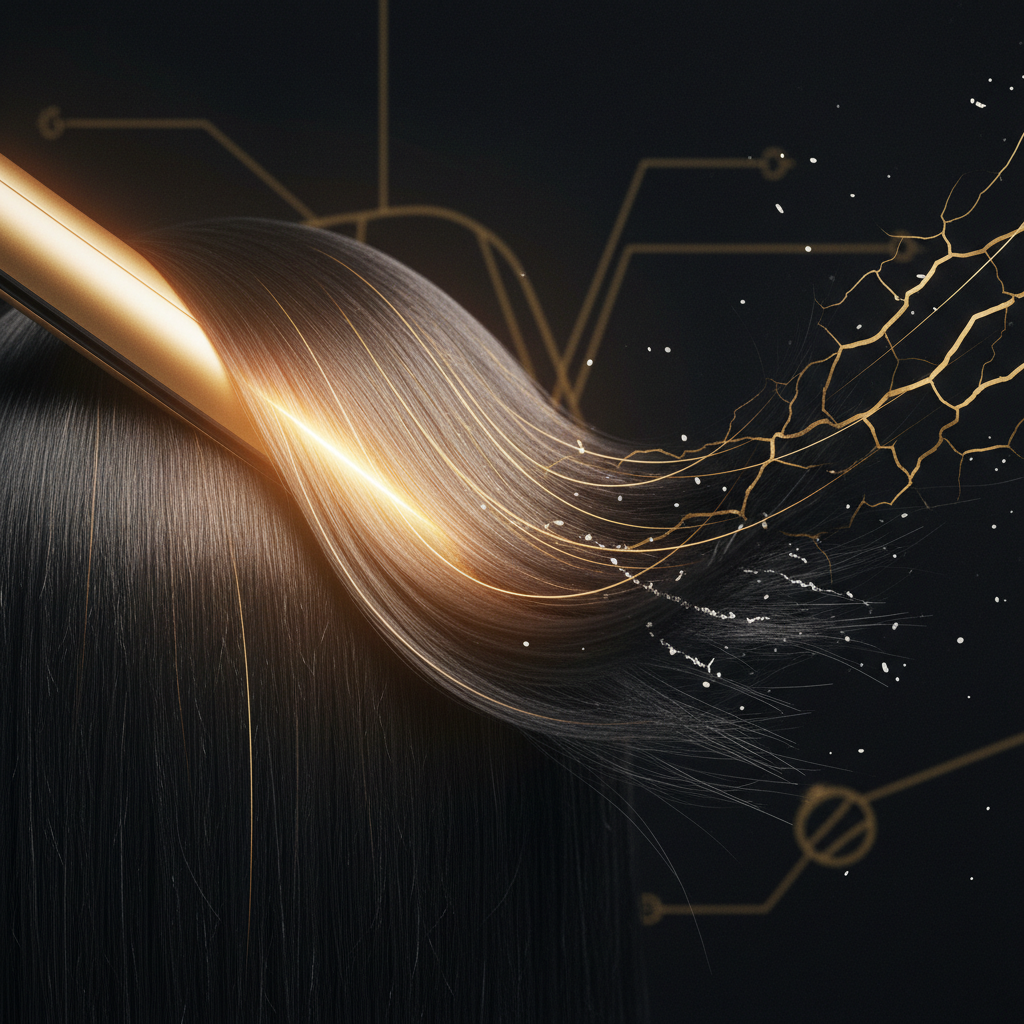
Quick answer: Understanding Cuticle Health and Heat Damage is essential for preserving the hair fibre, as excessive thermal styling strips protective lipids and degrades keratin. Cuticle Health and Heat Damage occurs when temperatures above 150°C crack, lift, or melt the outermost overlapping cuticle scales, leading to moisture loss and shaft breakage. While thermal protectants and conditioning agents can significantly reduce friction and buffer temperature transfer, dead hair fibres cannot biological repair themselves once structural keratin proteins denature.
Key takeaways
- The hair cuticle consists of 6 to 10 overlapping layers of cellular scales bound by a lipid-rich cell membrane complex.
- Heat tools above 150°C degrade 18-methyleicosanoic acid (18-MEA), the primary lipid responsible for water repellency and shine.
- Severe thermal exposure above 200°C denatures alpha-keratin proteins into disordered beta-keratin, permanently weakening fibre strength.
- Heat damage causes physical breakage along the hair shaft; it does not directly trigger follicular hair shedding or alopecia.
- Preventive practices, including silicone-based thermal protectants, temperature moderation, and working on dry hair, remain the only reliable defences.
Cuticle Health and Heat Damage: what the evidence shows
The relationship between Cuticle Health and Heat Damage centres on the thermal limits of keratin and its surrounding lipid matrix. Research in cosmetic chemistry shows that healthy cuticles lie flat, forming an intact barrier that shields the inner cortex from mechanical friction, environmental oxidation, and moisture fluctuations.
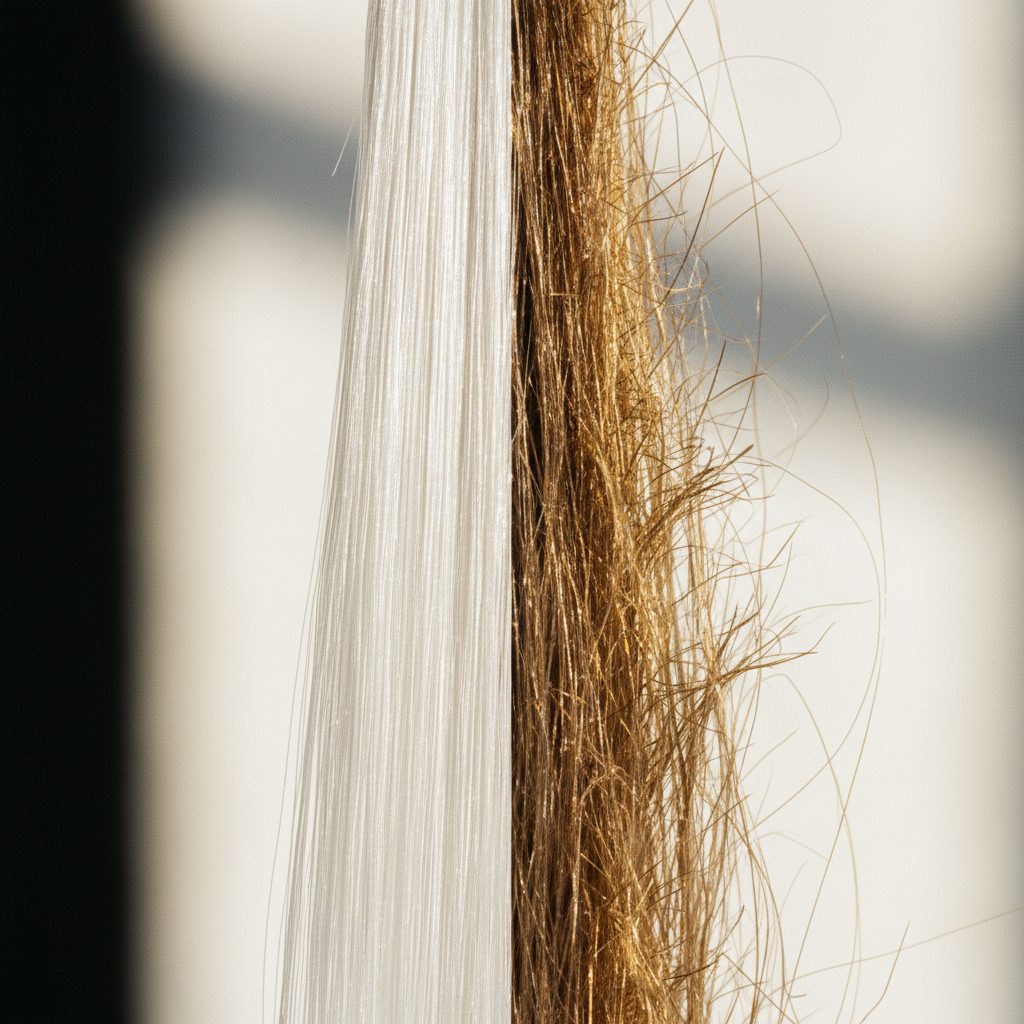
When thermal tools such as flat irons, curling tongs, and high-heat hair dryers are applied, this protective shield comes under intense physical stress. Studies indicate that thermal degradation begins at surprisingly modest temperatures:
- At 140°C to 150°C: The surface lipid layer, primarily 18-methyleicosanoic acid (18-MEA), begins to break down. This increases cuticle porosity and surface friction, making the hair hydrophilic (water-absorbing) and prone to tangles.
- At 160°C to 190°C: Cuticle scales begin to buckle, lift, and chip. The cell membrane complex that glues cuticle layers together deteriorates.
- At 200°C and above: Thermal denaturation of alpha-keratin occurs. The helical protein structures unravel, converting into disordered amorphous structures. At this threshold, microscopic blistering and thermal decomposition of the cortex take place.
Hair is a non-living biological fibre. Unlike skin, it cannot regenerate cellular layers. When heat breaches the cuticle, the damage is cumulative and permanent until the affected section is cut off.
The biological mechanism of thermal cuticle breakdown
To understand why hair responds so poorly to repeated high heat, you have to look at the cuticle architecture under electron microscopy.
+-------------------------------------------------------+
| Epicuticle: Hydrophobic lipid layer (18-MEA) |
+-------------------------------------------------------+
| Exocuticle: High-cysteine, rigid cross-linked protein|
+-------------------------------------------------------+
| Endocuticle: Low-cysteine, soft protein layer |
+-------------------------------------------------------+
| Cell Membrane Complex (CMC): Lipids and proteins |
+-------------------------------------------------------+
| Cortex: Structural alpha-keratin bundles |
+-------------------------------------------------------+
Each cuticle scale has three distinct internal sub-layers: the outer epicuticle, the rigid exocuticle, and the softer endocuticle. The epicuticle holds a bound layer of 18-MEA lipids. This microscopic fatty coating gives virgin hair its natural slip, sheen, and resistance to water ingress.
When you apply a hot iron directly to the hair, thermal conduction evaporates internal residual water at a rapid rate. If the hair is damp, water trapped within the cortex and endocuticle boils instantly. This rapid phase change from liquid to steam causes structural expansion, blowing microscopic holes through the exocuticle. Cosmetic trichologists call this phenomenon "bubble hair". The cuticle literally craters from the inside out, leading to immediate fracture points.
Even on bone-dry hair, dry heat causes the softer endocuticle to swell unevenly against the rigid exocuticle. Over time, the edges of the scales curl outward, exposing the cortex to mechanical friction from everyday brushing.
Observable signs of cuticle degradation
You do not need an electron microscope to recognise when thermal styling has compromised the hair shaft. Classic symptoms include:
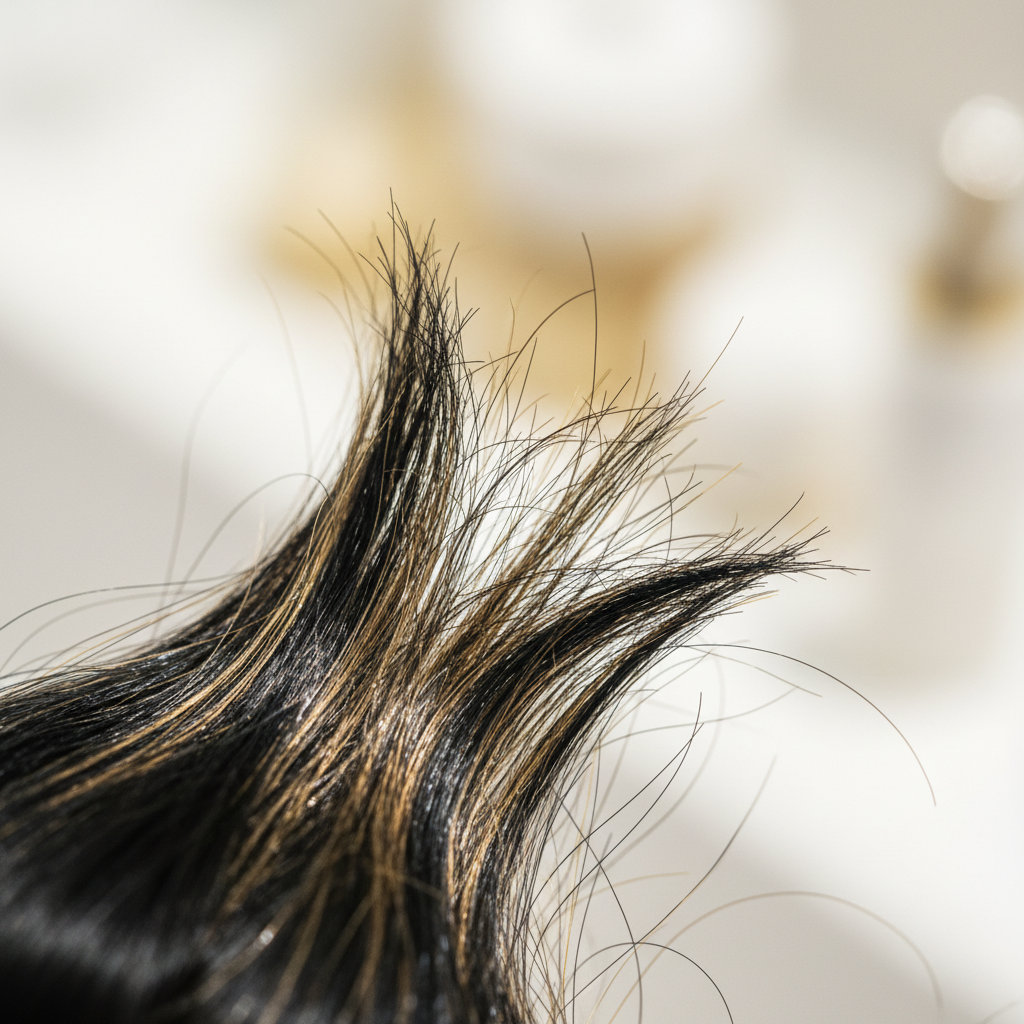
- Loss of natural shine: Intact cuticles reflect light evenly across a smooth surface. Lifted or eroded cuticles scatter light in different directions, leaving hair looking dull and matte.
- Excessive tangling: When cuticle scales lift like open pine cones, individual hair fibres catch against one another, creating stubborn knots during brushing.
- High porosity and rapid moisture shifts: Compromised cuticles absorb atmospheric humidity rapidly, causing severe frizz in humid environments, yet dry out just as fast into a brittle texture.
- Split ends and mid-shaft snaps: Without the protective reinforcement of intact cuticles, the cortex frays lengthwise (trichoptilosis) or snaps completely under low tension (trichorrhexis nodosa).
| Thermal Stage | Temperature Range | Primary Structural Impact | Reversibility |
|---|---|---|---|
| Mild Thermal Stress | Below 140°C | Surface moisture loss, temporary dehydration | Fully reversible with conditioning |
| Lipid Degradation | 140°C to 175°C | Depletion of 18-MEA lipid layer, raised scale edges | Managed cosmetically via conditioning polymers |
| Cuticle Cracking | 175°C to 200°C | Scale detachment, exposed cortex, CMC breakdown | Irreversible; requires protective coatings |
| Keratin Denaturation | Above 200°C | Alpha-keratin conversion, bubble hair, cortex collapse | Permanent; requires trimming |
What the evidence does not show
There is no scientific evidence demonstrating that any serum, mask, oil, or in-salon treatment can permanently rebuild lost cuticle scales. Cosmetic products containing hydrolysed proteins, silicones, and synthetic polymers can temporarily coat the hair shaft, fill microscopic voids, and glue down lifted scales. This provides immediate cosmetic improvement, reduces friction, and prevents further moisture loss. However, these formulations wash out over time and do not restore living biological tissue.
Furthermore, thermal damage along the hair shaft does not cause biological hair loss or follicular miniaturisation. It causes mechanical breakage. If you notice large numbers of shed hairs coming out with an intact white bulb at the root, heat styling tools are not the cause; that is a follicular shedding process such as telogen effluvium.
Mitigating heat stress: practical steps
While you cannot biologically regrow dead cuticle scales, you can significantly limit degradation through measured styling habits.
1. Never heat-style wet or damp hair
Ensure hair is 100% dry before using flat irons or curling wands. Wet heat accelerates steam expansion within the hair cortex, causing irreversible bubble hair and instant cuticle fractures.
2. Lower tool temperatures
Most styling can be achieved between 150°C and 180°C. Reserve temperatures above 190°C exclusively for thick, coarse, or highly resistant hair, and never linger on a single section for more than two to three seconds.
3. Use silicone-based thermal protectants
Thermal protectants formulate silicones such as dimethicone and amodimethicone alongside polymers that conduct heat much more slowly than water or bare keratin. These ingredients form a protective thermal blanket over the epicuticle, distributing heat evenly and lowering thermal shock.
4. Minimise daily friction
Damaged cuticles possess high surface friction. Use leave-in conditioners with cationic surfactants (such as cetrimonium chloride or behentrimonium methosulfate) to neutralise negative surface charges, reducing snagging during detangling.
Watermans: Supporting fibre resilience
To counteract the structural friction caused by thermal styling, a reliable daily routine is essential. While severe cuticle loss must be removed with regular trims, the surrounding hair fibre benefits greatly from surface conditioning and scalp care.
Watermans approaches hair maintenance from root to tip. Formulated without harsh sulphates, Watermans products cleanse gently, preventing the further stripping of native cuticle lipids. Paired with conditioning agents that coat vulnerable shafts, they help reduce day-to-day detangling friction and support healthy-looking fibre density.
When to seek professional advice
If your hair snaps rapidly despite using low heat and quality protectants, the underlying issue might not be thermal stress alone. Chemical processing, including bleaching, permanent waving, and relaxers, significantly lowers the temperature threshold at which keratin degrades. A professional salon colourist or trichologist can perform a wet stretch test to assess your hair's tensile elasticity.
If you are experiencing noticeable thinning at the crown, widening part lines, or excessive shedding with roots attached, consult a GP or registered trichologist. These signs point to follicular scalp conditions rather than shaft-level heat damage.
Frequently asked questions about Cuticle Health and Heat Damage
Can split ends from heat damage be repaired without cutting?
No. Split ends represent a complete structural fracture of the cuticle and underlying cortex. While conditioning serums containing silicones or specialised polymers can temporarily bind split ends together until your next wash, the only permanent remedy for severe Cuticle Health and Heat Damage is trimming the fractured ends away.
Does air drying cause more damage than blow drying?
Controlled studies have shown that prolonged air drying leaves the hair's cell membrane complex swollen with water for hours, which can place low-level stress on the endocuticle. However, using a hair dryer on high heat right against the fibre is far more destructive. The safest method is air drying halfway, followed by blow drying on a medium or cool setting from at least 15 cm away.
What is the maximum safe temperature for daily styling?
For fine or chemically processed hair, keep tool temperatures below 150°C. For normal to thick hair, aim between 160°C and 180°C. Temperatures exceeding 200°C inevitably trigger alpha-to-beta keratin denaturation, regardless of the thermal protectant you apply.
Why does heat-damaged hair become frizzy in humid weather?
When heat strips away the 18-MEA lipid layer and erodes the cuticle, the hair changes from hydrophobic (water-repelling) to hydrophilic (water-loving). In humid air, the exposed cortex readily absorbs airborne moisture, causing individual hair fibres to swell irregularly and break out of their smooth pattern.
Preserving your hair's protective barrier
Understanding Cuticle Health and Heat Damage gives you the knowledge needed to style your hair without compromising its structural integrity. The cuticle serves as your hair's sole defensive barrier against physical and environmental wear. Because this non-living keratin shell cannot regenerate once destroyed, prevention through moderate temperatures, adequate thermal protection, and gentle handling remains your best strategy for long-term fibre strength.
Sources and references
- Journal of Cosmetic Science: "Thermal degradation of hair keratin: a review of heating conditions and protein changes" (2011).
- International Journal of Trichology: "Hair Shaft Damage from Heat and Cosmetic Treatments" (2011).
- Society of Cosmetic Chemists: "The Effect of Heat on Hair Structure and Physical Properties" (2004).
- Annals of Dermatology: "Hair Shaft Damage from Heat and Drying: Electron Microscopy Evaluation" (2011).