Cortex and Cuticle Damage: Causes, Science, and Solutions
8 min read ·
Understand the science of Cortex and Cuticle Damage, including why hair breaks, how heat and chemicals degrade keratin, and practical steps to restore fibre strength.
Quick answer: Cortex and Cuticle Damage refers to the progressive structural breakdown of the hair fibre's protective outer scales (cuticle) and its internal protein core (cortex). Caused by chemical processing, excessive heat, UV radiation, and aggressive mechanical styling, this degradation leads to porous, brittle hair that snaps easily under tension. While cosmetic conditioning agents, bond builders, and lipid sealants can temporarily patch cracks and reduce further friction, true biological repair is impossible once the keratin framework is destroyed because hair is non-living tissue.
Key takeaways
- The cuticle consists of 5 to 10 overlapping layers of flat cells that shield the cortex from chemical, thermal, and environmental stress.
- Cortex damage compromises hair's tensile strength and elasticity, which leads directly to fibre breakage rather than root-level hair loss.
- Chemical services such as permanent bleaching, relaxing, and colouring break the disulphide bonds within the cortex and strip the protective 18-methyleicosanoic acid (18-MEA) lipid layer from the cuticle.
- Heat styling above 160 degrees Celsius denatures helical keratin proteins and evaporates structural moisture inside the fibre.
- Hair is biologically dead tissue; cosmetic treatments can coat, reinforce, and lubricate the shaft, but they cannot biologically regenerate destroyed keratin bonds.
Cortex and Cuticle Damage: what the evidence shows
Peer-reviewed trichological research demonstrates that hair weathering is an outside-in process. Intact human hair possesses a hydrophobic lipid envelope cemented by 18-methyleicosanoic acid (18-MEA). When exposed to continuous alkaline chemicals, heat tools, or harsh surfactants, this surface lipid layer erodes first.
Once the lipid shield disappears, the cuticle scales lift, chip, and break away. Without the intact cuticle barrier, environmental aggressors and moisture fluctuations penetrate straight into the cortex. The cortex accounts for roughly 85 to 90 percent of the hair fibre's total dry weight and contains tightly packed intermediate filaments of keratin rich in cystine. When Cortex and Cuticle Damage reaches this deep layer, the cystine disulphide bonds hydrolyse into cysteic acid. The fibre loses its natural elastic recovery, absorbs water excessively without retaining it, and snaps under regular combing tension.
Cuticle vs cortex: comparing structural breakdown
Understanding where structural failure occurs helps determine the correct corrective and preventative routine.
| Feature | Cuticle Damage | Cortex Damage |
|---|---|---|
| Primary Location | Outermost protective sheath (5 to 10 scale layers) | Interior fibrous matrix (85 to 90% of fibre mass) |
| Microscopic Signs | Lifted, jagged, chipped, or missing scales | Vacuoles, split microfibrils, broken macrofibrils |
| Visible Symptoms | Dullness, rough texture, frizz, knotting | Mid-shaft snapping, trichorrhexis nodosa, split ends |
| Tactile Changes | High surface friction, feels like straw | Loss of spring and elasticity; feels mushy when wet |
| Primary Triggers | Vigorous brushing, alkaline shampoo, friction | Bleach, ammonia, relaxers, excessive heat above 180°C |
| Cosmetic Remedy | Cationic conditioning, low-pH sealants, silicones | Bond re-linkers, hydrolysed proteins, shear trimming |
What the evidence does not show
Scientific literature clearly refutes several pervasive haircare myths regarding hair repair:
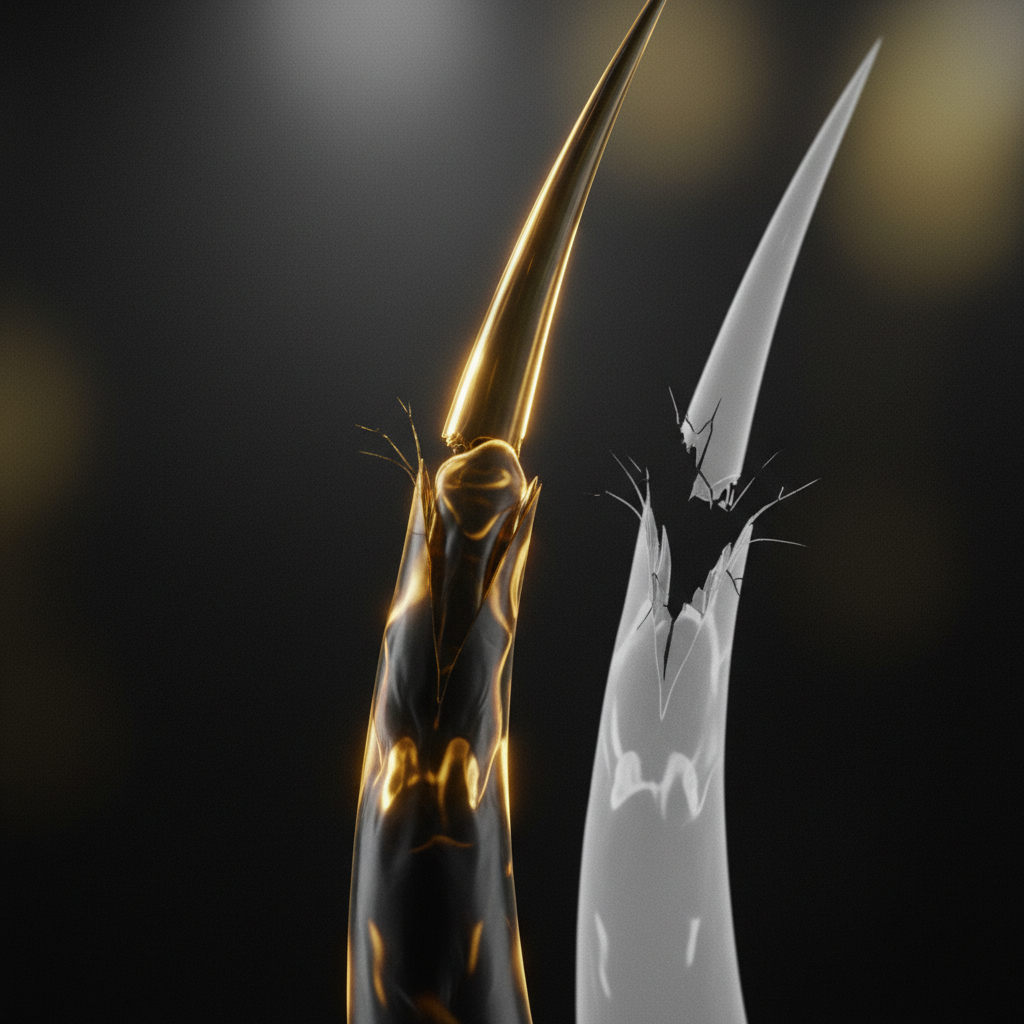
- Topical products cannot permanently heal split ends: Once the cortex splits longitudinally (trichoptilosis) or develops nodular fractures (trichorrhexis nodosa), no formulation can fuse the fibre back together permanently. Temporary polymers simply glue the split shut until the next wash.
- Damaged hair does not cause alopecia: Cortex and Cuticle Damage is strictly a structural issue of the hair shaft. It causes hair breakage, not follicular hair shedding (telogen effluvium) or follicle miniaturisation (androgenetic alopecia).
- Moisture alone does not fix structural weakness: While dry hair lacks suppleness, brittleness stemming from chemical degradation requires structural reinforcement (such as proteins or bond modifiers) and lipid replenishment, not merely water or simple humectants.
The biological and physical mechanisms of damage
The progression of fibre breakdown follows distinct biochemical pathways depending on the stressor.
Chemical oxidation and alkalisation
Permanent hair colours and bleaches rely on alkaline agents like ammonium hydroxide to elevate the cuticle scales by raising hair's native acidic pH (4.5 to 5.5) to alkaline levels (9.0 to 11.0). Hydrogen peroxide then oxidises melanin within the cortex. In doing so, it indiscriminately oxidises the disulphide bonds formed by the amino acid cystine. This reaction generates cysteic acid, significantly reducing the fibre's wet and dry tensile strength.
Thermal degradation
Applying heat tools between 160 and 220 degrees Celsius alters the secondary structure of keratin. At roughly 140 to 160 degrees Celsius, the alpha-helix keratin chains begin unraveling into disordered beta-sheet configurations. Above 180 degrees Celsius, cuticular cell membranes deteriorate, and structural moisture trapped inside rapidly vaporises, leading to internal bubbles and cracking along the cortex (often referred to as "bubble hair").
Mechanical friction and UV radiation
Combing hair while wet induces greater physical strain because wet hair can stretch up to 30 to 50 percent of its length before snapping, compared to roughly 20 percent when dry. Wet cuticle scales are softer and peel back easily when subjected to fine-toothed combs or tight elastic bands. Additionally, solar ultraviolet (UVB and UVA) radiation degrades tryptophan and cystine residues, accelerating photolytic breakdown of the cortex matrix.
Recognising the signs of fibre damage
Stylists and consumers can identify the severity of fibre fatigue by assessing specific physical characteristics:
- High porosity: The hair absorbs water rapidly when submerged or misted, but dries out just as quickly, remaining rough and unmanageable.
- Loss of elastic rebound: When a single wet strand is gently stretched, it fails to return to its original length, or it stretches like chewing gum before breaking cleanly.
- Absence of shine: Because lifted and missing cuticle scales scatter light rather than reflecting it uniformly, the hair appears flat, chalky, and matte.
- Pill-like nodes along the shaft: Running your fingertips down a single strand reveals tiny bumps or irregularities, indicating localized cortex fracture (trichorrhexis nodosa).
- Excessive sinkage in water: A dry, clean strand placed in a bowl of room-temperature water sinks to the bottom within seconds due to porous, stripped cuticle layers.
What you can do: protection and cosmetic management
Because you cannot biologically regenerate dead keratin cells, management centres on preventing further damage and cosmetically patching existing deficits.
- Control your styling temperature: Keep hot tools below 175 degrees Celsius. Always apply a film-forming heat protectant containing silicones, polyquaterniums, or hydrolysed wheat protein to buffer the rate of heat transfer.
- Restore an acidic surface pH: Use shampoos and conditioning treatments formulated at pH 4.0 to 5.5. Low pH environments contract the cuticle scales, keeping them flat against the cortex.
- Incorporate hydrolysed proteins: Small-chain peptides (molecular weight under 1,500 Daltons) can penetrate slightly beneath lifted cuticles to temporarily reinforce weakened internal areas and support tensile strength.
- Use slip agents on wet hair: Detangle gently starting from the ends, moving upward, using a wide-tooth comb or flexible-bristle brush alongside a conditioning rinse or leave-in emulsion to reduce surface friction.
- Trim damaged ends regularly: Eliminating split ends halts the upward propagation of cortical tears along the hair shaft.
When the cause may be something else
If you notice significant shedding where hairs fall out with a white bulb attached to the root, the issue is not Cortex and Cuticle Damage. That indicates hair shedding, often caused by telogen effluvium, hormonal fluctuations, nutritional deficiencies (such as iron or vitamin D), or thyroid dysfunction.
Similarly, diffuse thinning across the crown, widening partings, or receding temples point toward androgenetic alopecia. Breakage leaves behind short, uneven fragments without a root bulb; hair shedding sheds full-length fibres complete with their follicular root sheath.
When to get professional advice
Consult a qualified trichologist or dermatologist if you experience sudden, widespread hair thinning, patchy bald areas, scalp pain, scaling, or burning. A professional can use a dermatoscope (trichoscopy) to distinguish between mid-shaft breakage and follicular conditions. If your damage stems from a severe chemical burn or overlapping chemical treatments that blistered the scalp, medical evaluation is essential to prevent secondary scalp scarring.
Supporting hair condition with Watermans
When managing hair prone to mechanical stress and split ends, keeping the scalp balanced and the emerging hair fibre well conditioned is essential. Watermans GrowMe Shampoo and ConditionMe Conditioner are formulated to support the feel and resilience of daily styling routines.
While topical products cannot reverse severed disulphide bonds, the inclusion of hydrolysed lupin protein, niacinamide, biotin, and argan oil in these formulations helps coat the outer shaft, improve surface slip, and support overall hair manageability. Using mild, sulphate-free cleansers reduces cuticular friction during washing, protecting fragile strands from premature snap and excessive grooming fatigue.
Frequently asked questions about Cortex and Cuticle Damage
Can olaplex or bond builders permanently fix Cortex and Cuticle Damage?
Bond-building technologies cross-link broken disulphide bonds, providing significant structural reinforcement to the cortex. However, they are not permanent cures. Normal weathering, frequent washing, thermal styling, and chemical treatments gradually break down these newly created bonds over time, requiring ongoing maintenance and gentle handling.
How do I tell if my hair has cuticle or cortex damage?
Cuticle damage shows up as surface rough spots, frizz, dullness, and tangling. Cortex damage is deeper, causing the hair to lose elasticity, stretch unnaturally when wet, develop split ends, and snap off mid-shaft. Most chemically treated hair exhibits a blend of both.
Does hot oil repair a damaged cortex?
No. Oils cannot reach deep inside the cortex to rebuild keratin bonds. Certain plant oils, like coconut or argan oil, can penetrate past the cuticle to reduce moisture loss and smooth outer scales, but they cannot replace missing internal structural proteins.
What is the fastest way to stop breakage from Cortex and Cuticle Damage?
The most reliable method is cutting away the severely fractured ends, lowering thermal styling heat below 160 degrees Celsius, using leave-in conditioners with good slip, and pausing chemical bleaching or relaxing services until new, healthy growth comes in.
Conclusion
Understanding Cortex and Cuticle Damage gives you the knowledge to protect your hair's internal architecture before irreversible breakage occurs. While salon treatments and targeted conditioners provide excellent cosmetic shielding, gentle mechanical habits, sensible heat styling, and pH-balanced products remain your primary defence in preserving the strength of the hair shaft.
Sources and references
- Journal of Cosmetic Dermatology, "Hair shaft damage from heat and chemical processing", 2018.
- International Journal of Trichology, "Hair cosmetics: An overview", 2015.
- Robbins, C. R., "Chemical and Physical Behavior of Human Hair", 5th Edition, Springer, 2012.
- British Journal of Dermatology, "The ultrastructure of human hair and cosmetic implications", 2011.
- American Academy of Dermatology (AAD), "Hair styling without damage", clinical guidelines.
Find these ingredients in Watermans products
- Vitamin D: you will find this ingredient in our Hair Vitamins.
- Niacinamide: you will find this ingredient in our Hair Mask.