Comb vs Brush for Hair Health: An Evidence-Based Guide
10 min read ·
Master the comb vs brush for hair health debate. Learn the science of friction, wet hair fragility, and how to prevent mechanical breakage with the right tools.

Quick answer: When evaluating a comb vs brush for hair health, the best choice depends on whether your hair is wet or dry, and your individual curl pattern. Wide-tooth combs generate less friction and tensile stress on fragile, wet hair, making them superior for detangling without snapping fibres. Brushes excel at distributing natural sebum across dry strands and smoothing the cuticle. However, neither tool can reverse follicular hair loss or stimulate significant new growth; their role is strictly preventing mechanical breakage along the shaft.
Key takeaways
- Wet hair stretches up to 30 percent beyond its resting length before breaking, making a wide-tooth, seamless comb far safer than a dense brush on damp strands.
- Brushing dry hair distributes natural scalp oils (sebum) along the fibre, which conditions the mid-lengths and temporarily flattens the cuticle layer.
- Mechanical breakage from aggressive brushing or using tools with sharp plastic seams is often mistaken for hair loss, but it does not originate at the follicle.
- Excessive brushing wears away the protective epicuticle and 18-methyl eicosanoic acid (18-MEA) layer, leading to longitudinal splitting (trichorrhexis nodosa).
- Textured, curly, and coily hair types benefit most from wide-tooth combs or flexible-tine detangling tools used strictly with slip from water and conditioner.
Comb vs brush for hair health: what the evidence shows
The debate surrounding comb vs brush for hair health comes down to contact mechanics and friction coefficients. The surface of each hair shaft is covered in overlapping cuticle scales, coated in a delicate lipid layer consisting primarily of 18-MEA. When a grooming tool passes through a cluster of strands, it exerts two distinct forces: tensile force (pulling along the shaft) and shear force (friction against the cuticles).
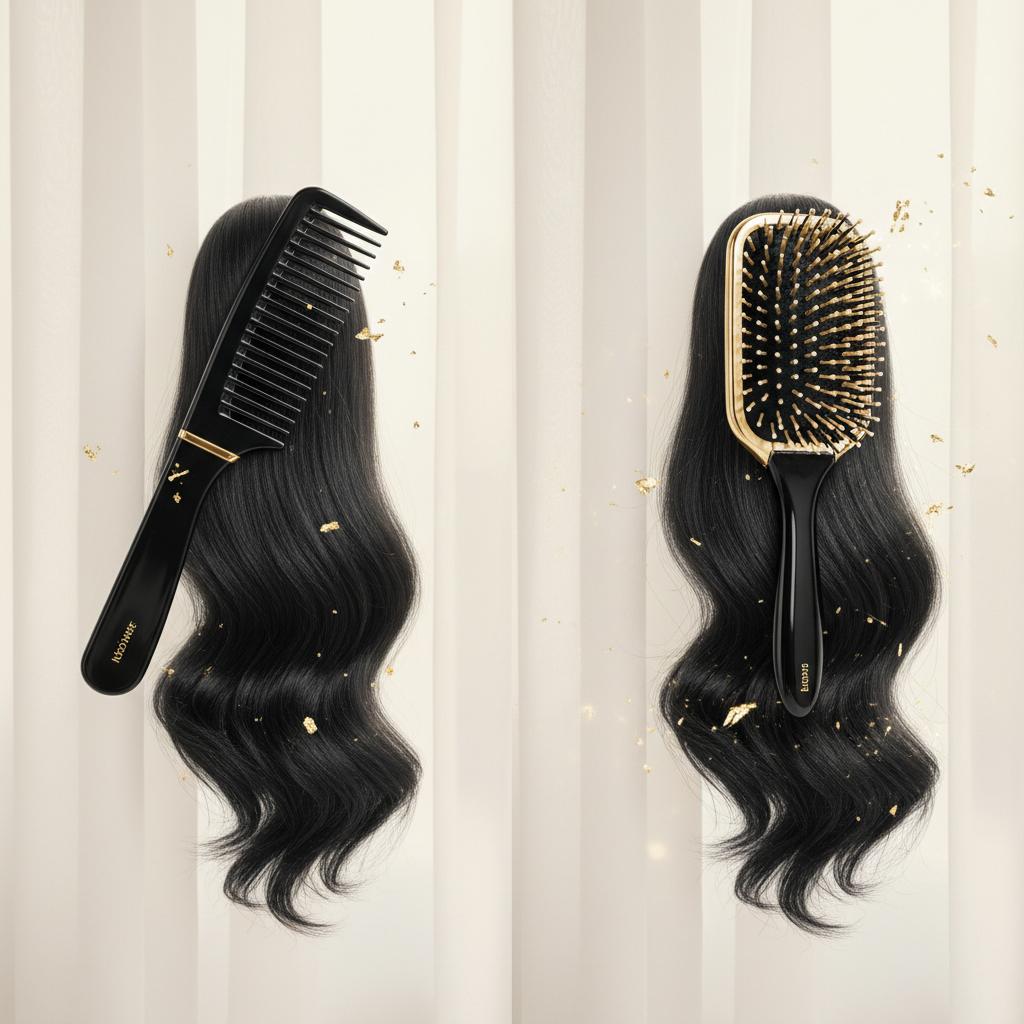
Dermatological studies investigating hair weathering show that repetitive grooming directly strips the lipid layer and lifts the cuticle edges. Brushes, particularly those with dense bristles or rigid plastic pins, contact hundreds of strands simultaneously. This high surface area creates significant frictional resistance. If the brush encounters a knot, the mechanical tension can easily exceed the hair fibre's tensile strength (roughly 50 to 100 grams of force per healthy strand), causing the fibre to snap.
In contrast, a wide-tooth comb contacts fewer hairs at any single moment. The wider spacing allows knots to be loosened gradually from the bottom up, distributing the mechanical load rather than concentrating it at a single point of resistance. Clinical research published in the Journal of Cosmetic Dermatology demonstrates that aggressive, frequent brushing correlates directly with increased hair breakage and split ends, whereas gentle combing preserves shaft integrity over time.
| Feature | Wide-Tooth Comb | Fine-Tooth Comb | Paddle / Detangling Brush | Boar Bristle Brush |
|---|---|---|---|---|
| Best used on | Wet or damp hair | Precise styling / dry parting | Dry hair detangling | Dry hair smoothing |
| Breakage risk | Very low | High (if detangling) | Moderate | Moderate to high on tangles |
| Sebum distribution | Minimal | Low | Moderate | Excellent |
| Tension level | Low | High on knots | Moderate | High |
| Ideal hair type | All types, especially curls | Straight, fine (styling only) | Medium to thick, straight/wavy | Fine to medium, dry hair |
What the evidence does not show
There is no credible scientific evidence that 100 brush strokes a day improves scalp circulation enough to stimulate hair growth or reverse pattern hair loss. This Victorian-era myth actively damages modern hair fibres. Vigorous brushing against the scalp can cause mechanical micro-trauma, leading to follicular inflammation or traction-related thinning if done repeatedly.
Furthermore, changing from a brush to a comb will not halt systemic hair shedding, such as telogen effluvium caused by stress, nutritional deficiencies, or hormonal fluctuations. Combing and brushing merely dislodge telogen hairs that have already detached from the dermal papilla inside the follicle days or weeks earlier.
The mechanism: why wet hair demands a comb
Hair fibre behaviour changes drastically when wet. Water penetrates the porous cuticle and enters the cortex, breaking temporary hydrogen bonds that give the hair its structural stiffness.
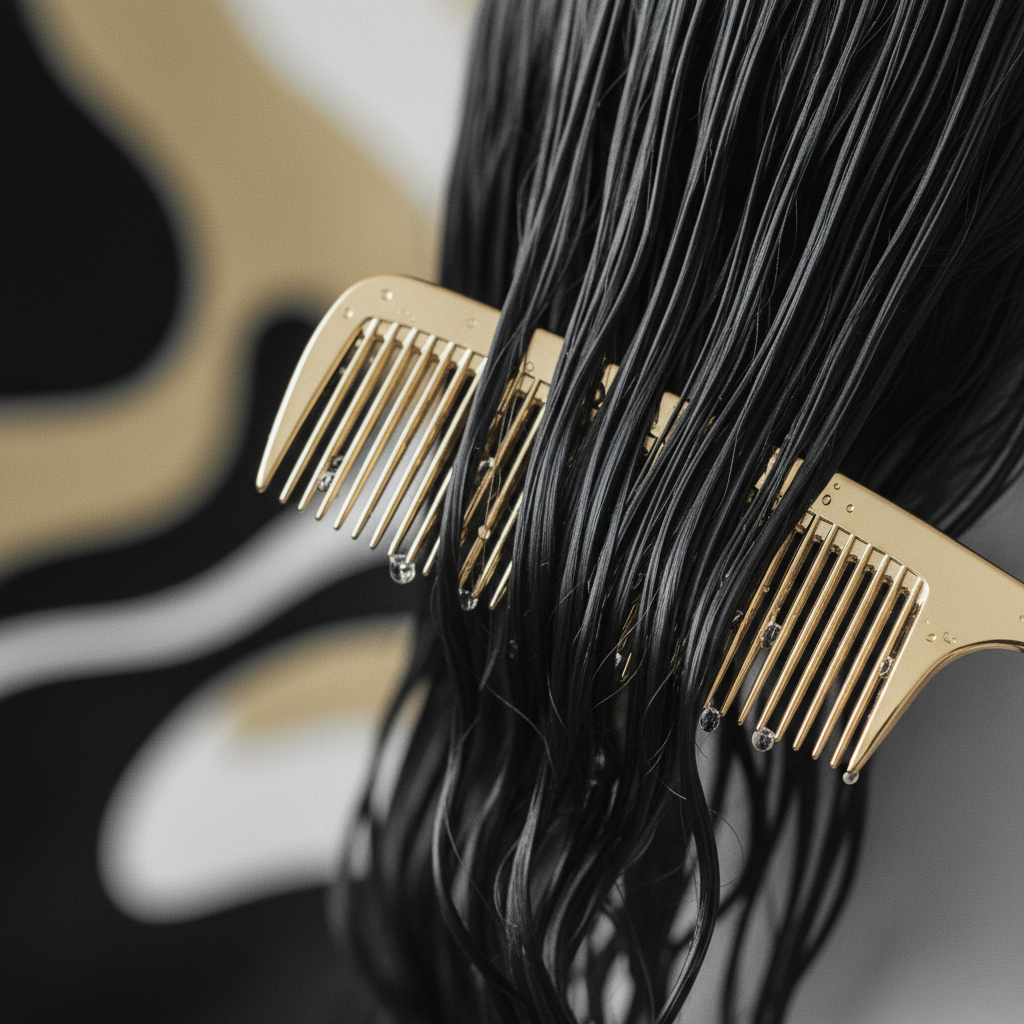
A dry hair fibre can stretch approximately 15 to 20 percent before suffering irreversible structural damage. When saturated with water, that same fibre can stretch by up to 30 to 50 percent, but its overall tensile strength decreases significantly. Wet hair is in an elastomeric, weakened state.
When you drag a standard brush through wet hair:
- The dense cluster of bristles traps the waterlogged strands.
- The hair stretches elasticity beyond its recovery threshold.
- The internal cortical cells rupture, or the outer cuticle shears off completely.
- The hair snaps, leaving an uneven, frayed tip that quickly develops into a split end.
A seamless, wide-tooth comb avoids this trapping effect. Because the teeth are spaced widely (often 3 to 8 mm apart), strands can slide freely. When the comb encounters an entangled cluster, it isolates the knot without placing the surrounding fibres under extreme tension.
The role of the brush: cuticle smoothing and sebum delivery
While combs excel at safe detangling, brushes serve an irreplaceable cosmetic function on completely dry hair. The scalp produces sebum, a complex mixture of triglycerides, wax esters, squalene, and free fatty acids. Sebum serves as the body's natural hair conditioner, sealing in moisture and protecting against environmental oxidants.
Sebum rarely travels down the length of long or curly strands on its own. A natural bristle brush, such as one made from boar hair, features microscopic scales that closely mimic human hair cuticles. As you gently sweep a bristle brush from the scalp to the ends on dry hair:
- Sebum is drawn along the length of the shaft.
- Raised cuticle scales are physically pressed flat against the cortex.
- Light reflection increases, giving the hair a natural, healthy shine.
- Surface friction between neighbouring strands decreases, reducing static.
Using a brush on dry hair is beneficial, provided the hair has already been detangled beforehand using your fingers or a wide-tooth comb.
Signs of mechanical damage from grooming tools
How do you tell if your styling tools are harming your strands? Look for these distinct physical indicators:
- Short, uneven hairs on your clothes: If hairs falling during styling have no tiny white bulb at the root, they are broken shafts, not shed follicles.
- White specks along the shaft: Known clinically as trichorrhexis nodosa, these nodes are areas where the cortical fibres have burst outward like two paintbrushes pushed together.
- Frayed, split ends (trichoptilosis): Longitudinal splits at the ends of your hair often indicate abrasive brushing tools or moulded plastic combs with sharp central seams.
- Mid-shaft snapping sounds: An audible snapping or popping noise while dragging a tool through your hair is the sound of fibres exceeding their tensile threshold.
Practical steps for healthier hair grooming
Adopting a systematic approach to tool selection preserves your hair's protective structure and cuts down on daily breakage.
- Check your tools for seams: Inexpensive plastic combs and brushes are made using two-piece injection moulds. These leave microscopic, razor-sharp seams down the centre of each tooth or bristle that act like tiny blades against your cuticle. Upgrade to hand-sawn, seamless acetate combs or polished wooden tools.
- Never detangle from roots to tips: Always start detangling 2 to 3 inches from the ends of the hair. Once that section is knot-free, move up a few inches and work down again. This prevents small knots from compounding into dense, impassable mats.
- Use slip before combing wet hair: Never comb dry, highly textured curls, and never comb bone-dry tangles without a lubricating agent. Apply a leave-in conditioner, oil, or detangling spray to drop surface friction.
- Reserve brushes for dry styling: Keep paddle brushes and boar bristle brushes away from the shower. Use them only after hair is 100 percent dry and pre-detangled.
- Clean your tools weekly: Sebum, shed skin cells, residual styling polymers, and dust collect between bristles. Wash your combs and brushes weekly in warm water with a clarifying shampoo to prevent re-depositing oxidised oils onto clean hair.
When breakage indicates a deeper issue
If your hair snaps under minimal tension despite using seamless, wide-tooth combs and gentle techniques, the primary issue is likely structural compromise within the cortex rather than the tool itself.
Common causes of extreme fibre fragility include:
- Chemical over-processing: Bleaching, permanent hair dyes, and chemical relaxers cleave the internal disulphide cystine bonds, leaving hair structurally weak.
- Thermal degradation: Using flat irons or curling wands above 185°C denatures keratin proteins and boils water trapped inside the cortex (bubble hair).
- Nutritional gaps: Severe protein deficiency, low ferritin levels, or zinc shortages compromise keratinisation inside the follicle before the strand even emerges.
If you notice sudden, diffuse shedding with white bulbs attached to the root, patches of exposed scalp, or scalp pain and scaling, consult a GP or registered trichologist. These are symptoms of physiological shedding or follicular alopecia, which require medical evaluation.
Supporting hair health with Watermans
Reducing mechanical stress with the right comb or brush is half the equation; nourishing the scalp environment completes it. Watermans focuses on topical cosmetic formulations designed to support the appearance of density, strength, and vitality.
Watermans GrowMe Shampoo delivers a nutrient-rich blend of biotin, rosemary extract, caffeine, niacinamide, and argan oil directly to the scalp. While it does not claim to treat underlying medical conditions or alter genetics, regular use helps create an optimal scalp environment for robust hair growth. Pairing gentle detangling habits with a revitalising daily regimen ensures hair looks thicker, fuller, and significantly more resilient against everyday mechanical stress.
Frequently asked questions about Comb vs Brush for Hair Health
Is a comb or brush better for hair thinning?
For thinning hair, a wide-tooth comb is significantly better than a brush. Thinning hair shafts often have a reduced diameter, making them physically weaker and more susceptible to tensile stress. A wide-tooth comb glides through strands with minimal pull, preventing unnecessary mechanical snapping that can make thinning look more severe.
Can using the wrong brush cause permanent hair loss?
No, using an unsuitable brush does not cause permanent follicular hair loss. The damage from aggressive brushing is limited to mechanical breakage along the shaft. The only exception is chronic, aggressive pulling that inflames the follicle over many years, potentially contributing to traction alopecia, though this is rare from brushing alone.
In the comb vs brush for hair health debate, which is best for afro-textured hair?
For afro-textured and tight coily hair (Type 4), wide-tooth combs and specialised flexible-row detangling tools are vastly superior to standard brushes. Coily hair has an elliptical cross-section with natural structural weak points along each twist. Brushes cause excessive friction, whereas a wide-tooth comb used on wet, conditioned hair detangles safely.
How often should you brush your hair for optimal health?
Brushing should be kept to the minimum necessary for styling and detangling. Once or twice daily is plenty for most hair types. The old advice to brush your hair 100 strokes a night causes cumulative friction that strips the outer cuticle layer and triggers breakage.
Making the right choice for your routine
Resolving the comb vs brush for hair health dilemma requires matching the right implement to the moisture state of your hair. Reach for a wide-tooth, seamless comb when hair is wet, fragile, or heavily tangled, and save your brush for gentle finishing, smoothing, and sebum distribution once the fibre is completely dry. Respecting the physical limits of the hair shaft is the simplest, most effective step toward long-term resilience and shine.
Sources and references
- American Academy of Dermatology Association. (2022). Hair styling without damage. AAD Public Resources.
- Robbins, C. R. (2012). Chemical and Physical Behavior of Human Hair (5th ed.). Springer-Verlag.
- Dawber, R. (1996). Hair: Its structure and response to cosmetic preparations. Clinics in Dermatology, 14(1), 105-112.
- Evans, T., & Wickett, R. R. (2012). Practical Modern Hair Science. Allured Business Media.
- Swift, J. A. (1999). The mechanics of fracture of human hair. International Journal of Cosmetic Science, 21(4), 227-239.
Find these ingredients in Watermans products
- Biotin: you will find this ingredient in our Hair Growth Shampoo.
- Zinc: you will find this ingredient in our Hair Vitamins.
- Niacinamide: you will find this ingredient in our Hair Mask.