Proper Hair Washing Technique: The Complete Scalp and Hair Guide
7 min read ·
Master the evidence-based Proper Hair Washing Technique to reduce cuticle friction, cleanse your scalp effectively, and prevent mechanical hair breakage.
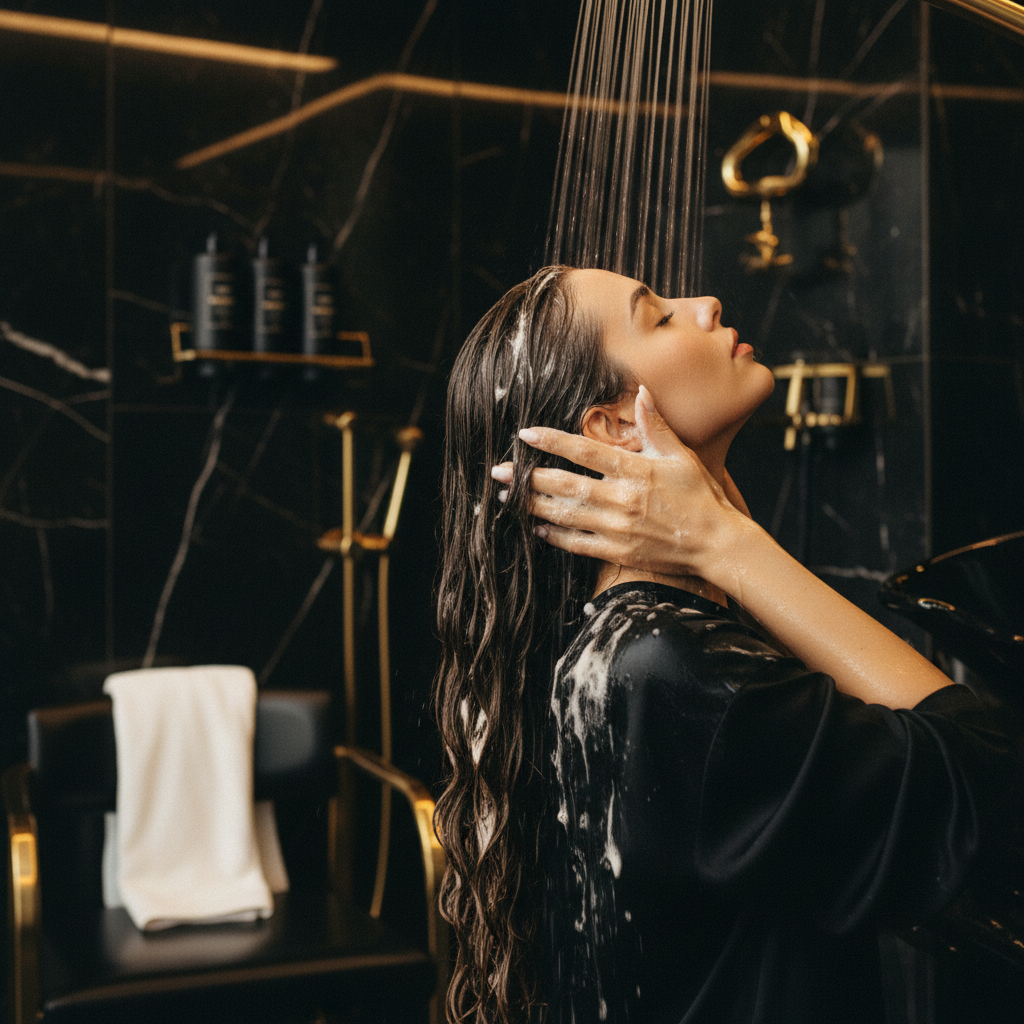
Quick answer: Adopting a Proper Hair Washing Technique protects the hair shaft from hygral fatigue, minimises cuticle friction, and cleanses the scalp without stripping protective lipids. The method involves saturating hair with lukewarm water, focusing shampoo exclusively on the scalp with gentle fingertip friction, allowing suds to cleanse the lengths passively, and applying conditioner from mid-lengths to ends. The main limitation is that washing technique alone cannot reverse genetic hair loss, treat clinical scalp infections, or mend split ends that have already fractured.
Key takeaways
- Cleansing should target the scalp skin, whereas conditioning should target the hair fibre.
- Wet hair swells and weakens; violent scrubbing or bunching hair on top of the head causes severe friction, cuticle uplift, and fibre breakage.
- Water temperature matters: very hot water strips the scalp barrier and lifts cuticles, while lukewarm water cleanses effectively without thermal stress.
- Rinsing thoroughly is vital because residual surfactants can cause scalp irritation, itching, and cosmetic dullness.
- Hair shedding in the shower (typically 50 to 100 hairs per day) is normal telogen release, not acute hair breakage caused by washing.
Proper Hair Washing Technique: what the evidence shows
Scientific research into hair tribology and cosmetic dermatology shows that wet hair is vulnerable to mechanical stress. When submerged in water, the hair shaft absorbs moisture and swells by up to 15 to 20 percent in diameter. This process temporarily weakens the hydrogen bonds inside the cortex, reducing the force required to break the fibre by roughly a third compared to dry hair.
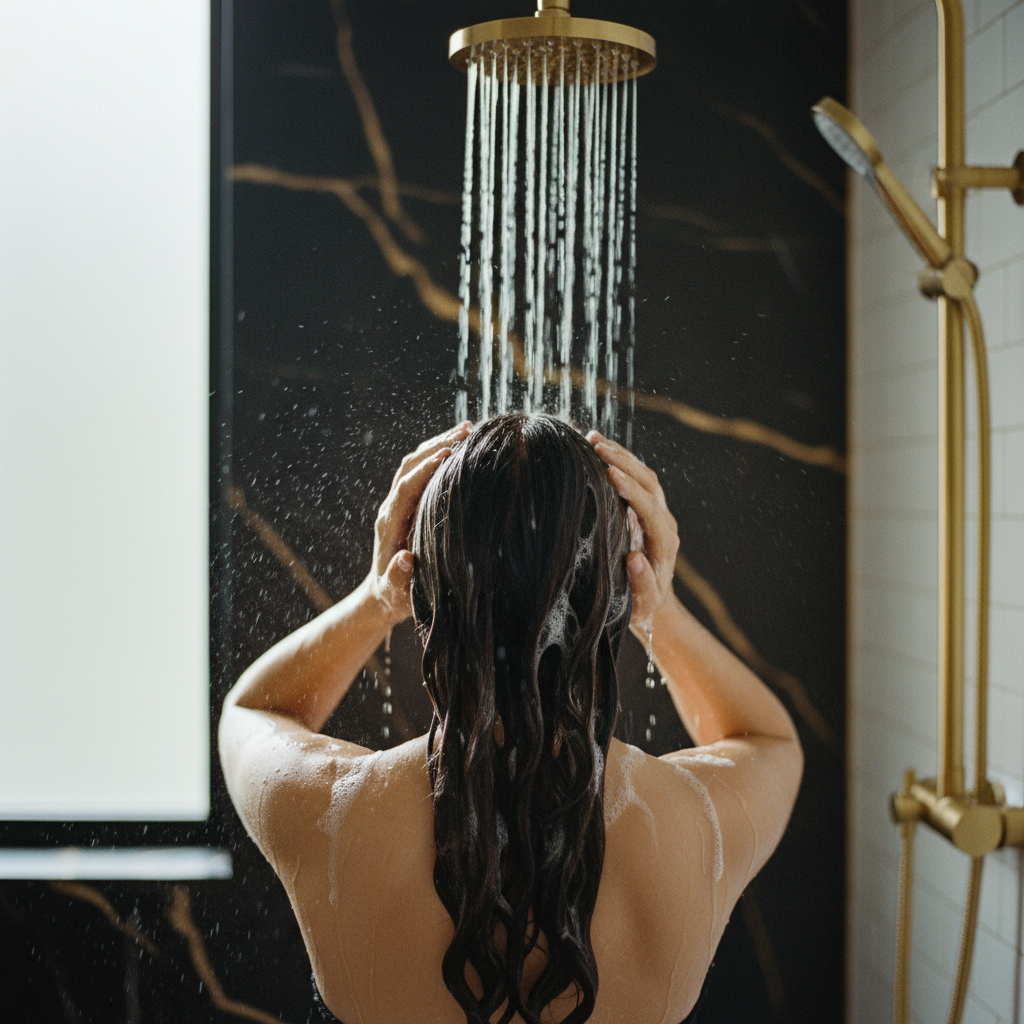
A clinical study published in the International Journal of Trichology highlights that the primary purpose of shampoo is to clean the scalp surface and sebum reservoirs around the follicle opening. Sebum, environmental dust, dead corneocytes, and styling product residues accumulate on the scalp. A Proper Hair Washing Technique uses surfactants to emulsify these non-polar lipids so water can rinse them away.
Rubbing shampoo down the lengths of the hair is unnecessary and damaging. The lather that rinses down the hair shaft during washing provides more than enough detergent action to clean the mid-lengths and ends. Vigorous circular scrubbing causes the imbricated cuticle scales to catch on each other, producing friction, micro-tears, and structural breakage.
+--------------------------+-------------------------------------+-----------------------------------+
| Washing Step | Common Mistake | Correct Evidence-Based Technique |
+--------------------------+-------------------------------------+-----------------------------------+
| Water Saturation | Rushing to apply shampoo on damp hair| Drench hair with lukewarm water for|
| | | at least 60 seconds first |
+--------------------------+-------------------------------------+-----------------------------------+
| Shampoo Application | Piling hair on crown and scrubbing | Distribute across scalp; massage |
| | lengths aggressively | roots with flat finger pads |
+--------------------------+-------------------------------------+-----------------------------------+
| Water Temperature | Using hot water to open pores | Use lukewarm water (37°C to 39°C) |
| | | to prevent lipid barrier removal |
+--------------------------+-------------------------------------+-----------------------------------+
| Conditioning | Applying heavy conditioner to the | Apply from mid-lengths to ends; |
| | scalp roots | leave for 2 to 3 minutes |
+--------------------------+-------------------------------------+-----------------------------------+
| Drying Preparation | Rubbing roughly with a terry towel | Squeeze gently with microfibre |
| | | towel or cotton cloth |
+--------------------------+-------------------------------------+-----------------------------------+
Step-by-step: executing a proper wash routine
Achieving optimal results requires a systematic approach to each phase of the wash cycle:
- Pre-wash detangling: Gently comb through dry hair with a wide-tooth comb before stepping into the shower. Wet hair knots more easily, and attempting to detangle wet, swollen strands creates extreme tensile stress.
- Complete saturation: Spend at least 60 seconds ensuring the hair is completely drenched with lukewarm water. Water acts as a buffer and helps spread the shampoo evenly without excessive product use.
- Targeted scalp cleansing: Dispense a coin-sized amount of shampoo into your hands and emulsify it between your palms. Apply it directly to the scalp: the hairline, temples, crown, and nape of the neck. Use the soft pads of your fingers, never your fingernails. Move in small, firm circles or zigzag motions to lift debris.
- Passive length cleansing: Allow the lather to run down the lengths of your hair as you rinse. Avoid bunching the hair into a pile on top of your head, as this roughs up the cuticle layer.
- Rinse thoroughly: Take twice as long to rinse as you did to lather. Lingering shampoo surfactant molecules disrupt the natural scalp pH (which sits between 4.5 and 5.5) and cause contact irritation.
- Condition the fibre: Squeeze excess water from your hair before applying conditioner. Waterlogged hair dilutes conditioning agents. Apply conditioner strictly from the mid-lengths to the tips. This replaces fatty acids, neutralises negative surface charges, and flattens the cuticle scales.
- Cool final rinse: A cool or lukewarm rinse removes conditioner residue. While cool water does not open or close living pores, it prevents premature melting of conditioning lipids.
What the evidence does not show
There are persistent myths surrounding hair washing that dermatological science does not support:
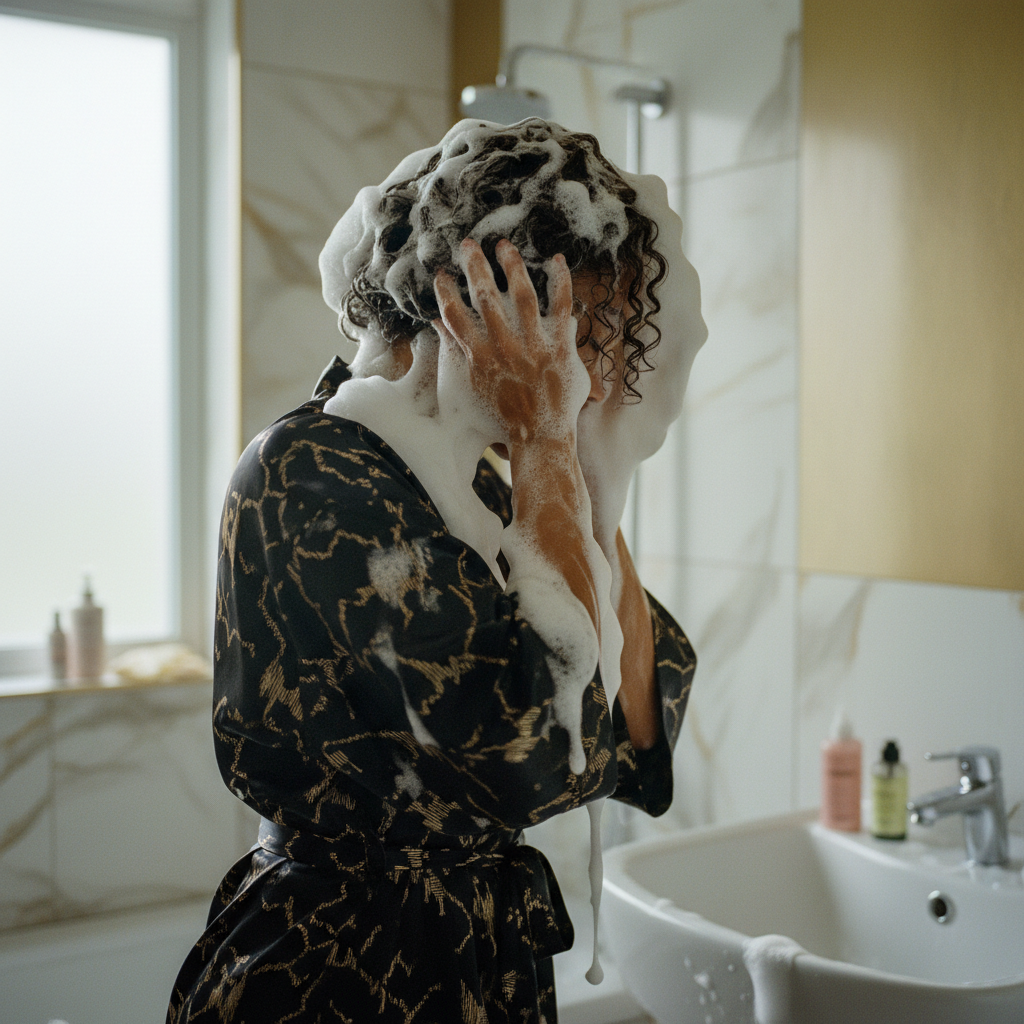
- Washing causes permanent hair loss: Hair seen in the drain during washing consists of telogen club hairs that disconnected from their blood supply two to three months earlier. The physical act of washing simply releases these hairs. It does not alter follicular cycles or cause alopecia.
- Cold water closes pores: The scalp does not contain muscular pores that open and close in response to temperature. Scalp ostia remain open. Scalp health depends on sebum regulation and microbial balance, not thermal shock.
- You can train your scalp to stop producing sebum: Sebum production is regulated primarily by systemic and local androgens, such as dihydrotestosterone (DHT), not by how rarely you wash. Extending wash intervals when your scalp is oily merely creates an ideal environment for Malassezia yeasts to proliferate, which triggers seborrhoeic dermatitis.
Signs of incorrect washing habits
You can assess whether your current routine is working by observing your scalp and hair shaft behaviour:
- Scalp dryness and persistent tightness: Often caused by washing with water that is too hot, or using harsh anionic cleansers without sufficient rinsing.
- Dull, tangled lengths: A classic sign of rubbing shampoo down the hair fibres, which strips the protective 18-methyleicosanoic acid (18-MEA) lipid layer and leaves cuticles flared.
- Rapid re-greasing at the roots with dry ends: Typically results from placing silicone-heavy conditioners on the scalp while using drying techniques on the ends.
- Mid-shaft snapping: Indicates wet friction damage from rubbing the hair between your palms or towel-scrubbing.
When the cause is something else
If your scalp remains persistently itchy, flaky, red, or tender despite adopting a gentle, structured wash routine, the underlying trigger is rarely technique alone.
Conditions such as seborrhoeic dermatitis, scalp psoriasis, folliculitis, or allergic contact dermatitis require targeted active ingredients (such as ketoconazole, zinc pyrithione, or salicylic acid) or topical medical prescriptions. Similarly, if you notice thinning patches, a widening parting, or shed hair exceeding 150 hairs daily for several weeks, consult a dermatologist or trichologist to evaluate for telogen effluvium, nutritional deficiencies, or pattern hair loss.
The role of premium formulation: Watermans
While correct mechanics are crucial, product formulation plays a major role in how the hair fibre behaves. Watermans approaches cleansing from a scalp-first perspective. Formulations such as Watermans GrowMe Shampoo incorporate biotin, rosemary extract, caffeine, and argan oil to nourish the scalp environment while gently removing debris.
By avoiding harsh, stripping surfactants and pairing targeted scalp nutrition with hydrating conditioning steps, you support the hair's natural resistance to daily mechanical stress and breakage.
Frequently asked questions about Proper Hair Washing Technique
How often should you wash your hair using this technique?
Washing frequency depends on your scalp type, activity level, and hair diameter. A fine, oily scalp benefits from daily or alternate-day washing to prevent sebum build-up and fungal overgrowth. Dry, coarse, or afro-textured hair thrives on washing every five to seven days to preserve essential moisture. The core steps of a Proper Hair Washing Technique apply across all schedules.
Should you always shampoo twice?
A double cleanse is helpful if you use heavy styling polymers, dry shampoos, or have excess sebum. The first shampoo breaks down surface oils, while the second produces a richer lather that cleanses the follicular margins. If you wash daily or have very dry hair, a single gentle lather is sufficient.
Does hot water damage hair fibres?
Yes. Water above 40°C strips essential surface ceramides from the hair fibre and dissolves the natural lipid barrier on the scalp. This leads to moisture loss, scalp dehydration, and rough cuticles. Lukewarm water cleanses sebum effectively without thermal damage.
Can using the wrong technique cause hair thinning?
Incorrect technique causes hair breakage, not follicular thinning. Scrubbing wet hair or piling it roughly causes the shaft to fracture along its length, creating an appearance of thinner ends. True hair thinning originates beneath the scalp within the follicle and relates to genetics, hormones, or systemic health.
Mastering your hair washing routine
Adopting a Proper Hair Washing Technique transforms a daily chore into an active preservation method for your hair and scalp. By treating your scalp like skin and your hair lengths like a fine textile, you minimise wet friction, protect the cuticle layer, and keep the follicular environment clean. Consistency, gentle manipulation, and targeted product placement deliver stronger-feeling, healthier-looking hair over time.
Sources and references
- International Journal of Trichology, "Shampoo and Conditioners: What a Dermatologist Should Know?", 2015.
- Journal of the American Academy of Dermatology, "Scalp condition impacts hair growth and retention via oxidative stress", 2018.
- British Journal of Dermatology, "The structural and mechanical properties of human hair fibres", 2012.
- Cosmetic Science and Technology, "Hair Cleansing: Mechanisms and Formulations", 2019.
Find these ingredients in Watermans products
- Zinc: you will find this ingredient in our Hair Vitamins.