Understanding Chemical Damage and Hair Recovery: Evidence, Structure, and Restoration
8 min read ·
Understand the science behind Chemical Damage and Hair Recovery, from bond cleavage to effective routines that restore strength and stop breakage.
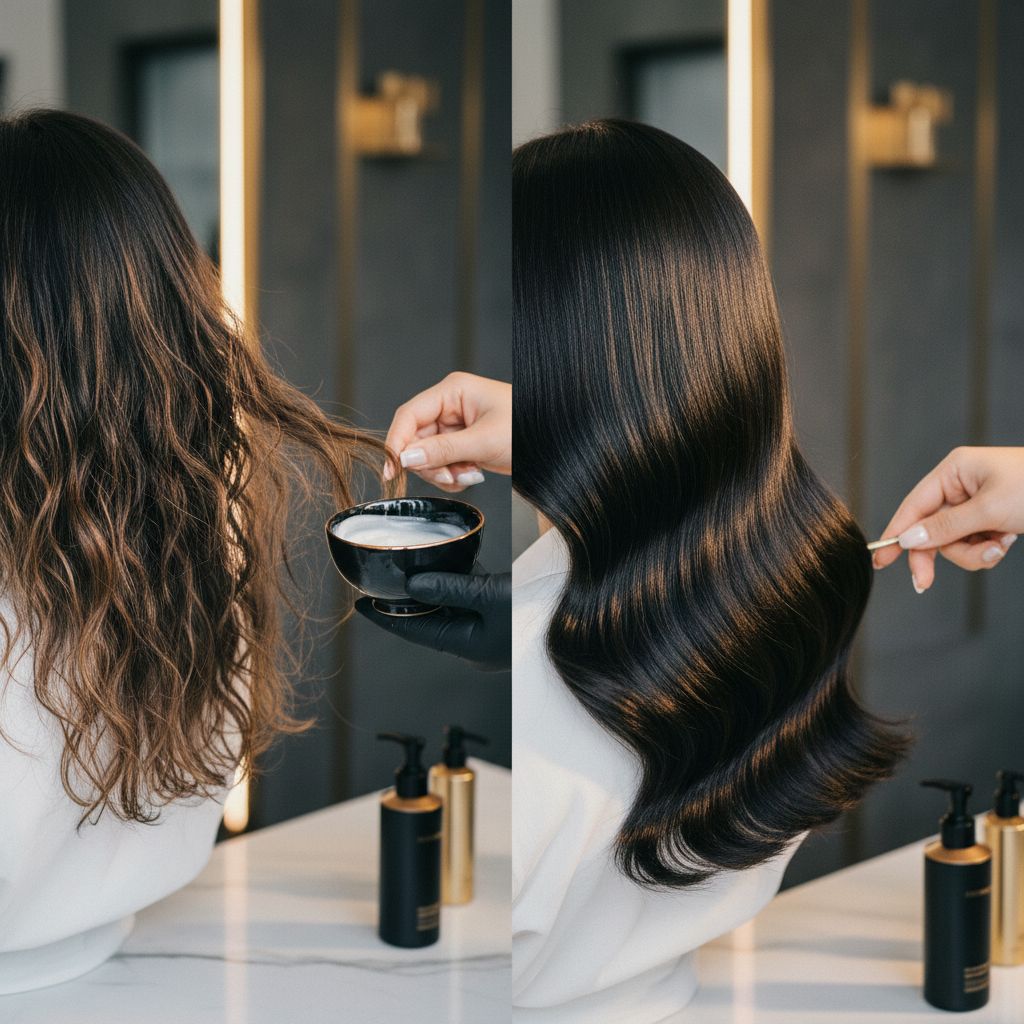
Quick answer: Understanding Chemical Damage and Hair Recovery begins with recognising that hair is non-living tissue unable to biologically heal itself. Bleaching, permanent colouring, perming, and chemical relaxing alter the cuticle and break structural disulphide bonds within the cortex. While full biological restoration is impossible, effective recovery relies on mitigating mechanical stress, reinforcing remaining keratin chains with targeted conditioning and bond-building technologies, and modifying daily routines to prevent breakage while new, undamaged fibre emerges from the scalp.
Key takeaways
- Chemical treatments degrade the protective F-layer (18-methyleicosanoic acid) and break internal disulphide bonds, leaving hair porous and mechanically weak.
- Hair fibres are non-living; therefore, true repair is a cosmetic reinforcement of remaining structure rather than biological cellular regeneration.
- Breakage along the hair shaft is distinct from follicular hair shedding and must not be confused with alopecia.
- Recovery protocols require reducing wet friction, balancing hydrolysed protein with emollients, and adjusting wash pH to 4.5 to 5.5.
- Severe chemical burns or follicular damage caused by improper chemical application require clinical trichological or dermatological assessment.
Chemical Damage and Hair Recovery: what the evidence shows
When discussing Chemical Damage and Hair Recovery, cosmetic science demonstrates that salon and at-home chemicals fundamentally alter hair fibre physics. Permanent hair colour, relaxers, and lighteners rely on alkaline agents such as ammonium hydroxide or sodium hydroxide to raise the cuticle scales. This allows chemicals to penetrate the cortex.
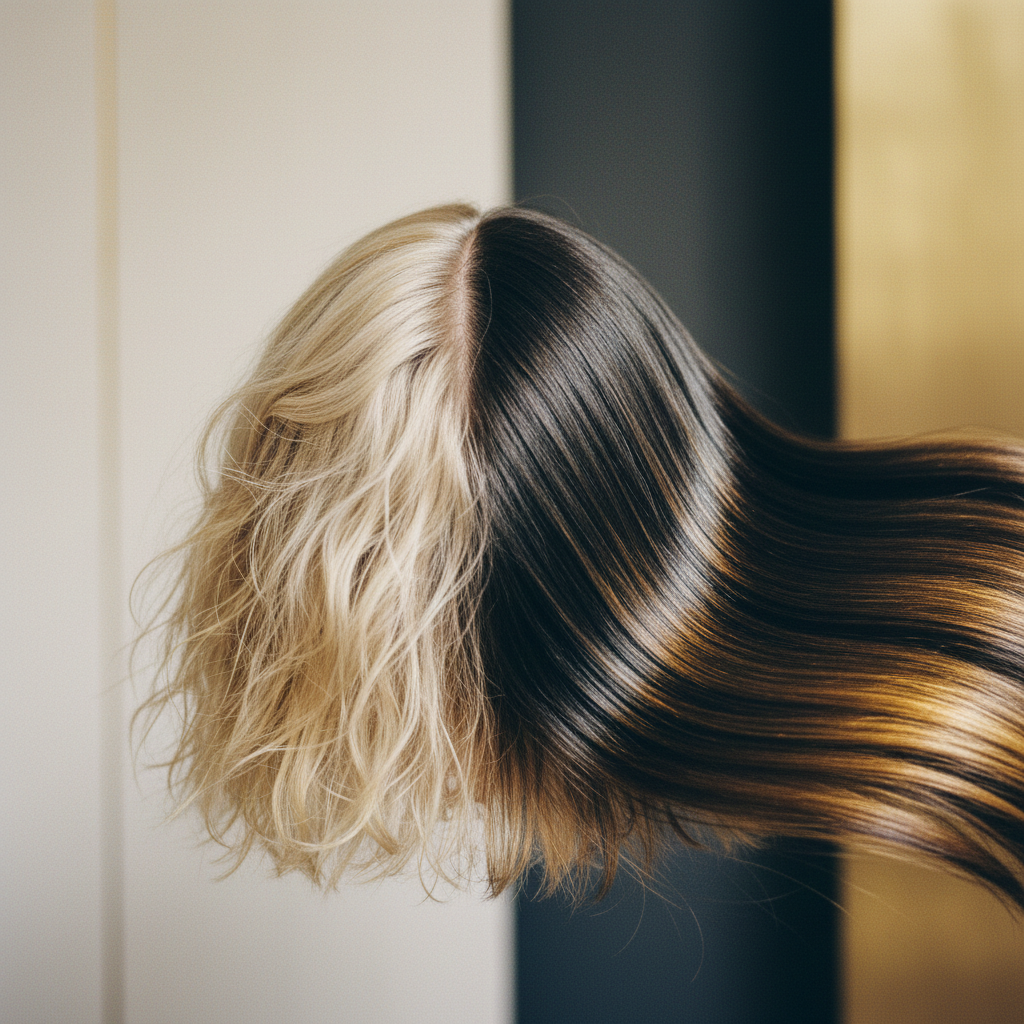
In lighteners, hydrogen peroxide oxidises natural melanin while simultaneously stripping cysteine, the sulphur-rich amino acid responsible for hair strength. Research published in the International Journal of Cosmetic Science shows that repeated bleaching can reduce hair's total cysteine content by up to 50 percent, converting disulphide bonds into cysteic acid. This shift leaves the fibre hyper-hydrophilic. Instead of repelling water, damaged hair absorbs excessive moisture, swells unevenly, and suffers structural collapse under low mechanical tension.
Cosmetic interventions cannot reform lost keratin molecules identically to their virgin state. However, cosmetic chemists have verified that low-molecular-weight proteins, lipid replenishment agents, and bis-aminopropyl diglycol dimaleate derivatives can temporarily cross-link damaged sites or lubricate the outer cuticle. This reduces inter-fibre friction and significantly decreases day-to-day breakage while the client manages regrowth.
The biochemical mechanism of chemical processing
Every healthy hair fibre possesses an outermost hydrophobic lipid barrier known as the 18-methyleicosanoic acid (18-MEA) layer, or F-layer. This single lipid layer repels ambient moisture and protects the overlapping cuticle scales beneath it.
During an alkaline chemical process:
- Alkaline swelling: A high pH (often between pH 9.0 and 13.0, depending on whether it is a tint, bleach, or relaxer) forces the cuticle cells to flare outward. This strips away the delicate 18-MEA barrier permanently.
- Disulphide bond cleavage: Alkaline reducing agents or oxidisers enter the cortex. In perm and relaxer chemistry, cystine bonds are broken to reshape the hair. Relaxers convert cystine into lanthionine, permanently reducing elasticity. In bleaching, oxidisers destroy disulphide linkages as an unintended side effect of oxidising melanin.
- Protein leaching: Once the cuticle is compromised and the internal matrix is altered, smaller peptides and natural moisture factors leach out during rinsing. The hair loses tensile strength, structural elasticity, and moisture retention capacity.
| Damage Stage | Structural State | Physical Signs | Primary Corrective Strategy |
|---|---|---|---|
| Mild (Single-process colour) | Cuticle slightly lifted; minor 18-MEA reduction | Dullness, mild tangling when wet, minor dryness | Acidic pH sealers (pH 4.5 to 5.5), regular light conditioning |
| Moderate (Double-process bleach or perm) | Cuticle chipped; moderate disulphide bond loss | Increased porosity, rough texture, wet elasticity loss | Low-weight hydrolysed proteins, lipid treatments, leave-in detanglers |
| Severe (Over-processed, overlapping bleach) | Cuticle stripped; cortex exposed; cysteic acid high | "Gummy" or stretchy wet feel, spontaneous snapping, split ends | Bond builders, minimal washing, structural trims, no heat styling |
Signs of chemical damage versus alternative issues
You must accurately identify whether symptoms stem from chemical processing or an unrelated scalp condition. Chemical damage strictly affects the non-living hair shaft.
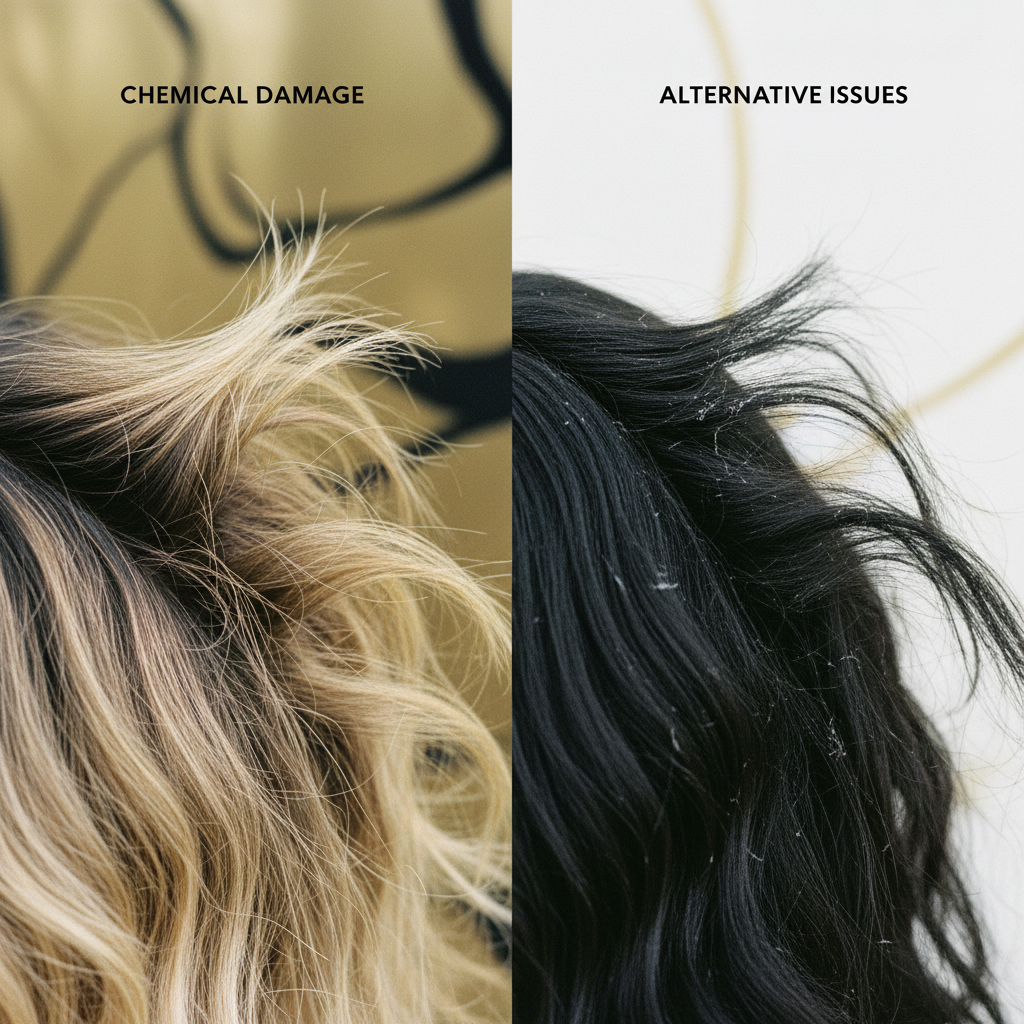
Typical symptoms of chemical damage include:
- Structural snap: Short pieces of hair breaking off without a white follicular bulb at the tip.
- Wet elasticity abnormalities: Wet hair stretches abnormally long like chewing gum and fails to return to its original length, or snaps immediately under negligible tension.
- High porosity: Hair absorbs water instantly in the shower, takes an unusually long time to dry, and tangles severely during washing.
- Extreme surface friction: Hair feels dry, rough, and rasping to the touch even after applying standard rinse-off conditioners.
If hair is shedding from the root in high volumes (identifiable by the white bulb at the end of the strand), the underlying issue is likely telogen effluvium or another form of follicular shedding. Chemical damage causes shaft breakage, not systemic root shedding, unless an aggressive chemical burn has damaged the scalp tissue itself.
What you can do: an evidence-based recovery plan
Navigating hair restoration requires a consistent routine focused on preserving the remaining fibre integrity.
1. Introduce acidic wash routines
Healthy hair and scalp have a natural acidic mantle between pH 4.5 and 5.5. Alkaline treatments leave cuticle cells elevated. Using shampoos and conditioners formulated within this acidic range helps compress the outer cuticular scales, smoothing the fibre surface, restoring shine, and shielding the fragile cortex from mechanical erosion.
2. Balance hydrolysed proteins and lipids
Severely chemically processed hair requires structural fortification. Look for products containing hydrolysed keratin, wheat protein, or silk amino acids. Because their molecular weight is small enough to enter the damaged cortex, they temporarily patch voids within the protein matrix. Always pair protein treatments with conditioning fatty alcohols (like cetyl and stearyl alcohol) to prevent the fibre from becoming brittle.
3. Minimize wet mechanical stress
Water weakens hair fibres by temporarily breaking hydrogen bonds. In chemically damaged hair, this vulnerability is amplified. Never brush chemically over-processed hair while it is soaking wet. Blot gently with a microfibre towel instead of rubbing, apply a slip-enhancing leave-in conditioner containing silicones or plant oils, and detangle exclusively with a wide-tooth comb starting from the tips and working upward.
4. Remove thermal stressors
Heat tools above 150°C rapidly degrade remaining structural proteins and strip any residual internal moisture. Cease blow-drying with high heat and discontinue using flat irons or curling wands entirely while recovering from significant chemical damage.
5. Schedule conservative dusting trims
Because split ends traverse upward along the hair shaft like a run in a stocking, trimming the most severely degraded ends every 6 to 8 weeks prevents structural fractures from destroying newer, healthier sections of the hair strand.
What the evidence does not show
There is no scientific evidence demonstrating that any topical cosmetic, oil, or salon treatment can "heal" hair permanently or return it to a virgin state. Once the biological 18-MEA lipid layer is removed by bleach or relaxers, it does not grow back onto that section of the hair shaft.
Furthermore, applying pure kitchen oils (such as raw coconut, olive, or castor oil) does not reconstruct disulphide bonds or replace lost structural keratin. While certain oils penetrate the fibre to slow water absorption, they lack the tensile-strengthening capabilities of formulated hydrolysed proteins and cosmetic conditioners.
When to seek professional clinical advice
If chemical treatments resulted in tingling that escalated to burning, scalp erythema, weeping sores, or sudden patches of complete baldness, consult a trichologist or dermatologist immediately. Chemical burns from relaxers or high-volume peroxides can cause scarring alopecia if the underlying follicle is destroyed.
Stylists should refer clients to medical professionals whenever scalp skin integrity is compromised. Additionally, if breakage is accompanied by unexplained root shedding exceeding 100 hairs daily for longer than two months, a clinical blood panel should be requested to screen for nutritional or hormonal triggers.
Watermans approaches to fibre care
For individuals working through hair recovery, maintaining a supported scalp environment while reinforcing fragile lengths is essential. Watermans focuses on delivering non-irritating, nutrient-dense topical formulas suited for delicate hair. Products like Watermans Grow Me shampoo provide a balanced wash experience free from harsh sulphates, cleansing the scalp without stripping compromised hair fibres. When paired with protective conditioning steps, gentle scalp care ensures that new hair growth emerges into an optimal environment while existing lengths are treated with minimal mechanical friction.
Frequently asked questions about Chemical Damage and Hair Recovery
Can split ends from chemical processing be permanently fused back together?
No. Split ends represent a complete fracture of the cuticle and cortex. While certain conditioning polymers temporarily glue the split fibres together until the next wash, the only permanent solution for a split end is cutting it off. Trimming prevents the split from migrating further up the strand.
What is the typical timeline for Chemical Damage and Hair Recovery?
The timeline depends on hair length and growth rate. Scalp hair grows roughly 1 to 1.25 centimetres per month. While cosmetic products improve manageability, strength, and appearance immediately, total physical recovery of a full head of hair requires growing out the compromised sections, which usually takes between one and three years.
How often should I apply protein treatments to chemically damaged hair?
Moderation is critical. Applying intensive hydrolysed protein treatments every 2 to 4 weeks is generally sufficient for chemically treated hair. Over-applying protein without adequate emollients can leave the hair stiff, rigid, and prone to snap fractures. Always follow protein applications with an emollient-rich moisturising conditioner.
Does chemical damage cause permanent baldness?
Chemical processing primarily damages the non-living hair shaft, resulting in mid-shaft breakage rather than root loss. However, if high-volume peroxide or caustic relaxers are left on the scalp long enough to cause severe chemical burns, deep tissue scarring can destroy follicles permanently. Standard, correctly applied treatments do not cause follicular hair loss.
Recovery and long-term care
Navigating Chemical Damage and Hair Recovery successfully requires patience, scientific realism, and disciplined daily maintenance. Because hair cannot biologically repair its structural bonds, long-term success comes down to halting further chemical processing, replenishing surface lubrication, and shielding fragile fibres from heat and friction. By giving remaining lengths structured support and allowing fresh growth to emerge unhindered, hair gradually returns to full density, strength, and shine.
Sources and references
- International Journal of Cosmetic Science, "Chemical and physical changes in hair caused by bleaching", 2008.
- Journal of Cosmetic Dermatology, "Hair breakage: Mechanisms, morphology, and testing methods", 2017.
- Robbins, C. R., "Chemical and Physical Behavior of Human Hair", 5th Edition, Springer, 2012.
- British Association of Dermatologists, "Hair Shedding and Breakage Guidelines", 2021.
Find these ingredients in Watermans products
- Castor Oil: you will find this ingredient in our Camellia & Black Castor Hair & Body Oil.