Carrier Oils for Scalp Barrier Health: Evidence, Lipids, and Best Practice
10 min read ·
Discover how Carrier Oils for Scalp Barrier Health work, from linoleic acid mechanics to lipid matrix repair, and learn which oils protect without clogging.
Quick answer: Carrier Oils for Scalp Barrier Health provide physiological lipids that reinforce the stratum corneum, reduce transepidermal water loss (TEWL), and soothe irritation. Oils rich in linoleic acid, such as rosehip and squalane, actively repair lipid membranes, whereas high-oleic oils can disrupt skin architecture if overused. Carrier oils cannot cure medical conditions like seborrhoeic dermatitis or reverse androgenetic alopecia, but they act as powerful cosmetic and restorative agents when chosen according to fatty acid profile and scalp sebum levels.
Key takeaways
- Carrier oils support the scalp lipid matrix by replenishing ceramides, free fatty acids, and cholesterol analogues.
- High-linoleic oils (such as rosehip and safflower) support barrier repair, while high-oleic oils (like heavy olive oil) can disrupt lipid membranes if left on sensitive scalps.
- Carrier oils address superficial barrier impairment and dry flaking; they do not cure fungal conditions, autoimmune scalp diseases, or hormonal hair loss.
- Individuals prone to dandruff or seborrhoeic dermatitis should avoid lipid-dense oils that feed Malassezia yeasts, opting instead for non-comedogenic lipids like squalane or mineral oil.
- Incorporating gentle massage alongside appropriate lipid replenishment stimulates microcirculation while maintaining a physiologically sound scalp environment.
Carrier Oils for Scalp Barrier Health: what the evidence shows
Evaluating Carrier Oils for Scalp Barrier Health requires understanding the biological structure of the scalp's outer barrier, known as the stratum corneum. This layer consists of corneocytes embedded in an intercellular lipid matrix composed of approximately 50% ceramides, 25% cholesterol, and 15% free fatty acids. Research in dermatology shows that topically applied plant oils interact directly with this brick-and-mortar matrix.
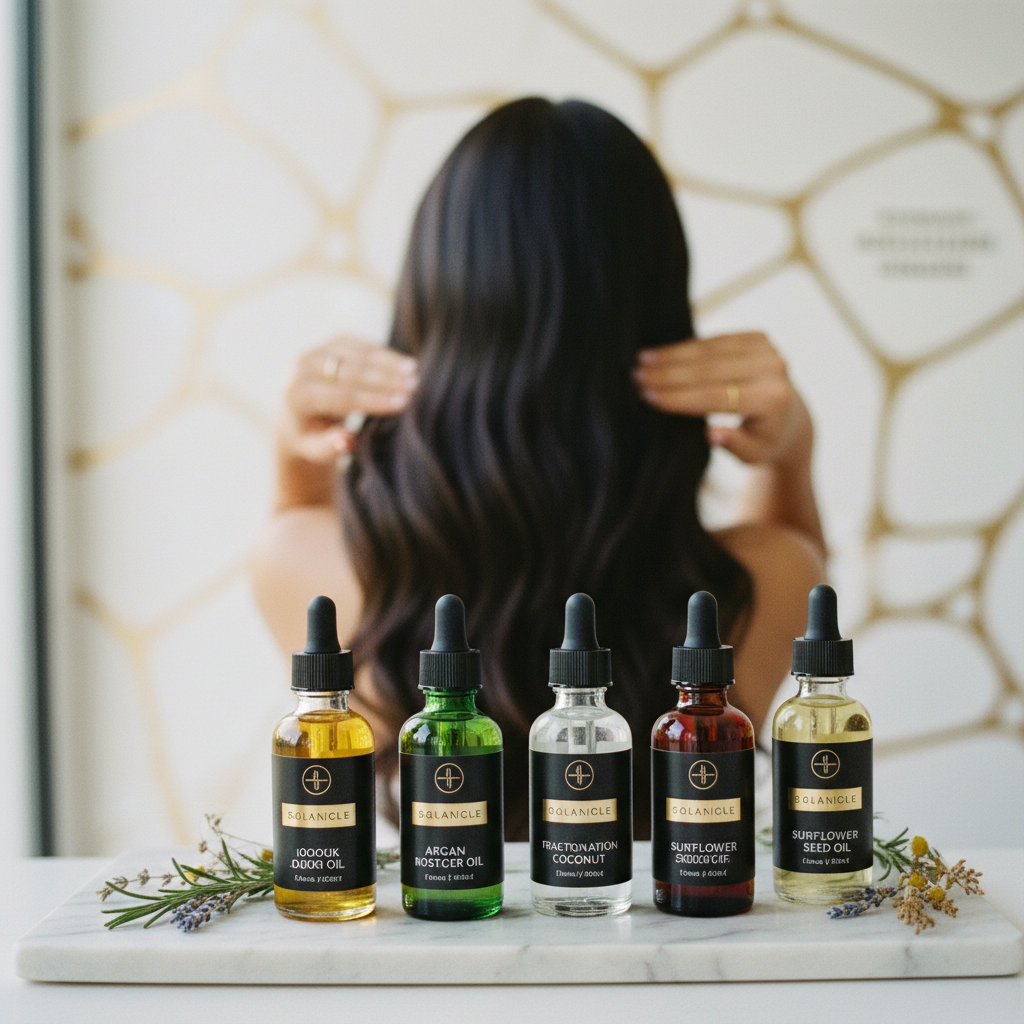
Not all plant lipids behave identically. Dermatology studies, notably comparative trials published in journals such as the International Journal of Molecular Sciences, demonstrate that oils with a high linoleic acid (an omega-6 polyunsaturated fatty acid) ratio significantly improve barrier integrity. Linoleic acid acts as a direct precursor to ceramide 1 (acylceramide), which is essential for cohesive barrier function. It repairs the lipid bilayer and reduces transepidermal water loss.
Conversely, oils dominated by oleic acid (a monounsaturated fatty acid) can compromise barrier function when used in high concentrations. Oleic acid acts as a skin penetration enhancer by fluidising stratum corneum lipids. While this property helps deliver active ingredients, applying heavy oleic oils to an already compromised scalp can induce microscopic lipid phase separations, triggering increased irritation and subclinical inflammation.
Jojoba oil presents a distinct mechanism. Chemically, jojoba is not a triglyceride oil but a liquid wax ester. Because human sebum consists of roughly 25% to 30% wax esters, jojoba integrates smoothly into the surface lipid film. It helps regulate surface oil without penetrating into deeper epidermal layers or causing occlusive buildup.
Stratum Corneum Structure:
┌──────────────────────────────────────────────┐
│ [Corneocyte] [Corneocyte] [Corneocyte] │ <- Keratin-rich "bricks"
├──────────────────────────────────────────────┤
│ ══════ Intercellular Lipids ═══════════════ │ <- Ceramides, FA, Cholesterol
├──────────────────────────────────────────────┤
│ [Corneocyte] [Corneocyte] [Corneocyte] │ <- Linoleic oils replenish this
└──────────────────────────────────────────────┘
What the evidence does not show
There is no credible clinical evidence showing that plant carrier oils treat genetic hair loss, follicular scarring, or active scalp infections. Applying oil does not reverse male or female pattern hair loss (androgenetic alopecia), which is driven by dihydrotestosterone (DHT) sensitivity and follicular miniaturisation.
Similarly, carrier oils do not eliminate microbial dandruff. The primary yeast implicated in seborrhoeic dermatitis, Malassezia restricta and Malassezia globosa, is lipid-dependent. These yeasts consume specific saturated fatty acids from sebum, leaving behind irritant unsaturated fatty acids like oleic acid that spark inflammatory flaking. Smearing rich culinary or vegetable oils across an actively flaking, itchy scalp frequently fuels Malassezia proliferation, transforming minor flaking into severe seborrhoeic eczema.
Carrier oils also do not accelerate natural hair growth rates. While a hydrated, healthy scalp barrier provides the optimal environment for an emerging hair fibre, oils do not modify the biological duration of the anagen (growth) phase.
Mechanisms of scalp barrier support
The scalp possesses a high follicular density and a greater rate of sebum excretion than almost any other area of human skin. Despite this natural oil supply, frequent washing with harsh anionic surfactants, chemical processing, thermal styling, and weather extremes can strip intercellular lipids.
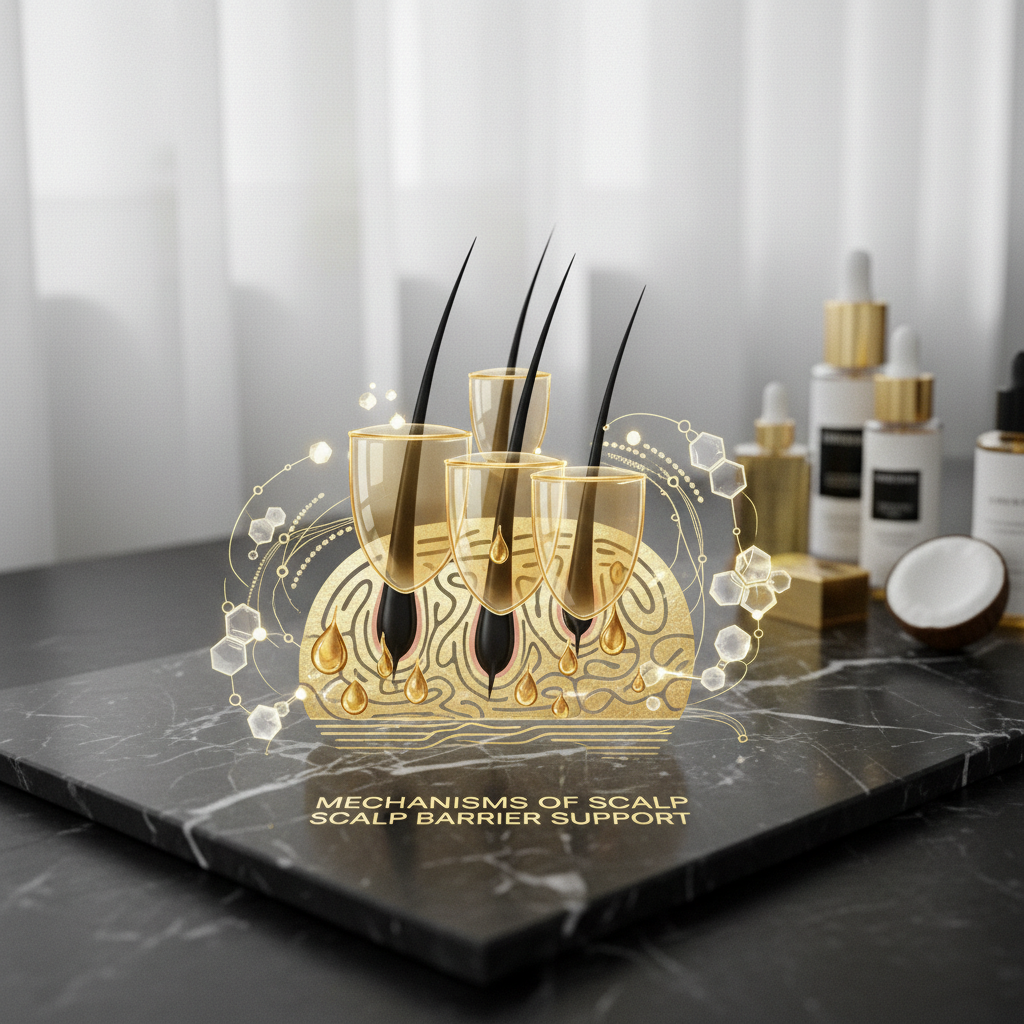
When lipids are depleted:
- Transepidermal water loss rises above normal physiological levels.
- Corneocytes detach unevenly, producing visible dry flakes, tightness, and itching.
- Environmental irritants and microbes penetrate more easily into the viable epidermis, prompting cytokine release and inflammation.
Applying appropriate carrier oils counteracts this cascade through three key mechanisms:
- Occlusion and hydration: Squalane and light plant esters form a breathable, semi-occlusive hydrophobic film across the skin surface. This reduces water evaporation without suffocating follicular ostia.
- Biochemical replenishing: High-linoleic lipids integrate into defective intercellular bilayers, restoring stratum corneum flexibility and cohesion.
- Anti-inflammatory fatty acid delivery: Pure cold-pressed oils contain unsaponifiable fractions, including phytosterols, squalene, and tocopherols (vitamin E). These compounds neutralise free radicals produced by UV exposure and pollution, mitigating lipid peroxidation at the scalp surface.
Fatty acid profiles: choosing the correct carrier oil
Selecting the correct lipid profile prevents adverse reactions and supports specific scalp needs. The table below outlines the compositional breakdown of standard carrier oils and their suitability for barrier health.
| Carrier Oil | Primary Fatty Acid | Secondary Fatty Acid | Barrier Suitability | Scalp Type Indication |
|---|---|---|---|---|
| Jojoba Oil | Gadoleic acid (70 to 80%) | Erucic acid (10 to 15%) | Excellent | Normal to unbalanced sebum; dry scalp |
| Squalane (Plant) | Saturated hydrocarbon (100%) | None | Exceptional | Highly sensitive, reactive, or eczema-prone |
| Rosehip Seed Oil | Linoleic acid (35 to 55%) | Alpha-linolenic acid (20 to 38%) | High | Dry, irritated, barrier-compromised |
| Argan Oil | Oleic acid (43 to 49%) | Linoleic acid (29 to 36%) | Moderate | Dry hair fibres; use sparingly on oily scalps |
| Sweet Almond Oil | Oleic acid (60 to 70%) | Linoleic acid (20 to 30%) | Moderate to Low | Intact skin only; potential barrier disruptor |
| Coconut Oil | Lauric acid (45 to 52%) | Myristic acid (16 to 20%) | Poor for scalp; high for hair shaft | Shaft protein retention only; occlusive on skin |
Signs of a compromised scalp barrier
Recognising the difference between superficial barrier disruption and underlying dermatological disorders ensures correct treatment.
A compromised scalp barrier typically presents as:
- A sensation of persistent tightness, prickling, or stinging, especially shortly after washing.
- Fine, powdery white flakes that detach easily throughout the day (distinct from greasy, adherent yellow flakes).
- Heightened reactivity to ordinary styling products, fragrances, or temperature shifts.
- Rough, dull skin texture along the hairline and part lines.
- Increased hair breakage near the root area due to localised friction and dryness.
How to use carrier oils safely on the scalp
To preserve the microbiome and prevent follicular clogging, follow an evidence-based application protocol:
- Conduct a patch test: Apply 2 to 3 drops of pure oil behind the ear or on the inner forearm. Monitor for 24 to 48 hours for redness, itching, or swelling.
- Apply to clean, slightly damp skin: Water trapped under an oil barrier provides deeper hydration. Apply oils right after gentle washing or after misting the scalp with pure water.
- Use minimal volume: For a full scalp application, 4 to 6 drops dispersed onto fingertips are sufficient. Part hair into sections and press the oil directly onto the exposed scalp tissue.
- Avoid overnight heavy soaking: Prolonged occlusion under heavy lipid layers creates an anaerobic environment that invites microbial dysbiosis. Limit pre-wash oil treatments to 20 to 45 minutes, or leave light drops of squalane or jojoba on the scalp without oversaturating.
- Cleanse thoroughly: When removing oils, use a balanced shampoo (pH 5.0 to 5.5). Apply shampoo directly to dry or slightly damp hair before dousing with water; the surfactant micelles bind the oil more efficiently this way.
When the cause may be something else
If your scalp remains uncomfortable despite barrier-focused care, topical carrier oils may not be appropriate.
- Seborrhoeic Dermatitis: Characterised by yellowish, oily, adherent scales accompanied by erythema and intense itching. Oils feed the underlying Malassezia yeast and worsen symptoms. Medicated shampoos containing ketoconazole, ciclopirox olamine, or zinc pyrithione are standard treatments.
- Scalp Psoriasis: Involves well-demarcated, thick, silvery-white plaques caused by accelerated epidermal cell turnover. While mineral oil can help soften plaques before descaling, plant oils do not address the autoimmune drivers.
- Folliculitis: Appears as small, red, tender pustules centred around hair follicles, driven by bacterial (Staphylococcus aureus) or fungal overgrowth. Plant oils can trap microbes inside the follicular canal, exacerbating pustule formation.
- Contact Dermatitis: An allergic reaction or chemical irritation triggered by dyes, preservatives, or fragrances, demanding complete allergen elimination rather than oil layering.
If you experience persistent scaling, raw skin, fluid weeping, pain, or patchy hair shedding, consult a GP or registered trichologist for formal clinical evaluation.
Formulated scalp care: a balanced alternative
While pure carrier oils provide raw lipids, balanced cosmetic formulations often deliver superior practical results. Raw oils can weigh down fine hair, resist clean rinsing, and attract airborne pollutants.
A targeted, water-based approach that combines scalp-friendly humectants, botanical extracts, and lightweight conditioning agents helps maintain a healthy surface without heavy occlusion. The Watermans range, including formulations like Grow Me Shampoo and Condition Me Conditioner, is developed to cleanse and condition hair and scalp without upsetting natural surface equilibrium. Formulated at a scalp-compatible pH, these products rinse cleanly while delivering nutrient-dense botanicals, making them an ideal complement for anyone seeking balanced scalp support without the mess or residue of heavy raw oils.
Frequently asked questions about Carrier Oils for Scalp Barrier Health
Can I use Carrier Oils for Scalp Barrier Health if I have dandruff?
No, using rich Carrier Oils for Scalp Barrier Health is usually counterproductive if you have true dandruff. Dandruff is driven by Malassezia yeasts, which metabolise fatty acids from topical oils, leading to more inflammation, scaling, and itchiness. Instead, use an anti-fungal treatment containing zinc pyrithione or ketoconazole, and restrict lipid replenishment to non-metabolised agents like squalane if dryness persists.
Which carrier oil has the highest linoleic acid content?
Safflower oil and evening primrose oil contain some of the highest linoleic acid levels among cosmetic carrier oils, often exceeding 70%. Rosehip seed oil also provides a rich source of linoleic acid (roughly 35 to 55%) alongside alpha-linolenic acid, making it an outstanding choice for soothing an irritated, dry scalp barrier.
Will applying carrier oils clog my hair follicles?
They can if used excessively or if you pick highly comedogenic lipids. Follicles become clogged when heavy oils combine with dead corneocytes and oxidised sebum, forming follicular plugs that can spark folliculitis. To avoid this, use lightweight, non-comedogenic oils like squalane or jojoba, use only a few drops, and avoid saturated lipids like coconut or palm oil directly on the scalp skin.
How often should I apply carrier oils to my scalp?
For a dry, intact scalp, applying 3 to 5 drops once or twice per week is plenty. Over-application shifts the natural cutaneous microenvironment and risks microbial overgrowth. If you use oil as a pre-shampoo barrier protectant, you can apply it 30 minutes before washing, twice weekly, ensuring your shampoo thoroughly cleanses away any excess residue.
Does coconut oil repair the scalp skin barrier?
Coconut oil excels at penetrating the hair shaft to prevent protein loss, but it is not optimal for the scalp skin barrier. It consists mainly of lauric acid, a saturated medium-chain fatty acid that does not replicate the natural intercellular lipid profile of human skin. It can feel heavy, occlude follicular openings, and potentially trigger breakouts on acne-prone scalps.
Summary
Maintaining the scalp's protective barrier requires a delicate balance of hydration, physiological lipids, and microbiome equilibrium. Using appropriate Carrier Oils for Scalp Barrier Health, particularly those rich in linoleic acid or liquid wax esters like jojoba, can soothe dry irritation and minimise water loss. However, oils must be matched carefully to your specific scalp chemistry. Keep application measured, avoid feeding underlying fungal conditions, and rely on gentle, pH-balanced hygiene to preserve both barrier resilience and optimal hair condition.
Sources and references
- International Journal of Molecular Sciences: "Anti-Inflammatory and Skin Barrier Repair Effects of Topical Application of Some Plant Oils" (Lin et al., 2018).
- British Journal of Dermatology: "Stratum corneum lipids, skin barrier function and dermatological disease" (Coderch et al., 2003).
- Journal of the European Academy of Dermatology and Venereology: "The role of linoleic acid in skin barrier integrity and epidermal differentiation" (2014).
- American Journal of Clinical Dermatology: "Seborrhoeic Dermatitis and Malassezia Species: How to Treat" (Gupta et al., 2004).
- Dermatology and Therapy: "Scalp Condition Impacts Hair Growth and Retention via Oxidative Stress" (Trueb et al., 2018).
Find these ingredients in Watermans products
- Zinc: you will find this ingredient in our Hair Vitamins.
- Oleic Acid: you will find this ingredient in our Camellia & Black Castor Hair & Body Oil.