How to Care for Chemically Treated Hair: The Complete Evidence-Based Guide
8 min read ·
Learn how to care for chemically treated hair with evidence-based methods. Discover lipid repair, pH rebalancing, and breakage prevention for coloured or bleached hair.
Quick answer: Learning How to Care for Chemically Treated Hair requires restoring the fibre's lipid barrier, managing structural porosity, and shielding altered keratin bonds from mechanical friction. Chemical services such as bleaching, permanent colouring, relaxing, and perming lift the cuticle and strip 18-methyleicosanoic acid (18-MEA), leaving the cortex vulnerable. Success depends on using pH-balanced products (pH 4.5 to 5.5), minimising heat, and applying deep conditioners. However, topical cosmetic products cannot permanently rebuild severed disulphide bonds; they can only reinforce and protect remaining structure.
Key takeaways
- Chemical processes strip the hair's protective F-layer (18-MEA), permanently increasing cuticle porosity and moisture loss.
- Bleaching oxidises structural cystine bonds into cystic acid, significantly reducing the dry and wet tensile strength of the hair fibre.
- Optimum cleansing requires acidic, sulphate-free formulations with a pH between 4.5 and 5.5 to prevent cuticle swelling.
- Hydrating conditioners lubricate the shaft, but hydrolysed proteins are required to temporarily fill gaps in damaged cuticles.
- Chemical damage manifests as hair fibre breakage, not true follicular shedding (telogen effluvium) or genetic hair loss (alopecia).
How to Care for Chemically Treated Hair: what the evidence shows
Scientific evaluation of How to Care for Chemically Treated Hair centres on the physical alteration of the hair shaft. Hair fibres consist of an outer cuticle, an inner cortex of keratin filaments, and occasionally a central medulla. Chemical processing disrupts these layers to modify the hair's natural pigment or curl pattern.
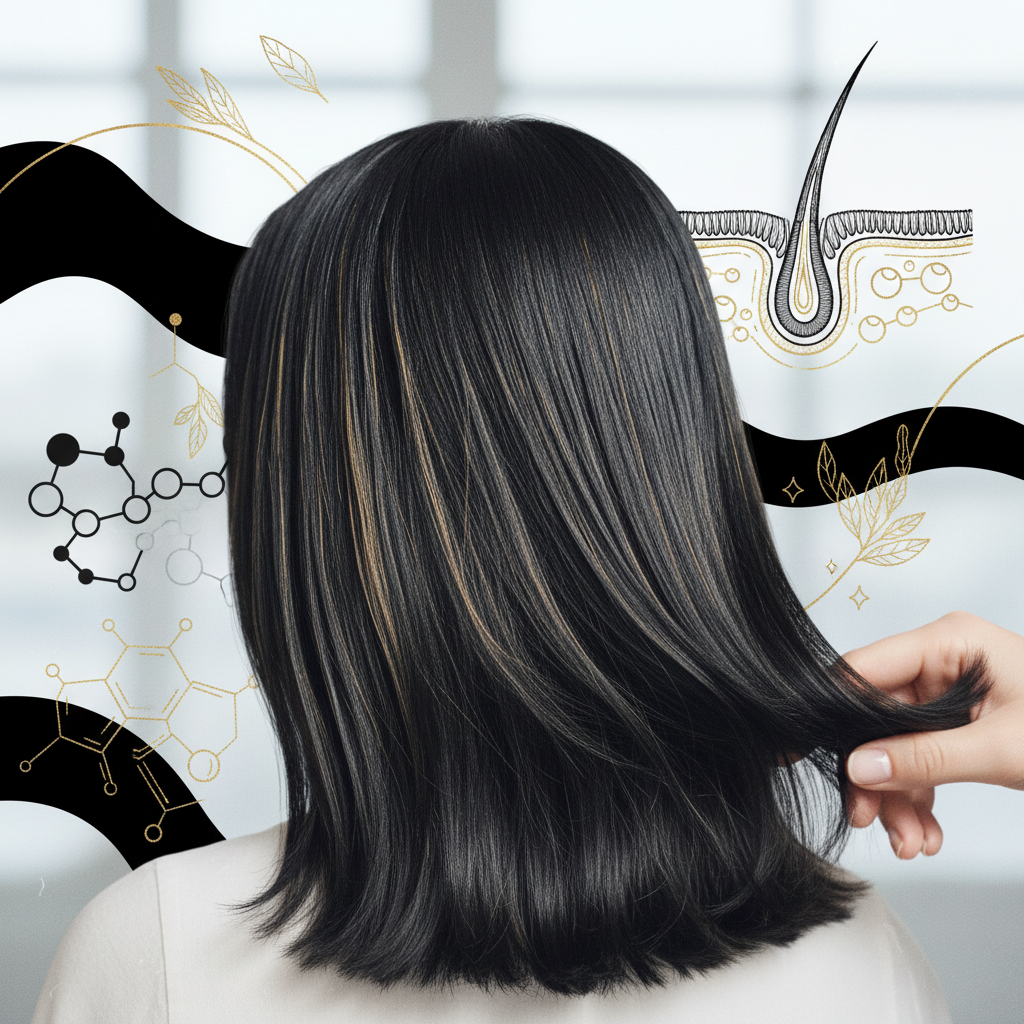
Alkaline agents such as ammonium hydroxide or sodium hydroxide swell the cuticle scales by raising hair pH from its natural resting state (roughly 3.67 for the fibre and 5.5 for the scalp) to pH 9.0 or higher. This structural lift allows active agents to penetrate the cortex. Bleaching oxidises melanin granules while unintentionally cleaving cystine disulphide bonds. Permanent waving and chemical relaxers reduce these disulphide cross-links to reshape the keratin matrix.
Once these bonds are severed or oxidised, the fibre loses mechanical elasticity. Studies published in the International Journal of Cosmetic Science confirm that chemical processing strips the outermost layer of 18-methyleicosanoic acid (18-MEA). This thin lipid monolayer provides natural hydrophobicity. Without 18-MEA, the hair shaft becomes intensely hydrophilic, absorbing excess water, swelling rapidly during washing (hygral fatigue), and losing natural slip.
What the evidence does not show: myths and structural limits
Cosmetic treatments have definite boundaries established by physical science:
- Bond repair cannot resurrect dead tissue. Hair is non-living biological tissue. Bond-building agents (such as bis-aminopropyl diglycol dimaleate or maleic acid complexes) form artificial cross-links between compromised keratin chains, but they do not regrow lost natural bonds or permanently reverse structural porosity.
- Topical treatments do not treat root hair loss. Chemical damage snaps hair along the shaft (breakage). It does not alter the follicular growth cycle under the scalp unless chemical burns cause cicatricial scarring. Shampoos and conditioners cannot reverse true follicular alopecia.
- Split ends cannot be permanently glued back together. While polyelectrolyte complexes temporarily seal split ends until the next wash, cutting away split or fraying ends remains the only permanent physical remedy.
| Chemical Process | Primary Structural Impact | Key Fibre Consequence | Maintenance Focus |
|---|---|---|---|
| Bleaching / High-Lift Dye | Melanin oxidation, cystine conversion to cystic acid | High porosity, dry brittleness, 18-MEA loss | Protein treatments, lipid replacement, pH 4.5 conditioners |
| Chemical Relaxers | Irreversible reduction of disulphide bonds via lanthionisation | Extreme drop in tensile strength, fragile flex points | Low-tension styling, deep conditioning, thermal avoidance |
| Permanent Waves | Disulphide bond cleavage and partial reformation | Cuticle scale misalignment, loss of natural oils | Film-forming humectants, curl-defining leave-in creams |
| Semi/Demi-Permanent Colour | Mild cuticle swelling, cortex penetration without major lifting | Surface friction, gradual lipid depletion | Colour-protecting UV shields, acidic rinse protocols |
The physical mechanisms of chemical damage
To understand how to manage compromised hair, one must examine the specific stress points created during chemical alteration:
Loss of the F-Layer
The F-layer is a covalent lipid shield that repels atmospheric water. Once stripped by alkali and peroxide, your hair absorbs ambient humidity, resulting in uncontrollable frizz, while simultaneously leaking internal moisture. High-porosity hair wets very quickly in the shower but dries out into a brittle, straw-like state just as fast.
Cystic acid accumulation
During bleaching and oxidative colouring, disulphide bonds split. When oxygen reacts with these broken sulfur bridges, it produces cystic acid. Higher concentrations of cystic acid make the cortex negatively charged, repelling natural sebum and making wet hair tangle, stretch excessively, and snap under tension.
Cuticle scale erosion
Repeated chemical services lift and chip the overlapping shingles of the cuticle. When the cuticle edge chips away, the cortex sits exposed to friction from hairbrushes, pillowcases, and hot tools, resulting in longitudinal splitting (trichoptilosis) and horizontal fractures.
Practical steps: How to Care for Chemically Treated Hair
Adopting an evidence-based care routine dramatically reduces breakage and prolongs the life of your colour or texture service.
1. Rebalance your cleansing pH
Use shampoos formulated between pH 4.5 and 5.5. Alkaline water and harsh anionic detergents further lift damaged cuticles, speeding colour wash-out and fibre tangling. Mild surfactants like sodium cocoyl isethionate or amphoteric betaines cleanse the scalp without aggressively stripping remaining lipids.
2. Alternate protein and moisture
Chemically treated hair requires two distinct interventions:
- Hydrolysed proteins: Low-molecular-weight proteins (such as hydrolysed wheat, silk, or vegetable protein) temporarily lodge into gaps within the damaged cuticle to bolster mechanical resilience.
- Fatty alcohols and emollients: Cetyl alcohol, stearyl alcohol, and natural triglycerides lubricate the surface, lowering the friction coefficient during brushing by up to 60 percent.
Use a protein-rich conditioning mask once every two to three weeks, balanced by regular hydrating conditioners during standard washes to prevent protein-induced stiffness.
3. Minimize wet manipulation
Hair fibres lose up to a third of their tensile strength when wet. For chemically processed hair, this drop is even steeper. Avoid rubbing your hair with standard cotton towels, which feature looped fibres that snag cuticles. Instead, squeeze excess water out with a smooth microfibre cloth. Detangle strictly with a wide-tooth comb or flexible detangling brush, starting from the tips and working slowly upward.
4. Apply thermal protection
Heat styling strips remaining moisture and further denatures keratin proteins. Always apply a leave-in product containing silicones (such as dimethicone or amodimethicone) or heat-resistant polymers before using heat. These ingredients form a protective barrier that slows heat transfer and reduces surface friction. Keep styling tool temperatures below 180°C.
5. Watermans supportive hair wellness
While chemical care concentrates on preserving the lengths, maintaining a clean, balanced scalp environment supports healthy new growth. Watermans offers revitalising formulations that help keep the scalp refreshed and the hair looking fuller. Incorporating supportive, nutrient-rich scalp care ensures that as your hair grows out, the new, untreated roots emerge strong and healthy.
When breakage indicates a different underlying issue
It is critical to distinguish between chemical shaft breakage and physiological hair loss. If you find whole strands of hair falling out with a small white bulb at the root, you are experiencing follicular shedding (telogen effluvium), not direct chemical snapping.
Medical triggers like iron deficiency, thyroid dysfunction, hormonal shifts, and acute physiological stress cause shedding from the root. If your hair is thinning at the crown or your parting is widening without signs of snapped mid-lengths, chemical processing may not be the primary culprit.
When to seek professional advice
Consult a registered trichologist or a certified colour specialist if you experience:
- Severe, unexpected breakage near the root line following a salon or home chemical service.
- Chemical burns, redness, stinging, or crusting on the scalp.
- Diffuse shedding exceeding 100 to 150 hairs daily for longer than six weeks.
- Hair that turns "gummy" or melts when wet, which signals severe chemical denaturation requiring emergency salon-grade restructuring and trimming.
Frequently asked questions about How to Care for Chemically Treated Hair
How often should I wash chemically treated hair?
Wash your hair two to three times a week. Chemically treated hair lacks natural lipid protection, meaning daily washing strips what little protective sebum remains. When you wash, focus your shampoo primarily on the scalp, letting the suds gently run down the lengths rather than scrubbing the fragile mid-shafts and ends.
What is the most important step in How to Care for Chemically Treated Hair?
The single most important step in How to Care for Chemically Treated Hair is lowering surface friction through pH-balanced conditioning and lipid replacement. Because the protective 18-MEA layer is stripped during processing, applying conditioners with fatty alcohols, cationic surfactants, or hydrolysed proteins restores slip, preventing mechanical snapping during daily combing and styling.
Can chemically damaged hair ever fully heal?
No. Because hair fibres are dead biological structures, they do not have cellular repair mechanisms. Products can coat, reinforce, and temporarily seal damaged zones, but they cannot restore the hair to its virgin state. Trimming damaged ends regularly remains essential to stop splits from travelling up the shaft.
Should I avoid all heat tools on processed hair?
Ideally, avoid direct heat entirely. If you must use hair dryers or straighteners, wait until the hair is at least 80 percent dry, apply an effective heat protectant, and set your tools below 180°C. High heat rapidly denatures damaged keratin and boils residual trapped moisture inside the cortex.
Essential principles for maintaining treated hair
Mastering How to Care for Chemically Treated Hair comes down to understanding the structural trade-offs of chemical services. Chemical processing transforms colour and texture by breaking natural bonds and stripping the hair's protective lipid coating. While these changes are irreversible, a dedicated routine using pH-balanced care, balanced protein and moisture, and reduced mechanical tension will shield the fibre from breakage. Protect your lengths with gentle handling, nourish your scalp, and trim split ends regularly to keep your hair resilient, shiny, and strong.
Sources and references
- International Journal of Cosmetic Science: The effect of chemical treatments on the hair surface and lipid composition (2018).
- Journal of Cosmetic Dermatology: Structural and chemical changes in human hair induced by bleaching and permanent waving (2020).
- British Association of Dermatologists: Hair breakage versus hair loss: diagnostic considerations (2021).
- Robbins, C. R.: Chemical and Physical Behavior of Human Hair, 5th Edition, Springer (2012).
- National Health Service (NHS): Hair loss and hair shaft abnormalities overview (2023).