Bond Builders and Fibre Repair: Mechanisms, Evidence, and Real Limitations
8 min read ·
Understand how Bond Builders and Fibre Repair work, the chemistry of hair cortex cross-linking, their benefits, and their limitations on damaged hair.

Quick answer: Bond Builders and Fibre Repair refer to cosmetic chemical treatments designed to target and cross-link broken bonds within the hair cortex, particularly following bleaching, perming, or thermal damage. These formulations aim to reform or bridge broken disulfide bonds, restoring tensile strength and elasticity. However, their main limitation is that hair is non-living keratinised tissue. Bond builders can reinforce fibre integrity and reduce snapping, but they cannot permanently reverse structural wear, regenerate living cells, or repair damaged follicles.
Key takeaways
- Hair structure depends on three primary bond types: weak hydrogen bonds, pH-dependent salt bonds, and strong covalent disulfide bonds.
- Chemical services such as alkaline bleaching and permanent waving rupture disulfide bonds, producing brittle cysteic acid residues.
- Bond builders work by introducing cross-linking active agents, such as maleates, carboxylates, or low molecular weight organic acids, to reinforce the cortex.
- Fibre repair is cosmetic and structural at the shaft level; it does not stimulate new hair growth or resolve biological hair loss.
- Overuse of concentrated protein or bonding systems without balanced moisture can lead to stiff, brittle hair that snaps under tension.
Bond Builders and Fibre Repair: what the evidence shows
Research into hair photochemistry and cosmetic chemistry demonstrates that alkaline processing and oxidative bleaching permanently alter hair fibres. When hair is bleached or relaxed, the alkaline pH (often between pH 9.0 and 11.0) swells the protective cuticle layer. Oxidising agents, such as hydrogen peroxide, penetrate the cortex to dissolve melanin granules. In doing so, they also oxidise cystine, the sulfur-containing amino acid responsible for the hair's structural rigidity.
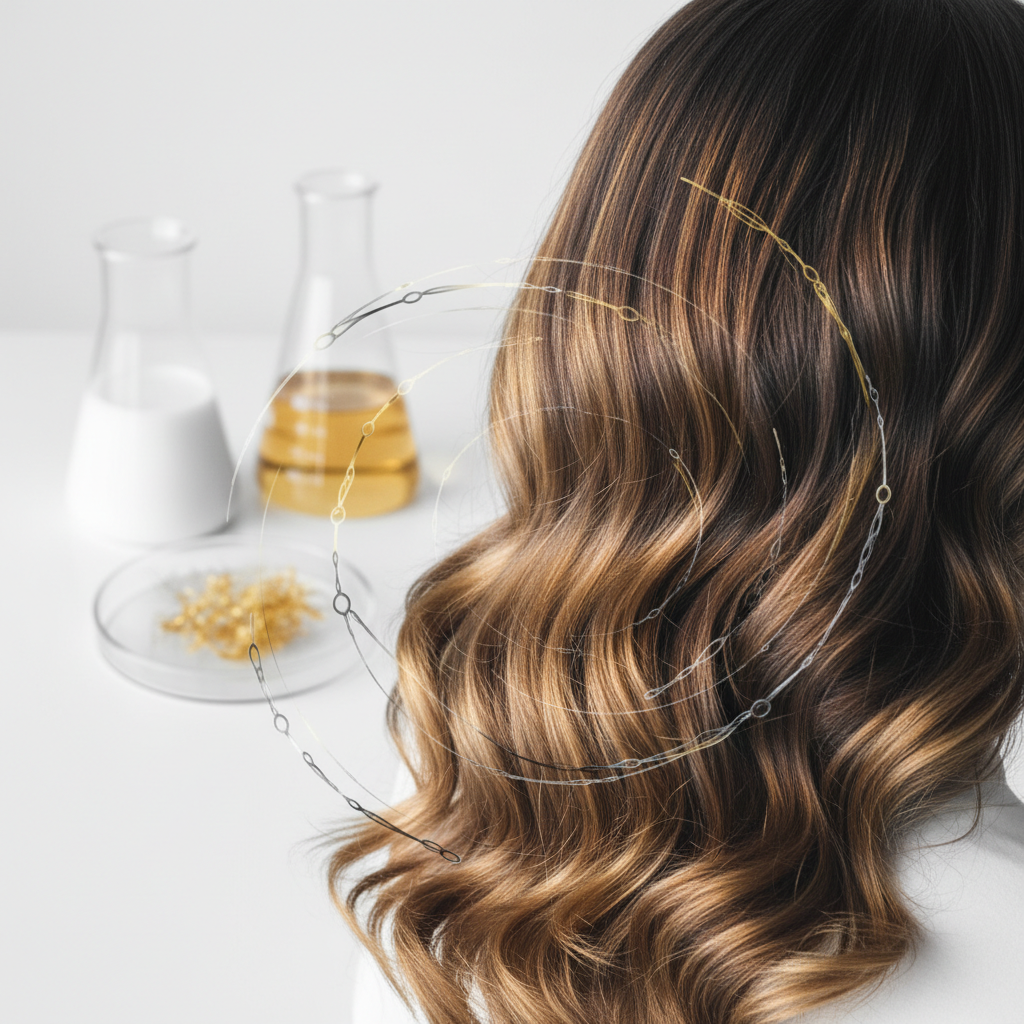
This oxidation converts disulfide bonds (-S-S-) into cysteic acid residues. Cysteic acid cannot naturally cross-link again. The result is a loss of tensile strength, higher fibre porosity, and increased susceptibility to mechanical breakage when brushed or styled.
The scientific premise of bond builders is cross-linking chemistry. Rather than simply coating the cuticle as traditional silicones or quats (quaternary ammonium compounds) do, bond-repairing compounds diffuse past the cuticle into the cortex. Active agents, such as bis-aminopropyl diglycol dimaleate, hydroxypropylammonium gluconate, or multifunctional carboxylic acids, seek out free thiol (-SH) groups or interact with amino groups. They form artificial covalent or ionic bridges, effectively bridging the gap left by degraded disulfide bonds.
Mechanical testing (such as stress-strain tensile analysis) published in cosmetic science literature confirms that hair treated with cross-linking bond builders shows higher resistance to mechanical breakage under wet and dry conditions compared to untreated, bleached controls. The hair demonstrates improved elastic recovery and reduced cuticle lift.
What the evidence does not show
It is vital to separate cosmetic fibre reinforcement from biological regeneration.
- They do not regenerate living tissue: Hair above the scalp surface is composed of non-living, fully keratinised cells. No formulation can "heal" or "revive" hair in the way skin heals a wound.
- They do not stop follicular hair loss: Bond builders act exclusively on the hair shaft. They have zero physiological influence on the hair follicle, the dermal papilla, or hair growth cycles. They cannot treat alopecia areata, androgenetic alopecia, or telogen effluvium.
- They are not permanent: While covalent bridges are more durable than water-soluble hydrogen bonds, daily shampooing, thermal styling above 185°C, ultraviolet exposure, and repeated chemical processing gradually degrade these artificial networks.
- They cannot fuse split ends together permanently: While some polymer complexes temporarily seal split ends (trichoptilosis) through adhesive films, the only permanent remedy for split ends is physical trimming.
Mechanisms of hair fibre bonds
Understanding how bond building works requires examining the three major forces holding human keratin together.
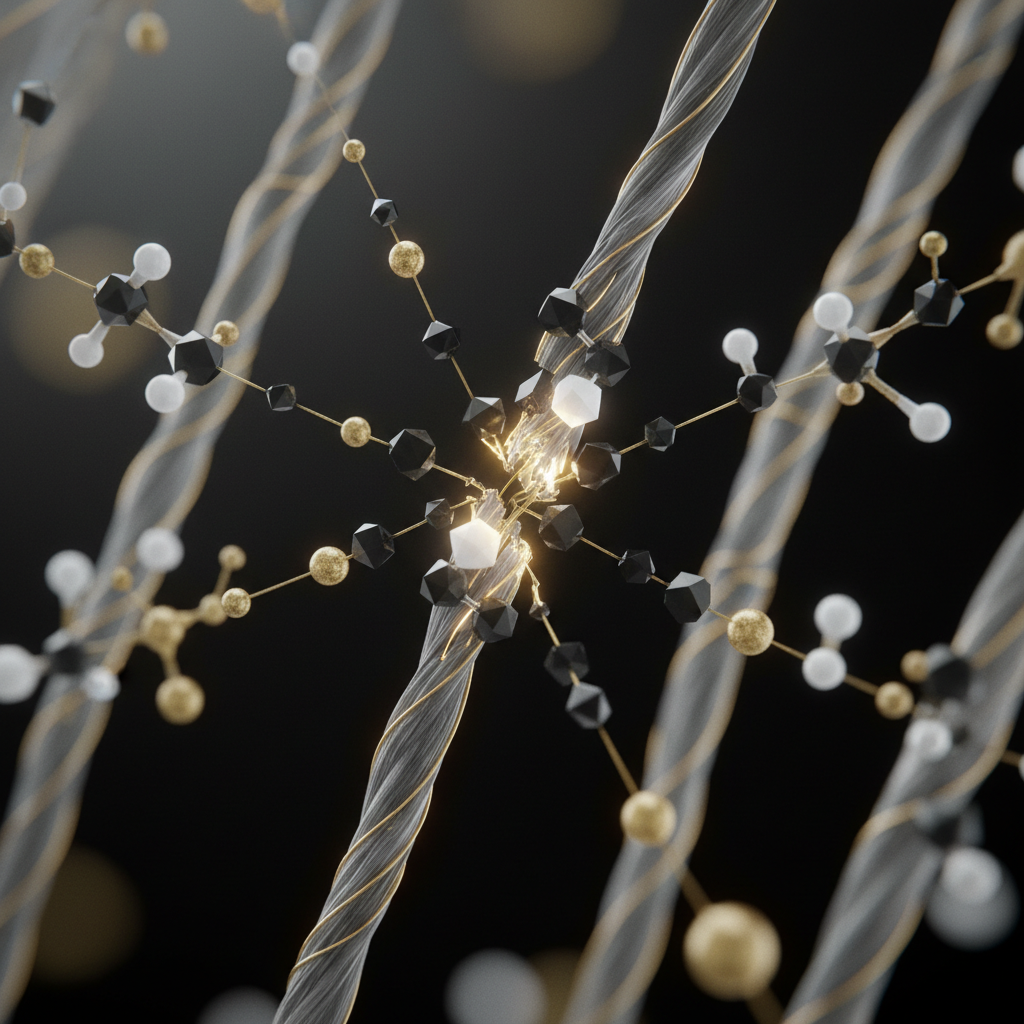
| Bond Type | Relative Strength | Cause of Breakage | Reversibility | How Repair Agents Act |
|---|---|---|---|---|
| Disulfide Bonds | Very strong (covalent) | Bleaching, chemical relaxers, perms, excessive heat (>200°C) | Irreversible naturally; forms cysteic acid | Cross-linking agents form artificial bridges between sulfur or amino groups |
| Salt Bonds | Moderate (ionic) | Extreme pH changes (acidic or alkaline solutions) | Reversible by restoring hair to its isoelectric point (pH 4.5 to 5.5) | Low-pH balancing treatments and acid rinses restore proper ionic charges |
| Hydrogen Bonds | Weak (physical) | Water, steam, daily washing, humidity | Reversible; broken by wetness and reset as hair dries | Conditioners and humectants regulate moisture absorption to stabilise alignment |
Signs of bond depletion in hair
Hair with broken cortex bonds behaves differently from hair that is merely surface-dry. Common signs of internal fibre disruption include:
- Excessive elasticity when wet: The hair stretches out like wet chewing gum and fails to snap back into its original length, indicating internal structural collapse.
- Mid-shaft snapping: Small fragments of hair snapping off during gentle detangling or towel drying, distinct from shed hairs that have a white bulb at the root.
- Extreme porosity: Hair absorbs water instantly, takes hours to dry, and feels rough or spongy when damp.
- Loss of natural curl pattern: Wavy, curly, or coily hair appears limp, stretched, or unevenly straight after chemical processing.
Practical steps for fibre repair
Restoring mechanical strength to broken hair fibres requires a deliberate, step-by-step approach.
1. Match the treatment to the damage type
If damage stems from oxidative lightening or perms, look for treatments containing validated bond-building cross-linkers or small, hydrolysed peptides (under 1,000 Daltons) that can penetrate the cortex. If the damage is purely thermal or mechanical, standard conditioning lipids, ceramides, and film-forming polymers are often sufficient.
2. Respect the moisture-protein balance
Bond builders and hydrolysed proteins increase hair rigidity. If used excessively without adequate conditioning emollients (such as fatty alcohols, argan oil, or plant sterols), the fibre can become brittle and fracture under minimal strain. Alternate structural bond-building sessions with intensive moisture masks.
3. Lower the washing pH
The isoelectric point of human hair is approximately pH 3.67, while typical healthy scalp surface conditions sit around pH 4.5 to 5.5. Using alkaline shampoos causes the hair shaft to swell, stressing delicate internal bonds. Use mildly acidic, sulphate-free formulations to keep the cuticle compact.
4. Control thermal degradation
Keratin begins to denature at roughly 155°C, with severe structural degradation occurring above 200°C. Never apply direct heat without a thermal protectant, and avoid repeating high-heat straightener passes over the same section of hair.
When hair breakage is actually shedding
A critical diagnostic step for both stylists and consumers is identifying whether hair accumulation stems from breakage or shedding.
Examine the fallen strands. If the hair strand is full length with a small, pale keratin bulb at one end, this is anagen or telogen hair shedding from the follicle. Bond builders will have no impact on this process, as the root cause may involve nutritional deficiencies (such as iron or vitamin D), hormonal shifts, thyroid changes, or physiological stress.
If the fallen strands are short, irregular lengths without a root bulb, the problem is hair breakage. This is the exact scenario where bond builders and fibre repair treatments are beneficial.
When to seek professional advice
Consult a certified trichologist or dermatologist if you notice sudden, diffuse shedding across the scalp, bald patches, burning, scaling, or redness on the scalp. These symptoms indicate scalp dermatoses or systemic hair disorders that require medical evaluation rather than cosmetic intervention.
If hair is severely melted or chemically disintegrating (known as "gumming") from overlapping bleach, consult an experienced professional colourist immediately for an in-salon bond treatment and a controlled corrective haircut.
The Watermans perspective on hair maintenance
At Watermans, the philosophy centres on supporting hair health from both ends of the strand. While internal fibre repair treatments strengthen the existing lengths through targeted cosmetic science, long-term hair density relies on a thriving scalp environment.
A clean, balanced scalp microbiome, supported by nutrient-dense botanicals and gentle, sulphate-free cleansing, ensures that new growth emerges with an intact cuticle and dense internal cortex. Combining protective fibre habits with consistent scalp care provides the ideal foundation for long, resilient hair.
Frequently asked questions about Bond Builders and Fibre Repair
Can bond builders and fibre repair products repair split ends permanently?
No, bond builders and fibre repair formulations cannot permanently fuse split ends back together. Split ends represent complete structural separation of the fibre cortex and cuticle. While bond builders and polymeric sealants can temporarily bind frayed ends through physical adhesion to reduce immediate snagging, the only permanent way to eliminate split ends is to trim them off.
How often should you use a bond-building treatment?
For moderately damaged or chemically treated hair, using a bond-building treatment once a week is usually sufficient. For severely compromised hair, twice-weekly applications during the first month can help reinforce tensile strength. Avoid daily use, as saturating hair with structural cross-linkers without complementary emollients can make fibres overly stiff and prone to snapping.
Do bond builders replace regular conditioners?
No. Bond builders operate inside the cortex to reinforce chemical bridges, whereas conditioners work primarily on the outer cuticle and F-layer. Conditioners deposit fatty alcohols, cationic surfactants, and lipids to smooth the surface, lower friction, detangle, and seal in hydration. Both are necessary for complete hair health.
Can virgin, uncoloured hair benefit from bond-building treatments?
Virgin hair exposed to high heat styling, intense sun exposure, or mechanical stress from rough brushing can suffer bond breakage. However, because virgin hair retains most of its native disulfide bonds, the visible improvement will be far less dramatic than on bleached or chemically relaxed hair. Light conditioning is often all virgin hair requires.
Conclusion
Understanding Bond Builders and Fibre Repair allows you to make informed decisions based on chemistry rather than marketing claims. While these treatments represent a major scientific breakthrough in mitigating the destructive effects of bleaching, perming, and heat styling, their abilities are strictly cosmetic and mechanical. They cross-link and reinforce the non-living hair shaft, preventing premature snapping. When paired with responsible styling habits, moisture-rich conditioning, and dedicated scalp care, bond repair technology helps hair stay strong, resilient, and intact.
Sources and references
- Journal of Cosmetic Science: Chemical and Physical Changes in Oxidised Hair Fibres, 2018.
- International Journal of Cosmetic Science: The effect of cosmetic bleaching on the physical properties of human hair, 2020.
- British Association of Dermatologists: Hair breakage versus hair loss: clinical distinctions, 2021.
- Cosmetics & Toiletries: Disulfide Cross-linking and Keratin Dynamics in Damaged Hair, 2019.
Find these ingredients in Watermans products
- Argan Oil: you will find this ingredient in our Hair Growth Shampoo.
- Vitamin D: you will find this ingredient in our Hair Vitamins.