Androgenetic Alopecia Explained
5 min read ·
Androgenetic alopecia, commonly known as male-pattern or female-pattern hair loss, is a genetic condition causing progressive hair thinning and eventual loss.
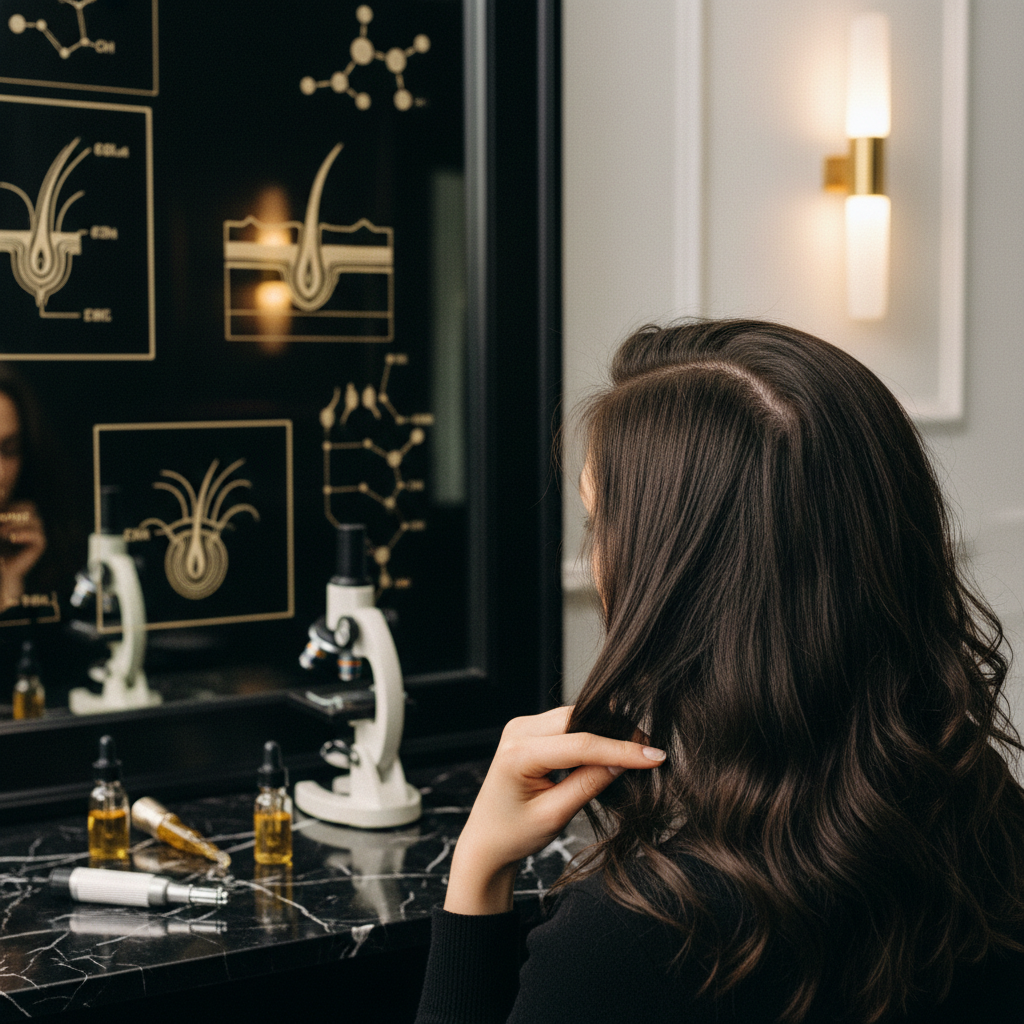
Androgenetic Alopecia Explained
Androgenetic alopecia (AGA) is the most common form of hair loss, affecting millions worldwide. Often referred to as male-pattern baldness or female-pattern hair loss, it is a genetically predetermined condition characterised by progressive hair thinning and eventual loss. Understanding its mechanisms and manifestation is crucial for effective management.
What is Androgenetic Alopecia?
AGA is a non-scarring alopecia, meaning it does not typically result in scarring of the scalp tissue. It is progressive, meaning the hair loss worsens over time if left untreated. The condition is primarily influenced by genetics and androgens, a group of hormones. While often associated with men, women are also significantly affected, though the pattern of hair loss differs.
The Role of Androgens and Genetics
At the heart of androgenetic alopecia is the hormone dihydrotestosterone (DHT), a potent androgen derived from testosterone by the enzyme 5-alpha-reductase. Hair follicles in individuals with a genetic predisposition to AGA are sensitive to DHT. When DHT binds to receptors in these susceptible follicles, it initiates a process called follicular miniaturisation.
Follicular miniaturisation is a gradual shrinking of the hair follicle. Over time, the terminal hairs (thick, pigmented hairs) produced by these follicles become progressively finer, shorter, and lighter in colour, eventually transforming into vellus hairs (fine, unpigmented "peach fuzz"). Ultimately, the follicle may cease producing visible hair altogether.
The genetic component of AGA is polygenic, meaning multiple genes contribute to its development, rather than a single gene. These genes can be inherited from either parent. While the exact genetic pathways are still being researched, it is clear that a family history of hair loss significantly increases an individual's risk.
Male-Pattern Hair Loss
In men, androgenetic alopecia typically follows a predictable pattern, often beginning in the late teens or early twenties, though it can start at any age. The most common manifestations include:
- Receding Hairline: Hair loss often starts with a receding hairline at the temples.
- Thinning Crown: Thinning also frequently occurs at the crown (vertex) of the scalp.
- M-Shape Pattern: As the condition progresses, these areas expand and merge, often leaving a characteristic "M" shape, with hair remaining on the sides and back of the head.
The Norwood-Hamilton scale is commonly used to classify the stages of male-pattern baldness, ranging from minimal hair loss to extensive baldness.
Female-Pattern Hair Loss
Androgenetic alopecia in women, often called female-pattern hair loss (FPHL), generally presents differently than in men. It typically begins later in life, often around menopause, but can start earlier. FPHL rarely leads to complete baldness and is characterised by:
- Diffuse Thinning: A general thinning of hair primarily over the top and crown of the scalp.
- Widening Part Line: The most common sign is a widening of the central part line.
- Maintained Hairline: The frontal hairline is usually preserved, meaning the hair at the forehead does not recede.
Women with FPHL may experience a reduction in hair density and volume, making the scalp more visible. The Ludwig scale is frequently used to classify the severity of FPHL, from mild to severe thinning of the crown.
Diagnosis
Diagnosis of androgenetic alopecia is typically made based on a thorough medical history, physical examination of the scalp, and the characteristic pattern of hair loss. A dermatologist or trichologist may use a dermatoscope to examine the hair follicles and scalp more closely, looking for miniaturised hairs and other diagnostic signs. Blood tests may be performed to rule out other causes of hair loss, such as thyroid disorders, iron deficiency, or hormonal imbalances, especially in women.
Management and Treatment Options
While there is no cure for androgenetic alopecia, several treatment options can slow its progression, stimulate hair growth, and improve hair density. Early intervention is generally more effective.
Topical Treatments
- Minoxidil: Available over-the-counter, minoxidil is applied directly to the scalp. Its exact mechanism is not fully understood, but it is believed to prolong the anagen (growth) phase of the hair cycle and stimulate miniaturised follicles.
Oral Medications
- Finasteride: This prescription oral medication inhibits the enzyme 5-alpha-reductase, thereby reducing DHT levels in the scalp. It is primarily used in men and has shown significant efficacy in slowing hair loss and promoting regrowth. It is not typically prescribed for women of childbearing potential.
- Spironolactone: An oral medication sometimes prescribed for women with FPHL, particularly when there are signs of androgen excess. It acts as an anti-androgen.
Other Therapies
- Low-Level Laser Therapy (LLLT): Devices emitting low-level laser light are believed to stimulate cellular activity in hair follicles, promoting hair growth and reducing inflammation. These can be used at home or in a clinic setting.
- Microneedling: This procedure involves creating tiny punctures in the scalp, which can enhance the absorption of topical treatments and potentially stimulate growth factors.
- Hair Transplant Surgery: For individuals with significant hair loss, hair transplantation involves moving healthy hair follicles from a donor area (typically the back or sides of the scalp) to areas of thinning or baldness. While effective, it does not stop the underlying process of miniaturisation in remaining follicles, so adjunctive medical therapy is often recommended.
- Nutritional Support: A balanced diet rich in vitamins and minerals essential for hair health (such as iron, zinc, biotin, and vitamins A, D, and E) can support overall hair vitality. Specific hair growth shampoos and conditioners are formulated with ingredients that nourish the scalp and hair, creating an optimal environment for growth.
Living with Androgenetic Alopecia
Androgenetic alopecia can have a significant psychological impact, affecting self-esteem and body image. Support groups and counselling can be beneficial. It is important to remember that it is a common condition, and various effective management strategies are available. Regular consultation with a healthcare professional can help determine the most suitable approach for each individual.
Maintaining a healthy lifestyle, managing stress, and using gentle hair care practices can also contribute to overall hair health and may complement medical treatments.
Find these ingredients in Watermans products
- Biotin, you will find this ingredient in our Hair Growth Shampoo.
- Zinc, you will find this ingredient in our Hair Vitamins.