Allantoin for Hair and Scalp: Understanding Its Benefits
9 min read ·
Allantoin is a compound widely used in haircare for its soothing, moisturising, and gentle exfoliating properties, helping to support a healthier scalp environment.
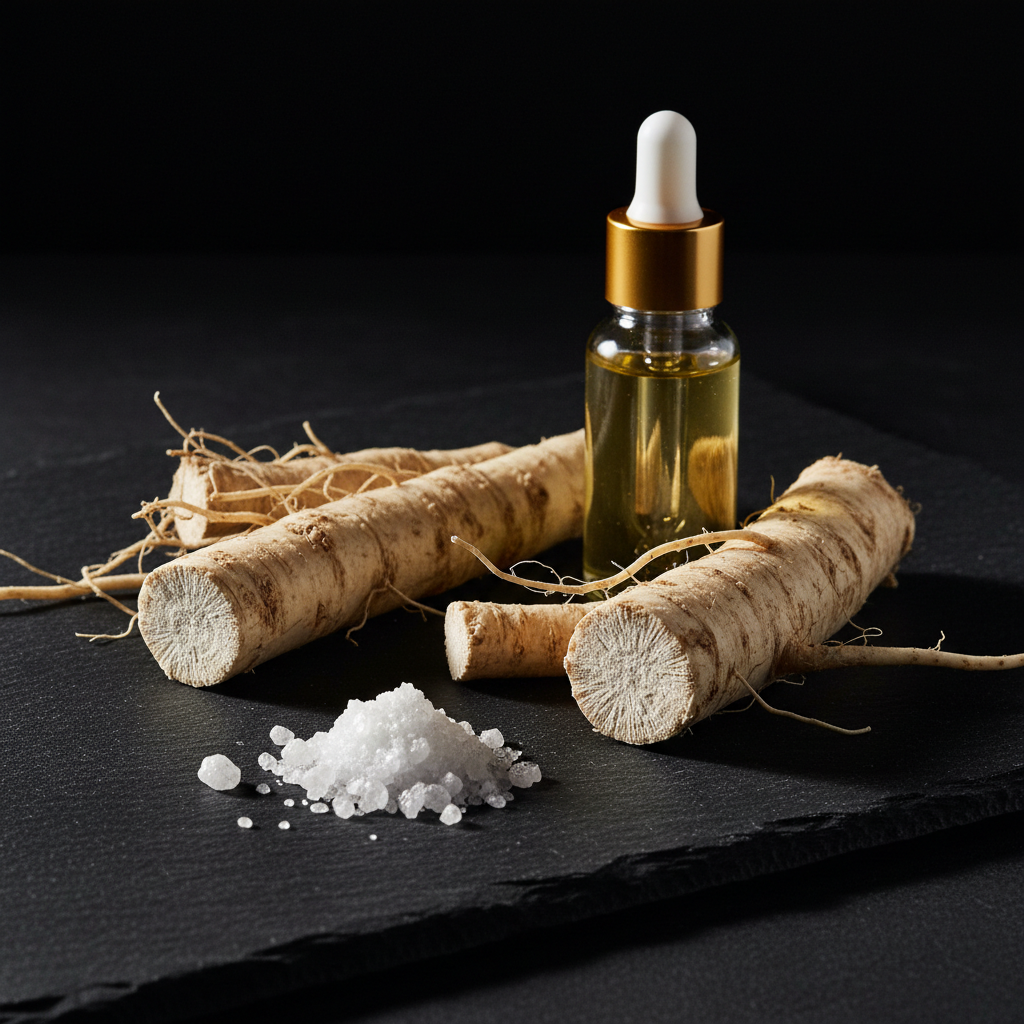
Quick answer: Allantoin is a naturally occurring compound, often derived from plants like comfrey, used in haircare for its ability to soothe, moisturise, and gently exfoliate the scalp. It helps reduce irritation and flakiness by promoting healthy cell turnover and hydration, but it does not directly stimulate hair growth or treat alopecia. Its primary benefits are cosmetic, contributing to a healthier-feeling scalp and better hair condition.
Key takeaways
- Allantoin is a naturally occurring compound, often extracted from plants or synthesised, known for its skin-conditioning properties.
- It acts as a humectant, drawing moisture into the scalp to alleviate dryness and support the skin's natural barrier.
- Allantoin provides a mild keratolytic effect, gently helping to shed dead skin cells and reduce scalp flakiness.
- Its anti-inflammatory properties can soothe an irritated or sensitive scalp, reducing redness and discomfort.
- Allantoin is generally well-tolerated, even by sensitive skin types, and is found in many shampoos, conditioners, and scalp treatments.
- While it supports scalp health, Allantoin does not directly treat hair loss (alopecia) or promote new hair growth.
Allantoin: what the evidence shows
Allantoin is a heterocyclic organic compound found naturally in many organisms, including certain plants like comfrey (Symphytum officinale), sugar beet, and chamomile. In haircare products, it is typically included for its well-documented cosmetic benefits related to scalp conditioning. Evidence indicates that Allantoin possesses mild keratolytic, humectant, and soothing properties that contribute to a healthier-feeling scalp and improved hair condition.
Its mild keratolytic action means it can gently promote the shedding of dead skin cells on the scalp's surface. This can help prevent the build-up of flakes often associated with dryness or mild dandruff, allowing for a clearer scalp. While not a strong exfoliant, this action can indirectly improve the absorption of other beneficial ingredients by removing surface debris. Research, including studies on skin conditions, supports Allantoin's role in gentle exfoliation, which is beneficial for scalp health (Akhtar et al., 2011).
As a humectant, Allantoin helps to attract and bind water to the skin, enhancing scalp hydration. It supports the skin's natural barrier function, which is crucial for reducing transepidermal water loss (TEWL). By improving moisture retention, Allantoin helps to alleviate scalp dryness, tightness, and itching, contributing to a more comfortable scalp environment. This hydrating effect is consistent with its use in various dermatological preparations.
Furthermore, Allantoin exhibits soothing properties, which can help calm an irritated scalp. By reducing mild inflammation and discomfort, it can alleviate redness and itchiness, making it a suitable ingredient for individuals with sensitive or reactive scalps. This soothing effect creates a more optimal environment for hair follicles, supporting overall hair health.
It's important to note that while Allantoin supports scalp health, there is currently insufficient evidence to conclude that it directly causes hair growth or treats hair loss (alopecia). Its benefits are primarily related to conditioning the scalp and improving the aesthetic appearance of hair by reducing breakage due to improved fibre condition.
What Allantoin does not show
Despite its benefits for scalp health, Allantoin has not been shown in controlled research to directly stimulate hair growth, reverse hair loss, or treat medical conditions like androgenetic alopecia or telogen effluvium. Its role is supportive, creating a healthier scalp environment that can indirectly benefit hair, but it does not alter the hair growth cycle or reactivate dormant follicles. Claims of "hair growth" from Allantoin should be understood in the context of improving scalp health, not as a direct treatment for hair loss.
The mechanism of action for Allantoin
Allantoin works through a combination of actions that contribute to scalp and hair well-being:
- Keratolytic Effect: Allantoin helps to loosen and shed corneocytes (dead skin cells) on the scalp's outermost layer. This process, known as desquamation, is gentle and helps to prevent the accumulation of flakes and debris, promoting a cleaner scalp. This mechanism is similar to that of other mild exfoliants, ensuring the scalp maintains a healthy cellular turnover without excessive irritation.
- Humectant Properties: The molecule structure of Allantoin allows it to attract water from the atmosphere and bind it within the stratum corneum (the outermost layer of the skin). This increases the water content of the scalp, improving hydration and maintaining the skin's natural barrier. A well-hydrated scalp is less prone to dryness, itching, and irritation.
- Soothing and Anti-Irritant Action: Allantoin has demonstrated the ability to reduce the sensation of irritation and soothe inflamed tissues. It is thought to do this by promoting the natural healing processes of the skin and reducing factors that contribute to irritation. This makes it beneficial for sensitive or compromised scalps.
- Cell Proliferation Support: Some research indicates Allantoin can support healthy cell proliferation, which is essential for wound healing and tissue regeneration. For the scalp, this can mean a faster recovery from minor abrasions or irritations, contributing to overall scalp resilience.
These combined effects work synergistically to create a more balanced, comfortable, and receptive scalp environment, which is fundamental for maintaining the health and appearance of hair.
Who benefits most from Allantoin?
Allantoin is particularly beneficial for individuals experiencing:
- Dry, itchy, or tight scalps: Its humectant properties provide hydration and relief from discomfort.
- Sensitive or easily irritated scalps: The soothing action helps calm redness and alleviate irritation.
- Scalps with mild flakiness or dry dandruff: Its gentle keratolytic effect assists in shedding dead skin cells, reducing visible flakes.
- Hair prone to breakage: By improving scalp health and reducing inflammation, Allantoin indirectly supports stronger-feeling hair fibres, making them less prone to snapping.
When the cause may be something else
If you are experiencing severe or persistent scalp issues, such as intense itching, significant hair shedding, painful lesions, or widespread redness, Allantoin in cosmetic products may not be sufficient. These symptoms could indicate underlying conditions that require professional medical attention, such as:
- Seborrhoeic dermatitis: A chronic inflammatory skin condition causing red, flaky, greasy patches.
- Psoriasis: An autoimmune condition leading to thick, silvery scales on the scalp.
- Contact dermatitis: An allergic reaction to a specific ingredient in a product.
- Fungal infections: Conditions like tinea capitis (ringworm of the scalp).
- Alopecia areata or other forms of hair loss: Which require diagnosis and treatment by a dermatologist.
In such cases, it's crucial to consult a healthcare professional for an accurate diagnosis and appropriate treatment plan. Allantoin can be a complementary ingredient but not a primary treatment for severe medical conditions.
When to get professional advice
You should seek advice from a doctor or dermatologist if:
- Your scalp condition worsens or does not improve after several weeks of using over-the-counter products.
- You experience significant hair loss or unusual patches of baldness.
- Your scalp is painful, oozing, or shows signs of infection.
- You develop new or unusual symptoms on your scalp or skin.
- You have concerns about a persistent scalp issue that affects your quality of life.
A professional can provide a precise diagnosis and recommend targeted treatments, which may include prescription medications or other interventions beyond cosmetic ingredients like Allantoin.
Frequently asked questions about Allantoin
Is Allantoin safe for all hair types?
Yes, Allantoin is generally considered safe and well-tolerated for all hair types, including colour-treated hair and sensitive scalps. Its non-irritating and non-sensitising properties make it a gentle ingredient. It primarily benefits the scalp, which in turn supports the health of the hair fibre, regardless of its texture or treatment history.
Can Allantoin help with dandruff?
Allantoin can assist with mild cases of dandruff or flakiness, particularly if these are caused by dryness or mild irritation. Its gentle keratolytic action helps to loosen and shed dead skin cells, while its humectant properties hydrate the scalp. For more severe or persistent dandruff, especially if caused by fungal overgrowth, dedicated anti-dandruff ingredients may be more effective.
How long does it take to see results from products containing Allantoin?
The time it takes to see results from products containing Allantoin can vary. For soothing and hydration benefits, many individuals report feeling an improvement in scalp comfort within a few days to a week of regular use. The gentle exfoliating effects may become noticeable over a few weeks as flakiness diminishes and the scalp appears clearer. Consistent use is key for maintaining these benefits.
Does Allantoin cause product build-up?
No, Allantoin itself does not cause product build-up. It is a water-soluble compound that is readily rinsed from the hair and scalp. In fact, its mild keratolytic properties can help prevent the accumulation of dead skin cells that contribute to scalp build-up. If you experience build-up, it's more likely due to other ingredients in a formulation or insufficient cleansing (see: How to Do a Clarifying Wash: A Guide to Deep Hair Cleansing).
Is Allantoin natural or synthetic?
Allantoin exists naturally in several plants and animal sources. The Allantoin used in cosmetic products can be either naturally derived (e.g., extracted from comfrey) or synthetically produced. Both forms are chemically identical and offer the same beneficial properties. The choice between natural or synthetic typically depends on manufacturing processes and product formulation goals.
Can Allantoin replace a conditioner?
Allantoin is an ingredient that offers specific benefits to the scalp and hair, primarily related to soothing and hydration. While it can be found in conditioners, it does not replace the primary functions of a conditioner, which are to detangle, smooth the hair cuticles, and provide overall fibre conditioning. For comprehensive hair care, Allantoin can be a beneficial addition to a conditioning product but not a substitute for it (see: The Science of Conditioners: How Hair Care Formulations Work).
For a healthier scalp and hair with Allantoin
Allantoin stands out as a versatile and gentle ingredient in haircare, primarily valued for its capacity to condition the scalp. Its unique blend of soothing, hydrating, and mild exfoliating properties contributes significantly to a comfortable and healthier-feeling scalp environment. By supporting the skin's natural barrier and promoting healthy cell turnover, Allantoin helps to reduce common concerns like dryness, itching, and flakiness. While it doesn't offer a direct solution for hair loss, its role in optimising scalp health is an important foundation for maintaining the vitality and appearance of your hair. For those seeking to address scalp discomfort and improve overall hair condition, products containing Allantoin can be a valuable addition to a haircare routine.
Watermans products containing Allantoin
Watermans formulations are designed with scalp health in mind, recognising it as the foundation for healthy-looking hair. Allantoin is one of the key ingredients featured in Watermans products, chosen for its proven efficacy in soothing and moisturising the scalp. You will find Allantoin in Watermans Hair Growth Shampoo, where it works alongside other beneficial ingredients to create an optimal environment for hair to thrive, helping to reduce scalp irritation and dryness. This contributes to less hair breakage and a feeling of stronger, healthier hair.
Sources and references
- Akhtar, N., et al. (2011). Effect of Allantoin on Human Skin. African Journal of Biotechnology, 10(49), 10077-10082. Available from: https://www.ajol.info/index.php/ajb/article/view/97071
- Cosmetic Ingredient Review Expert Panel. (2010). Final report on the safety assessment of Allantoin and its related compounds. International Journal of Toxicology, 29(4 Suppl), 1S-23S. Available from: https://pubmed.ncbi.nlm.nih.gov/20885773/
- National Center for Biotechnology Information. PubChem Compound Summary for CID 204, Allantoin. Retrieved [Current Year] from https://pubchem.ncbi.nlm.nih.gov/compound/Allantoin
- British Association of Dermatologists. (Ongoing). Patient information leaflets on various scalp conditions. Available from: https://www.bad.org.uk/for-the-public/patient-information-leaflets/
- European Chemicals Agency (ECHA). (Ongoing). Allantoin information on ECHA website.