Water Softeners for Hair Health: Understanding Their Impact
11 min read ·
Exploring Water Softeners for Hair Health, this article details how removing hard water minerals can improve hair condition and scalp health, though it's not a medical treatment.
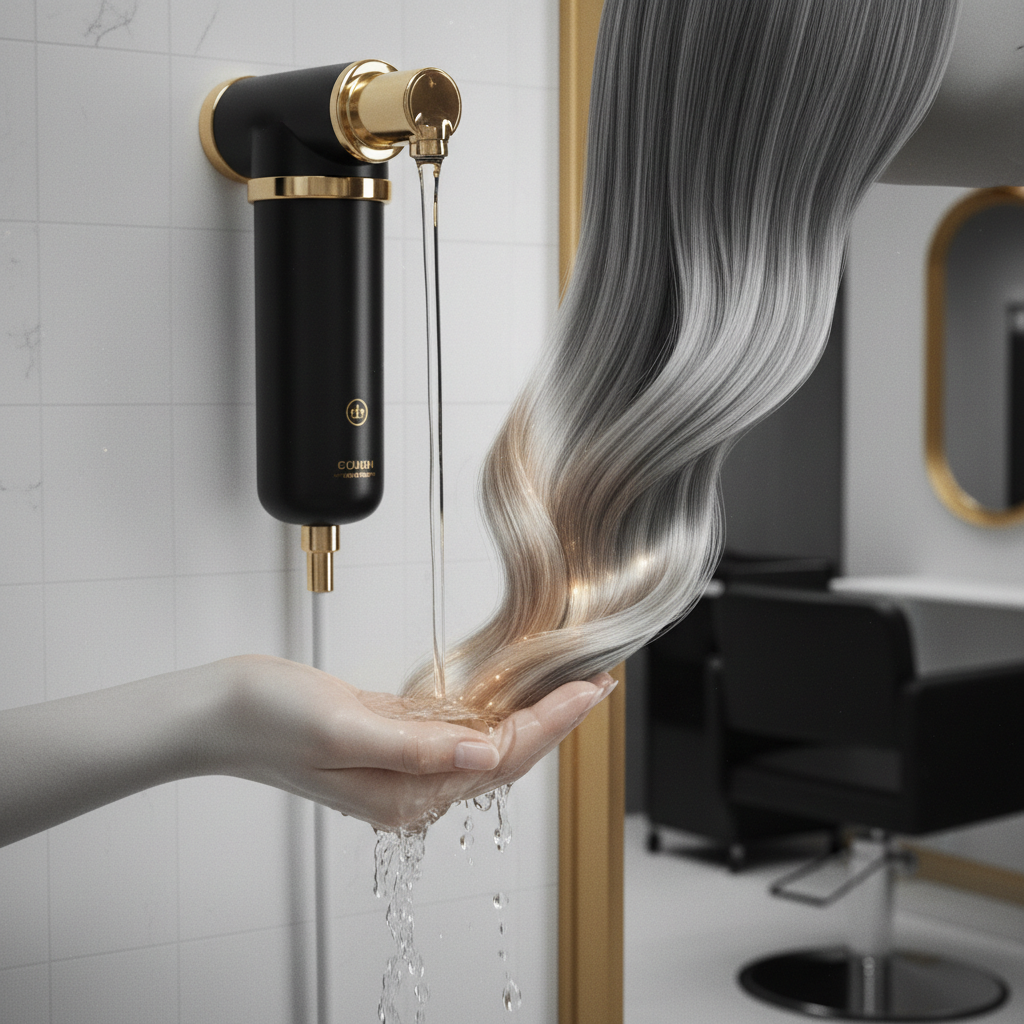
Quick answer: Water Softeners for Hair Health work by removing excess minerals like calcium and magnesium from your water supply. This can prevent mineral build-up on hair fibres and the scalp, leading to hair that feels softer, looks shinier, and is less prone to dryness and breakage. However, using Water Softeners for Hair Health is a cosmetic approach to improving hair condition, not a treatment for underlying medical conditions like hair loss or alopecia. Its benefits are primarily for hair manageability and appearance.
Key takeaways
- Hard water contains high levels of dissolved minerals, primarily calcium and magnesium, which can leave a residue on hair and scalp.
- This mineral build-up can make hair feel dry, dull, and prone to breakage, and can also impact scalp health.
- Water softeners remove these minerals, allowing shampoo to lather better and rinse more cleanly from hair.
- Using softened water can lead to hair that feels softer, looks shinier, is easier to manage, and may help maintain hair colour.
- While beneficial for hair condition, water softeners do not treat hair loss or medical scalp conditions.
- Other factors like product choice, hair care routines, and health conditions also significantly affect hair health.
Water Softeners for Hair Health: what the evidence shows
Water softeners are devices designed to reduce the concentration of mineral ions, mainly calcium and magnesium, in water. These minerals are responsible for "hard water", a common issue in many regions. When hard water is used for washing hair, these positively charged mineral ions can bind to the negatively charged protein structures of the hair fibre. This process can leave a visible and palpable residue on the hair and scalp, affecting its appearance and feel.
Research has shown that hard water can indeed have an impact on hair. A study published in the International Journal of Dermatology in 2012 found that hair washed with hard water required more force to comb through compared to hair washed with soft water, suggesting increased friction and potential for damage. The same study also noted increased mineral deposition on the hair shafts. This deposition can lead to several cosmetic concerns:
- Dullness and reduced shine: Mineral build-up on the hair surface can roughen the cuticle, scattering light rather than reflecting it smoothly, making hair appear dull.
- Dryness and brittleness: The mineral coating can prevent moisture from penetrating the hair fibre effectively, leading to dryness. This dryness, combined with the rough cuticle, can make hair feel coarse and more susceptible to mechanical damage and breakage.
- Reduced lather and cleaning efficacy: Hard water minerals react with surfactants (cleansing agents) in shampoos, reducing their ability to lather and clean effectively. This can necessitate using more product or lead to a less thorough cleanse, potentially leaving behind more product residue and minerals.
- Scalp irritation: Mineral deposits can accumulate on the scalp, potentially contributing to dryness, itchiness, or a feeling of residue, though direct causation of specific scalp conditions is complex and multi-factorial.
- Fading of hair colour: For colour-treated hair, hard water minerals can interfere with the colour molecules or accelerate their degradation, leading to premature fading. Studies have indicated that mineral build-up can contribute to colour instability.
Using Water Softeners for Hair Health addresses these issues by removing the problem-causing minerals before the water reaches your shower. This allows shampoos and conditioners to work more effectively, promoting better cleansing, improved moisture absorption, and a smoother hair surface. The result is hair that often feels softer, looks shinier, is easier to detangle, and may experience less breakage due to improved condition.
What the evidence does not show
While water softeners can significantly improve the cosmetic condition of hair, there is no robust scientific evidence to suggest that Water Softeners for Hair Health directly prevent or treat patterned hair loss (androgenic alopecia), telogen effluvium, or any other forms of alopecia. Hair loss is a complex issue often influenced by genetics, hormones, nutrition, and medical conditions. Softened water primarily affects the external condition and manageability of the hair fibre and scalp surface, rather than internal follicular processes.
Similarly, while softened water can alleviate scalp dryness caused by mineral residue, it is not a treatment for dermatological conditions like dandruff, seborrheic dermatitis, or psoriasis. These conditions require specific medical or specialised cosmetic treatments. If you are experiencing significant hair loss or persistent scalp issues, it is crucial to consult a healthcare professional.
The mechanism: how water softeners work
The most common type of water softener uses an ion-exchange process. Inside the softener, there are resin beads coated with positively charged sodium ions (Na⁺). As hard water, containing positively charged calcium (Ca²⁺) and magnesium (Mg²⁺) ions, flows through these beads, the calcium and magnesium ions have a stronger affinity for the resin. They effectively "exchange places" with the sodium ions. The calcium and magnesium ions bind to the resin, and sodium ions are released into the water, resulting in "soft" water. Periodically, the resin beads need to be regenerated by flushing them with a concentrated brine (saltwater) solution, which replenishes the sodium ions on the beads.
Other methods, such as chelation in some shower filters, work by binding to the metal ions, making them less reactive, rather than removing them entirely.
Signs to look for
Recognising the signs of hard water can help you determine if a water softener might benefit your hair:
- Dull, lifeless hair: Your hair lacks its natural sheen and looks flat.
- Dry, brittle, or frizzy hair: Despite using conditioning products, your hair still feels rough, breaks easily, or is difficult to smooth.
- Difficulty lathering shampoo: You need to use a lot of shampoo to get a decent lather, and it feels like it doesn't rinse cleanly.
- Hair feels "gummy" or "straw-like" after washing: This sensation is often due to mineral residue.
- Scalp dryness or itchiness without other conditions: Your scalp feels tight or itchy, and you can see a residue on it.
- Soap scum in your bathroom: White, chalky residue on shower doors, taps, and tiles is a strong indicator of hard water.
- Poor performance of hair colour: Your colour-treated hair fades quickly or looks dull shortly after colouring.
What you can do
If you suspect hard water is affecting your hair, several strategies can help:
- Water Softeners for Hair Health: Installing a whole-house water softener is the most comprehensive solution for treating hard water throughout your home. This provides consistent benefits for your hair, skin, and appliances. While a significant investment, it delivers the most complete mineral removal.
- Showerhead filters: These can offer a localised solution. While not as comprehensive as a whole-house system, some showerhead filters are designed to reduce chlorine and heavy metals, and a select few may offer some reduction in hardness minerals. Their effectiveness can vary significantly, and they typically need cartridge replacement.
- Clarifying shampoos: Regular use of a clarifying shampoo (e.g., once a week or every two weeks) can help remove mineral build-up and product residue from your hair. This can temporarily restore shine and softness. Follow with a good conditioner or hair mask, as clarifying shampoos can sometimes be drying. You can learn more about this in "How to Do a Clarifying Wash: A Guide to Deep Hair Cleansing".
- Chelating shampoos: These are specifically formulated with ingredients that bind to and remove mineral deposits from the hair shaft. They are often stronger than regular clarifying shampoos and should be used as needed, not necessarily daily. Look for ingredients like EDTA (ethylenediaminetetraacetic acid) or phytic acid.
- Acidic rinses: A diluted apple cider vinegar rinse (e.g., 1 part vinegar to 4 parts water) can help to dissolve mineral build-up and smooth the hair cuticle. Use sparingly, as overuse can be drying.
- Optimise your hair care routine: Regardless of water hardness, ensuring you use appropriate shampoos and conditioners for your hair type, moisturising regularly, and protecting your hair from heat and environmental damage are crucial for overall hair health. The "Science of Conditioners: How Hair Care Formulations Work" and "Hair Hydration: The Science Behind Keeping Hair Moist" provide further insights.
When the cause may be something else
Sometimes, what appears to be hard water damage could be due to other factors affecting your hair. It's important to consider these possibilities:
- Product build-up: Over-reliance on heavy styling products, inadequate rinsing, or using products incompatible with your hair type can lead to a dull, greasy, or stiff feeling, mimicking mineral build-up. This is distinct from hard water deposits.
- Hair damage: Chemical treatments (colouring, perms, relaxers), excessive heat styling, or harsh brushing can damage the hair's cuticle, leading to dryness, frizz, and breakage that can be mistaken for hard water effects. Refer to "Hair Damage: Causes, Signs, and Solutions" for more information.
- Scalp conditions: Persistent scalp dryness, itchiness, or flakiness could indicate conditions like dandruff or seborrheic dermatitis, which require specific treatments, rather than just soft water. See "Dandruff: Causes and Treatments Explained" or "Understanding Scalp Health".
- Nutritional deficiencies or health issues: Your diet and overall health play a significant role in hair quality. Deficiencies in vitamins or minerals, hormonal imbalances, or certain medical conditions can impact hair strength, growth, and appearance.
- Over-washing or harsh products: Washing your hair too frequently or using shampoos with harsh surfactants can strip natural oils, leading to dryness and irritation, regardless of water quality.
When to get professional advice
If you are experiencing significant hair breakage, hair loss (which is distinct from breakage), persistent scalp irritation, or any other concerning changes in your hair and scalp health, it's advisable to seek professional help. A dermatologist or trichologist can diagnose underlying conditions and recommend appropriate medical treatments or interventions that Water Softeners for Hair Health cannot provide. They can differentiate between cosmetic issues and medical conditions requiring specialist care.
Comparison of Water Softener Options
| Feature | Whole-House Ion Exchange Softener | Showerhead Filter (Some models) | Chelating Shampoo (Example) |
|---|---|---|---|
| Mechanism | Removes minerals (Ca, Mg) via ion exchange | Filters some impurities, minimal mineral reduction | Binds to and removes mineral deposits from hair |
| Effect on Water | Softens all water in the home | Only softens water at showerhead | No effect on water, acts on hair |
| Hair Benefits | Consistent softness, shine, improved lather, less breakage | Minor improvements for some, mainly chlorine reduction | Removes existing build-up, restores manageability |
| Scalp Benefits | Reduces mineral residue, potentially less irritation | Limited, mostly from chlorine reduction | Cleanses scalp of build-up |
| Cost | High initial investment, ongoing salt costs | Low initial cost, regular cartridge replacement | Moderate cost per bottle |
| Maintenance | Salt refills, occasional cleaning | Regular cartridge replacement | Part of hair wash routine |
| Efficacy | Very high for water softening | Varies, generally low for mineral softening | High for removing existing build-up |
| Installation | Professional installation recommended | Easy DIY installation | No installation |
Frequently asked questions about Water Softeners for Hair Health
Does using softened water make your hair oily?
No, using softened water typically does not make your hair oily. In fact, by allowing shampoos to lather and rinse more effectively, it can help prevent the build-up of residue that might make hair feel heavy or dirty, which could be mistaken for oiliness. Softened water helps hair feel cleaner and lighter, not greasier. Oily hair is usually a result of sebum overproduction, which soft water won't influence.
Can Water Softeners for Hair Health prevent hair loss?
No, Water Softeners for Hair Health are not a preventative or treatment for hair loss. Hair loss has many causes, including genetics, hormones, and medical conditions, none of which are addressed by softening water. While hard water can contribute to hair breakage, which might look like thinning, it doesn't cause actual hair loss from the follicle. If you're concerned about hair loss, consult a doctor.
How long does it take to see results from softened water on hair?
Many people notice an immediate difference in how their hair feels after the first wash with softened water. Hair often feels softer, smoother, and shampoos lather better straight away. Full improvements in shine, manageability, and reduced breakage may become more apparent over a few weeks, as existing mineral build-up gradually diminishes and hair health improves.
Is softened water safe for colour-treated hair?
Yes, softened water is generally considered beneficial for colour-treated hair. Hard water minerals can contribute to premature colour fading by binding to the hair fibre and interfering with colour molecules. By removing these minerals, softened water can help to protect your hair colour, allowing it to last longer and appear more vibrant. This helps maintain the integrity of your colour service.
Do I still need to use conditioner with softened water?
Absolutely. While softened water improves hair's feel and manageability, conditioner is still essential. It provides moisture, helps detangle, smooths the hair cuticle, and offers protection against damage. Softened water simply allows your conditioner, and other hair products, to work more efficiently, enhancing their benefits rather than replacing them. Choosing the right conditioner for your hair type is still key.
Conclusion
Understanding the impact of hard water on your hair is the first step towards achieving better hair health. While Water Softeners for Hair Health offer a valuable solution for improving the cosmetic condition of your hair, leading to softer, shinier, and more manageable strands, it is important to have realistic expectations. They are an effective tool for managing the external effects of hard water exposure on hair fibres and the scalp. For persistent concerns like significant hair loss or medical scalp conditions, professional medical advice remains paramount. Combining softened water with a thoughtful hair care routine can significantly enhance your hair's appearance and feel.
Sources and references
- International Journal of Dermatology, "Effect of hard water on tensile strength and morphology of human hair", 2012, DOI: 10.1111/j.1365-4632.2012.05431.x
- Water Quality Association (WQA), "Hardness in Drinking Water", Undated
- American Academy of Dermatology Association (AAD), Undated