Understanding Hair Loss: Causes, Signs and Management
11 min read ·
Understanding Hair Loss involves distinguishing between normal shedding, breakage and various forms of alopecia, with precise diagnosis crucial for effective management.
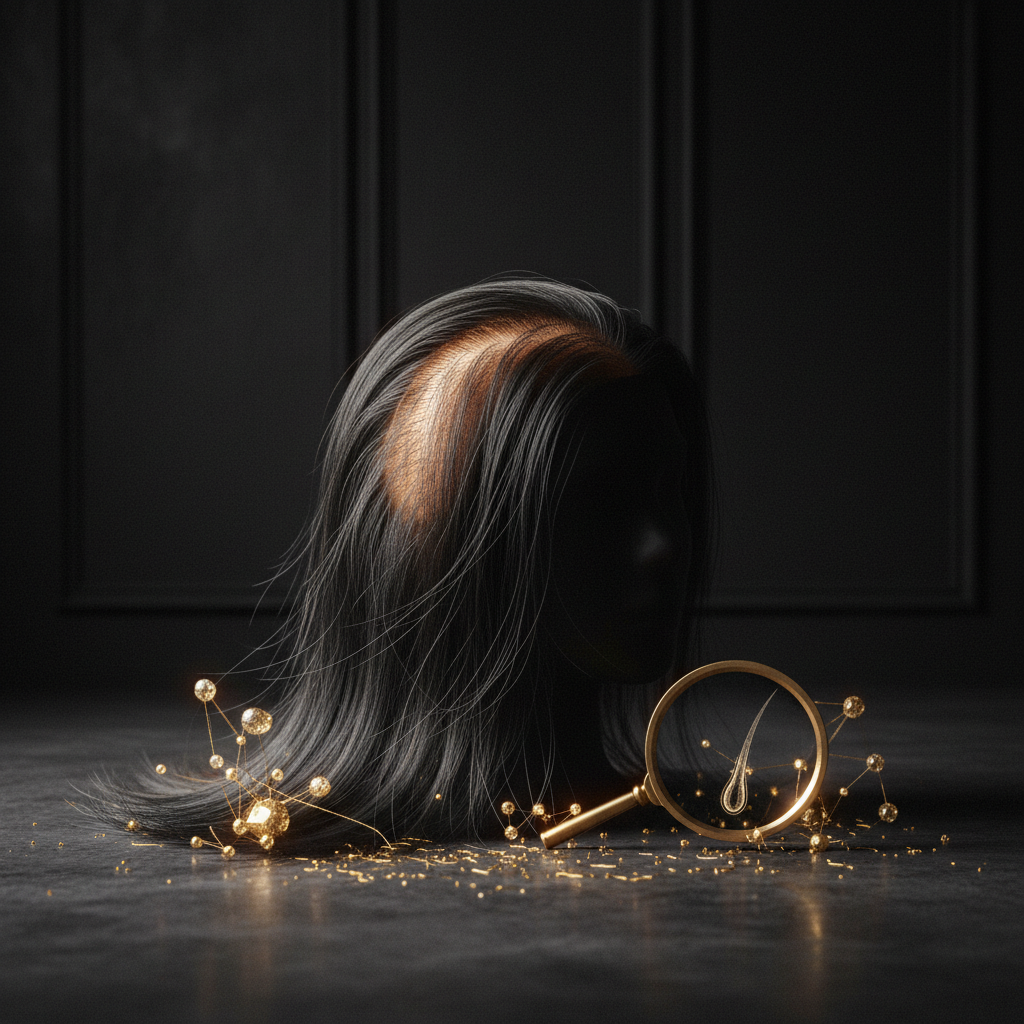
Quick answer: Understanding Hair Loss involves recognising that it is a complex issue, often misunderstood, and differs significantly from normal hair shedding or hair breakage. It refers specifically to hair leaving the scalp from the follicle (alopecia) and can be caused by a range of factors, from genetics and hormones to stress and autoimmune conditions. A proper diagnosis is essential because treatments vary widely, and cosmetics cannot cure alopecia. Its limitation is that it focuses on hair leaving the follicle, not just damage to the hair fibre.
Key takeaways
- Hair loss differs from shedding and breakage: Hair loss means hair leaving the follicle (alopecia), while shedding is part of the normal growth cycle, and breakage is the hair fibre snapping.
- The hair growth cycle is fundamental: Hair grows in phases (anagen, catagen, telogen); disruptions to this cycle are a common cause of hair loss.
- Multiple causes exist: Hair loss can stem from genetics, hormones, autoimmune conditions, stress, nutrition, medications, and physical trauma to the follicles.
- Early diagnosis is key: Consulting a healthcare professional for diagnosis can help identify the specific type and cause of hair loss, leading to more effective management.
- Cosmetics offer supportive care: While specific medical treatments address various forms of alopecia, haircare products can help maintain scalp health and support existing hair strength, but do not cure alopecia.
Understanding Hair Loss: what the evidence shows
Understanding Hair Loss means recognising that it refers specifically to the permanent or temporary cessation of hair growth from the follicle, or a significant increase in hair shedding from the follicle. This is distinct from normal daily hair shedding, which is part of the hair's natural growth cycle, and also from hair breakage, where the hair fibre snaps along its length. The average person sheds between 50 to 100 hairs per day as part of the normal hair growth cycle; anything significantly beyond this or noticeable thinning can indicate hair loss.
The hair growth cycle: a natural rhythm
Hair growth is not continuous but follows a cyclical pattern with three main phases that determine how and when hair grows and sheds. Disruptions to this cycle are often at the root of hair loss conditions:
- Anagen (Growth Phase): This is the active period of hair production, where cells in the hair follicle rapidly divide, causing the hair shaft to grow. This phase typically lasts from 2 to 7 years, though it varies by individual and body location. Approximately 85% to 90% of hairs on a healthy scalp are in the anagen phase at any given time.
- Catagen (Transition Phase): A brief transitional period, usually lasting around 10 days, where hair growth stops. The hair follicle shrinks, detaching from the dermal papilla, which nourishes it. About 1% of scalp hairs are in this phase.
- Telogen (Resting Phase): During this phase, the hair follicle is completely at rest, and the hair detaches from the follicle. This phase typically lasts about 3 months. Towards the end of the telogen phase, the old hair is shed, and a new anagen hair begins to grow in the same follicle. Around 10% to 15% of scalp hairs are in this phase.
When this natural cycle is disrupted, for example, by a large number of hairs prematurely entering the telogen phase, excessive shedding (telogen effluvium) occurs. Conditions like androgenetic alopecia cause follicles to progressively miniaturise over successive cycles, producing finer, shorter hairs until they eventually stop producing hair altogether.
Common types of hair loss (alopecia)
"Alopecia" is the medical term for hair loss. It manifests in various forms, each with distinct causes and patterns.
Androgenetic Alopecia (Pattern Hair Loss)
This is the most common form of hair loss, affecting both men and women, primarily due to genetic predisposition and hormonal factors. In men, it often starts with a receding hairline and thinning at the crown, eventually forming an M-shaped pattern or leading to baldness. In women, it typically presents as diffuse thinning over the top of the scalp, usually sparing the frontal hairline. Complete baldness is rare in women. The mechanism involves the conversion of testosterone to dihydrotestosterone (DHT) by the enzyme 5-alpha reductase. DHT binds to specific receptors in genetically susceptible hair follicles, causing them to miniaturise over time. This leads to the production of progressively shorter, finer, and lighter hairs until the follicle eventually becomes dormant.
Telogen Effluvium
This condition involves a sudden, widespread shedding of hair, occurring when a significant number of hairs prematurely enter the telogen (resting) phase. It is usually temporary and results from a physiological or psychological stressor that disrupts the hair growth cycle. Common triggers include major surgery, childbirth, severe illness or fever, significant psychological stress, extreme dietary changes, certain medications, or thyroid disorders. Hair shedding typically begins 2 to 4 months after the triggering event. Recovery is generally good once the underlying cause is identified and addressed.
Alopecia Areata
An autoimmune condition where the body's immune system mistakenly attacks healthy hair follicles, leading to sudden, often patchy, hair loss. It can affect any hair-bearing area, including the scalp, beard, or body. The patches are typically round or oval. While the exact cause is unknown, genetic predisposition and environmental factors are thought to play a role. Hair can often regrow spontaneously, but new patches may appear, and in some cases, it can progress to complete scalp hair loss (alopecia totalis) or total body hair loss (alopecia universalis).
Traction Alopecia
This type of hair loss results from chronic or repetitive pulling on the hair follicles, typically due to tight hairstyles such as braids, ponytails, dreadlocks, or hair extensions. Continuous tension can physically damage the hair follicle, leading to inflammation and, over time, permanent hair loss in the affected areas. Early intervention, by avoiding tight hairstyles, can often allow hair to regrow. If the pulling continues for too long, the damage can become irreversible, leading to scarring and permanent hair loss.
Scarring Alopecia (Cicatricial Alopecia)
This is a group of rare inflammatory disorders that destroy the hair follicle and replace it with scar tissue. Once a follicle is scarred, it is permanently unable to produce hair. The inflammation often occurs around the upper part of the hair follicle. Early diagnosis and treatment are crucial to minimise the destruction of follicles and prevent further hair loss. Conditions include lichen planopilaris and frontal fibrosing alopecia.
Factors contributing to hair loss
Beyond specific types of alopecia, various factors can influence or exacerbate hair loss:
- Nutritional Deficiencies: A lack of essential vitamins and minerals, particularly iron, zinc, biotin, and vitamins D and B complex, can impair the hair growth cycle and overall hair health. Severe protein deficiency can also lead to widespread shedding.
- Hormonal Imbalances: Fluctuations in hormones, such as those during pregnancy, postpartum, menopause, or due to conditions like polycystic ovary syndrome (PCOS) or thyroid disorders (hypothyroidism or hyperthyroidism), can disrupt the hair growth cycle and lead to increased shedding or thinning.
- Medications: Certain drugs can have hair loss as a side effect. These include chemotherapy agents, blood thinners, antidepressants, retinoids, and some medications for high blood pressure or arthritis.
- Stress: Both chronic physical and psychological stress can significantly impact the hair growth cycle, potentially pushing a larger percentage of hairs into the telogen phase prematurely, leading to widespread shedding known as telogen effluvium. See also Anagen Effluvium.
- Hair Styling Practices: Aggressive brushing, excessive heat styling (see Heat Styling Safety Best Practices), frequent chemical treatments (such as perms, relaxers, or bleaching), and tight hairstyles (as mentioned with traction alopecia) can cause damage to the hair shaft and follicles, leading to breakage or hair loss. You can find more information on Chemical Hair Treatments: What They Are and How They Affect Hair.
- Scalp Health: Conditions affecting the scalp, such as seborrheic dermatitis, psoriasis, fungal infections (e.g., tinea capitis), or severe dandruff (see Dandruff: Causes and Treatments Explained), can create an unhealthy environment for hair growth, leading to inflammation and subsequent hair loss. Understanding Scalp Health is vital.
- Environmental Factors: While not a primary cause of alopecia, exposure to pollutants and hard water (see Hard Water and Hair Damage: Understanding the Impact on Your Hair) can contribute to hair fibre damage and dryness, potentially leading to increased breakage, which can be confused with hair loss.
Understanding the distinction: hair loss vs. hair shedding vs. hair breakage
It's important to accurately differentiate these terms, as they refer to different phenomena and require different approaches to management.
| Feature | Hair Loss (Alopecia) | Hair Shedding (Telogen Effluvium) | Hair Breakage |
|---|---|---|---|
| Mechanism | Hair stops growing from the follicle or follicle miniaturises; often a deeper, systemic issue. | Disruption of the hair growth cycle; many hairs prematurely enter telogen and fall out. | Physical damage to the hair shaft, causing it to snap. |
| Appearance | Noticeable thinning, bald patches, or overall decrease in hair density on the scalp. | Widespread thinning, significant number of hairs falling out daily (often with a white bulb at the root). | Shorter, uneven hair strands, split ends, frizz, hair often looks brittle. |
| Root/End | Hair often lacks a distinct root, or follicle may be miniaturised. | Hair typically has a small white bulb at the root (the telogen club hair). | Hair breaks mid-shaft; no root attached. |
| Causes | Genetics, hormones, autoimmune disease, medication, scarring, severe stress. | Major stressor (childbirth, illness, surgery, diet, medication). | Chemical treatments, heat styling, harsh brushing, UV exposure, lack of moisture. |
| Management | Medical diagnosis and treatment (topicals, oral meds, injections, surgery). | Identifying and addressing the underlying stressor; often self-resolving. | Improving hair care routine, moisturising, gentle handling, protective styles. |
When to seek professional advice
If you are experiencing sudden, excessive, or persistent hair loss, it is advisable to consult a general practitioner or a dermatologist. A healthcare professional can accurately diagnose the specific type of alopecia you are experiencing through examination, medical history, and sometimes blood tests or a scalp biopsy. Early diagnosis is crucial because treatments vary widely depending on the cause, and timely intervention can often slow progression, prevent further loss, or even promote regrowth in some cases.
If you notice patchy hair loss, rapid thinning, scalp inflammation, itching, or pain, these are strong indicators to seek professional medical advice. Self-diagnosing and self-treating hair loss can be ineffective and may delay appropriate care.
Frequently asked questions about Understanding Hair Loss
Can stress really cause hair loss?
Yes, stress can certainly contribute to hair loss. Severe physical or emotional stress can push a significant number of hair follicles into the resting (telogen) phase prematurely. This leads to a condition called telogen effluvium, where widespread hair shedding typically occurs about 2 to 4 months after the stressful event. While temporary, managing stress is important for hair health.
Is it normal to see hair on my brush or in the shower?
Yes, it is entirely normal to see hair on your brush, in the shower drain, or on your clothes. The average person sheds between 50 to 100 hairs per day as part of the natural hair growth cycle. This is a regular part of renewal, not hair loss. If you notice a significant increase in the amount of hair shed, it may warrant further investigation.
Can dietary changes improve hair loss?
For some types of hair loss, particularly those linked to nutritional deficiencies, dietary changes can be beneficial. Ensuring adequate intake of iron, zinc, biotin, protein, and vitamins D and B complex is important for healthy hair growth. However, dietary changes alone are unlikely to resolve genetically programmed hair loss or autoimmune conditions. Always consult a professional for personalised advice.
What's the difference between hair loss and hair breakage?
Hair loss refers to hair falling out from the root, meaning it has detached from the follicle. Hair breakage, on the other hand, means the hair shaft has snapped along its length, leaving the root still in the scalp. Breakage is often due to physical or chemical damage, whereas hair loss indicates a disruption in the hair growth cycle or follicle health. Understanding Hair Loss means knowing this key distinction.
Can frequent washing lead to hair loss?
No, frequent washing does not cause hair loss. The hairs you see coming out during washing are typically those already in the telogen (resting) phase, which would have shed regardless. Gently washing your hair and maintaining a clean scalp is generally beneficial for hair health. If you notice excessive shedding during washing, it's usually a sign of an underlying issue, not the washing itself.
Supporting your hair and scalp
While specific medical treatments address various forms of alopecia, maintaining a healthy scalp and strong hair fibres is always beneficial. Regular, gentle cleansing (see Hair Cleansing and Conditioning) and conditioning (see The Science of Conditioners: How Hair Care Formulations Work) can help keep the scalp environment optimal for existing hair growth and reduce the risk of breakage. Choosing appropriate products for your hair type (see Choosing the Right Shampoo for Your Hair Type) and addressing concerns like an oily scalp (see Oily Scalp Care: Understanding and Managing Excess Sebum) can support overall hair vitality.
For those seeking to support healthy hair and scalp, Watermans offers products formulated to provide optimal conditions. Our GrowMe® Hair Growth Shampoo and Conditioner, for example, are designed to cleanse and nourish the scalp, supporting the health of existing hair.
Find these ingredients in Watermans products
- Niacinamide: you will find this ingredient in our Hair Mask.
- Zinc: You will find this ingredient in our GrowMe® Hair Growth Vitamins.
- Biotin: Our GrowMe® Hair Growth Vitamins contain biotin.
- Niacinamide (Vitamin B3): This is included in our GrowMe® Hair Growth Shampoo and Conditioner.
Sources and references
- American Academy of Dermatology Association, "Hair Loss: Diagnosis and Treatment", Last accessed 2023.
- National Institute of Arthritis and Musculoskeletal and Skin Diseases (NIAMS), "Alopecia Areata: Questions and Answers", 2023.
- NHS, "Hair loss", Last accessed 2023.
- British Association of Dermatologists, "Androgenetic Alopecia", "Telogen Effluvium", "Alopecia Areata", Last accessed 2023.
- Mayo Clinic, "Hair loss", Last accessed 2023.
- Trueb, R. M. (2002). "Molecular mechanisms of androgenetic alopecia". Experimental Gerontology, 37(8-9), 981-990. DOI: 10.1016/s0531-5565(02)00099-2.
- Harrison, S., & Sinclair, R. (2002). "Telogen effluvium". Clinical and Experimental Dermatology, 27(5), 389-395. DOI: 10.1046/j.1365-2230.2002.01083.x.
- PubMed Central, "Nutrition and Hair: Deficiencies and Supplements", Last accessed 2023. (This refers to a collection of studies accessible via PubMed Central, not a single specific article.)
- Cleveland Clinic, "Traction Alopecia", Last accessed 2023.
- Journal of the American Academy of Dermatology, "Cicatricial Alopecias", Last accessed 2023. (This refers to review articles or consensus statements often published by JAAD, not a single article.)