Understanding Transepidermal Water Loss: The Science of Scalp Hydration
8 min read ·
Understanding Transepidermal Water Loss explains how moisture evaporates from the scalp barrier, why elevated rates cause irritation, and how to restore balance.

Quick answer: Understanding Transepidermal Water Loss (TEWL) is essential for maintaining scalp and skin barrier health. TEWL refers to the passive evaporation of moisture from the deeper dermis through the stratum corneum into the atmosphere. While a baseline level of water evaporation is completely normal and continuous, elevated TEWL signals an impaired lipid barrier, leading to dehydration, flaking, and irritation. However, measuring TEWL only quantifies outward barrier integrity; it cannot diagnose specific underlying skin diseases or internal nutritional deficiencies.
Key takeaways
- Transepidermal water loss measures the quantity of condensed water diffusing through the stratum corneum into the external environment.
- Healthy basal TEWL rates typically range between 4 and 10 g/m²/h on covered skin, though scalp values fluctuate depending on sebum output and washing frequency.
- High TEWL compromises the scalp barrier, leaving skin prone to irritation, micro-inflammation, and dry flakes.
- Keratinocytes and intercellular lipids (ceramides, cholesterol, and free fatty acids in an approximate 1:1:1 molar ratio) regulate this moisture barrier.
- Topically supporting the barrier with humectants, physiological lipids, and gentle surfactants helps lower elevated TEWL.
Understanding Transepidermal Water Loss: what the evidence shows
Understanding Transepidermal Water Loss begins with the physical architecture of the skin. The outermost layer of the epidermis, the stratum corneum, functions as a brick-and-mortar structure. The "bricks" are corneocytes, which are non-viable, protein-packed cells rich in Natural Moisturising Factor (NMF). The "mortar" consists of lamellar lipid bilayers containing roughly 50% ceramides, 25% cholesterol, and 15% free fatty acids.
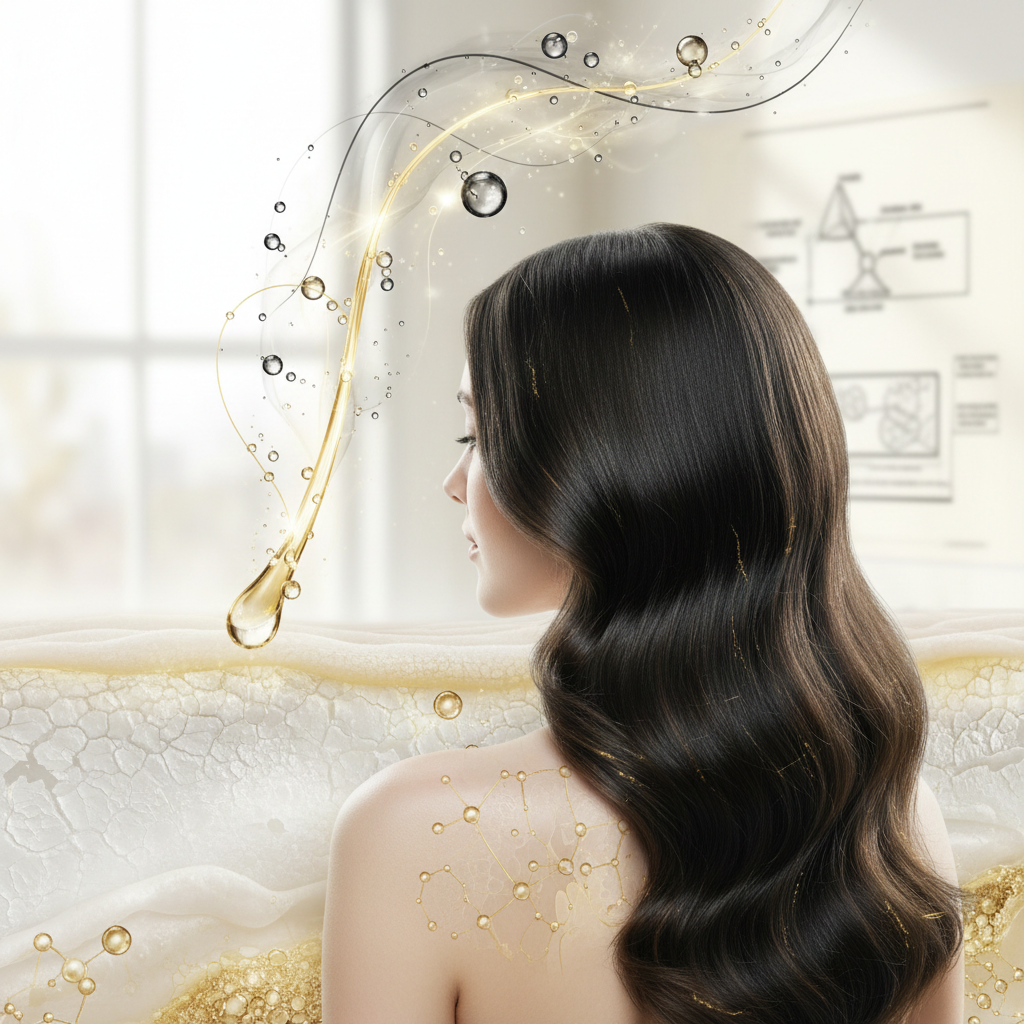
Water continually travels upward from the vascularised dermis to hydrate the epidermis. Under normal physiological conditions, a steady rate of this water evaporates into the air. This baseline loss is not sweat; it is imperceptible evaporation. Dermatologists and cosmetic scientists assess barrier health by measuring this evaporation rate, recorded in grams per square metre per hour (g/m²/h), using closed-chamber or open-chamber evaporimeters.
When the lipid mortar breaks down or corneocytes shed prematurely, water escapes much faster. Studies in the British Journal of Dermatology confirm that elevated TEWL correlates directly with clinical dryness, heightened sensitivity to external irritants, and compromised skin elasticity. On the scalp, an accelerated rate of water loss weakens the microenvironment surrounding the hair follicle.
What the evidence does not show about TEWL
Measuring TEWL provides a clear snapshot of barrier function, but it has defined scientific boundaries:
- It does not measure internal hydration: Drinking excessive water will not automatically lower an elevated TEWL reading if the physical epidermal lipid matrix is damaged.
- It is not an index of hair growth: High TEWL does not cause follicular miniaturisation or pattern hair loss (androgenetic alopecia). It affects the cutaneous surface, not follicle genetics.
- It cannot diagnose specific conditions: An elevated reading tells you the physical barrier is impaired, but it cannot differentiate between contact dermatitis, mild atopic eczema, or over-cleansing.
- It does not capture sweat production: TEWL measurements must be taken when the subject is at rest, in a climate-controlled room (ideally 20 to 22 degrees Celsius with 40% to 50% relative humidity), because eccrine sweating completely skews the reading.
The biological mechanism: how water escapes the scalp
The scalp features a dense concentration of sebaceous glands and hair follicles, making its barrier biology distinct from facial or arm skin. Water retention relies on two interdependent systems:
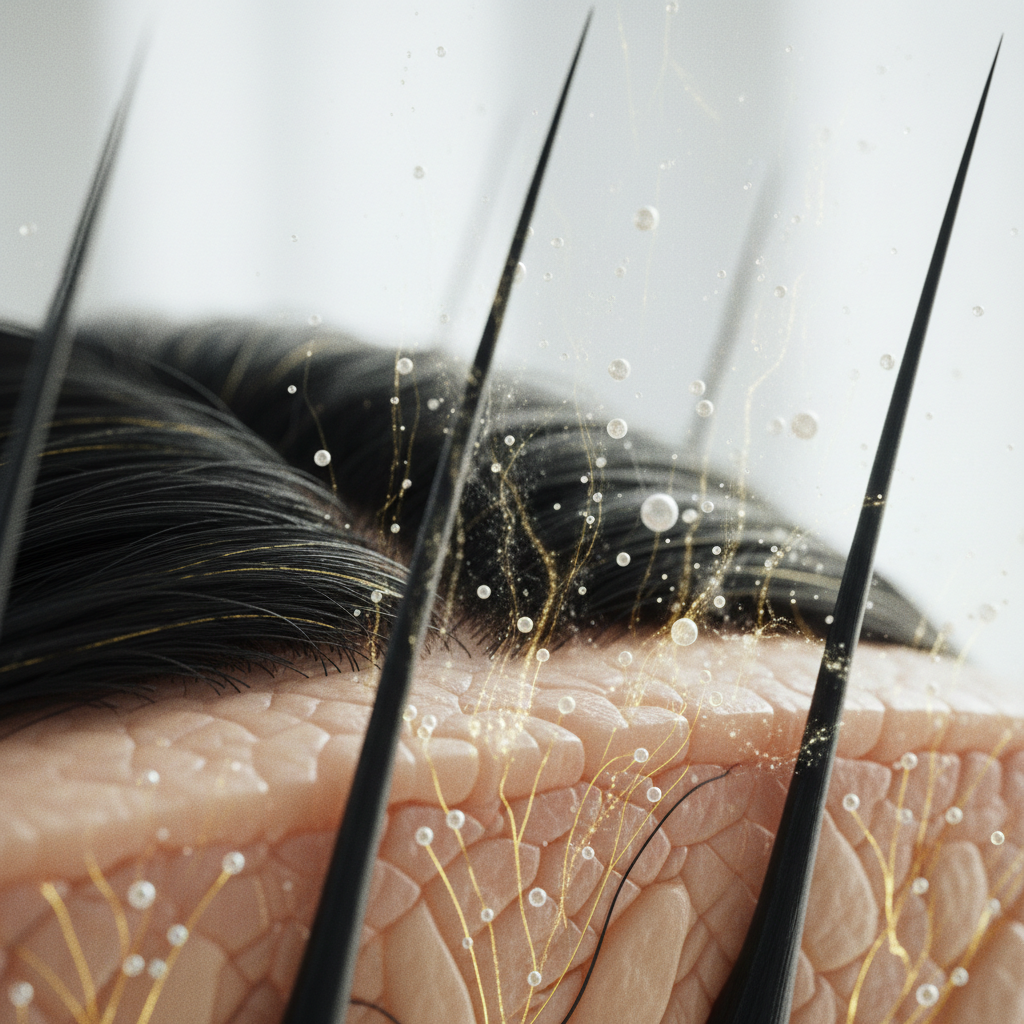
- The stratum corneum lipid bilayers: As keratinocytes move through the spinous and granular layers, they release lamellar bodies containing glucosylceramides, sphingomyelin, and phospholipids. Enzymes convert these into ceramides and free fatty acids. If enzyme activity drops or harsh detergents strip these lipids, pathways open between cells, letting water evaporate outward.
- Natural Moisturising Factor (NMF): Produced through the breakdown of the structural protein filaggrin, NMF consists of free amino acids, pyrrolidone carboxylic acid (PCA), lactate, and urea. These hygroscopic compounds absorb water and hold it within corneocytes. When ambient humidity drops or surfactants wash NMF away, corneocytes shrink, creating micro-fissures in the barrier.
When water loss accelerates, cutaneous enzymes that oversee normal desquamation (corneodesmosome breakdown) lose the moisture they need to work properly. As a result, dead cells shed in clumps rather than imperceptibly, producing visible dry flakes on the scalp.
Signs of elevated TEWL on the scalp
Recognising elevated TEWL helps professionals distinguish between simple barrier dehydration and other scalp concerns:
| Characteristic | Normal TEWL (Balanced Barrier) | Elevated TEWL (Impaired Barrier) | Seborrhoeic Dermatitis (Fungal Imbalance) |
|---|---|---|---|
| Typical Evaporation Rate | 5 to 10 g/m²/h | 15 to 30+ g/m²/h | Highly variable, often 18 to 25 g/m²/h |
| Visual Appearance | Smooth, pale pink or flesh-toned scalp | Dull, fine powdery white flakes | Yellowish, greasy scales; pink-red patches |
| Sensory Symptoms | Comfortable, no persistent sensation | Tightness after washing, mild prickling | Persistent itch, warmth, soreness |
| Primary Root Cause | Intact lamellar lipids and balanced NMF | Stripped lipids, low humidity, harsh wash | Malassezia yeast overgrowth and sebum breakdown |
| Response to Lipids | Remains balanced | Calms quickly with emollients | Can flare if heavy plant oils feed the yeast |
Practical steps to lower TEWL and restore the barrier
Lowering elevated TEWL requires an approach that protects existing lipids while replenishing moisture.
Use gentle, physiological surfactant systems
Traditional anionic surfactants like high concentrations of sodium lauryl sulphate (SLS) can penetrate the stratum corneum and bind to keratin, denaturing proteins and extracting intercellular lipids. Opt for milder surfactants (such as amphoteric betaines or non-ionic glucosides) and products formulated close to the scalp's natural pH of 4.5 to 5.5. A mildly acidic pH keeps lipid-processing enzymes working efficiently.
Rebuild the lipid matrix topically
Applying topical formulations containing physiological lipids helps reseal the spaces between corneocytes. Look for ingredients that mimic the skin's lipid barrier:
- Ceramides (specifically Ceramide NP, AP, and EOP)
- Phytosterols and cholesterol
- Essential fatty acids (linoleic and linolenic acids)
Layer humectants under light emollients
To retain water, combine humectants with occlusives. Humectants like glycerin, hyaluronic acid, sodium PCA, and panthenol draw water from the dermis into the stratum corneum. Following this with light emollients traps the moisture and slows evaporation.
Manage external environmental factors
Central heating and air conditioning lower ambient humidity below 30%, which pulls water out of the stratum corneum. Using a room humidifier during dry winter months reduces the vapour-pressure gradient between your skin and the surrounding air, keeping TEWL at a baseline level.
When an impaired barrier is something else
Dryness and tightness do not always stem purely from elevated TEWL. Several dermatological conditions mimic basic barrier dehydration:
- Psoriasis: Plaque psoriasis features accelerated epidermal turnover (3 to 4 days instead of 28 days), leaving an incomplete barrier with thick, silvery scales and elevated TEWL. This requires medical treatment rather than simple cosmetic moisturisers.
- Seborrhoeic Dermatitis: While TEWL is often raised in seborrhoeic dermatitis, the underlying trigger is an inflammatory reaction to oleic acid produced by Malassezia yeasts feeding on sebum. Calming it requires antifungal and anti-inflammatory agents alongside barrier support.
- Allergic Contact Dermatitis: A sudden increase in redness, swelling, and water loss after using a new haircare product points to a type IV delayed hypersensitivity reaction, which requires allergen identification and avoidance.
When to seek professional advice
Seek guidance from a GP, dermatologist, or qualified trichologist if:
- Flaking and tightness do not improve after 3 to 4 weeks of gentle barrier care.
- The scalp shows signs of infection, such as oozing, crusting, or persistent heat.
- Scalp discomfort is accompanied by diffuse hair shedding (telogen effluvium) or patchy hair loss (alopecia).
- Severe itching interferes with sleep or daily activities.
Scalp care and Watermans
Supporting barrier function requires a balanced approach to cleansing and conditioning. Watermans designs scalp-first formulations that prioritise the microenvironment around the follicle. Rather than relying on harsh cleansing agents that strip structural lipids and increase TEWL, Watermans products integrate scalp-nourishing botanical extracts, caffeine, biotin, and humectants. Maintaining balanced scalp moisture and a calm, clean surface provides an optimal foundation for hair to look thicker, feel stronger, and resist mechanical breakage.
Conclusion
Understanding Transepidermal Water Loss gives stylists and consumers a scientific lens through which to evaluate scalp health. Rather than mistaking every instance of flaking for dandruff or poor hygiene, understanding TEWL clarifies that tight, uncomfortable skin often stems from an impaired physical barrier. By adopting mild cleansing practices, replenishing surface lipids, and protecting the scalp from harsh environmental extremes, you can normalise moisture loss, calm irritation, and cultivate a healthy environment for hair to thrive.
Frequently asked questions about Understanding Transepidermal Water Loss
What is the normal rate of transepidermal water loss on the scalp?
A healthy scalp typically registers a TEWL value between 5 and 15 g/m²/h, though it can vary based on proximity to sebaceous glands, recent washing, and environmental humidity. Values rising consistently above 20 to 25 g/m²/h generally indicate that the stratum corneum lipid matrix is compromised, leaving the scalp vulnerable to irritation and accelerated moisture evaporation.
How does Understanding Transepidermal Water Loss help with dry scalp?
Understanding Transepidermal Water Loss helps you realise that a dry scalp is usually not a lack of sebum (oil), but a failure to retain water within the stratum corneum. Instead of applying heavy, pore-clogging oils that can disrupt the scalp microbiome, you can focus on humectants to bind water and physiological lipids to seal the intercellular barrier.
Does high transepidermal water loss cause permanent hair loss?
No. Elevated TEWL affects the outermost epidermal layer and does not directly trigger follicular miniaturisation, scarring, or permanent hair loss. However, an impaired barrier can lead to chronic micro-inflammation, itching, and subsequent scratching. Aggressive scratching can cause mechanical hair breakage and temporary shedding, making barrier repair an important part of overall hair maintenance.
Can washing your hair too often increase TEWL?
Yes. Frequent washing with hot water and strong anionic surfactants extracts structural lipids, such as ceramides and cholesterol, from the stratum corneum. This increases TEWL, leading to post-wash tightness and flaking. Switching to lukewarm water and milder surfactant blends helps preserve lipid architecture and normalises water evaporation.
Sources and references
- British Association of Dermatologists. Measurement of Transepidermal Water Loss in Dermatology. British Journal of Dermatology, 2018.
- Rawlings, A.V., and Harding, C.R. Moisturization and skin barrier function. Dermatologic Therapy, 2004.
- Proksch, E., Brandner, J.M., and Jensen, J.M. The skin: an indispensable barrier. Experimental Dermatology, 2008.
- Elias, P.M. Skin barrier function: basic concepts and clinical relevance. Journal of Dermatology, 2020.
- World Health Organization / International Contact Dermatitis Research Group. Guidelines on TEWL assessment techniques, 2019.
Find these ingredients in Watermans products
- Biotin: you will find this ingredient in our Hair Growth Shampoo.
- Oleic Acid: you will find this ingredient in our Camellia & Black Castor Hair & Body Oil.
- Panthenol (Provitamin B5): you will find this ingredient in our Heat Protection Spray.