Understanding Contact Dermatitis: Symptoms, Triggers, and Scalp Care
7 min read ·
Understanding Contact Dermatitis: explore causes, differences between irritant and allergic types, common hair product triggers, and barrier recovery.
Quick answer: Understanding Contact Dermatitis begins with identifying an inflammatory skin reaction triggered by external substances touching the scalp or skin. It presents in two forms: irritant contact dermatitis, caused by direct chemical damage to the skin barrier, and allergic contact dermatitis, an immune-mediated type IV delayed hypersensitivity response. While symptoms such as redness, burning, and flaking resolve once the trigger is eliminated, identifying the offending cosmetic chemical, preservative, or fragrance requires careful elimination or clinical patch testing.
Key takeaways
- Contact dermatitis accounts for up to 95 percent of all occupational skin disorders seen in hairdressing and salon environments.
- Irritant contact dermatitis occurs quickly when an external agent strips the skin barrier, requiring no prior immune sensitisation.
- Allergic contact dermatitis is a delayed, cell-mediated allergic response that typically emerges 24 to 72 hours after exposure.
- Common hair product culprits include paraphenylenediamine (PPD) in permanent hair dyes, methylisothiazolinone preservatives, and fragrances.
- Contact dermatitis affects the skin surface; it does not destroy healthy follicles or cause permanent scarring alopecia unless severe secondary infection occurs.
Understanding Contact Dermatitis: what the evidence shows
Understanding Contact Dermatitis requires distinguishing between direct chemical injury and an adaptive immune response. Dermatological research published by the British Association of Dermatologists categorises contact dermatitis into two distinct biological pathways: irritant contact dermatitis (ICD) and allergic contact dermatitis (ACD).
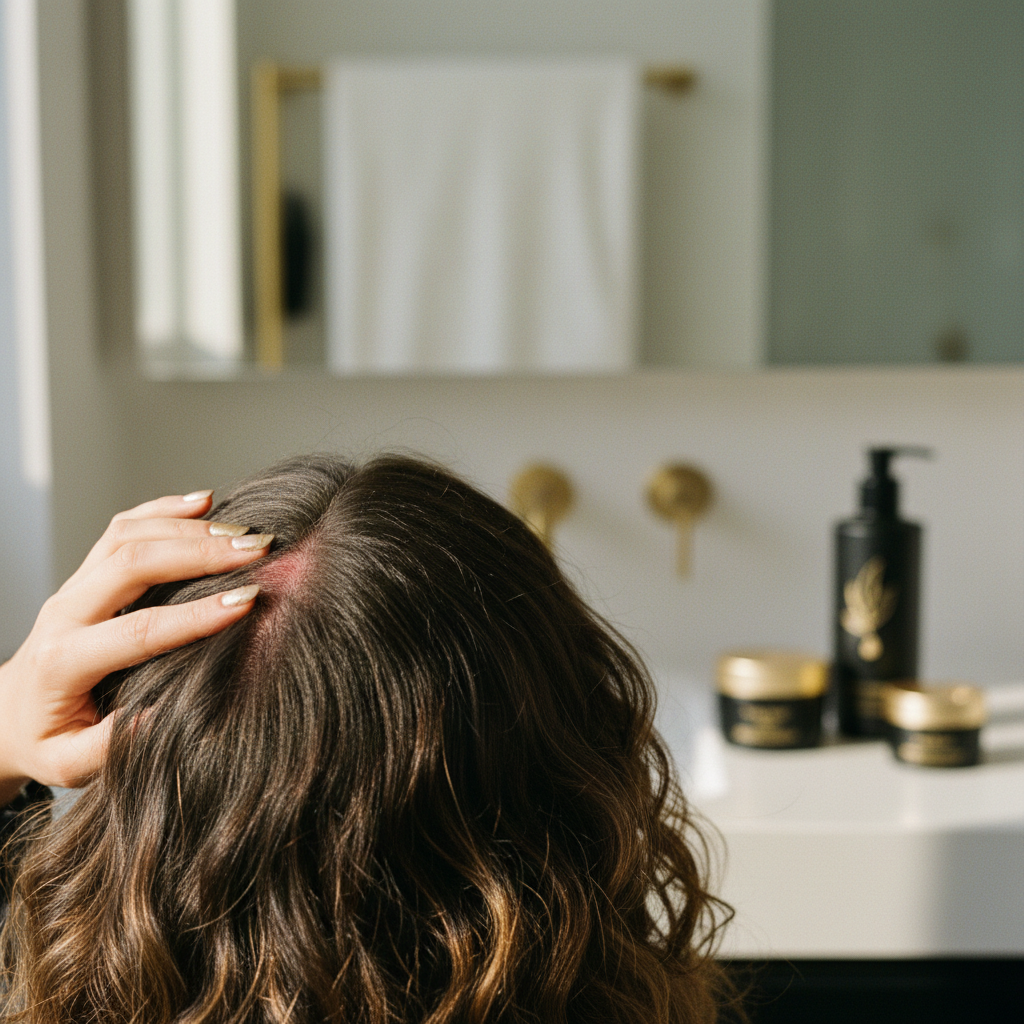
Irritant contact dermatitis accounts for roughly 80 percent of all clinical cases. It develops when an external substance physically or chemically disrupts the stratum corneum, the outermost protective layer of the skin. Alkaline hair processing solutions, bleaching powders containing ammonium persulfate, and harsh anionic surfactants can strip physiological lipids and denature surface keratins. Anyone exposed to a high enough concentration for a sufficient duration will experience irritant dermatitis.
Allergic contact dermatitis accounts for the remaining 20 percent of cases. ACD is a type IV cell-mediated delayed hypersensitivity reaction. During initial contact, a reactive chemical hapten binds to epidermal proteins, creating an antigen that is captured by Langerhans cells. These immune cells travel to local lymph nodes, priming T-lymphocytes. Upon re-exposure, primed T-cells migrate back to the skin, releasing pro-inflammatory cytokines that generate an eczematous response. Unlike irritant reactions, allergic dermatitis requires genetic predisposition and prior sensitisation, meaning a product used safely for months can suddenly provoke a reaction.
Irritant versus allergic contact dermatitis
The following table summarises the primary differences between the two forms:
| Feature | Irritant Contact Dermatitis (ICD) | Allergic Contact Dermatitis (ACD) |
|---|---|---|
| Biological mechanism | Non-immunological barrier disruption | Type IV delayed hypersensitivity (cell-mediated) |
| Sensitisation required | No; occurs on first exposure if strong enough | Yes; requires prior exposure and priming |
| Onset of symptoms | Immediate to a few hours | 24 to 72 hours post-exposure |
| Key symptoms | Stinging, burning, dry tightness, redness | Intense itching, blistering, swelling, weeping |
| Area affected | Confined strictly to the exact contact zone | Can spread beyond the contact margins |
| Common salon triggers | Bleach powders, peroxide, hot water, surfactants | PPD, fragrance mixes, preservatives (isothiazolinones) |
What the evidence does not show
There is no clinical evidence that contact dermatitis directly attacks hair follicle stem cells or causes permanent genetic hair loss (androgenetic alopecia). When hair shedding accompanies an acute reaction on the scalp, it is almost exclusively telogen effluvium triggered by systemic inflammatory stress, or localised hair breakage caused by the harsh chemical that damaged the scalp in the first place.
Controlled studies also confirm that contact dermatitis cannot be cleared purely by taking oral vitamins, changing dietary habits, or applying natural oils. In fact, applying unrefined plant oils or botanical extracts to an inflamed scalp often worsens allergic dermatitis, because natural essential oils contain common sensitising compounds like limonene, linalool, and geraniol.
Common triggers on the scalp and hands
Cosmetic chemistry uses hundreds of functional ingredients, but patch-test data from the North American Contact Dermatitis Group and European surveillance networks point to a concentrated list of frequent offenders.
Hair dyes and colouring agents
Paraphenylenediamine (PPD) remains the single most common cause of allergic contact dermatitis associated with haircare. Found in permanent and demi-permanent oxidising dyes, PPD penetrates the hair cuticle to polymerise inside the cortex. Cross-reactions regularly occur with related aromatic amines, including paratoluenediamine (PTD), as well as black henna temporary tattoos.
Preservatives
Aqueous cosmetics require antimicrobial preservation. Methylisothiazolinone (MI) and methylchloroisothiazolinone (MCI) caused an international surge in allergic contact dermatitis during the 2010s, prompting regulatory bans in leave-on cosmetics across the UK and European Union. While restricted to rinse-off formulas at low concentrations (15 parts per million for the MCI/MI mixture), they remain active triggers for previously sensitised individuals. Formaldehyde releasers like DMDM hydantoin and quaternium-15 represent additional recognised irritants.
Surfactants and processing chemicals
Strong alkaline agents such as ammonium hydroxide, ethanolamine, and persulfate salts in hair lightening products disrupt the scalp's natural acid mantle (pH 4.5 to 5.5). When the pH rises above 7.0, the enzymatic barrier weakens, increasing trans-epidermal water loss and leaving nerve endings exposed to chemical irritation.
Recognising the clinical signs
The presentation of contact dermatitis varies depending on whether the reaction occurs on the scalp, the neck, or the hands of a stylist.
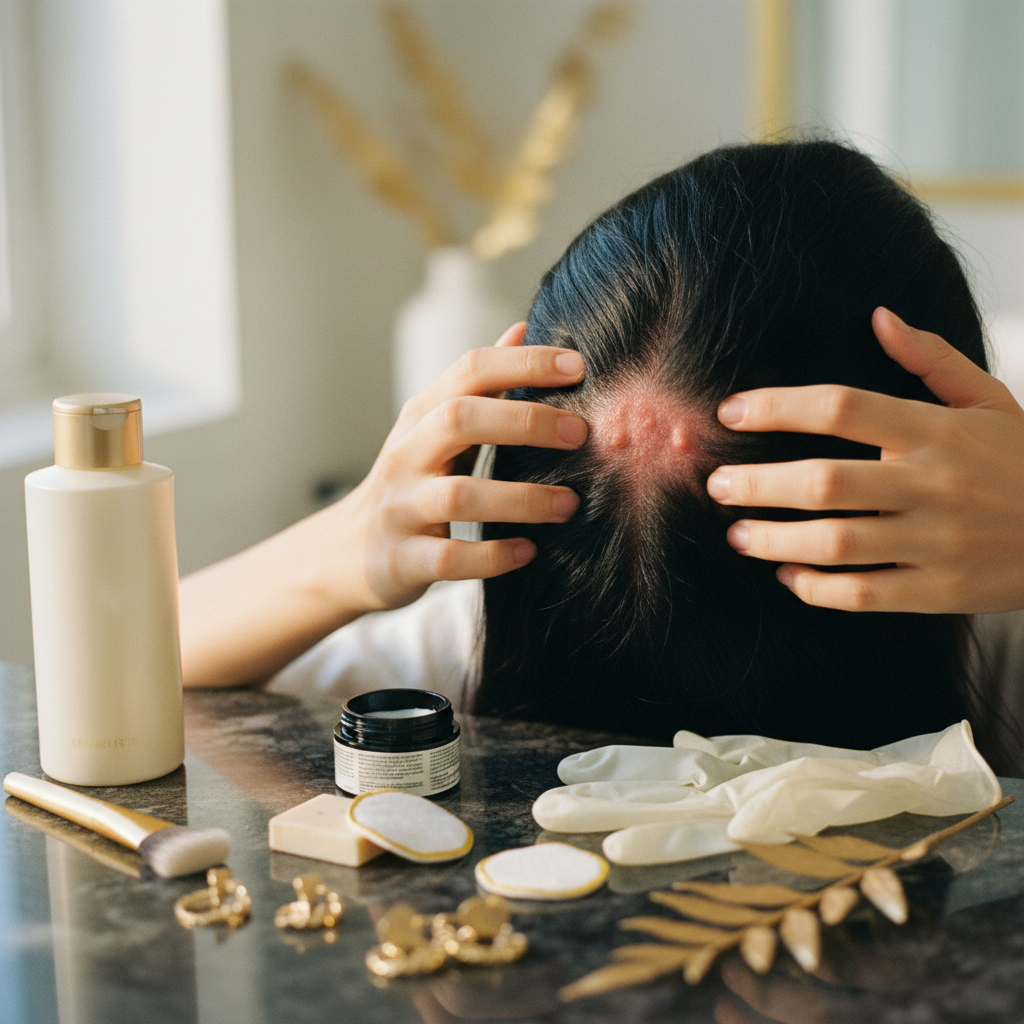
On the scalp, thick hair coverage can mask subtle erythema (redness). Patients often describe symptoms before visible signs emerge:
- Persistent stinging or burning immediately following product application, typical of irritant dermatitis.
- Pruritus (severe itching) that peaks two to three days after a service, pointing toward allergic contact dermatitis.
- Localised micro-vesicles (tiny fluid-filled blisters) that rupture, leaving crusting, weeping, or yellow flaking.
- Facial and periorbital oedema (swelling around the eyes, forehead, and ears), common when hair dye allergens wash downward over thinner facial skin during rinsing.
On the hands of hairdressers, contact dermatitis frequently presents as chronic, dry, fissured eczema over the finger webs and knuckles, driven by repeated wet work combined with shampoo exposure.
What you can do: immediate steps and management
If you suspect an active flare-up of contact dermatitis from a haircare product, immediate elimination of the trigger is paramount.
- Rinse thoroughly: Flush the scalp with lukewarm or cool water. Avoid hot water, which dilates cutaneous blood vessels and accelerates inflammation.
- Strip back the routine: Discontinue all styling products, dry shampoos, colourants, and highly fragranced treatments. Switch temporarily to an unfragranced, neutral-pH cleanser.
- Cool compresses: For weeping or burning skin, applying clean towels dampened with physiological saline or cool water calms cutaneous nerve endings.
- Resist mechanical friction: Scratching damaged skin introduces Staphylococcus aureus or other opportunistic bacteria, turning a sterile chemical inflammation into a secondary bacterial infection.
- Support barrier recovery: Once weeping subsides, use simple emollients formulated without botanical fragrances or complex active botanicals.
In professional environments, prevention requires consistent use of nitrile gloves. Latex gloves offer inadequate protection against hair colour molecules and monomer acrylates, which can permeate thin latex within minutes.
When the cause may be something else
Scalp dermatitis shares overlapping symptoms with several other dermatological conditions:
- Seborrheic dermatitis: Characterised by greasy, yellowish scales over erythematous patches, driven by an inflammatory reaction to Malassezia yeast rather than external chemicals. It typically clusters along the hairline, eyebrows, and nasolabial folds.
- Scalp psoriasis: Produces thick, silvery-white plaques with sharply demarcated borders. It is an autoimmune condition driven by accelerated epidermal turnover, often presenting with pitting in the fingernails.
- Folliculitis: Presents as discrete follicular pustules, usually caused by bacterial infection of the hair follicle rather than widespread surface inflammation.
When to seek medical advice
You should consult a GP or dermatologist if your scalp exhibits swelling that spreads to your eyes or neck, if you notice pus or golden crusting indicating a secondary bacterial infection, or if symptoms persist for more than two weeks despite stopping suspected products.
A dermatologist can perform epicutaneous patch testing using standardised allergen series. Patch testing involves placing small aluminium chambers containing diluted allergens onto the upper back for 48 hours, followed by evaluations at 48, 72, and 96 hours to identify the specific chemical responsible.
Thoughtful daily care with Watermans
When managing a sensitive or recovering scalp, product formulation matters. Watermans focuses on clean cosmetic formulations that respect the delicate barrier of the scalp while supporting healthy-feeling hair growth. Products like Watermans Grow Me Shampoo are designed with gentle surfactants and nourishing ingredients, steering clear of aggressive chemical stripping agents. Selecting well-balanced formulas helps maintain moisture, reduces surface friction, and supports a resilient environment for hair to thrive.
Conclusion
Understanding Contact Dermatitis gives you the clarity needed to protect your scalp and skin barrier from avoidable chemical damage. By distinguishing between simple irritant reactions and true immunological allergies, both consumers and hair professionals can quickly pinpoint offending agents like harsh bleaching salts, fragrances, or oxidising dyes. With rapid elimination of the trigger, protective barrier care, and medical patch testing when necessary, the skin can heal completely, safeguarding the foundation for healthy hair growth.
Sources and references
- British Association of Dermatologists. Clinical Guidelines for the Management of Contact Dermatitis. 2017.
- North American Contact Dermatitis Group. Patch Test Results for Cosmetic Ingredients and Preservatives. Dermatitis, 2020.
- Health and Safety Executive (HSE). Hairdressing: Preventing Work-Related Skin Disease. HSE Information Sheet, 2019.
- National Institute for Health and Care Excellence (NICE). Eczema: Clinical Knowledge Summary for Contact Dermatitis. 2021.
- European Academy of Dermatology and Venereology (EADV). Position Statement: Contact Allergy to Hair Dyes. 2018.