Scalp Hydration vs Sebum: Understanding Water and Oil Balance
10 min read ·
Understand the real difference in Scalp Hydration vs Sebum. Learn how water content and oil production affect barrier function, flaking, and daily hair health.

Quick answer: Understanding Scalp Hydration vs Sebum comes down to distinguishing between water content and oil production. Scalp hydration refers to water retained within the epidermal layers, primarily the stratum corneum, supporting skin barrier integrity. Sebum is a lipid-rich substance secreted by sebaceous glands to lubricate skin and coat the hair fibre. While sebum prevents trans-epidermal water loss, excess oil cannot replace depleted moisture. A scalp can easily be simultaneously oily and dehydrated if the epidermal barrier is compromised.
Key takeaways
- Water versus oil: Hydration measures moisture levels inside the skin cells, whereas sebum is a surface lipid mixture produced by sebaceous glands.
- Dehydrated yet greasy: An oily scalp can still lack hydration. In fact, stripping natural moisture often triggers compensatory surface sebum spreading.
- The stratum corneum barrier: Healthy scalp hydration relies on natural moisturising factors (NMFs) and intercellular lipids like ceramides, not just sebum.
- Dandruff vs dry skin: Flaking from scalp dehydration is usually fine, powdery, and white, whereas flaking driven by sebum-loving yeasts like Malassezia tends to be larger, yellowish, and greasy.
- Balanced routine: Treating an imbalance requires balancing water-binding humectants with gentle cleansing, avoiding harsh sulphates that degrade barrier lipids.
Scalp Hydration vs Sebum: what the evidence shows
When dermatologists evaluate Scalp Hydration vs Sebum, they are assessing two biochemically distinct components of cutaneous biology. The human scalp possesses the highest density of sebaceous glands on the body, with up to 400 to 900 glands per square centimetre. These glands secrete sebum, an intricate lipid mixture composed of squalene (around 12 to 15 percent), wax esters (25 percent), triglycerides (40 to 45 percent), and free fatty acids (around 10 percent).
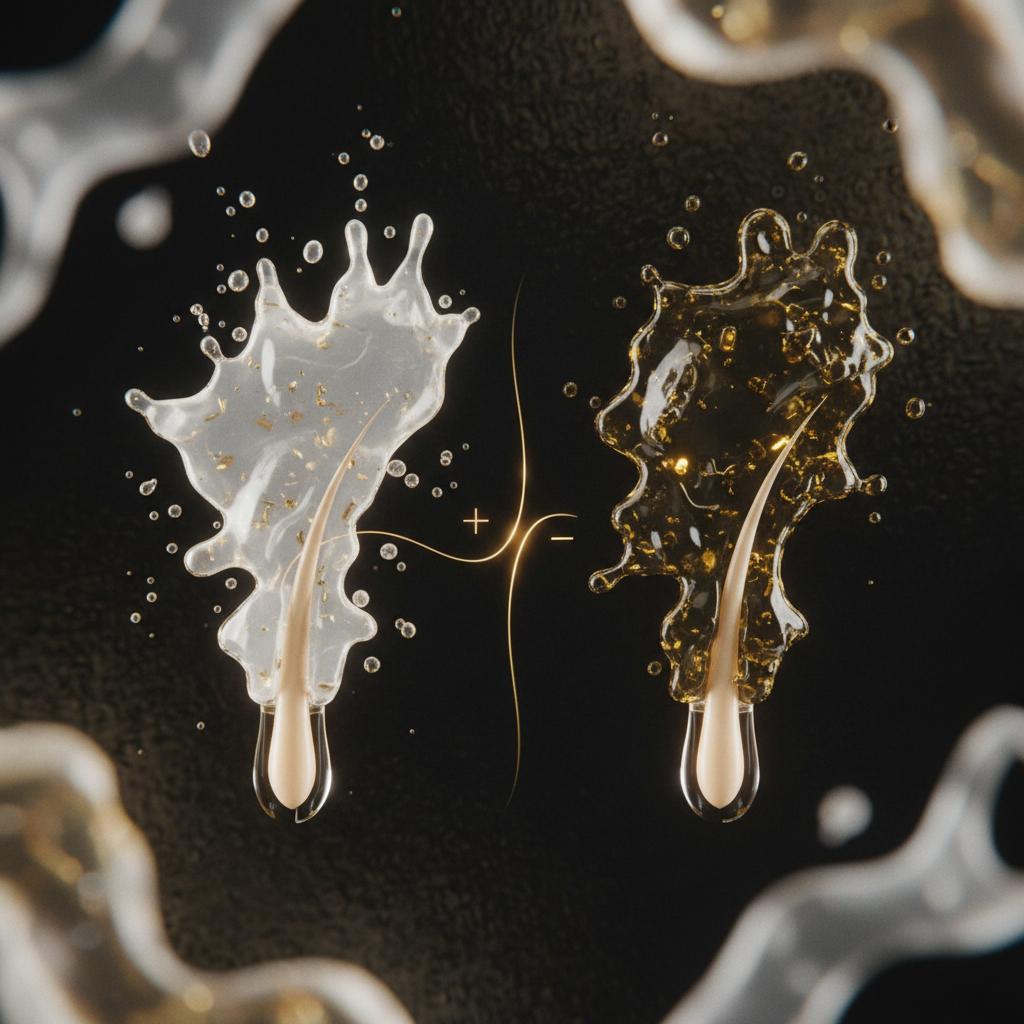
In contrast, scalp hydration represents the concentration of water within the stratum corneum, the outermost layer of the epidermis. Under normal physiological conditions, the stratum corneum contains 15 to 30 percent water. This water is held internally by Natural Moisturising Factors (NMFs), which include amino acids, pyrrolidone carboxylic acid (PCA), lactate, and urea. Intercellular lipids, structured in tightly packed lamellar sheets of ceramides, cholesterol, and free fatty acids, lock this water into place.
While sebum forms an occlusive, hydrophobic surface layer that slows down trans-epidermal water loss (TEWL), it is not a direct hydrating agent. Studies indicate that high sebum production does not guarantee high stratum corneum hydration. In clinical skin barrier assessments using corneometry (measuring water content) and sebumetry (measuring surface lipids), individuals frequently present with elevated sebum readings alongside depleted moisture indices.
| Parameter | Scalp Hydration | Scalp Sebum |
|---|---|---|
| Primary Substance | Water (H2O) bound to intracellular molecules | Complex hydrophobic lipids (triglycerides, squalene, esters) |
| Origin | Blood supply, sweat glands, atmospheric moisture, topical humectants | Holocrine secretion from sebaceous glands attached to hair follicles |
| Location | Inside stratum corneum corneocytes and epidermal intercellular space | Surface of the epidermis and the hair fibre cuticles |
| Key Function | Maintains cellular flexibility, enzyme function, and barrier integrity | Lubricates hair fibre, provides mild antimicrobial activity, reduces TEWL |
| Measurement Tool | Corneometer (measures electrical capacitance of skin) | Sebumeter (measures light transmission through a lipid film) |
| Sign of Deficiency | Tightness, dullness, fine dry flakes, prickling itch | Rough fibre texture, frizzy strands, lack of natural shine |
| Sign of Excess | Rarely an issue (skin naturally regulates upper water boundaries) | Greasy roots, clumping hair, sebaceous build-up, malodour |
What the biological mechanism reveals
The relationship between water and oil on the scalp is governed by the epidermal barrier function. Corneocytes, which are dead, keratin-packed cells, act like bricks in a wall. The mortar consists of intercellular lipids arranged in ordered bilayers. When this mortar is intact, water cannot easily evaporate from the deeper viable layers of the scalp into the surrounding air.
Sebum sits on top of this brick-and-mortar structure as part of the hydrolipidic film. Because sebum contains non-polar fats, it acts as a secondary seal. However, sebum cannot hydrate skin on its own because lipids do not attract or generate water molecules. If your natural moisture barrier is degraded, using oils alone will merely coat parched, dehydrated skin without restoring the water needed for healthy cellular desquamation.
Desquamation is the natural process where dead skin cells shed invisibly one by one. The enzymes responsible for breaking down the cellular bonds (corneodesmosomes) require an aqueous environment with adequate water activity. When the scalp is dehydrated, these enzymes fail to work properly. As a result, cells shed in visible clumps, which many people mistakenly treat with heavy plant oils or harsh clarifying cleansers.
Common misconceptions and what the evidence does not show
A widespread belief is that applying plant oils directly hydrates a dry scalp. Evidence does not support this. Vegetable oils and mineral oils are emollients and occlusives, not humectants. They can seal in existing moisture, but they supply zero water. Applying heavy oils to a dehydrated scalp without first replenishing water simply traps the dehydration underneath.
Another frequent myth is that oily scalps never need moisturising agents. Research demonstrates that when individuals excessively strip surface sebum using high-pH soaps or aggressive degreasing detergents, they damage the delicate stratum corneum barrier. This increases TEWL significantly. In response, the scalp may feel irritated and taut, while sebaceous glands continue pumping out normal or elevated amounts of sebum, yielding an uncomfortable combination of an oily surface over an inflamed, dehydrated epidermal base.
Finally, having an oily scalp does not mean your hair fibres are hydrated. Sebum travels slowly down the hair shaft, especially on textured, wavy, or coily hair types. A person may experience a heavy, greasy root zone alongside severe moisture deprivation throughout the mid-lengths and ends.
Identifying the signs: dehydrated scalp versus oily scalp
Distinguishing whether your scalp needs water, lipid reduction, or both is essential for targeted care.
Signs of low scalp hydration (dehydration)
- Scalp feels uncomfortably tight, especially within an hour of washing.
- Persistent low-grade itching or stinging sensation without redness or grease.
- Fine, dry, lightweight white flakes that drift easily off the head onto dark clothing.
- Skin on the face or body also exhibits dryness or dullness.
- Hair appears flat, brittle, and lacks elasticity near the roots.
Signs of excessive sebum (greasiness)
- Hair roots look slick, separation-prone, and oily within 24 hours of cleansing.
- Flakes, if present, are larger, slightly sticky, yellow or pale off-white, and adhere to the scalp and base of hair shafts.
- Distinct sebum odour caused by lipid oxidation and bacterial breakdown.
- Redness, scalp pimples, or tender follicular papules.
What you can do to restore balance
Restoring equilibrium between scalp hydration and sebum requires a structured, two-pronged approach that preserves barrier function while regulating surface lipids.
- Cleanse with balanced surfactants: Choose shampoos formulated close to the scalp's natural physiological pH of 4.5 to 5.5. Avoid harsh alkaline bars or aggressive sulphate cleansers that strip essential ceramides from the stratum corneum.
- Apply water-based humectants: If your scalp is dehydrated, introduce humectants like hyaluronic acid, glycerin, panthenol (provitamin B5), or aloe vera directly to the damp scalp. These pull water into the stratum corneum without leaving heavy, greasy residues.
- Wash according to lipid output: Do not push wash cycles to extremes if you produce high amounts of sebum. Allowing sebum to accumulate oxidises squalene, which causes follicular inflammation and triggers microbial imbalances. Wash as frequently as your individual sebum rate demands.
- Mind water temperature: Rinsing hair with very hot water dissolves barrier lipids and accelerates evaporation, leading to acute dehydration. Opt for lukewarm water instead.
- Manage internal hydration: While drinking water does not instantly fix a compromised stratum corneum, chronic systemic dehydration limits the baseline fluid available to dermal and epidermal tissues.
Supporting scalp balance with Watermans
When managing scalp balance, topical formulations should respect the scalp's natural acid mantle while nourishing the follicular environment. Watermans products are developed to foster a healthy, refreshed, and balanced scalp ecosystem.
Formulated without harsh, barrier-stripping chemicals, Watermans cleansers and leave-in scalp applications deliver targeted humectants and conditioning nutrients. These ingredients support natural moisture retention across the stratum corneum while lifting away oxidised surface sebum, build-up, and dead cellular debris. Incorporating gentle, nutrient-dense products into your weekly routine promotes a resilient epidermal barrier and stronger-feeling, revitalised hair.
When the cause may be something else
If your scalp remains consistently inflamed, intensely itchy, or covered in thick crusts, the underlying problem may extend beyond simple dehydration or surface sebum. Several clinical conditions share these symptoms:
- Seborrhoeic Dermatitis: An inflammatory skin condition linked to an overgrowth of Malassezia yeasts, which metabolise sebum into irritating free fatty acids. It causes persistent redness, burning, and greasy, yellowish scales.
- Scalp Psoriasis: An autoimmune condition leading to rapid epidermal turnover. It produces thick, silvery, well-demarcated plaques that can be mistaken for extreme dry skin.
- Contact Dermatitis: An allergic reaction or sensitivity to fragrances, preservatives (such as methylisothiazolinone), or specific hair dye ingredients like paraphenylenediamine (PPD).
- Folliculitis: Bacterial or fungal infection of the hair follicles, marked by small, red, itchy pustules around the hair base.
When to seek professional advice
Consult a GP, dermatologist, or qualified trichologist if:
- Flaking and itching do not improve after three to four weeks of using gentle humectant and pH-balanced routines.
- Your scalp displays visible inflammation, swelling, bleeding, or weeping fluid.
- You notice diffuse shedding or patchy hair loss alongside scalp irritation.
- Discomfort interferes with your sleep or daily tasks.
Frequently asked questions about Scalp Hydration vs Sebum
Can I have both a dehydrated scalp and an oily scalp at the same time?
Yes. When evaluating Scalp Hydration vs Sebum, dermatologists frequently observe oily yet dehydrated scalps. If your epidermal barrier is damaged from harsh washing or environmental stress, your scalp loses internal water rapidly. Meanwhile, your sebaceous glands continue releasing normal or elevated levels of oil, leaving you with greasy roots and a tight, parched, flaky scalp surface.
Does drinking more water fix an oily scalp?
Drinking adequate water supports general cellular health, but it will not stop sebaceous glands from producing sebum. Sebum production is primarily regulated by genetics and androgenic hormones such as dihydrotestosterone (DHT), not internal hydration levels. Balancing an oily scalp requires appropriate topical cleansing and barrier support.
Are natural plant oils effective for hydrating the scalp?
No, pure plant oils do not hydrate the scalp because they contain no water. Oils are occlusives and emollients that lubricate the skin and help lock existing moisture in. To hydrate a dry scalp, you must apply water-based humectants (such as glycerin, aloe, or hyaluronic acid) before sealing with light conditioning agents.
Why does a dehydrated scalp itch?
A dehydrated scalp itches because low water levels in the stratum corneum compromise its barrier function. When the barrier weakens, irritants penetrate more easily and micro-fissures develop between corneocytes. This triggers mild nerve irritation and low-grade epidermal inflammation, which your sensory nerves register as an annoying, prickling itch.
How often should I wash my hair if my scalp is dehydrated?
You should wash as often as needed to keep the scalp free of accumulated sebum and sweat without stripping the skin. For most people with dehydrated scalps, washing two to three times a week with a gentle, sulphate-free, pH-balanced cleanser strikes the right balance between cleanliness and moisture barrier preservation.
Balancing scalp moisture and oils
Navigating Scalp Hydration vs Sebum is simple once you recognise that water hydrates cells while lipids protect the surface. Lasting scalp comfort does not come from stripping away all natural oils, nor does it come from smothering dry skin in heavy plant fats. By focusing on gentle, pH-balanced cleansing, replenishing natural moisture factors, and respecting your skin's protective barrier, you can achieve a calm, healthy scalp environment that supports resilient hair growth.
Sources and references
- British Association of Dermatologists. Seborrhoeic Dermatitis Guidelines and Patient Information, 2020.
- Rawlings, A. V., and C. R. Harding. "Moisturization and skin barrier function." Dermatologic Therapy, vol. 17, suppl. 1, 2004, pp. 43-48.
- Saint-Léger, D., et al. "The role of sebum in scalp health and barrier function." International Journal of Cosmetic Science, 2007.
- Zouboulis, C. C. "The human sebaceous gland: a dynamic endocrine organ." Experimental Dermatology, vol. 13, no. S4, 2004, pp. 31-35.
- National Health Service (NHS). Dandruff and Scalp Conditions, 2022.
Find these ingredients in Watermans products
- Panthenol (Provitamin B5): you will find this ingredient in our Heat Protection Spray.
- Aloe Vera: you will find this ingredient in our Curly Hair Conditioner.