Understanding Hygral Fatigue in Hair: Causes, Science, and Solutions
9 min read ·
Explore the science behind hygral fatigue in hair. Learn how excessive water swelling weakens the cuticle, how to spot the signs, and evidence-based ways to restore strength.
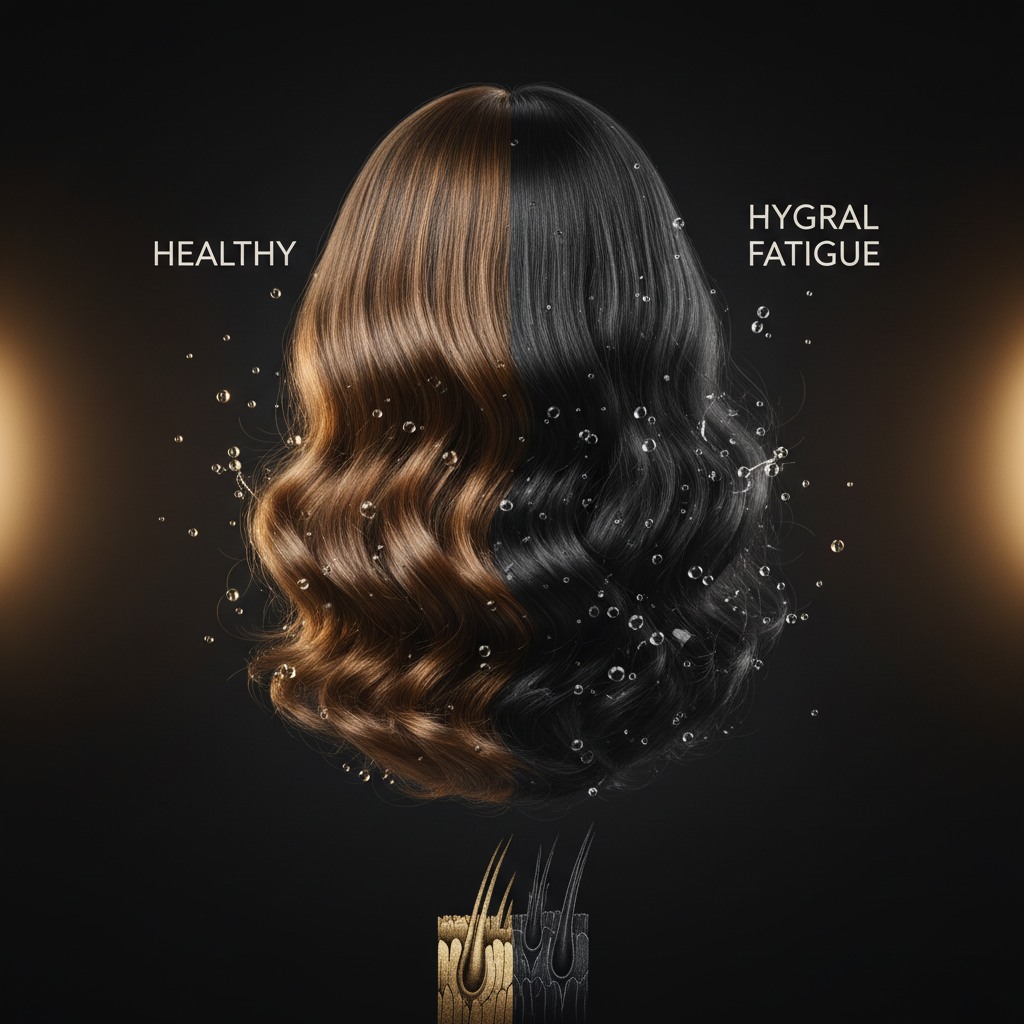
Quick answer: Understanding Hygral Fatigue in Hair means recognising the structural damage caused by repeated, excessive swelling and deswelling of the hair fibre as it absorbs and loses water. When cuticle layers are repeatedly forced open and closed, the cell membrane complex weakens, leaving strands limp, gummy when wet, and prone to severe breakage. While restoring structural integrity is possible through balanced conditioning and protein treatments, the main limitation is that true cuticle disintegration cannot be biologically regenerated; damaged fibre must be carefully protected until it grows out.
Key takeaways
- Hygral fatigue occurs when water moves repeatedly into and out of the cortex, forcing the hair fibre to expand by up to 15 to 20 percent in diameter and strain its cuticle cells.
- The condition primarily stems from high-porosity cuticles, prolonged water immersion, overnight conditioning, or frequent wet-to-dry cycling without lipid protection.
- Classic symptoms include a mushy or gummy texture when wet, extreme elasticity without recoil, chronic frizz, and excessive snapping along the mid-lengths and ends.
- Hygral fatigue is fibre breakage and structural damage along the shaft, completely distinct from follicular hair loss or shedding at the root.
- Prevention involves minimising prolonged soaking, balancing moisture with protein or amino acid treatments, and sealing the cuticle using protective lipids or pre-shampoo oils.
Understanding Hygral Fatigue in Hair: what the evidence shows
Understanding Hygral Fatigue in Hair begins with understanding the composite nature of the hair shaft. Hair is composed primarily of keratinised proteins (around 65 to 95 percent by weight), water, lipids, and trace minerals. The outermost protective sheath, the cuticle, consists of overlapping dead cells bound together by the cell membrane complex (CMC), a lipid-rich layer containing 18-methyleicosanoic acid (18-MEA).
When healthy hair is exposed to water, the cortex absorbs moisture, swelling laterally by roughly 14 to 16 percent and expanding in length by about 1 to 2 percent. Because healthy hair maintains an intact hydrophobic lipid layer, water uptake is regulated.
However, when hair is chemically treated, bleached, heat-damaged, or naturally highly porous, the protective 18-MEA layer is stripped away. Water floods directly into the internal cortex unrestricted. As the cortex swells and deswells repeatedly through daily washing, prolonged wet styling, or humid environments, the cuticle scales are repeatedly bent outward and pushed flat again. Over time, this repetitive mechanical stress breaks down the cell membrane complex, chips the cuticle edges, and leads to structural failure known as hygral fatigue.
The mechanical process: how swelling damages the fibre
Hair fibre behaves like an elastomeric composite material. The structural degradation follows a specific physical cycle:
- Unregulated water absorption: Without an intact hydrophobic outer coating, liquid water rapidly penetrates the cuticle gaps into the macrofibrils of the cortex.
- Radial expansion: The hydrogen bonds within keratin intermediate filaments are broken by water molecules. The cortex swells outward, forcing the overlapping cuticle tiles to flare open beyond their mechanical design limit.
- Internal delamination: Repeated volumetric shifts shear the delicate lipid-protein glue of the cell membrane complex between individual cuticle layers.
- Deswelling and micro-fractures: As the hair dries, water evaporates. The cortex shrinks back down, but the stretched, deformed cuticle scales cannot re-align smoothly. They buckle, lift, and eventually break off.
- Loss of tensile elasticity: With repeated cycles, the internal keratin network loses its ability to spring back. The fibre becomes structurally weak, gummy when soaked, and brittle when dry.
Signs of hygral fatigue versus other hair conditions
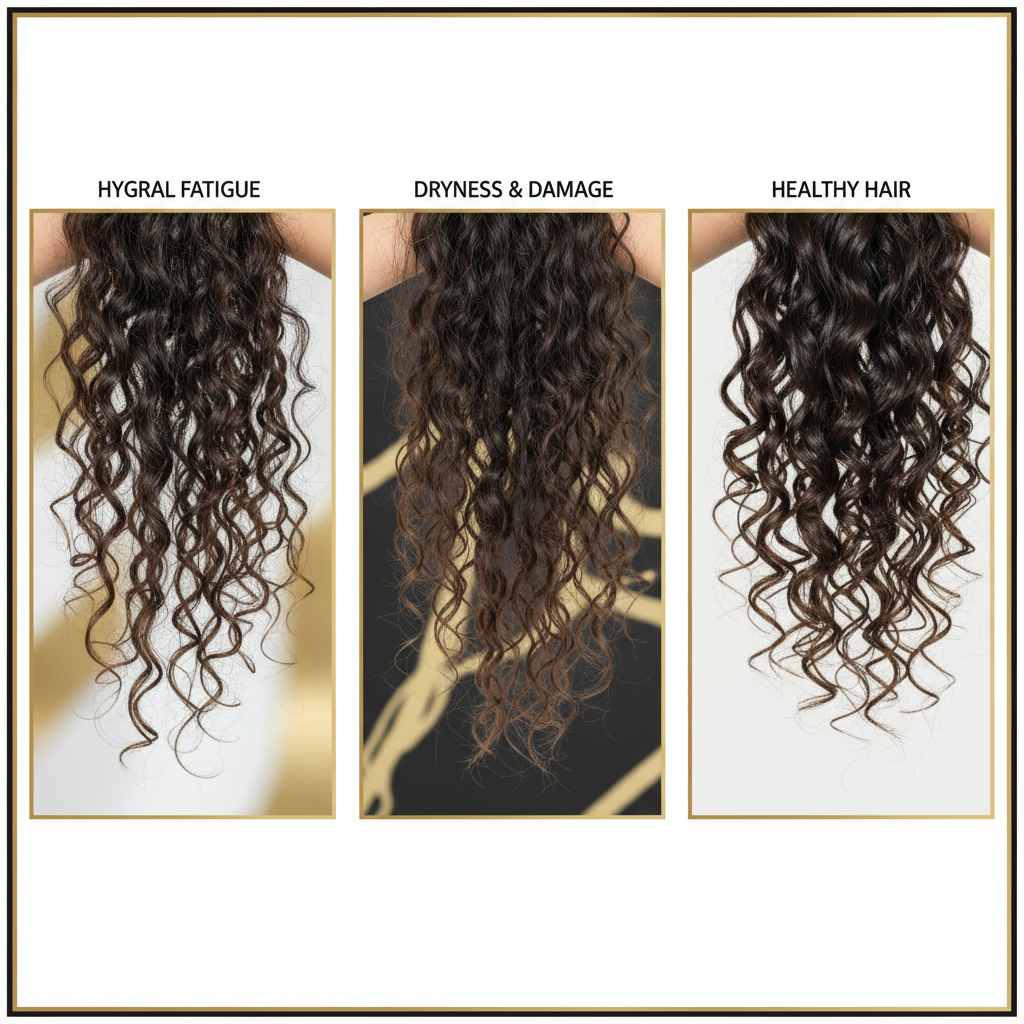
Because hygral fatigue causes weakness and breakage, people frequently confuse it with moisture deficiency or genetic thinning. The signs, however, are distinctive once you examine the wet fibre.
| Characteristic | Hygral Fatigue | Protein Overload | Normal Healthy Hair |
|---|---|---|---|
| Feel when wet | Mushy, gummy, or excessively soft | Stiff, rough, and coarse | Smooth, firm, and pliable |
| Elasticity test | Stretches far beyond normal, then snaps without bouncing back | Snaps almost immediately with zero stretch | Stretches roughly 20 to 30 percent and returns to resting length |
| Porosity state | Excessively high porosity with damaged CMC | Low to variable; cuticles often coated or brittle | Balanced, medium porosity |
| Curl pattern behaviour | Sagging curls that lose definition and drop | Rigid, wire-like curls that resist shaping | Springy, defined, and responsive curls |
| Primary remedy | Hydrolysed protein, amino acids, and reduced water exposure | Clarifying washes and deep emollient conditioning | Maintenance of moisture-protein equilibrium |
What the evidence does not show
Understanding Hygral Fatigue in Hair also requires separating science from salon myths. Online communities often label any form of frizzy or unmanageable hair as hygral fatigue.
First, scientific literature does not support the claim that water alone causes healthy, virgin hair to instantly suffer hygral fatigue. A single swim or a normal 10-minute shower will not destroy intact hair. Hygral fatigue is a cumulative fatigue failure that requires either pre-existing cuticle compromise (such as bleaching or heat abuse) or extreme, prolonged immersion, such as sleeping with soaking wet hair under plastic caps.
Second, hygral fatigue is never a cause of follicular hair loss. It does not cause hairs to shed from the follicle, nor does it cause telogen effluvium or androgenetic alopecia. Any hair loss experienced is mechanical breakage along the shaft.
Finally, no topical cosmetic can physically "fuse" shattered cuticle scales back together permanently. While cosmetic polymers, amino acids, and hydrolysed proteins can temporarily patch damaged areas and reduce porosity, the damaged fibre must eventually be trimmed away as healthy hair emerges from the scalp.
What you can do to prevent and manage hygral fatigue
If your hair displays the classic signs of over-swelling and mushiness, you can implement several practical, evidence-backed steps to reinforce the hair shaft.
Minimise water exposure times
Limit long, soaking washes. Avoid leaving hair wet for extended periods, and never sleep with wet hair or wet deep-conditioning masks overnight. Rapid, gentle drying reduces the total duration of cortical swelling. Use a soft microfibre towel to absorb surface water by blotting, never by rough rubbing.
Use pre-shampoo oil treatments
Certain plant oils, particularly coconut oil, possess a low molecular weight and a straight-chain chemical structure that allows them to penetrate the hair shaft. Studies demonstrate that applying a penetrating oil before washing significantly reduces the volume of water the cortex can absorb, dramatically lowering the swelling stresses that drive hygral fatigue.
Introduce structural proteins and amino acids
Incorporate leave-in treatments or masks containing hydrolysed wheat, silk, or soy proteins, as well as targeted amino acids. These lower-molecular-weight molecules temporarily bind to the exposed internal keratin and fill cuticle gaps, reducing excessive water absorption and restoring a balanced tensile strength.
Optimise product pH
Cuticle scales naturally open in alkaline environments (pH above 7.0) and lie flatter in mildly acidic conditions (pH 4.5 to 5.5). Using acid-balanced shampoos and conditioners helps keep the cuticle smooth, limiting excessive water ingress.
The role of targeted haircare routines
Maintaining resilient hair requires an environment where both scalp and fibre are supported. For those seeking a complete regimen to reduce mechanical breakage and fortify the strand environment, Watermans offers revitalising formulations that focus on scalp vitality and fibre strength without relying on heavy, cuticle-stripping compounds. Balancing cleansing with structural support ensures the hair remains resilient against daily washing stresses.
When the cause may be something else
Before addressing hygral fatigue, verify that your hair concerns are not stemming from an entirely different mechanical or biological issue:
- Hard water buildup: High concentrations of calcium and magnesium in tap water can leave a calcified film on the fibre, making hair feel simultaneously coated and dry. This requires a chelating treatment, not necessarily protein.
- Follicular shedding: If you are finding white bulb roots on the hairs shedding across your shoulders, you are experiencing follicular shedding, which relates to the hair growth cycle rather than water-induced breakage along the shaft.
- Chemical over-processing: Bleaching and perming directly break disulfide bonds inside the cortex. While chemically altered hair is highly susceptible to hygral fatigue, bond-builders and pH adjusters are required alongside water-reduction strategies.
When to seek professional advice
Consult a qualified trichologist or dermatologist if you notice sudden, diffuse shedding from the scalp, distinct patches of hair loss, or scalp irritation and burning. If hair breakage remains severe despite balancing protein, moisture, and wash habits, a professional stylist can perform a microscopic cuticle analysis to determine whether chemical cutting, thermal damage, or environmental exposure is the primary culprit.
Frequently asked questions about Understanding Hygral Fatigue in Hair
Can leaving conditioner on overnight cause hygral fatigue?
Yes. Leaving deep conditioners or masks on the hair overnight under a shower cap traps moisture against the fibre for six to eight hours. This prolonged cortical swelling breaks down the cell membrane complex, leading directly to hygral fatigue. Deep treatments should be rinsed according to the manufacturer's directions, typically within 5 to 30 minutes.
Does hygral fatigue cause permanent hair loss?
No. Hygral fatigue affects only the non-living hair fibre along the shaft, resulting in breakage and split ends. It does not damage the hair follicle beneath the scalp, nor does it inhibit new hair growth. It should never be confused with genetic or medical hair loss.
Can low-porosity hair experience hygral fatigue?
It is relatively rare. Low-porosity hair has tightly bound, overlapping cuticle tiles that naturally resist rapid water penetration. While prolonged immersion over months could theoretically induce stress, high-porosity and chemically lightened hair are vastly more susceptible to developing the condition.
How does protein help with Understanding Hygral Fatigue in Hair?
Hydrolysed proteins and amino acids adhere to exposed areas of the hair shaft where cuticles have worn away. By temporarily filling these micro-fractures, protein treatments limit the volume of water capable of entering the cortex, reinforcing structural integrity and reducing over-stretching when wet.
How long does it take to fix hygral fatigue?
Immediate improvements in wet elasticity and feel can often be seen after one or two protein-restorative treatments and a shift toward shorter wash cycles. However, severely degraded hair fibres cannot be permanently repaired at a cellular level; long-term management requires protecting the shaft until the damaged sections can be gradually trimmed away.
Conclusion
Understanding Hygral Fatigue in Hair empowers you to make informed decisions about your daily washing, styling, and conditioning routines. Water is essential for cleansing and daily hygiene, but unrestrained moisture cycling breaks down the delicate structural architecture of vulnerable hair. By limiting prolonged soaking, using penetrating pre-shampoo oils, maintaining an optimal moisture-protein balance, and choosing pH-balanced hair formulations, you can safeguard your cuticle layers, prevent structural snapping, and keep your hair resilient, shiny, and strong.
Sources and references
- International Journal of Cosmetic Science, "Investigation of the effects of water on the mechanical properties of human hair," 2005.
- Journal of Cosmetic Science, "Secondary ion mass spectrometric investigation of penetration of coconut and mineral oils into human hair fibres," 2001.
- Robbins, C. R., Chemical and Physical Behavior of Human Hair, 5th ed., Springer, 2012.
- Society of Cosmetic Chemists, "Hair damage caused by repeated water swelling and drying cycles," 2009.
Where Watermans fits
If you want a routine built around the science above, these are the products from the range that apply here: