Understanding Hydral Fatigue: Causes, Symptoms, and Fibre Repair
9 min read ·
Understanding Hydral Fatigue is essential to stopping hair breakage. Learn how repeated water swelling damages the cuticle, and how to restore fibre strength.
Quick answer: Understanding Hydral Fatigue begins with recognising that repeated swelling and contracting of the hair fibre from excessive water absorption weakens its internal structure. When water enters the cortex, the shaft expands. As it dries, it contracts. Over time, this constant mechanical strain degrades the cuticle and breaks down structural keratin bonds, leaving hair limp, gummy, and prone to breakage. However, understanding hydral fatigue also means recognising its limitation: it is purely mechanical fibre damage, not follicular hair loss.
Key takeaways
- Hydral fatigue is physical damage caused by the continuous, excessive swelling and deswelling of the hair shaft when wet.
- Water breaks temporary hydrogen bonds in the cortex, causing the hair fibre to expand radially by up to 15 to 20 percent.
- Symptoms include a mushy or gummy texture when wet, extreme elasticity without snap-back, dullness, and mechanical breakage.
- Porous, chemically treated, or heat-damaged hair is at the highest risk because a compromised cuticle allows water to flood the cortex unchecked.
- Correction requires balancing moisture with hydrolysed protein treatments, reducing wet time, and applying hydrophobic lipid barriers.
Understanding Hydral Fatigue: what the evidence shows
Cosmetic science confirms that hair is naturally hygroscopic. It readily absorbs water from the surrounding environment. In pristine, healthy hair, an intact 18-methyleicosanoic acid (18-MEA) lipid layer coats the cuticle. This provides an effective hydrophobic shield that limits how quickly water penetrates the shaft.
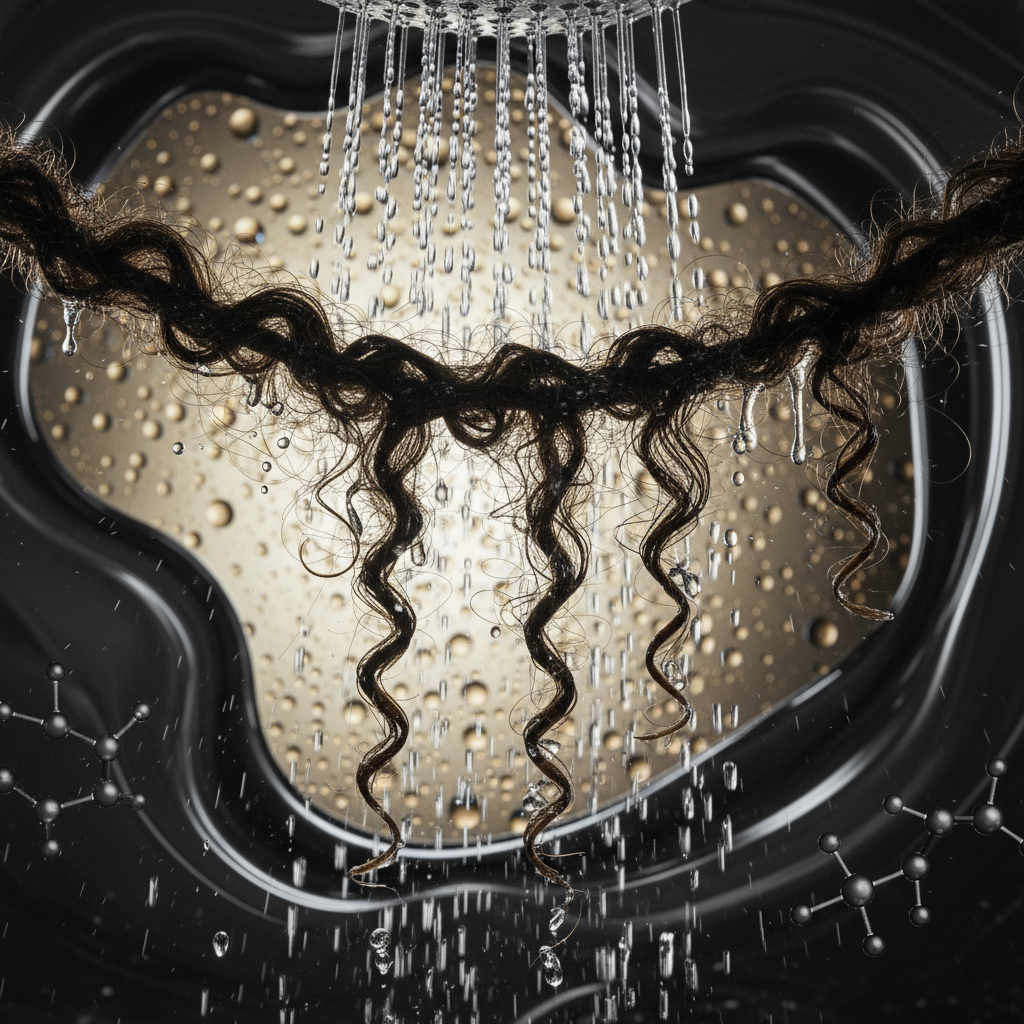
When hair is submerged in water, the fibre absorbs liquid rapidly. Undamaged hair can absorb roughly 30 percent of its dry weight in water, while chemically processed or high-porosity hair can absorb up to 45 to 55 percent. As water floods the cortex, it forces the keratin filament network apart. This radial swelling puts intense outward pressure on the protective cuticle scales. When the hair dries, the water evaporates and the fibre shrinks back to its original diameter.
Understanding hydral fatigue means looking at the cumulative impact of this cycle. When hair undergoes constant wetting, prolonged soaking, or frequent washing without protective lipids, the repeated expansion and contraction creates micro-cracks in the cuticle layers. Over time, cuticle cells lift, chip, and break away. Once the protective outer armour fails, the inner cortex loses structural integrity, leading to severe weakening and eventual fibre breakage.
What the evidence does not show
The conversation around hair health frequently blurs the line between cosmetic fibre wear and biological disorders. Understanding hydral fatigue requires separating laboratory science from internet myths.
First, hydral fatigue does not cause follicular hair loss or alopecia. The biological cycle of the hair follicle beneath the scalp is completely unaffected by whether the external fibre absorbs too much water. If you notice full strands shedding with the white bulb attached, this is physiological shedding (such as telogen effluvium), not hydral fatigue. Hydral fatigue causes snapping, splitting, and mid-shaft fractures.
Second, the evidence does not show that water itself is toxic to hair. Water is essential for fibre flexibility and styling. The problem is not the presence of moisture, but uncontrolled, excessive saturation over extended periods without adequate lipid barriers or structural proteins to support the strain.
The mechanical and biochemical mechanism
Hair is made of roughly 85 to 90 percent keratin protein, bundled into intermediate filaments within the cortex. These protein chains are held together by three types of bonds:
- Disulphide bonds: Strong, permanent covalent bonds that dictate the hair's permanent shape.
- Salt bonds: Ionic bonds governed by pH levels.
- Hydrogen bonds: Weak, temporary bonds that form between adjacent keratin chains.
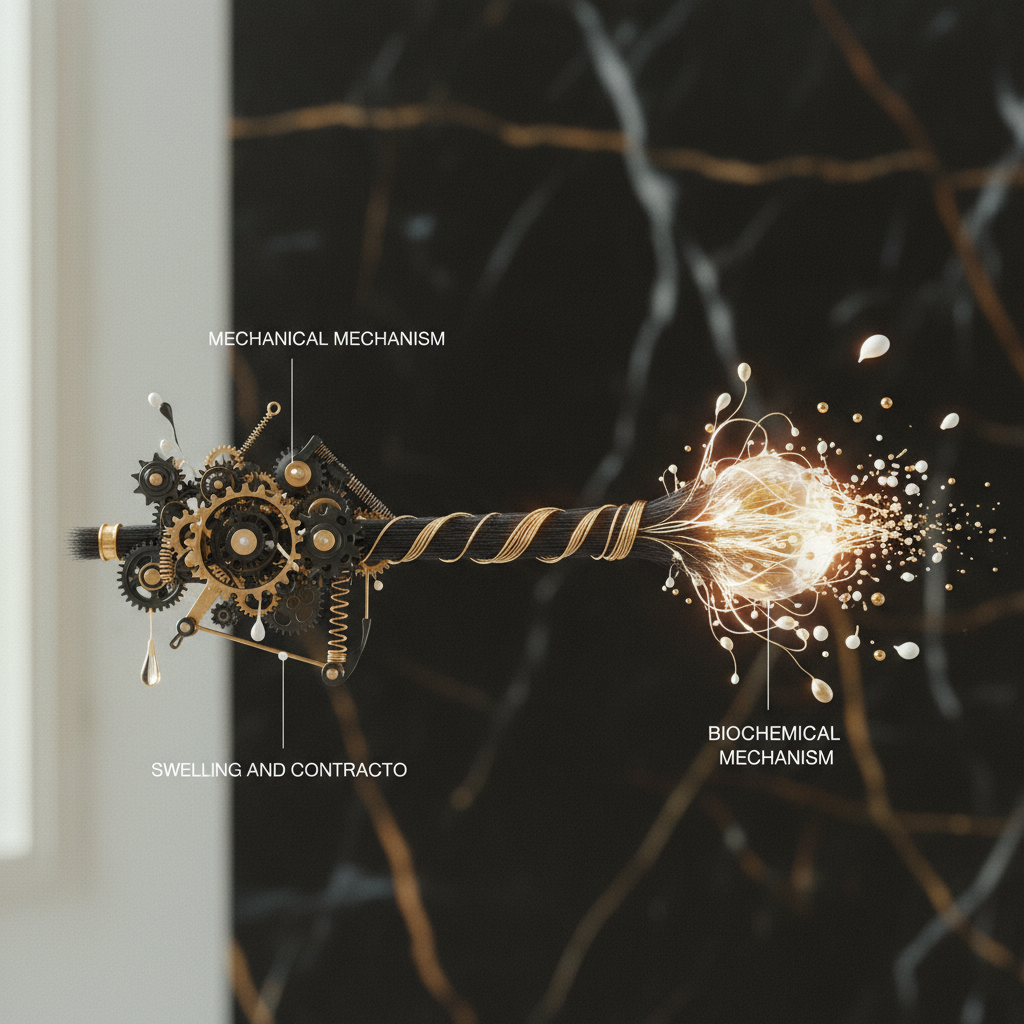
Water disrupts the temporary hydrogen bonds. When water molecules penetrate the cortex, they insert themselves between the polypeptide chains, breaking the original hydrogen bonds and forming new, weaker bonds with the water itself. This process softens the hair matrix, reducing its tensile strength by roughly one-third compared to when it is dry.
Because wet hair has lower tensile strength and significantly higher elasticity, any external manipulation, such as combing, brushing, or wrapping in tight towels, causes far greater structural trauma. When the hair swells repeatedly, the cuticle margins experience mechanical shear stress. The outer layers lift permanently, exposing the delicate cortical cells beneath to moisture loss, protein loss, and friction.
| Characteristic | Healthy Hair Fibre | Fibre with Hydral Fatigue | Fibre with Protein Overload |
|---|---|---|---|
| Wet Texture | Smooth, firm, resilient | Mushy, gummy, limp | Stiff, rough, straw-like |
| Elasticity | Stretches 20 to 30% and bounces back | Stretches excessively without returning, then snaps | Does not stretch; snaps immediately under tension |
| Cuticle Condition | Flat, sealed, hydrophobic | Lifted, chipped, porous | Rigid, coated, brittle |
| Water Absorption | Controlled, gradual | Rapid, excessive flooding | Repelled or minimal |
| Primary Need | Maintenance and gentle handling | Hydrolysed protein and occlusive lipids | Deep moisturising and clarifying |
The visible and tactile signs to look for
Spotting the condition early prevents widespread fibre breakage. The signs are distinct from standard dryness:
- Gummy or mushy texture: When wet, the hair feels soft in an unnatural way, almost like wet cotton candy or cooked noodles.
- Excessive, dead elasticity: Gently pull a single wet strand. If it stretches out far beyond its resting length without bouncing back, the internal matrix has lost its structural spring.
- Loss of curl definition: Naturally wavy, curly, or coily hair loses its pattern, hanging limp and lifeless even after applying styling products.
- Severe tangling: Lifted and chipped cuticle scales catch on neighbouring strands like Velcro, creating persistent knots.
- Breakage during washing: Significant amounts of short, broken fibre fragments gather in the shower drain or brush, distinct from full shed hairs with roots.
What you can do to restore the fibre
Reversing the effects of hydral fatigue requires a deliberate shift in your hair care routine. You must reinforce the internal protein scaffold and rebuild the external hydrophobic barrier.
1. Introduce hydrolysed protein treatments
Water cannot rebuild the keratin structure; amino acids and hydrolysed proteins can. Look for formulas containing hydrolysed wheat protein, hydrolysed keratin, or silk amino acids. These small-molecular-weight proteins penetrate beneath the lifted cuticle into the cortex, filling empty structural voids and restoring tensile strength.
2. Reduce water exposure time
Minimise the amount of time hair remains fully saturated. Avoid prolonged deep conditioning, overnight wet treatments, or excessive soaking. Wash your hair efficiently, gently squeeze out excess water, and use a smooth microfibre towel to absorb moisture quickly without causing friction.
3. Use pre-shampoo oil treatments
Applying a penetrating oil prior to washing is one of the most effective ways to prevent hydral fatigue. Pure coconut oil, for instance, has a high affinity for hair proteins and a low molecular weight that allows it to penetrate the shaft. By occupying space inside the cortex, it physically limits how much water can rush in during washing, dampening the swelling cycle.
4. Balance pH levels
Healthy hair and scalp thrive at an acidic pH between 4.5 and 5.5. Alkaline environments force the cuticle open, inviting excess water inside. Use shampoos and conditioners buffered to this natural pH range to encourage the cuticle shingles to lie flat, sealing the shaft.
When the cause may be something else
It is easy to misdiagnose hair issues. If your hair feels dry and brittle rather than limp and gummy, you may be experiencing protein overload rather than hydral fatigue. Protein overload occurs when an excess of hardening agents deposits on the shaft, leaving the fibre stiff and unyielding.
Similarly, if you are noticing thinning at the crown, a widening parting, or clumps of hair coming out with intact roots, the problem is follicular. Systemic issues such as iron deficiency, thyroid dysfunction, hormonal shifts, or severe physiological stress alter the hair growth cycle. No amount of protein or lipid balancing on the external fibre will correct a follicular disruption.
When to get professional advice
Seek guidance from a qualified trichologist or dermatologist if you notice widespread scalp inflammation, burning, redness, or genuine shedding from the follicle. A professional trichological assessment can examine the scalp under dermoscopy to confirm whether the root system is healthy. For severe fibre degradation, a professional stylist can assess the exact protein-moisture balance required or trim away irreversibly damaged lengths before splits travel higher up the shaft.
Supporting hair strength with Watermans
When managing structural hair concerns, maintaining a balanced scalp and strong hair fibres is paramount. Watermans GrowMe Shampoo is formulated with a revitalising blend of biotin, caffeine, argan oil, rosemary extract, and hydrolysed lupin protein. Rather than oversaturating hair fibres with heavy water-trapping agents, it focuses on feeding the scalp environment while delivering strengthening amino acids to reinforce the fibre surface. Paired with Watermans ConditionMe Conditioner, which features cholesterol, caffeine, and softening lipids, it provides the essential hydrophobic conditioning needed to seal the cuticle against repetitive water damage without weighing down delicate strands.
Frequently asked questions about Understanding Hydral Fatigue
Can leaving conditioner on overnight cause hydral fatigue?
Yes. Leaving wet conditioner on your hair for hours or sleeping with a wet hair mask traps water inside the hair shaft. This extended saturation forces the cortex into an unnatural, prolonged state of swelling. Over time, it weakens the keratin bonds and causes the exact structural degradation associated with hydral fatigue. Conditioning treatments should always follow the manufacturer's suggested timings, typically 3 to 15 minutes.
Does low porosity hair experience hydral fatigue?
Low porosity hair can experience hydral fatigue, though it is far less common. Low porosity hair has tightly closed, overlapping cuticles that resist water penetration. However, if low porosity hair is soaked for hours or subjected to frequent heat-assisted deep conditioning, water can become trapped inside the cortex. Because the tight cuticle makes it difficult for trapped water to evaporate, repeated swelling can still cause mechanical stress.
How long does it take to fix hydral fatigue?
Correcting hydral fatigue usually takes between two to six weeks of dedicated care, depending on the severity of the fibre damage. By pausing wet soaking, introducing weekly hydrolysed protein treatments, and using pre-shampoo oils, the hair fibre quickly regains tensile strength. However, parts of the fibre where the cuticle has completely broken away cannot be biologically healed and must be managed until trimmed.
Is hydral fatigue the same as moisture overload?
Yes, hydral fatigue and moisture overload are terms often used interchangeably in haircare. Moisture overload describes the state where hair has an excess of water and conditioning agents relative to structural protein. Hydral fatigue is the precise mechanical consequence of that imbalance: the structural breakdown caused by the constant expansion and contraction of the over-moisturised fibre.
Conclusion
Understanding Hydral Fatigue provides the foundation for healthier styling and maintenance habits. Hair fibres are resilient, but they are not invincible against the physical forces of repeated swelling and drying. By keeping wet time to a sensible minimum, protecting the hair with lipid-rich pre-wash treatments, and regularly replenishing structural proteins, you protect the cuticle from excessive stress. Treat the hair fibre with the mechanical respect it deserves, and it will retain its natural bounce, shine, and strength.
Sources and references
- Chemical and Physical Behavior of Human Hair (Clarence R. Robbins, 5th Edition, Springer, 2012)
- Journal of Cosmetic Science, "Investigation of the effects of water on hair fibre properties", Society of Cosmetic Chemists
- International Journal of Cosmetic Science, "Secondary ion mass spectrometric investigation of the penetration of coconut and mineral oils into human hair fibres", 2001
- British Association of Dermatologists, "Hair Structure and Disorders Reference Guidelines"
Find these ingredients in Watermans products
- Biotin: you will find this ingredient in our Hair Growth Shampoo.
- Wheat Amino Acids: you will find this ingredient in our Heat Protection Spray.