Understanding Hard Water Damage: The Science and Solutions
9 min read ·
Understanding Hard Water Damage reveals how mineral buildup causes severe hair breakage rather than root hair loss, and how targeted chelating cleansers restore fibre strength.
Quick answer: Understanding Hard Water Damage begins with distinguishing between hair fibre breakage and root-level hair loss. Hard water contains elevated concentrations of dissolved calcium and magnesium ions. These minerals bond to the negatively charged surface of hair fibres, creating an insoluble film that blocks moisture absorption, roughens cuticles, and increases mechanical friction. This calcified coating leads to brittleness, dullness, and snapping along the hair shaft. Crucially, controlled dermatological studies show hard water does not cause follicular hair loss or alopecia.
Key takeaways
- Hard water contains high levels of dissolved calcium and magnesium that bind electrostatically to the hair fibre.
- Mineral buildup creates an insoluble barrier that prevents conditioning agents and moisture from penetrating the hair shaft.
- Hard water causes hair breakage (structural snapping), not follicular hair loss or alopecia.
- Chelating agents like disodium EDTA and citric acid actively break the bonds between minerals and keratin.
- Clarifying treatments should be balanced with rich, moisturising conditioners to maintain tensile elasticity.
Understanding Hard Water Damage: what the evidence shows
Understanding Hard Water Damage requires examining the physical chemistry of how dissolved minerals interact with keratin. When domestic water filters through limestone, chalk, or gypsum deposits, it absorbs dissolved mineral salts, primarily calcium carbonate, calcium sulphate, and magnesium sulphate. In the UK, water hardness is measured in milligrams per litre (mg/L) of calcium carbonate equivalent. Anything above 200 mg/L is classified as hard water, with very hard water exceeding 300 mg/L.
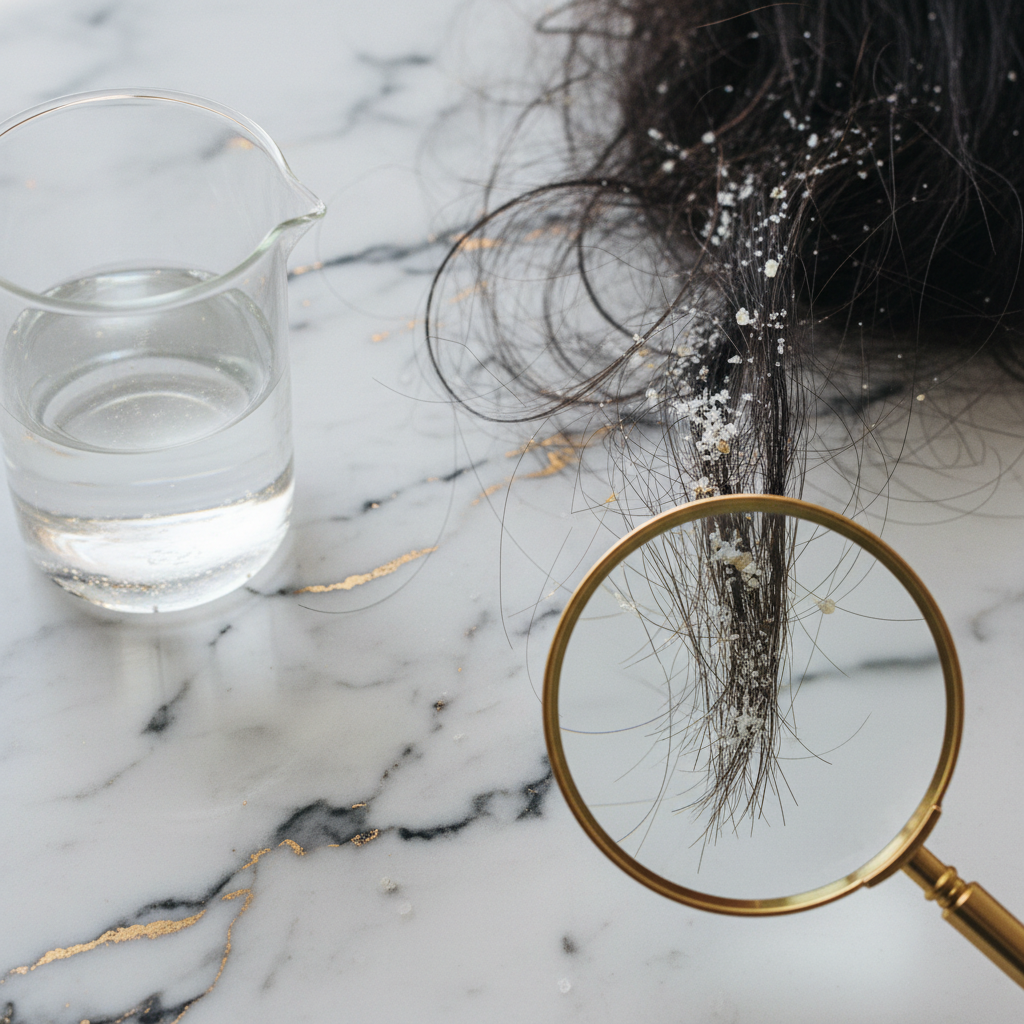
When you wash your hair in hard water, these positively charged divalent cations (Ca2+ and Mg2+) are strongly attracted to the negatively charged, oxidised sites on the hair cuticle. Instead of rinsing cleanly away, the minerals crystallise on the surface of the hair shaft.
Peer-reviewed studies examining the mechanical properties of hair washed in hard water confirm that while tensile strength at the core of the cortex remains largely intact over short periods, surface friction increases significantly. A 2013 study published in the International Journal of Trichology measured the tensile strength and elasticity of hair fibres treated with hard water versus distilled water over 30 days. The researchers found no significant reduction in the absolute tensile strength of the fibre core, but noted substantial surface mineral deposition, stiffness, and increased tangling. This roughness causes hair strands to catch against one another, leading to cuticle chipping, split ends, and mid-shaft breakage during everyday brushing and styling.
What the evidence does not show
There is a widespread myth that washing in hard water causes biological hair loss or baldness. Clinical dermatology does not support this claim.
Hard water minerals remain strictly on the exterior of the stratum corneum and the hair shaft. They do not penetrate the dermal papilla or disrupt the follicular growth cycle. Conditions such as androgenetic alopecia (pattern hair loss), telogen effluvium (diffuse shedding), and alopecia areata are driven by genetics, hormonal shifts, nutritional deficiencies, and immune responses.
When people moving to hard water areas report sudden "hair loss", they are almost always experiencing one of two phenomena:
- Severe breakage: Mineral-encrusted fibres become brittle and snap off near the scalp during washing, mimicking shedding.
- Telogen accumulation: Stiff, tangled strands trap naturally shed hairs (we shed 50 to 100 hairs daily) until vigorous washing releases them all at once.
Unless an underlying inflammatory scalp condition is aggravated by mineral soap scum, hard water does not target the hair follicle.
The biological and chemical mechanism
The damage caused by hard water unfolds in three distinct chemical stages:
1. Surfactant interference and soap curd formation
Traditional shampoos and soaps rely on anionic surfactants to bind with oils and rinse them away. In hard water, calcium and magnesium ions react with fatty acids and detergents to create an insoluble, waxy precipitate known as calcium stearate (soap scum). This curd coats the hair shaft, resisting clean water rinses and leaving a tacky, dull residue.
2. Moisture barrier creation
Healthy hair fibres possess an equilibrium of natural internal moisture that maintains flexural elasticity. The mineral shield deposited by hard water acts as a semi-impermeable barrier. While it prevents atmospheric hydration and humectants from entering the cortex, it also traps the hair in a parched state. Hair feels constantly dry, straw-like, and unresponsive to standard rinse-out conditioners.
3. Surface abrasion and cuticle erosion
The cuticle consists of overlapping shingle-like scales. Mineral crystals lodge under and around these edges, forcing them upward and preventing them from lying flat. When raised cuticles rub together, the protective lipid layer (18-methyl eicosanoic acid) strips away. The exposed cortex becomes vulnerable to moisture loss, environmental oxidation, and mechanical friction, ultimately snapping under minimal tension.
| Feature | Soft Water Effect | Hard Water Effect |
|---|---|---|
| Mineral Content | Low (0 to 60 mg/L CaCO3) | High (200+ mg/L CaCO3) |
| Lather Quality | Rich, generous, easy lather | Reduced, suppressed lather |
| Rinse Feel | Slippery, smooth, clean glide | Tacky, coated, friction-heavy |
| Cuticle Position | Lies flat and compact | Raised, roughened by crystals |
| Impact on Colour | Minimal fading from minerals | Rapid brassiness, mineral oxidation |
| Breakage Risk | Low mechanical friction | Elevated risk of mid-shaft snapping |
Signs of hard water mineral buildup
Identifying mineral stress on your hair helps you intervene before permanent fibre snapping occurs. Common signs include:
- Persistent dryness and stiffness: Hair feels coarse and dry even immediately after applying a conditioning treatment.
- Dull, matte appearance: Light reflects evenly off a smooth cuticle. Mineral crystals scatter light, eliminating natural shine.
- Colour distortion and brassiness: Dissolved minerals, particularly when traces of iron or copper are present alongside calcium, oxidise blonde and light-coloured hair into brassy orange or greenish casts.
- Tangled, unmanageable texture: The elevated friction coefficient causes constant knotting, especially at the nape of the neck.
- Scalp irritation: Mineral deposits can trap sebum and dead skin cells on the scalp surface, triggering itchiness, dryness, or flaking.
How to treat and prevent mineral buildup
Reversing mineral buildup requires targeted chemistry rather than heavy cosmetic oils, which only sit on top of the mineral layer.
Use chelating agents
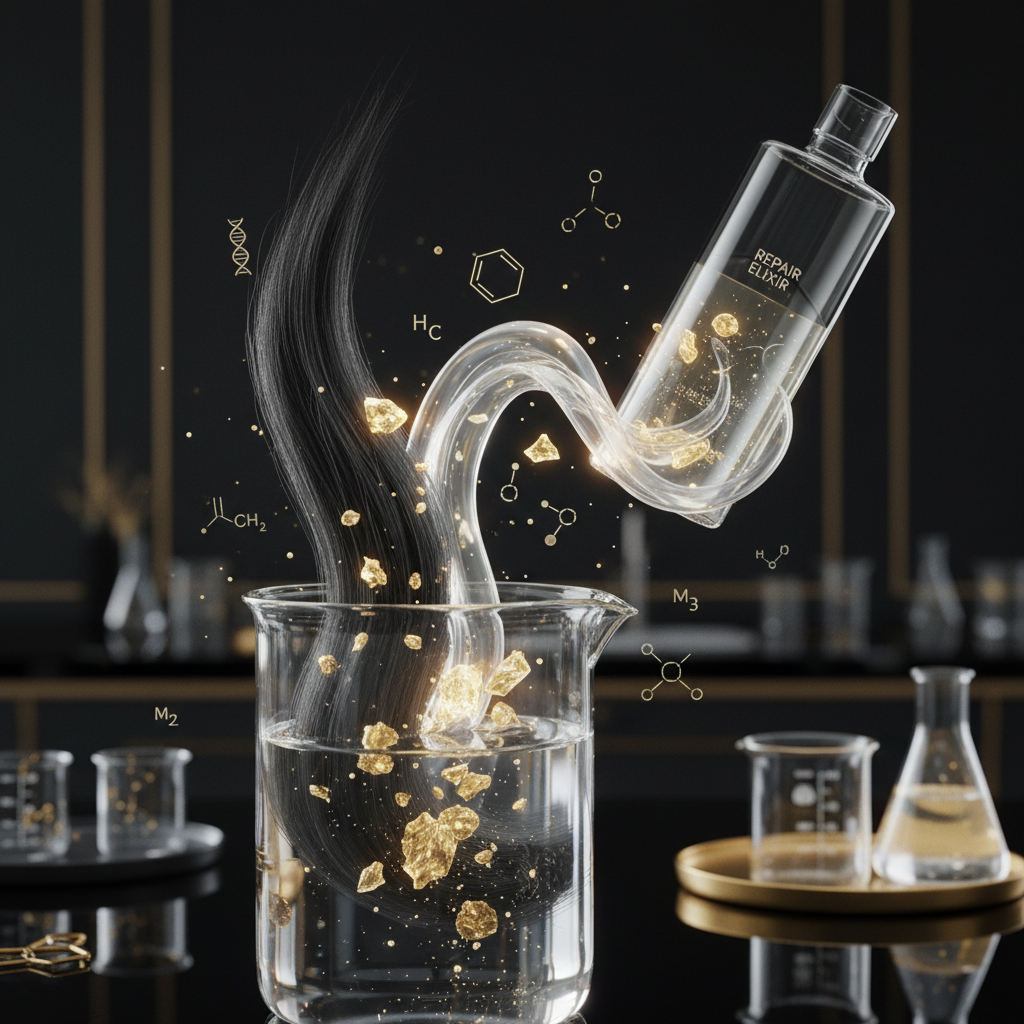
A standard clarifying shampoo removes excess sebum and styling polymers, but it lacks the chemical strength to break ionic mineral bonds. Look for chelating shampoos formulated with tetrasodium EDTA, disodium EDTA, or sodium phytate. These ingredients act as chemical claws, binding free metal ions and pulling them off the hair shaft so they can be rinsed away. Use a chelating wash once every 7 to 14 days depending on local water hardness.
Incorporate acidic rinses
Hair has a natural, slightly acidic pH of 4.5 to 5.5, whereas hard tap water often sits between pH 7.5 and 8.5. Alkaline water causes the cuticle to swell and flare. An acidic rinse (such as diluted apple cider vinegar or a formulated citric acid treatment at roughly pH 4.0) neutralises mineral residue and encourages the cuticle scales to contract and lie flat.
Protect with shower filters or softeners
An ion-exchange water softener replaces calcium and magnesium with sodium ions throughout the home, completely resolving hard water issues. If a whole-house system is impractical, specialised shower filters can reduce sediment, chlorine, and some mineral scale, though standard carbon shower filters cannot fully soften water.
Replenish with deep moisture
Once minerals are stripped, the hair fibre requires deep hydration. Follow every chelating session with a penetrative, hydrolysed protein and lipid mask to restore internal elasticity and seal the cuticular envelope.
When the issue is not hard water
If your hair is shedding directly from the root with the white keratin bulb attached, hard water is not the root cause. Sudden diffuse hair thinning across the entire scalp typically points to telogen effluvium triggered by acute illness, physiological stress, thyroid imbalances, or low ferritin levels. Widening partings or receding temples suggest androgenetic hair loss driven by dihydrotestosterone (DHT) sensitivity.
Consult a registered trichologist or a GP if you experience active scalp inflammation, patches of complete hair loss, or prolonged excessive shedding.
Supporting hair resilience with Watermans
When addressing fragile hair stressed by environmental minerals, supporting the scalp foundation and protecting fibre integrity is essential. Watermans Grow Me Shampoo provides a clarifying, revitalising wash designed to cleanse the hair and scalp without harsh sulphates. Enriched with biotin, rosemary, caffeine, and argan oil, it helps maintain a clean scalp environment while fortifying the hair against day-to-day mechanical strain.
Pairing this with a rich conditioning treatment such as Watermans Condition Me Conditioner supplies hydrolysed lupin protein and cholesterol to replenish lost lipids, smoothing cuticles roughened by hard water exposure and restoring softness, shine, and tensile resilience.
Frequently asked questions about Understanding Hard Water Damage
Can hard water cause permanent baldness?
No. There is no clinical evidence that hard water damages the living hair follicle beneath the scalp or causes permanent baldness. Hard water deposits minerals exclusively on the outer hair shaft. The perceived hair loss associated with hard water is almost always fibre breakage, where brittle strands snap off, rather than follicles ceasing production.
How often should I use a chelating shampoo?
Understanding Hard Water Damage involves matching treatment frequency to your water supply. In moderately hard water areas, using a chelating shampoo once every two weeks is generally sufficient. If your water hardness exceeds 300 mg/L or you wash your hair daily, a weekly chelating treatment will prevent mineral accumulation without stripping natural protective lipids.
Does boiling hard water soften it for washing hair?
Boiling only removes temporary hardness caused by dissolved calcium bicarbonate, precipitating it out as limescale. It does not remove permanent hardness caused by calcium and magnesium sulphates or chlorides. Boiling water for daily hair washing is impractical, inefficient, and will not completely protect your hair fibres from mineral adhesion.
How does hard water affect dyed or bleached hair?
Chemically treated hair is inherently more porous, possessing many open, negatively charged bonding sites. This allows calcium, magnesium, and trace metals like copper to penetrate deeper into the cortex. In bleached hair, hard water accelerates brassy tones, causes rapid colour fading, and significantly compounds structural breakage.
Effective management of hard water exposure
Understanding Hard Water Damage allows you to protect your hair using targeted chemical solutions rather than guesswork. By distinguishing between follicular shedding and superficial fibre breakage, you can deploy chelating cleansers, acidic balancing rinses, and nourishing conditioning routines to strip away calcified buildup. With the right care strategy, hair washed in hard water can retain its natural flexibility, brightness, and strength.
Sources and references
- International Journal of Trichology: Srinivasan, G. Et al., "Evaluation of the Effect of Hard Water on the Tensile Strength of Hair", 2013.
- Journal of Cosmetic Dermatology: Evans, T. Et al., "The role of metal ions in hair weathering and cosmetic damage", 2015.
- Drinking Water Inspectorate (DWI): "Water Hardness in England and Wales", Technical Guidelines, 2021.
- British Association of Dermatologists: "Telogen Effluvium and Hair Shedding Diagnostic Criteria", Clinical Information Leaflet, 2022.
Find these ingredients in Watermans products
- Copper: you will find this ingredient in our Hair Vitamins.