Chelating Shampoo Benefits: Scientific Mechanisms and Hair Health
10 min read ·
Explore the proven Chelating Shampoo Benefits. Discover how sequestering agents remove hard water minerals, copper, and chlorine to restore hair health.
Quick answer: The core Chelating Shampoo Benefits centre on removing stubborn mineral deposits, heavy metals, and chlorine from the hair shaft that regular clarifying washes leave behind. Formulated with specialised sequestering agents like tetrasodium EDTA, these formulas chemically bind to calcium, magnesium, copper, and iron. This restores fibre softness, prevents discolouration, and improves the penetration of salon treatments. However, a major limitation is that chelating shampoos can strip natural lipids and will not reverse existing structural cortex damage or treat biological scalp conditions.
Key takeaways
- Chelating shampoos contain active bonding agents that capture and lift mineral build-up and metal ions from the hair fibre.
- Unlike standard clarifying shampoos that target surface oils and styling polymers, chelating formulas neutralise deep-set calcium, magnesium, copper, and iron.
- Swimmers and residents living in hard water areas (water exceeding 120 mg/L of calcium carbonate) see the greatest improvements in hair texture and shine.
- Chelating formulas prep the hair before chemical services, preventing unwanted colour shifts and uneven bleach lift.
- Overuse can deplete the hair cuticle of essential lipids, meaning these formulas should typically be used only once every two to four weeks.
Chelating Shampoo Benefits: what the evidence shows
Understanding Chelating Shampoo Benefits begins with the science of mineral deposition. Tap water throughout much of the UK and worldwide contains dissolved minerals, particularly calcium and magnesium carbonates, alongside trace metals such as copper and iron leached from domestic pipework. According to cosmetic dermatology studies, copper ions in domestic tap water migrate into the hair shaft, catalysing free-radical generation when exposed to UV light or hydrogen peroxide during colouring.
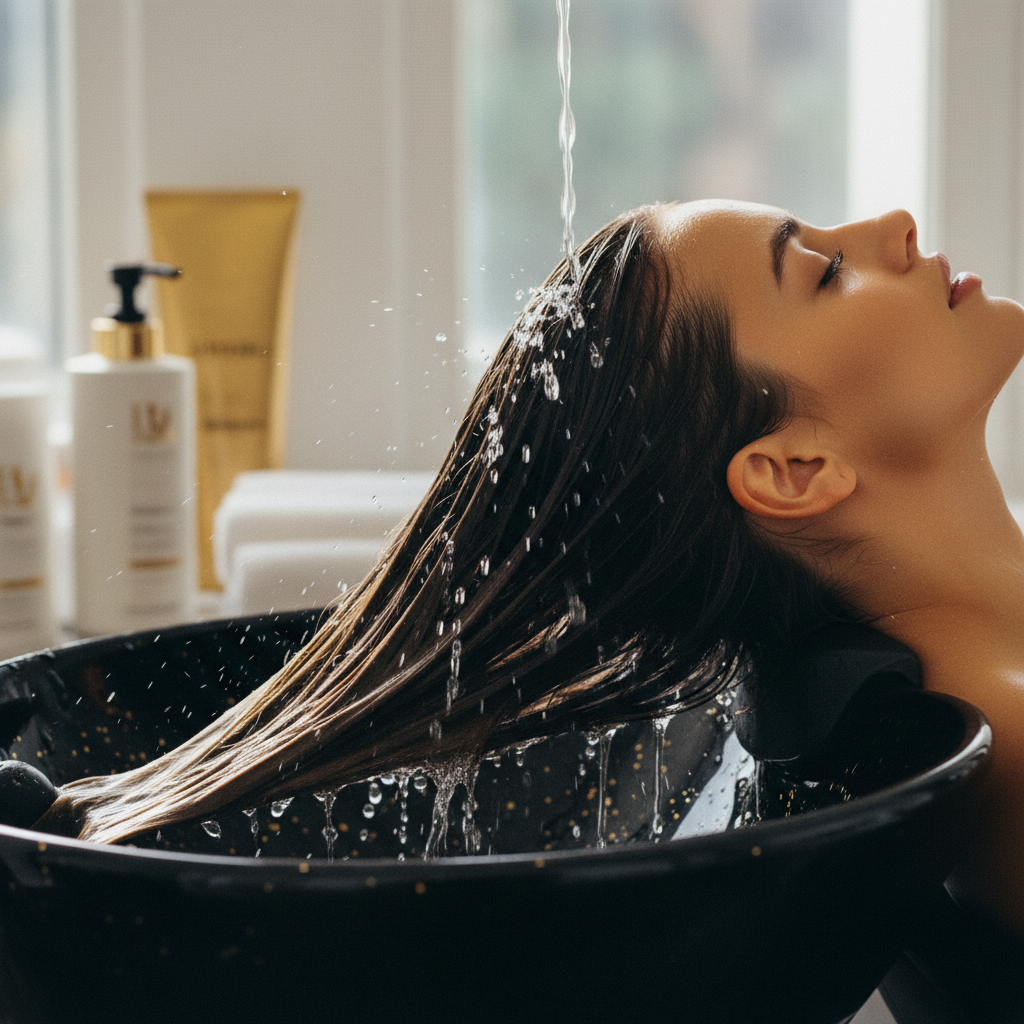
Chelating formulas target these embedded elements directly. While cosmetic surfactants clean surface sebum, chelating agents act as molecular claws (the term derives from the Greek word chele, meaning claw). By forming multiple coordinate bonds with polyvalent metal ions, the chelating agent transforms an insoluble mineral into a water-soluble complex that washes cleanly away down the drain.
The primary, clinically observed Chelating Shampoo Benefits include:
- Removal of copper and green discolouration: Swimmers often develop a greenish tint on lightened or blonde hair. This is caused by oxidised copper ions binding to the keratin matrix, not by chlorine alone. Chelating shampoos sequester these copper deposits, lifting the unwanted green hue.
- Neutralisation of hard water stiffness: Calcium and magnesium ions cross-link with fatty acids from sebum, creating insoluble "soap scum" deposits that coat the hair cuticle. This leaves hair feeling rough, brittle, and unmanageable. Chelating removes these crusts, restoring natural flexibility.
- Optimised chemical processing: Metals inside the hair shaft react violently with bleaching agents. High iron or copper levels can cause rapid heat spikes during lightening, patchy colour uptake, or sudden fibre breakage. Removing them ensures predictable salon results.
- Enhanced moisture uptake: When mineral calcification seals the cuticle layer, conditioning treatments and deep masks sit uselessly on top of the hair. Stripping the mineral crust allows hydrating active ingredients to properly reach the inner fibre.
| Feature | Regular Shampoo | Clarifying Shampoo | Chelating Shampoo |
|---|---|---|---|
| Primary Target | Daily sebum, sweat, superficial dust | Styling polymers, heavy silicones, surface grease | Mineral salts, heavy metals, chlorine, calcium scale |
| Key Active Agents | Standard surfactants (e.g. Cocamidopropyl Betaine) | Concentrated anionic surfactants (e.g. SLES) | Sequestering agents (e.g. Tetrasodium EDTA, Sodium Phytate) |
| Penetration Depth | Surface cuticle | Cuticle surface and shallow edges | Surface cuticle and cortex-level mineral deposits |
| Frequency of Use | 2 to 7 times per week | Once every 7 to 10 days | Once every 14 to 30 days (or post-swim) |
| Impact on Colour | Gentle (if colour-safe) | Can fade semi-permanent dyes | Can fade surface tone while removing dull metallic casts |
What the evidence does not show
While the performance of chelating cleansers on mineral deposits is thoroughly established, marketing claims frequently overstep the boundary of scientific reality.
Chelating shampoos do not treat or prevent hair loss. Follicular miniaturisation, such as androgenetic alopecia, and immune-driven shedding, such as telogen effluvium, happen beneath the skin's surface within the dermal papilla. Mineral build-up can cause hair breakage along the shaft due to mechanical stiffness, but snapping is not hair loss. No shampoo can alter genetic thinning or reset cellular growth cycles.
Furthermore, chelating shampoos cannot rebuild broken disulfide bonds within the cortex. If hair has been structurally degraded by over-bleaching, heat tools, or mechanical tension, a chelating wash will simply strip away any silicone glazes or mineral films, exposing the true, fragile state of the underlying fibre. It cleans the canvas, but it does not repair the structure.
The mechanism: how chelating agents work
Hair fibres carry a net negative electrical charge at physiological pH levels. Dissolved minerals in hard water carry positive charges (such as Ca2+, Mg2+, Cu2+, and Fe3+). This electrostatic attraction pulls metal ions directly onto and into the keratin structure. Once settled, they bind tightly to carboxyl and sulfhydryl groups in hair proteins.
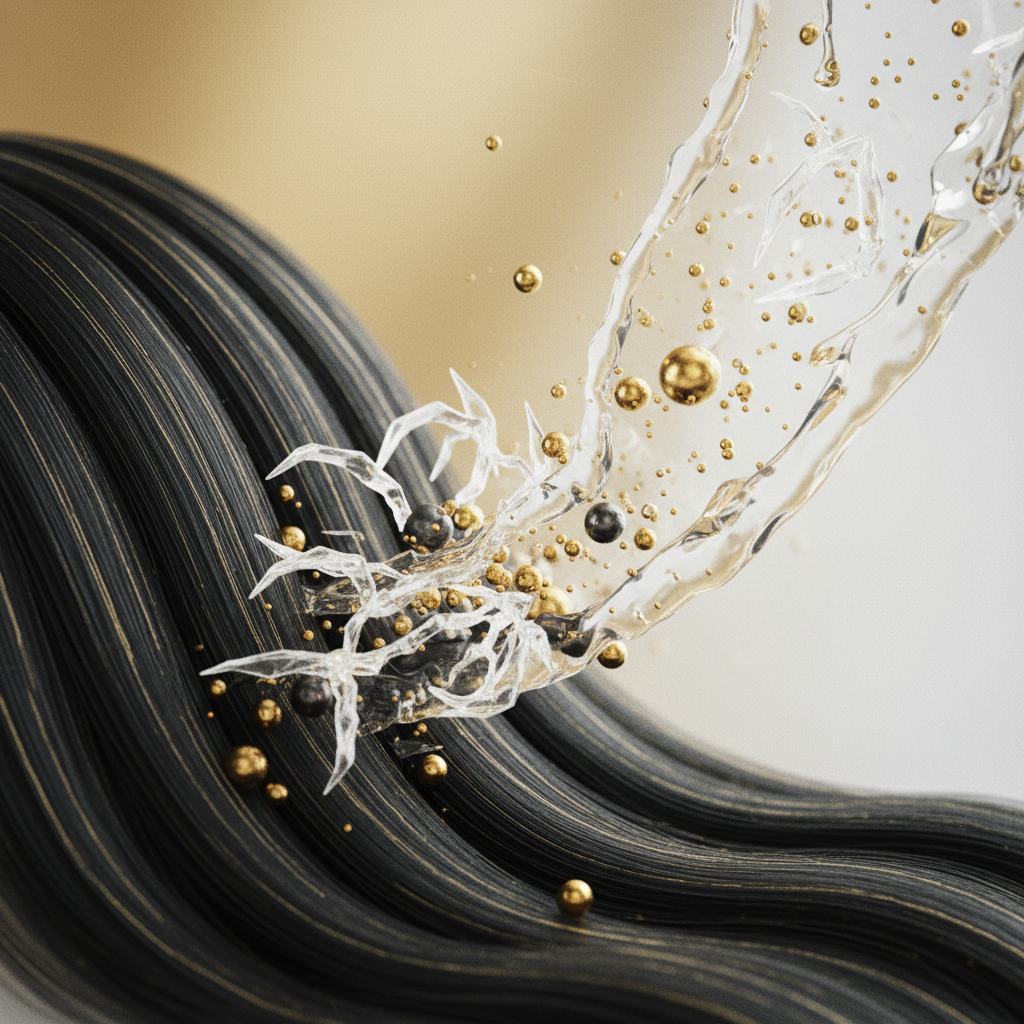
To break these bonds, chelating shampoos use organic compounds with specific spatial arrangements of electron-donating atoms (usually oxygen or nitrogen). The most common agents include:
- Tetrasodium EDTA (ethylenediaminetetraacetic acid): A synthetic hexadentate ligand that wraps completely around metal ions, rendering them inert and water-soluble.
- Disodium EDTA: A related salt that operates efficiently at slightly lower pH ranges.
- Sodium Phytate / Phytic Acid: A plant-derived chelating agent extracted from rice or grains, popular in natural haircare formulations, effective at sequestering calcium and iron.
- Citric Acid: A weaker, alpha-hydroxy acid chelator that helps lower product pH to contract the cuticle while capturing light surface minerals.
Formulations operate best around a pH of 5.0 to 6.5. This allows the surfactants to lift lipid barriers while the chelating agents draw out the positively charged metals without severely destabilising the hair fibre's isoelectric point.
Signs your hair needs chelating
You do not need to use a chelating wash every time you wash your hair. However, distinct indicators suggest mineral build-up has reached a problematic threshold:
- Your hair feels perpetually coated, straw-like, or gritty, even immediately after conditioning.
- Blonde, silver, or light brunette hair appears dull, muddy, or takes on an ash-green or brassy-orange cast that purple shampoo cannot fix.
- Lathering becomes noticeably difficult; your normal shampoo produces thin, limp foam because hard water minerals are binding to the surfactants.
- Curl patterns lose their elasticity, appearing weighed down, frizzy, and unresponsive to styling products.
- You are planning a major colour transformation or bleach service and live in an area with hard water or wash frequently in chlorinated pools.
What you can do: safe application protocol
Because chelating agents are potent cleansers, using them correctly protects the hair's natural moisture balance.
- Assess your local water profile: Water hardness is measured in milligrams per litre (mg/L) of calcium carbonate. Soft water sits below 60 mg/L; hard water falls between 120 and 180 mg/L; very hard water exceeds 180 mg/L. Check your regional water provider's annual water quality report. If you are in a soft-water zone and avoid public pools, you rarely need a chelating product.
- Apply to damp hair: Thoroughly saturate the hair with warm water to begin opening the cuticle slightly. Work the chelating formula from roots to ends.
- Respect contact time: Unlike basic cleansers that are rinsed immediately, chelating agents require dwell time to break coordinate bonds. Leave the lather on the hair for 3 to 5 minutes. For heavy swimmer build-up, some salon protocols extend this up to 10 minutes under a plastic cap.
- Rinse thoroughly: Rinse with clean running water until the runoff is completely clear.
- Replenish lost lipids: Chelating strips protective 18-methyleicosanoic acid (18-MEA) and surface sebum alongside the minerals. Always follow a chelating step with an intensive, lipid-rich [deep conditioner](https://watermanshair.com/products/masque-me-luxurious-hair-mask) or acidic moisture mask to seal the cuticle scales back down.
When the cause may be something else
Dryness, snapping, and dullness are not always caused by tap water minerals. Before altering your routine, consider other contributing factors:
- Protein-moisture imbalance: Overuse of hydrolysed vegetable or keratin proteins can mimic mineral calcification, leaving the hair brittle, stiff, and prone to snapping.
- Seborrheic dermatitis or scalp conditions: Flaking and irritation near the roots are often assumed to be mineral scale, but they are frequently linked to Malassezia yeast overgrowth on the scalp, which requires targeted antifungal actives rather than chelators.
- Thermal degradation: Heat styling over 185°C denatures the alpha-keratin structure of the hair into amorphous beta-keratin, permanently destroying elasticity regardless of mineral presence.
When to get professional advice
If your hair continues to snap despite using chelating washes and hydrating conditioners, consult a qualified trichologist or experienced colourist. A stylist can perform an in-salon strand test to check how your hair reacts to bleach or developer before attempting major chemical services. If you experience intense scalp redness, scaling, or diffuse shedding from the roots, visit your GP or a dermatologist, as these are medical issues beyond the scope of clarifying cosmetic treatments.
Integrating gentle care with Watermans
Chelating is an occasional corrective measure, not a daily routine. For ongoing day-to-day maintenance, maintaining a balanced scalp and strong fibre condition requires nourishment rather than constant stripping. Watermans hair care products, including Grow Me Shampoo and Condition Me Conditioner, are engineered to nurture the hair ecosystem without harsh mineral deposits. Their balanced, nutrient-dense formulas supply caffeine, rosemary, biotin, and argan oil to promote fuller, thicker-looking hair and support overall fibre resilience between deep-cleansing sessions.
Frequently asked questions about Chelating Shampoo Benefits
What are the main Chelating Shampoo Benefits for swimmers?
For swimmers, the primary benefit is the rapid removal of copper compounds and chlorine residues that chemically adhere to hair fibres. Chelating formulas bind to oxidised copper, preventing and reversing light hair from turning an ash-green tone. They also eliminate the pungent smell of pool chlorine and remove the brittle, crunchy texture caused by pool chemicals.
Can a chelating shampoo strip colour-treated hair?
Yes, chelating shampoos can lift artificial colour molecules. Because they deeply cleanse the cuticle to capture metals, they may wash away fresh semi-permanent or demi-permanent glosses. However, colourists frequently use them before colouring to eliminate mineral interference, ensuring shades take evenly and avoiding rogue chemical reactions with bleach.
How often should you use a chelating shampoo?
Most people living in hard water areas only need to use a chelating formula once every two to four weeks. Frequent swimmers or those with exceptionally hard municipal water (over 200 mg/L) can use one once a week. Using it more frequently can deplete the cuticle of protective lipids and cause unnecessary dryness.
What is the difference between clarifying and chelating shampoos?
Clarifying shampoos are designed with concentrated surfactants to strip superficial residues like hairspray, styling waxes, and silicones. Chelating shampoos contain specialised sequestering ligands, such as EDTA, which penetrate deeper to chemically break the bonds of mineral salts, rust, iron, and heavy metals that regular clarifying cleansers cannot dissolve.
Can chelating shampoo stop hair shedding?
No. Chelating shampoos only treat the external hair shaft. They do not alter the follicular hair growth cycle, hormones, or systemic health factors that dictate biological shedding (such as telogen effluvium). They can, however, reduce hair breakage by eliminating brittle mineral crusts, which prevents the fibre from snapping mid-shaft.
Summary
Understanding Chelating Shampoo Benefits allows you to make precise, evidence-based choices for your haircare routine. By targeting stubborn mineral scale, chlorine, and metallic ions that standard cleansers leave behind, chelating formulas restore natural shine, improve responsiveness to conditioning masks, and safeguard hair during salon colour treatments. Used conservatively alongside nourishing, moisture-rich products, chelating remains an indispensable corrective tool for hard-water management.
Sources and references
- Journal of the Society of Cosmetic Chemists: "The Effect of Hard Water on Hair Fibre Properties and Wash Performance" (2011).
- International Journal of Cosmetic Science: "Investigation of the penetration of copper into hair during washing and its impact on fibre integrity" (2014).
- British Journal of Dermatology: "Trace elements and heavy metals in human hair: systemic versus external environmental deposition" (2018).
- Drinking Water Inspectorate (DWI): "Hardness of Water in Supplies across England and Wales" (dwi.gov.uk, 2023).
Find these ingredients in Watermans products
- Copper: you will find this ingredient in our Hair Vitamins.