Restoring Porous Damaged Hair: The Definitive Guide to Cuticle Health
8 min read ·
Learn how to manage and restore porous damaged hair. Understand the physical mechanisms of high porosity, cuticle erosion, and proven cosmetic lipid and protein solutions.
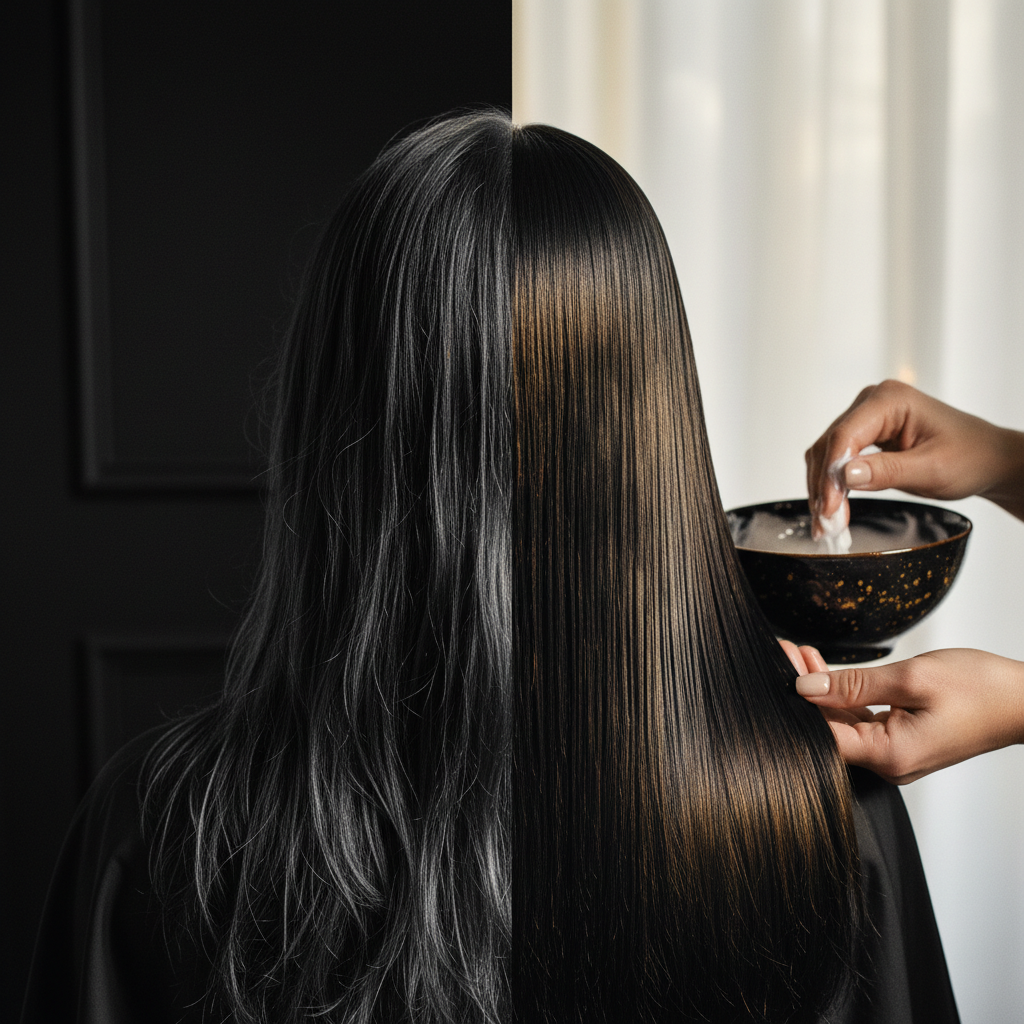
Quick answer: Restoring porous damaged hair requires re-establishing the structural lipid barrier and reinforcing the internal cortex. Porosity spikes when chemical processing, heat, or mechanical friction strips the protective 18-methyleicosanoic acid (18-MEA) layer and fractures the cuticle scales. Because hair fibre is non-living tissue, restoring porous damaged hair cannot mean biological healing; instead, it means managing porosity through targeted low-pH conditioning, hydrolysed proteins, and lipid replenishment to restore tensile strength, reduce water uptake, and halt progressive snapping.
Key takeaways
- High porosity occurs when the protective cuticle lifts, chips, or erodes, exposing the underlying keratin cortex.
- Hair fibres are non-living; true biological regeneration is impossible once the fibre exits the scalp.
- Damaged, porous hair absorbs water rapidly but cannot retain internal hydration, leaving it vulnerable to hygral fatigue.
- Acidic formulations (pH 3.5 to 5.5) help flatten disrupted cuticle edges and preserve the fibre's isoelectric point.
- Hydrolysed proteins temporarily patch cortical micro-voids, while biomimetic lipids restore surface hydrophobicity.
Restoring Porous Damaged Hair: what the evidence shows
Restoring porous damaged hair centres on cosmetic rehabilitation rather than biological cure. A virgin hair fibre is naturally hydrophobic. Its surface is coated with a monolayer of fatty acids, predominantly 18-MEA, covalently bonded to the epicuticle. When bleaching agents, chemical relaxers, or temperatures above 180°C attack the shaft, this lipid layer is stripped away, and the overlapping cuticle cells lift and break.
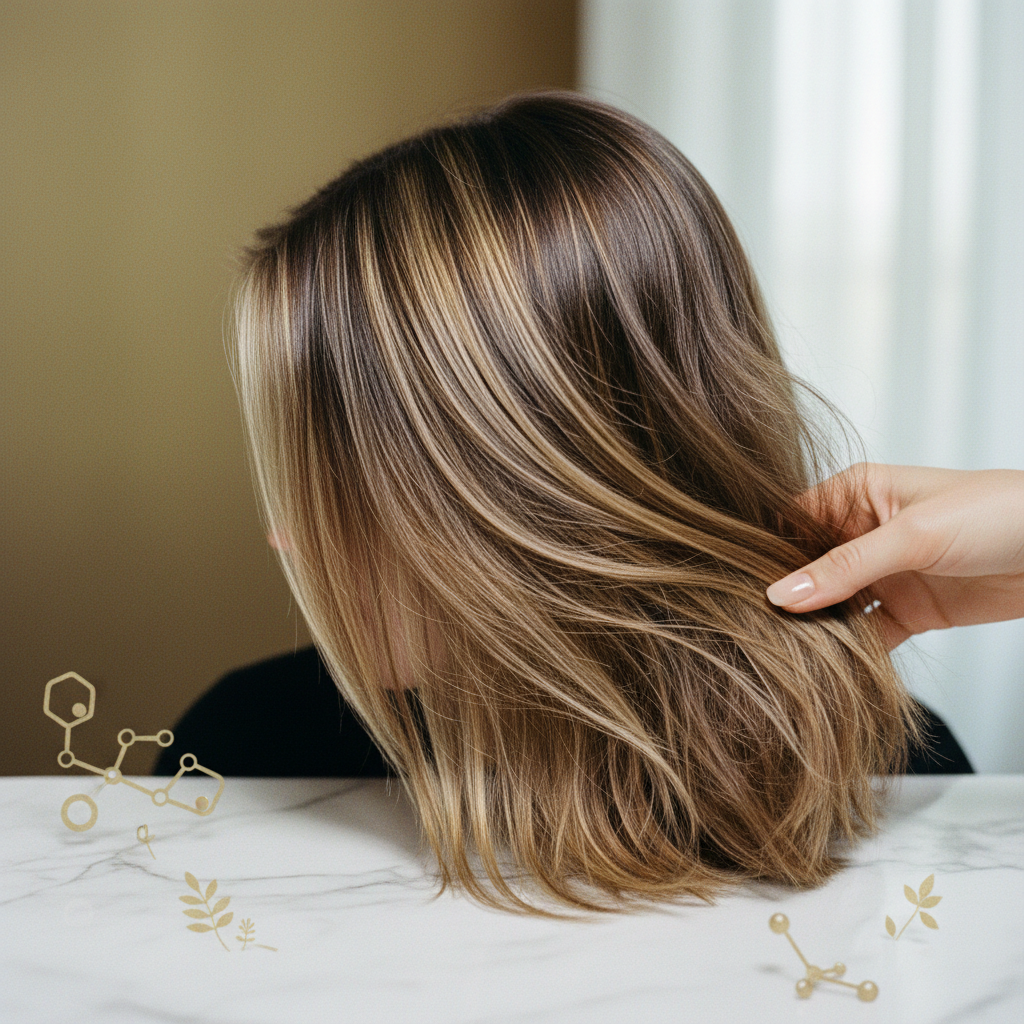
The result is a hydrophilic, highly porous fibre that acts like an unsealed sponge. Research published in the International Journal of Cosmetic Science demonstrates that high-porosity hair absorbs excessive moisture in humid environments and loses it just as quickly in dry air. This continuous swelling and deswelling, known as hygral fatigue, weakens internal disulphide bonds and accelerates fibre breakage.
Cosmetic restoration relies on physical deposition. Low-molecular-weight proteins (such as hydrolysed wheat, keratin, or silk proteins under 1,000 Daltons) penetrate the fractured endocuticle and cortex to temporarily supplement mechanical rigidity. Simultaneously, film-forming conditioning agents deposit along the epicuticle, sealing gaps and mimicking the natural hydrophobic barrier to repel excessive atmospheric moisture.
| Characteristic | Healthy, Low-Porosity Hair | Porous, Damaged Hair | Restorative Target |
|---|---|---|---|
| Cuticle Condition | Tightly bound, flat scales | Lifted, fractured, or missing scales | Flattened, sealed cuticle margins |
| Surface Chemistry | Hydrophobic (lipid-rich) | Hydrophilic (lipid-depleted) | Restored hydrophobic coating |
| Fibre Isoelectric Point | Approximately pH 3.67 | Shifts lower (more negatively charged) | Neutralised surface charge |
| Moisture Absorption | Slow, controlled uptake | Rapid saturation, rapid loss | Controlled, balanced water exchange |
| Tensile Elasticity | Stretches up to 30% wet without snap | Snaps easily under light tension | Fortified cortex with reduced breakage |
What the evidence does not show
Controlled cosmetic chemistry studies do not support the idea of permanent structural repair. Many salon marketing claims suggest that a single bond-building or deep-conditioning treatment permanently fuses broken hair back to a virgin state. The data shows that while certain active chemistries create cross-links between exposed cysteine groups, these bonds degrade over time with subsequent washing, heat styling, and environmental oxidation.
Furthermore, products cannot permanently re-anchor lost cuticle scales. Once cuticle tiles break off from the cortex, no treatment can reattach them biologically. Cosmetic rehabilitation is an ongoing management strategy: you must continually apply protective, film-forming, and reinforcing agents to maintain structural integrity until new hair emerges from the follicle.
The biological and physical mechanism of hair porosity
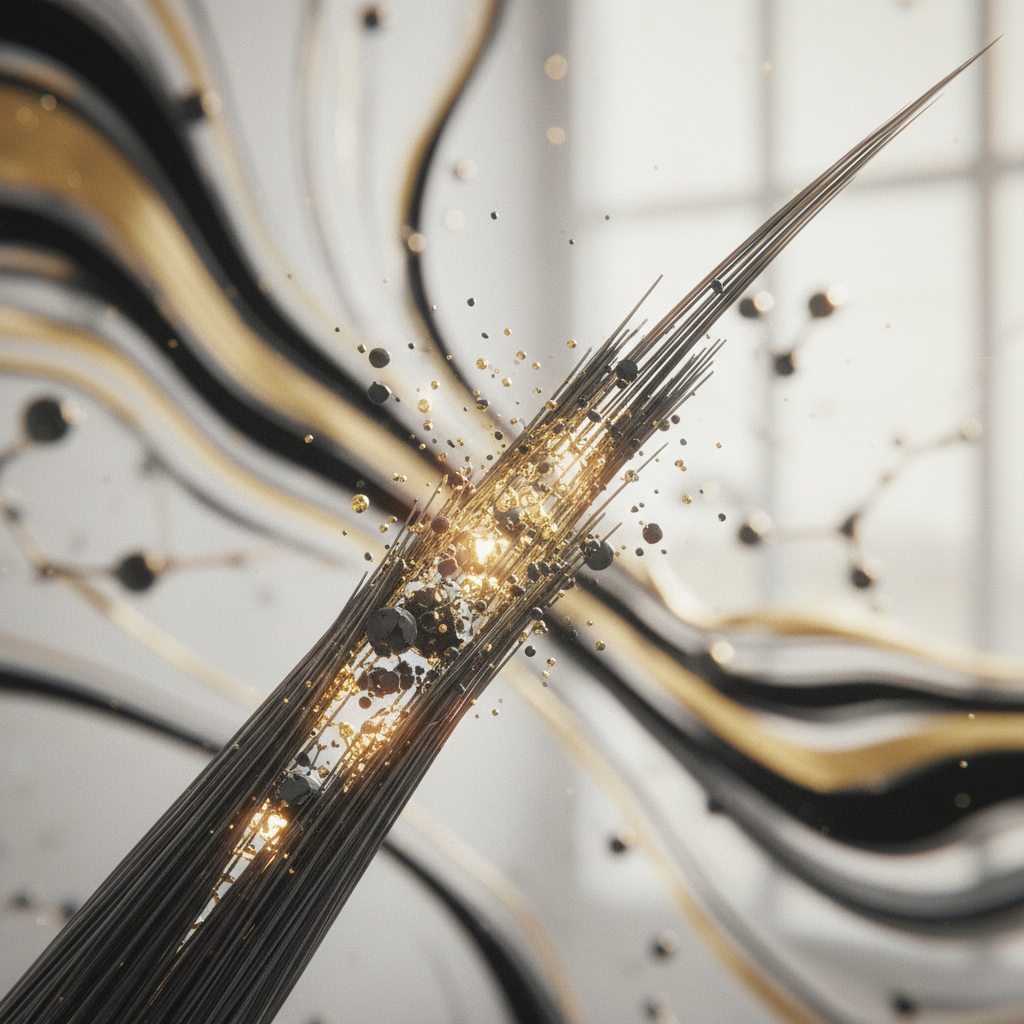
The hair shaft consists of three main components: the outermost protective cuticle, the structural cortex, and the central medulla. The cuticle consists of five to ten overlapping cell layers cemented together by the cell membrane complex (CMC).
 [ Intact Epicuticle with 18-MEA ] -> Repels water, protects cortex
 │
 [ Cuticle Erosion from Bleach/Heat ] -> Scales lift and break away
 │
 [ Exposed Cortex & Hygral Fatigue ] -> Water rushes in; cortex fractures
 │
 [ Cosmetic Restoration Protocol ] -> Protein infill + acidic lipid seal
Chemical bleaching oxidises the thioester bonds anchoring 18-MEA, converting cystine into cysteic acid. This chemical conversion creates a strong negative surface charge and strips the lipid envelope. Without this natural wax-like protection, cuticle scales lift.
Water molecules then bypass the outer defence and flood the cortex, causing the fibre to swell radially. This swelling stretches the keratin fibrils beyond their elastic threshold. When the hair dries, it contracts unevenly. Repeated cycles fracture the internal macrofibrils, manifesting as split ends, extreme tangling, and mechanical breakage.
Signs that your hair has become porous and damaged
Porous hair displays clear structural and tactile symptoms:
- Rapid wetting and drying: The hair saturates with water instantly upon stepping into the shower, rather than repelling water for the first few seconds. It also air-dries unusually fast due to an inability to hold bound moisture.
- Persistent rough texture: When you slide your fingers up a single dry strand from tip to root, it feels raspy, ridged, and uneven.
- Chronic tangling and matting: Lifted cuticle scales act like tiny barbs, catching on adjacent fibres and creating persistent friction knots.
- Wet elasticity loss: When gently stretched while damp, the strand either extends like chewing gum without bouncing back, or it snaps abruptly with almost no resistance.
- Dull, matte appearance: Fractured cuticles scatter light randomly rather than reflecting it uniformly, stripping the hair of natural shine.
Practical steps for restoring porous damaged hair
- Prioritise acidic formulations: Healthy hair thrives near an isoelectric point of pH 3.67. Shampoos and conditioners formulated between pH 3.5 and 5.5 neutralise negative electrostatic charges, encourage lifted cuticle scales to lie flat against the shaft, and minimise friction.
- Apply balanced hydrolysed proteins: Incorporate leave-in or rinse-off treatments containing hydrolysed vegetable, wheat, or keratin proteins. Smaller peptides diffuse into microscopic voids in the damaged cuticle to temporarily bolster tensile strength.
- Rebuild the hydrophobic shield with biomimetic lipids: Seal the hair with natural and synthetic lipids such as ceramides, fatty alcohols (cetyl and stearyl alcohol), and light plant oils. These replace the missing 18-MEA layer and create a waterproof barrier that buffers against humidity.
- Minimise wet mechanical handling: Wet hair with high porosity is fragile. Detangle exclusively with wide-tooth combs or flexible-bristle detanglers, always starting from the tips and working upward while the hair is saturated with slip-enhancing conditioner.
- Enforce strict thermal limits: Lower styling tools below 150°C and always apply a film-forming heat protectant containing polymers like polyquaternium or silicones, which distribute heat evenly and buffer fragile proteins from heat denaturation.
When the cause may be something else
It is vital to distinguish between cosmetic fibre damage and physiological scalp conditions. If you notice an increased quantity of entire hairs shedding from the scalp, with the white bulb still attached at the root, you are experiencing follicular shedding (such as telogen effluvium or androgenetic alopecia), not porosity-driven breakage.
Restorative conditioning protocols only target the physical strand. They do not alter shedding cycles, systemic nutritional deficiencies, thyroid abnormalities, or hormonal shifts. If your overall density is decreasing at the scalp level, look beyond surface porosity treatments.
When to seek professional advice
Consult a qualified trichologist or dermatologist if your hair breakage is accompanied by scalp pain, redness, persistent scaling, or patchy thinning. These signs indicate inflammatory scalp pathology rather than simple mechanical or chemical damage.
Additionally, if your hair snaps continuously along the shaft despite months of low-pH care and protein supplementation, consult an experienced professional stylist. When structural degradation reaches the stage of trichorrhexis nodosa (node-like cortical fractures), the safest approach is a progressive haircut to remove the irreparably compromised lengths.
A holistic approach with Watermans
When addressing fragile, depleted hair fibres, supporting the scalp environment while reinforcing individual lengths creates the best conditions for resilient growth. Watermans focuses on evidence-aligned, nutrient-dense haircare designed to respect the scalp barrier and fortify the appearance of thinning or fragile strands. Formulations enriched with biotin, hydrolysed lupin protein, caffeine, and rosemary extract help improve the physical feel and body of stressed hair while cleansing without harsh stripped finishes. For high-porosity lengths prone to snapping, integrating a gentle, strengthening cleanse into a dedicated conditioning routine provides a balanced cosmetic foundation.
Frequently asked questions about Restoring Porous Damaged Hair
Can restoring porous damaged hair fix split ends permanently?
No, cosmetic treatments cannot fuse split ends back together permanently. While protein deposits and film-forming silicones can temporarily glue the split margins together to improve appearance, the cortical structural integrity is gone. Trimming the split tips is the only permanent solution to prevent fractures from travelling up the shaft.
How often should I apply protein treatments when restoring porous damaged hair?
Apply protein treatments every two to four weeks, depending on the severity of chemical damage. Overusing concentrated proteins without balanced moisturising agents can cause the fibre to feel stiff, brittle, and dry. Alternate protein reconstructors with lipid-rich, humectant conditioning masks to maintain flexibility.
Does high porosity hair require hot oil treatments?
Hot oil treatments can help high-porosity hair, but the oil temperature must remain moderate, never exceeding 40°C. Penetrating oils like coconut oil can help reduce internal protein loss when applied as a pre-wash treatment, while sealing oils coat lifted cuticles to lock in leave-in conditioners.
Is the water float test reliable for determining hair porosity?
The water float test is largely unreliable. Surface tension and residual sebum or styling products on the hair strand frequently keep damaged, high-porosity hair floating for hours. Evaluating how quickly your hair absorbs water when washed and checking its tactile texture provide far more accurate assessments.
Does hard water worsen porous hair damage?
Yes, hard water compounds porosity issues. Calcium and magnesium ions bind strongly to the negatively charged, cysteic-acid-rich sites on porous hair, forming mineral deposits. These residues make the hair feel stiff, amplify friction, and impede conditioning agents from coating the shaft effectively.
Final thoughts on hair rehabilitation
Restoring porous damaged hair requires patience, gentle handling, and chemically sound routines. Because the hair fibre cannot self-repair biologically, your primary objective is to manage porosity mechanically and cosmetically: buffer the internal cortex with hydrolysed proteins, restore the lost lipid envelope, and keep the cuticle sealed using acidic, low-friction products. By limiting high-heat styling, pacing chemical treatments, and focusing on protective daily care, you can preserve fibre elasticity and keep damaged lengths looking strong, glossy, and intact.
Sources and references
- International Journal of Cosmetic Science, "The role of 18-methyleicosanoic acid in hair health and surface properties", 2012.
- Journal of Cosmetic Science, "Secondary ion mass spectrometry study of 18-MEA on hair surfaces", 2008.
- Robbins, C. R., Chemical and Physical Behavior of Human Hair, 5th ed., Springer, 2012.
- Society of Cosmetic Chemists, "Hair damage by chemical processes and thermal styling: structural alterations", 2015.
Find these ingredients in Watermans products
- Biotin: you will find this ingredient in our Hair Growth Shampoo.