Understanding the Hair Shaft Structure: Cuticle, Cortex, and Medulla Explained
10 min read ·
Understanding the Hair Shaft Structure reveals how the cuticle, cortex, and medulla govern strength, and why damaged fibre cannot biologically repair itself.

Quick answer: Understanding the Hair Shaft Structure reveals that each strand is a non-living, protein-rich fibre composed of three concentric layers: the outer cuticle, the intermediate cortex, and the central medulla. The cortex provides tensile strength and colour, while overlapping cuticle cells protect against external damage. However, the main limitation is that the visible hair shaft cannot biologically repair itself once damaged. Because it contains no living cells, treatments can only cosmetically condition, coat, or temporarily reinforce broken chemical bonds.
Key takeaways
- The hair shaft consists of three anatomical zones: the protective cuticle, the structural cortex, and the variable medulla.
- Alpha-keratin proteins make up roughly 65 to 95 percent of the fibre weight, reinforced by cystine disulphide bonds.
- The outer cuticle consists of 5 to 10 overlapping cellular layers that control moisture retention and shine.
- Hair fibre is biologically dead once it emerges from the scalp, meaning structural damage cannot be biologically healed.
- Distinction is critical: physical breakage along the shaft is structural damage, not follicular hair shedding or hair loss.
Understanding the Hair Shaft Structure: what the evidence shows
Scientific analysis demonstrates that hair is an integrated composite material designed to withstand tension, friction, and environmental wear. Understanding the Hair Shaft Structure requires examining its cellular architecture from the outer perimeter to the core.
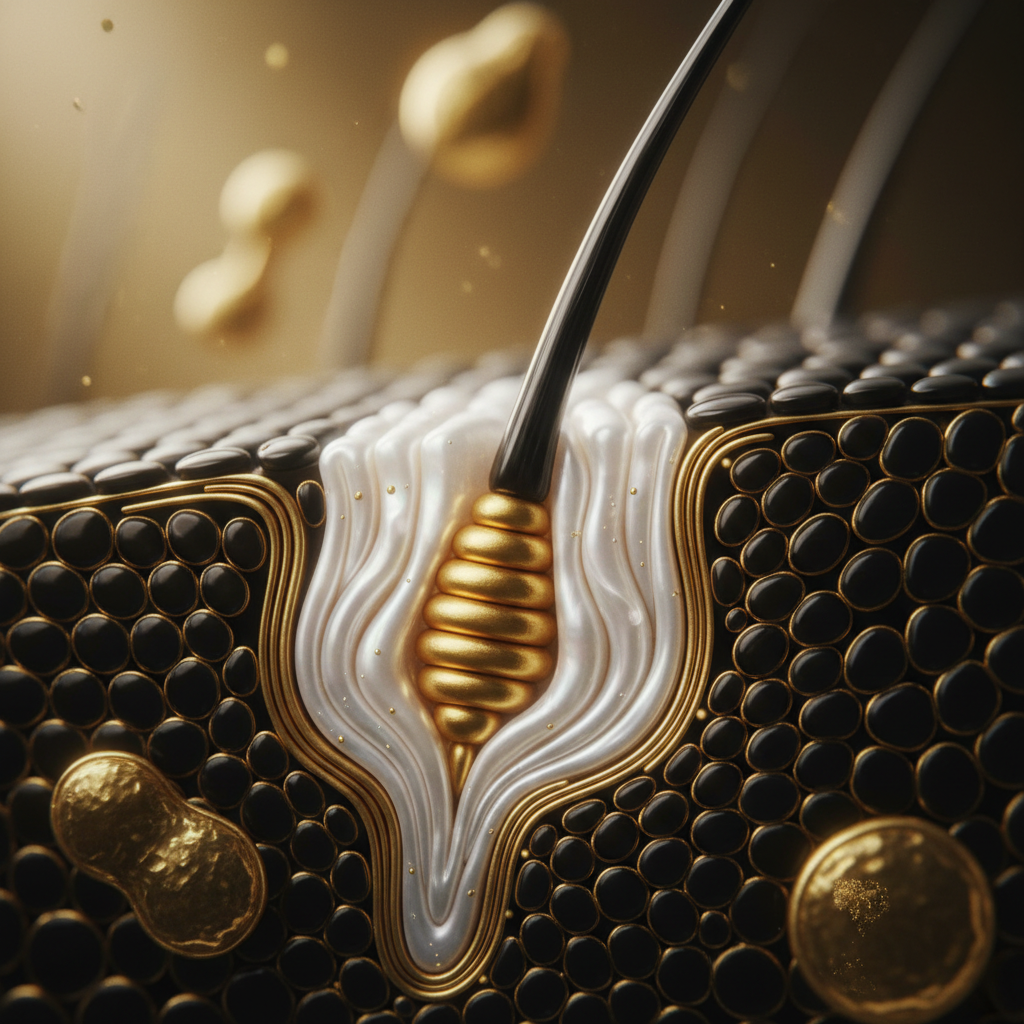
 +---------------------------------------------+
 | CUTICLE (5 to 10 overlapping scales) |
 | +---------------------------------------+ |
 | | CORTEX (Macro- & microfibrils) | |
 | | +---------------------------------+ | |
 | | | MEDULLA (Air spaces & core) | | |
 | | +---------------------------------+ | |
 | +---------------------------------------+ |
 +---------------------------------------------+
1. The Cuticle: The Protective Shield
The outermost envelope of the hair fibre is the cuticle. It consists of 5 to 10 overlapping layers of flattened, non-pigmented scale cells that point upwards from root to tip, like tiles on a slate roof. Each cuticle cell is about 0.3 to 0.5 micrometres thick.
On the surface of the cuticle lies the 18-methyleicosanoic acid (18-MEA) layer, also known as the F-layer. This mono-layer of fatty acids is covalently bound to the underlying protein. It renders healthy virgin hair naturally hydrophobic, causing water to bead off and reducing physical friction between neighbouring fibres.
Beneath the F-layer, each cuticle scale contains three distinct proteinaceous sub-layers:
- The Epicuticle: A thin, high-cystine outer membrane resistant to chemical breakdown.
- The Exocuticle: A layer comprising roughly 55 percent of the scale, heavily cross-linked with sulphur bonds.
- The Endocuticle: An inner zone with low cystine content that swells easily in water, making it mechanically vulnerable.
When environmental pH rises above the natural hair isoelectric point (around pH 3.67 to 5.5), the cuticle scales swell and lift, exposing the delicate interior.
2. The Cortex: The Mechanical Core
The cortex forms the vast bulk of the hair shaft, accounting for 75 to 90 percent of its total volume. It dictates the mechanical integrity, elasticity, tensile strength, and natural colour of the fibre.
The cortex is packed with spindle-shaped cortical cells aligned parallel to the fibre axis. Inside these cells sit macrofibrils, which divide further into intermediate filaments (microfibrils) embedded in a sulphur-rich amorphous protein matrix. This arrangement resembles steel-reinforced concrete: the rigid alpha-keratin helices provide tensile resistance, while the matrix absorbs compression and chemical load.
Three primary chemical cross-links stabilise this protein structure:
- Disulphide bonds: Strong covalent bonds formed between pairs of cysteine amino acids. These provide permanent elasticity and can only be cleaved by alkaline reducers, bleaching, or extreme heat.
- Salt bridges (ionic bonds): Intermediate-strength electrovalent bonds between positive and negative amino acid side chains. These are susceptible to shifts in pH.
- Hydrogen bonds: Weak physical bonds that break readily in the presence of water, permitting temporary thermal styling when hair dries.
Melanin granules, synthesised in the follicle by melanocytes, are embedded throughout the cortex. Eumelanin creates brown and black shades, while pheomelanin gives blonde and red tones.
3. The Medulla: The Core Channel
The innermost zone is the medulla. Composed of soft keratin, lipids, and air-filled pockets, its presence is variable. The medulla is generally continuous or fragmented in thick, coarse fibres, but it is frequently absent in naturally fine or unpigmented vellus hair.
Evidence indicates that the medulla contributes little to the mechanical tensile strength of the fibre. However, it plays a role in light scattering, influencing the visual depth and sheen of coarse hair types.
| Hair Shaft Layer | Primary Composition | Structural Role | Susceptibility to Damage |
|---|---|---|---|
| Cuticle | Keratinocytes, 18-MEA lipid layer | Protects cortex, controls friction, repels liquid water | Stripped by alkaline chemicals, bleaching, heat, brushing |
| Cortex | Alpha-keratin fibrils, disulphide matrix, melanin | Provides tensile strength, elasticity, and colour | Degraded by UV radiation, hydrogen peroxide, thermal irons |
| Medulla | Amorphous proteins, open air spaces | Internal structural fill, light scattering | Minimal mechanical vulnerability; not involved in strength |
What the evidence does not show
Cosmetic science has debunked several persistent myths regarding fibre anatomy.
First, hair cannot be "nourished" or "fed" from the outside through topical cosmetics. Once the hair fibre emerges past the infundibulum of the scalp follicle, it is biologically dead. It possesses no metabolic activity, nervous tissue, or blood supply. Products cannot deliver vitamins to the shaft to stimulate cellular growth.
Second, split ends cannot be permanently repaired. When the protective cuticle strips away and the cortical fibrils unravel, topical conditioning agents can glue the fibrils together using polymers or charged silicones. However, this bonding is strictly cosmetic and temporary. Controlled tensile testing demonstrates that split ends retain zero structural recovery once washed; the only permanent solution is physical trimming.
Third, hair shaft breakage must never be confused with alopecia or medical shedding. Shedding (such as telogen effluvium) involves the bulb dislodging cleanly from the follicle beneath the scalp, often showing a small white root sheath. Breakage occurs when structural stress fractures the shaft mid-fibre due to cortex degradation. Shampoos and surface conditioners do not cure follicular hair loss.
The mechanisms of structural degradation
Damage to the hair shaft follows a predictable chemical and physical trajectory. When hair is subjected to mechanical trauma (such as vigorous backcombing or harsh wet detangling), the overlapping cuticle scales crack and detach from the underlying cell membrane complex (CMC).
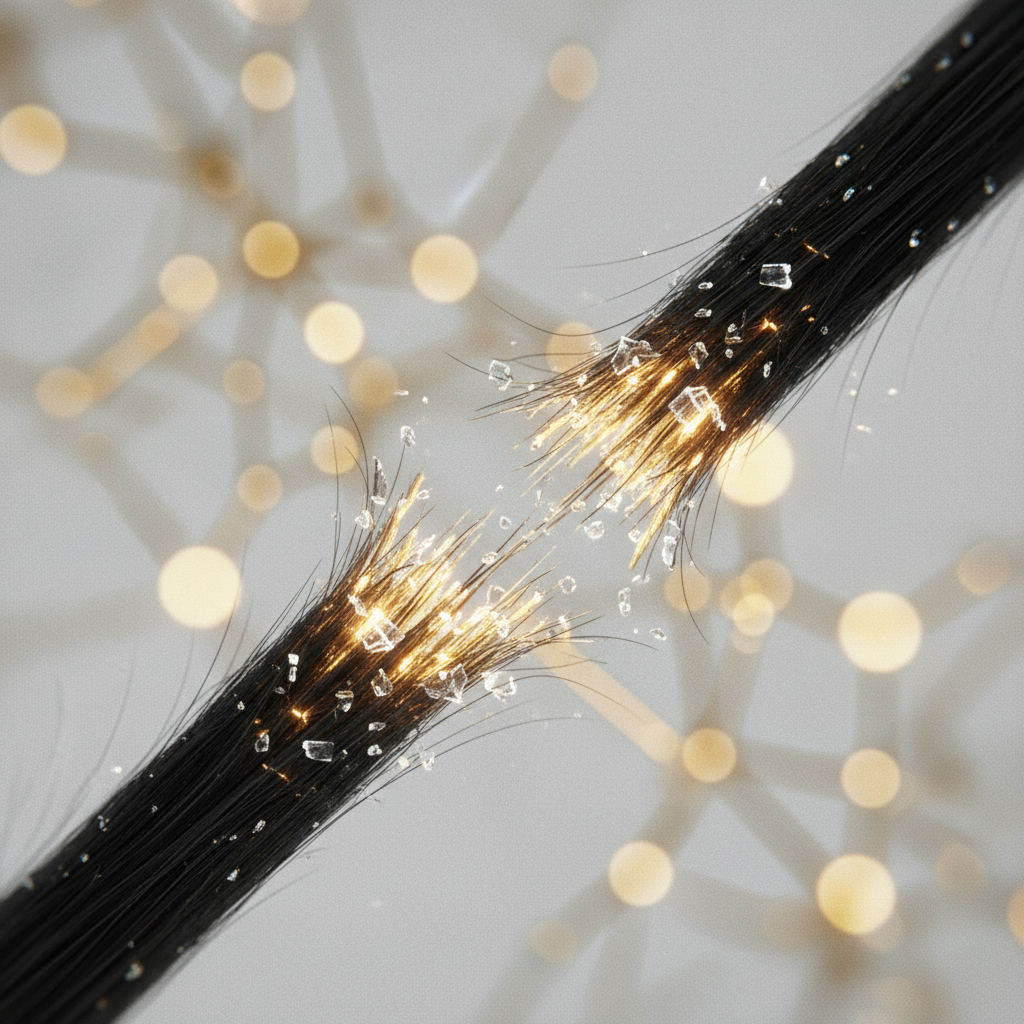
Chemical processing accelerates this degradation. Bleaching agents rely on alkaline substances, typically ammonium hydroxide, to swell the cuticle scales to a lifted state. Hydrogen peroxide then penetrates into the cortex to oxidise melanin granules. In doing so, it oxidises cysteine into cysteic acid, permanently destroying disulphide bonds.
Thermal styling over 180 degrees Celsius causes the water trapped inside the cortex to boil rapidly, creating structural voids or "bubble hair." Extreme heat also alters the native alpha-keratin conformation into amorphous beta-sheet proteins, permanently lowering the fibre's breaking point.
Identifying signs of hair shaft damage
You can spot structural degradation along the shaft through clear physical markers:
- Raised porosity: Damaged hair absorbs water instantly but dries unevenly because the cuticle can no longer regulate moisture transfer.
- Loss of elasticity: Healthy hair stretches up to 30 percent of its dry length before snapping. Damaged cortical fibres snap under minimal tension with zero bounce.
- Trichoptilosis (split ends): The longitudinal splitting of the cortex, typically appearing at the distal ends where cuticle layers have eroded over time.
- Trichorrhexis nodosa: The formation of microscopic, paintbrush-like nodes along the shaft where the cortex has collapsed internally, creating points of immediate structural failure.
- Tangling and high friction: The loss of the hydrophobic 18-MEA lipid layer makes the surface feel rough, causing wet fibres to interlock and form stubborn knots.
Evidence-based strategies to protect the hair fibre
Because biological repair is impossible, hair care must focus on structural preservation and preventative protection.
Maintain an optimal pH range
Hair exists in its most stable, compact state between pH 4.5 and 5.5. Washing with high-pH alkaline soaps swells the cuticle and dissolves the lipid envelope. Using balanced acidic shampoos and conditioners neutralises negative surface charges, flattens the cuticle shingles, and minimises fibre swelling.
Reduce mechanical friction when wet
Water weakens the cortex by breaking hydrogen bonds, which drops the hair's wet tensile yield point. Always detangle hair gently using wide-tooth combs or flexible-bristle detangling brushes. Apply leave-in conditioning agents that contain cationic surfactants (such as cetrimonium chloride or behentrimonium methosulfate). These deposit a slip layer that replicates the missing 18-MEA lipid barrier.
Shield against thermal degradation
Never apply heated styling irons to wet or damp hair; this causes rapid cortex vapourisation. When using heat tools, keep temperatures below 185 degrees Celsius and apply heat-protectant polymers. These ingredients distribute heat evenly across the surface and slow down thermal transfer into the inner protein matrix.
Minimise oxidative stress
Ultraviolet (UV) radiation breaks down aromatic amino acids like tryptophan and cystine in the cortex, weakening the protein backbone. Minimise prolonged UV exposure using wide-brimmed hats or cosmetic UV filters.
When the issue is follicular, not structural
If you notice a sudden reduction in overall hair density, diffuse thinning across the crown, or a receding hairline, the problem is not hair shaft breakage. These are signs of follicular changes such as androgenetic alopecia, alopecia areata, or nutritional telogen effluvium.
Topical shaft treatments cannot correct a disrupted hair growth cycle. When hair falls out with the bulb intact, the issue sits inside the dermis. Consult a GP or a registered trichologist for proper diagnostic tests, such as a scalp dermoscopy or blood panels evaluating ferritin, vitamin D, and thyroid function.
Supporting the hair with Watermans
While cosmetic products cannot alter internal genetics or rewrite biological structure, maintaining healthy fibre condition helps minimise premature snap and friction-induced breakage along the shaft.
Watermans Grow Me Shampoo and Condition Me Conditioner are formulated to support the appearance of strand strength and manageable texture. Built with ingredients like biotin, rosemary, caffeine, and hydrolysed lupin protein, the range helps smooth the outer cuticle surface, detangle fragile lengths, and maintain moisture balance across the fibre. This keeps the hair feeling resilient and looking fuller throughout everyday styling.
Frequently asked questions about Understanding the Hair Shaft Structure
What is the primary protein found in the hair shaft?
The primary structural component is alpha-keratin, a fibrous, insoluble protein rich in the amino acid cysteine. Keratin accounts for roughly 65 to 95 percent of the total hair weight. These proteins assemble into coiled-coil filaments that are cross-linked by strong disulphide bonds, giving the hair shaft its remarkable durability, elasticity, and resistance to environmental degradation.
How does Understanding the Hair Shaft Structure explain why wet hair stretches more?
Understanding the Hair Shaft Structure explains this through hydrogen bonding within the cortex. In dry hair, extensive hydrogen bonds help keep the keratin microfibrils locked together. When hair is submerged in water, water molecules disrupt these hydrogen cross-links, temporarily softening the cortex matrix. This allows the alpha-keratin helices to uncoil into beta-keratin, letting wet hair stretch up to 30 to 50 percent before snapping.
Can a damaged cuticle layer ever naturally grow back?
No. Because the visible hair shaft contains no living cellular material, a cracked, eroded, or stripped cuticle cannot biologically regenerate. While cosmetic masks, oils, and bond-building treatments can deposit temporary protective films or bridge broken protein junctions, they wash out over time. The only way to eliminate severe structural damage is to trim the affected section.
Does every human hair shaft have a medulla?
No, the medulla is not present in all hair types. It is commonly found in coarse, thick terminal hairs, as well as grey hair. However, naturally fine hair and soft vellus hair often lack a medulla entirely, or feature a discontinuous, fragmented central core. Its absence does not weaken the fibre, as mechanical strength depends almost entirely on the cortex.
How does chemical colouring change the hair shaft?
Permanent colour requires an alkaline swelling agent to lift the overlapping cuticle scales and breach the hydrophobic lipid barrier. Once inside the cortex, oxidising agents degrade natural melanin granules and create synthetic colour pigments. This process permanently depletes cystine disulphide bonds, increasing porosity and leaving the cortex vulnerable to splitting if not maintained with restorative conditioning.
The reality of maintaining shaft integrity
Understanding the Hair Shaft Structure reveals hair as an intricate, natural composite material requiring careful mechanical and chemical preservation. Because this dead keratin fibre lacks biological healing mechanisms, everyday styling routines dictate its lifespan. By protecting the outer cuticle layer from excessive alkalinity, limiting mechanical friction, and buffering the cortex against aggressive heat, you preserve the structural integrity of your hair and prevent unnecessary breakage.
Sources and references
- Robbins, C. R. (2012). Chemical and Physical Behavior of Human Hair (5th ed.). Springer Science & Business Media. DOI: 10.1007/978-3-642-25611-0.
- Dawber, R. (1996). Hair: Its structure and response to cosmetic preparations. Clinics in Dermatology, 14(1), 105-112. DOI: 10.1016/0738-081x(95)00117-x.
- Cruz, C. F., Costa, C., Gomes, A. C., Matamá, T., & Cavaco-Paulo, A. (2016). Human hair characteristics and methods to evaluate hair physical and mechanical properties. International Journal of Cosmetic Science, 38(5), 443-449. DOI: 10.1111/ics.12322.
- Gould, J. W., & Mercurio, M. G. (1999). An introduction to the biology and structure of hair. Dermatologic Clinics, 17(2), 239-253. DOI: 10.1016/S0733-8635(05)70083-2.
- Velasco, M. V. R., et al. (2009). Hair fibre characteristics and methods to evaluate hair physical and mechanical properties. Brazilian Journal of Pharmaceutical Sciences, 45(1), 153-162.
Find these ingredients in Watermans products
- Vitamin D: you will find this ingredient in our Hair Vitamins.