Treating Hair Breakage vs Hair Loss: An Evidence-Based Guide
8 min read ·
Understand the biological differences when treating hair breakage vs hair loss, from repairing fractured cuticles to diagnosing underlying follicular thinning.

Quick answer: Successfully Treating Hair Breakage vs Hair Loss starts with identifying whether the problem originates along the hair shaft or inside the follicle. Hair breakage is structural fibre snapping caused by mechanical tension, heat, or chemical damage, remedied through cuticular repair, bond support, and reduced trauma. Hair loss (including shedding like telogen effluvium or follicular miniaturisation like alopecia) originates beneath the scalp and requires metabolic, hormonal, or medical intervention. Topical cosmetic treatments strengthen snapping strands but cannot cure true follicular disorders.
Key takeaways
- Hair breakage occurs when the external cuticle fractures and the inner cortex snaps, leaving shorter fragments without a root bulb.
- Hair shedding involves entire strands detaching from within the follicle, visible as a small white keratin bulb at the root end.
- True hair loss (alopecia) involves follicular miniaturisation, autoimmune attack, or altered biological growth cycles beneath the scalp surface.
- Treating breakage focuses on restoring tensile strength, lipid lubrication, and moisture balance while eliminating mechanical and thermal trauma.
- Treating hair loss requires investigating internal triggers such as ferritin deficiency, thyroid dysregulation, hormonal shifts, or genetic predispositions.
Treating Hair Breakage vs Hair Loss: what the evidence shows
Understanding the difference between Treating Hair Breakage vs Hair Loss prevents wasted time and ineffective routines. The human scalp contains roughly 100,000 hair follicles, cycling through anagen (growth), catagen (regression), and telogen (resting) phases. It is completely physiological to shed between 50 and 100 telogen hairs per day.
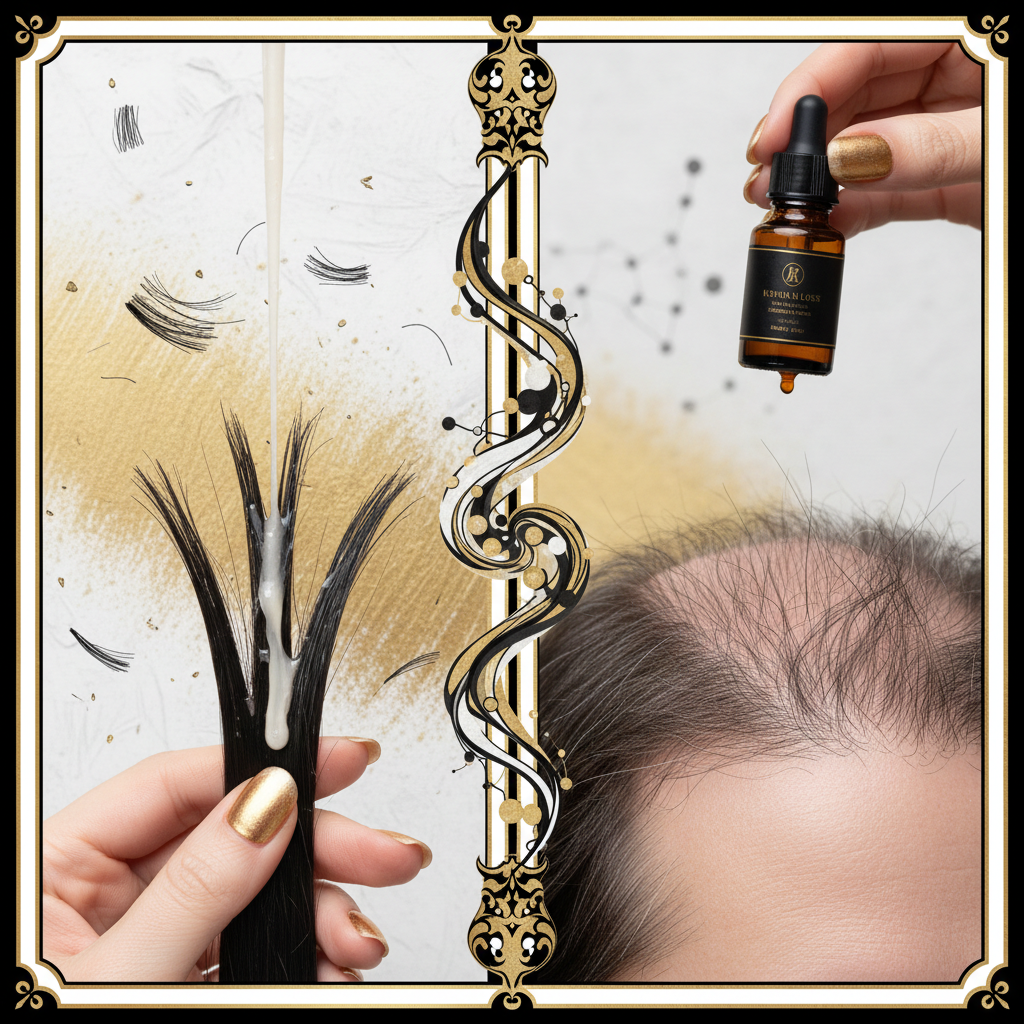
When people notice thinning, diminished volume, or debris on their clothing, they frequently conflate snapping fibres with follicular shedding. Clinical trichology separates these conditions by site of pathology:
- Hair breakage (trichorrhexis nodosa, weathering, cuticular fracture): The follicle operates normally, producing healthy fibres. However, external insults strip the protective 18-methyleicosanoic acid (18-MEA) lipid layer, erode cuticle scales, and expose the cortical keratin bundles. Under tension, the weakened fibre snaps.
- Hair shedding (telogen effluvium): Systemic stressors shock an abnormal percentage of anagen follicles into premature telogen, causing widespread shedding roughly two to three months later.
- Hair loss (androgenetic alopecia, alopecia areata, scarring alopecias): The follicle itself changes. In pattern thinning, dihydrotestosterone (DHT) binds to androgen receptors in susceptible follicles, triggering micro-inflammation, shorter anagen cycles, and progressive miniaturisation until the follicle produces only microscopic vellus hair.
Topical conditioning masks, protein reconstructors, and leave-in sealants fortify the hair shaft and halt breakage. However, they cannot stimulate inactive follicles or reverse genetic miniaturisation.
| Characteristic | Hair Breakage | Hair Shedding (Telogen Effluvium) | Pattern Hair Loss (Androgenetic) |
|---|---|---|---|
| Site of problem | Hair shaft (external fibre) | Scalp follicle (growth cycle) | Scalp follicle (miniaturisation) |
| Appearance of strand | Short, fractured pieces; split ends; no white bulb | Full-length strand with visible white keratin bulb | Finer, shorter strands; diffuse scalp visibility |
| Primary causes | Heat, bleach, UV, friction, rough detangling | Illness, acute stress, iron deficiency, postpartum | Genetic sensitivity to DHT, hormonal shifts |
| Scalp density | Usually normal at the roots; ends appear thin | Temporary diffuse thinning across the entire scalp | Progressive thinning at crown, temples, or parting line |
| Primary interventions | Cuticle smoothing, bond repair, lower heat, gentle handling | Correcting systemic deficiencies, reducing physiological stress | Medical therapies, scalp-stimulating routines, anti-androgens |
What the evidence does not show
Controlled research does not support the idea that cosmetic shampoos or rinse-off conditioners can cure biological alopecia. A product formulated to strengthen weak strands deposits conditioning agents such as quaternary ammonium compounds, hydrolysed proteins, and silicones onto the outer cuticle. These ingredients increase elasticity and reduce friction, which measurably reduces breakage during brushing. They do not alter follicle genetics, block androgen receptors at a cellular level, or restart a dormant anagen phase.
Equally, evidence does not show that trimming your ends makes hair grow faster from the scalp. Trimming removes split ends, which stops vertical fissure propagation up the hair shaft. This preserves the length you have grown, creating the appearance of faster growth by preventing breakage, but follicular growth rates remain entirely governed by genetics, blood supply, and cellular metabolism.
Identifying the signs: root bulbs versus fractured ends
Differentiating breakage from follicular loss requires simple physical inspection:
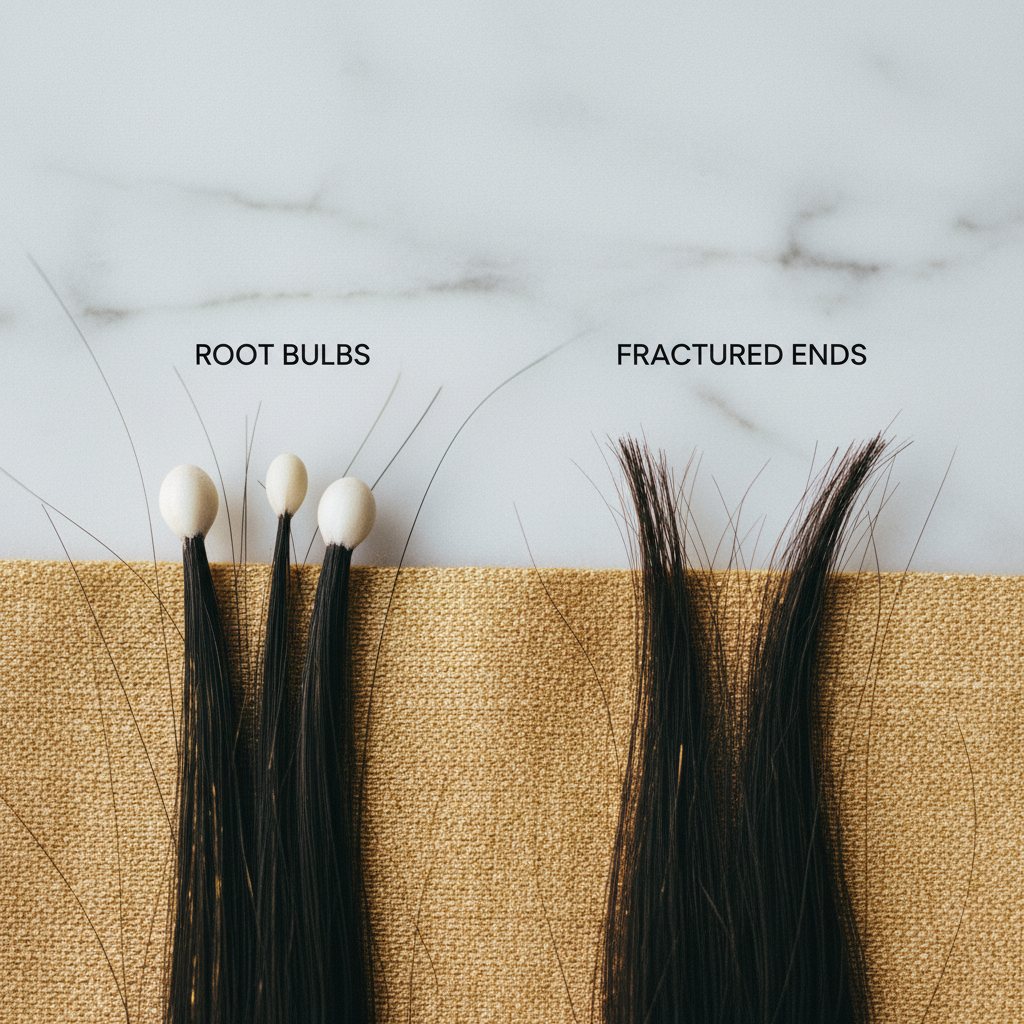
- Look for the bulb: Collect hairs that fall during brushing or washing. Examine the end under bright light. A distinct white or translucent bulb confirms the entire fibre released from the follicle. If both ends are blunt, frayed, or split, the hair snapped along its shaft.
- Check the strand length: Breakage typically produces uneven, short fragments alongside longer strands. True shedding produces full-length fibres matching your overall hair length.
- Examine overall density: If your ponytail circumference has shrunk, but you see tiny, fractured hairs haloing your crown and temples without scalp widening, mechanical breakage is likely. If your central parting is widening or your scalp shows through at the crown while individual strand health feels intact, investigate follicular hair loss.
How to treat hair breakage
Treating structural fibre damage involves reinforcing remaining cortical bonds, resealing the cuticular envelope, and reducing mechanical friction:
- Rebuild fibre integrity: Hydrolysed plant proteins and bond-building complexes temporarily integrate into damaged cuticular gaps, raising the force required to break the fibre.
- Restore lipid lubrication: Hair stripped by bleaching or high-pH soaps loses its hydrophobic lipid layer. Conditioners with fatty alcohols (cetyl and stearyl alcohol) and natural lipids replenish surface slip, cutting comb-drag forces by up to 80%.
- Manage heat and moisture: Thermal tools above 185°C degrade keratin proteins and boil water inside the cortex, creating structural bubble hair. Keep styling heat below this threshold, apply silicone or polymer-based thermal protectants, and never apply direct heat to damp hair.
- Gentle handling: Wet hair can stretch by roughly 30% before snapping, but its cuticle is softened and vulnerable. Detangle with a wide-tooth comb starting at the ends, working upward, using dedicated slip-enhancing leave-in products.
How to address follicular hair loss
Addressing shedding and follicular miniaturisation requires treating the scalp environment and biological drivers:
- Blood biochemistry: Check serum ferritin (aiming for levels above 50 ug/L for optimal follicular cycling), vitamin D3, zinc, and thyroid hormones (TSH, free T3 and T4). Correcting iron deficiency often arrests chronic telogen effluvium within three to six months.
- Scalp micro-circulation and health: Malassezia yeast overgrowth and sebum oxidation trigger perifollicular inflammation, which exacerbates shedding. Regular cleansing with targeted active shampoos clears micro-debris and maintains an acidic scalp mantle between pH 4.5 and 5.5.
- Hormonal pathways: If androgenetic alopecia is diagnosed, medical interventions evaluated by a trichologist or dermatologist, alongside scalp stimulants like caffeine, niacinamide, and botanical rosemary extracts, help protect follicles from progressive miniaturisation.
Watermans approaches to complete hair and scalp care
A comprehensive haircare strategy targets both the fibre and the scalp environment simultaneously. Watermans focuses on this two-pronged approach.
For the scalp, products like Watermans Grow Me Shampoo supply a stimulating topical blend including caffeine, biotin, rosemary extract, niacinamide, and argan oil. These ingredients cleanse the scalp, sweep away follicle-clogging sebum, and encourage optimal conditions for strong hair growth.
For the fibre, pairing regular cleansing with Watermans Condition Me Conditioner delivers hydrolysed lupin protein, cholesterol, and restorative emollients directly to the cuticle. This improves tensile elasticity, locks in hydration, and reduces the friction that causes mechanical breakage during daily styling.
Frequently asked questions about Treating Hair Breakage vs Hair Loss
What is the primary difference when Treating Hair Breakage vs Hair Loss?
The difference comes down to location and biological mechanism. Breakage is structural damage along the hair shaft caused by external physical, chemical, or heat stress, treated by repairing the cuticle and reducing styling friction. Hair loss occurs under the scalp within the hair follicle, driven by hormones, genetics, nutritional deficiencies, or systemic stress, requiring targeted scalp, metabolic, or medical treatments.
Can severe breakage eventually lead to permanent baldness?
No. Severe breakage can leave large patches of hair snapped close to the scalp, creating the visual impression of baldness, but it leaves the living follicle completely intact. Once the mechanical or chemical source of trauma stops and protective routines begin, the follicle continues to push out healthy, normal hair.
How long does it take to see results after addressing breakage?
Fibre breakage halts as soon as you correct the damaging stimulus and introduce effective conditioning, bond repair, and heat protection. You should notice fewer snapped fragments on your clothing and brushes within two weeks. Restoring lost visual density, however, requires waiting for unbroken hair to grow out, which takes several months at roughly one centimetre per month.
Can a single product solve both hair loss and breakage?
A well-formulated regimen can target both, but a single wash cannot fix genetic follicular thinning and cuticular weathering identically. A quality shampoo cleanses the scalp environment and provides stimulating nutrients, while a nourishing conditioner or treatment mask provides the surface slip, lubrication, and proteins necessary to shield fibres from snapping.
A coordinated approach to hair resilience
Successfully Treating Hair Breakage vs Hair Loss demands an accurate assessment of where your strands are failing. If short, brittle fragments collect on your shoulders without a bulb, focus your attention on cuticular protection, protein balance, and minimal heat styling. If full-length hairs gather in the shower drain with a bulb attached, or your scalp visibility increases across the crown, look inward at systemic health, blood markers, and scalp stimulation. Treating the right problem ensures your hair retains both density at the root and strength down to the ends.
Sources and references
- British Association of Dermatologists. Telogen Effluvium Guidelines and Information. 2021.
- National Institute for Health and Care Excellence (NICE). Alopecia: Clinical Knowledge Summaries. 2022.
- Robbins, C. R. Chemical and Physical Behavior of Human Hair. 5th ed., Springer-Verlag, 2012.
- Sinclair, R. "Healthy hair: what is it?" Journal of Investigative Dermatology Symposium Proceedings, 2007.
- Trüeb, R. M. "Oxidative stress in ageing of hair." International Journal of Trichology, 2009.
- Dawber, R. "Hair: Its Structure and Response to Physical and Chemical Treatments." Clinics in Dermatology, 1996.
Find these ingredients in Watermans products
- Zinc: you will find this ingredient in our Hair Vitamins.