Androgenetic Alopecia Causes: Genetics, Hormones, and Evidence
8 min read ·
Explore the proven biological and genetic Androgenetic Alopecia Causes, debunk common hair loss myths, and learn how DHT drives follicular miniaturisation.
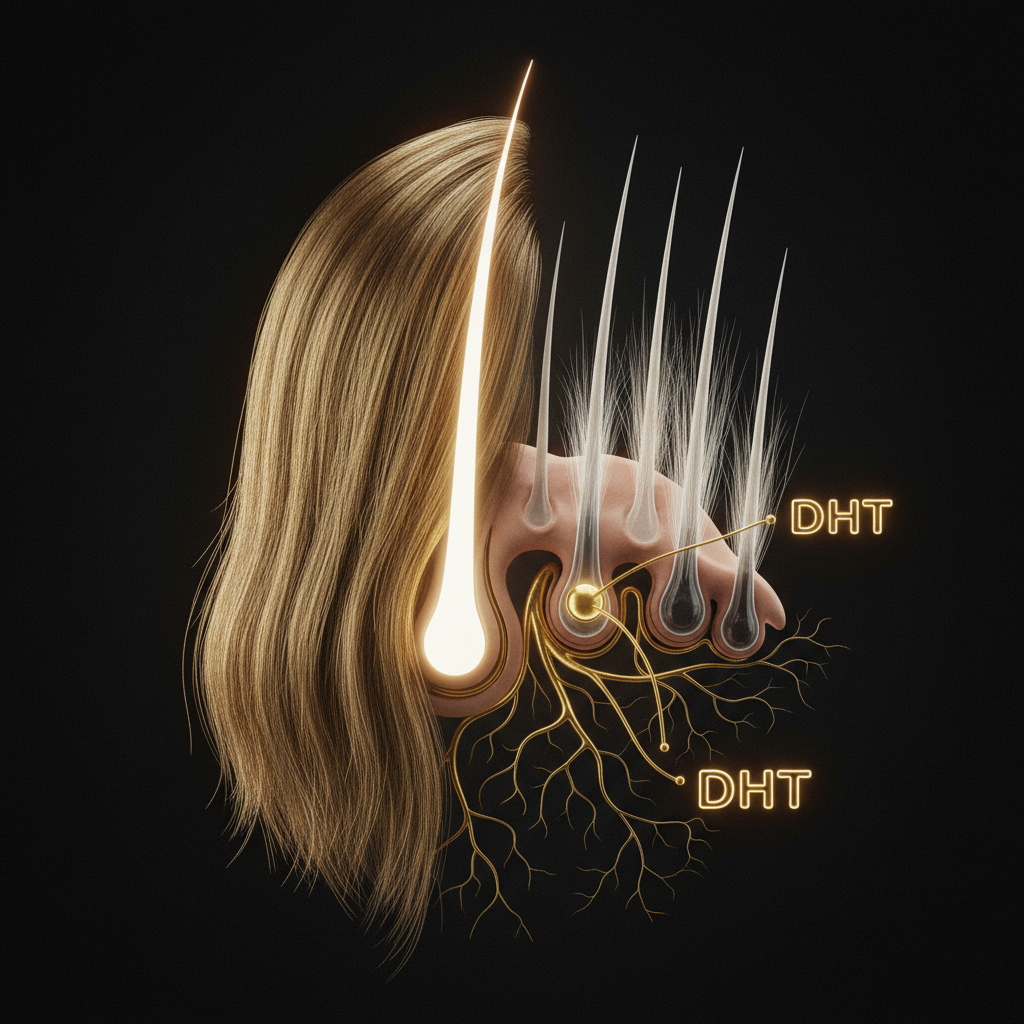
Quick answer: The primary Androgenetic Alopecia Causes are a polygenic genetic predisposition combined with the sensitivity of hair follicles to dihydrotestosterone (DHT), an androgen derived from testosterone via the 5-alpha reductase enzyme. This interaction progressively shrinks hair follicles in patterned scalp zones. While genetics and circulating hormones determine your underlying vulnerability, external factors like severe physiological stress or nutritional deficits cannot cause this condition on their own, though they may trigger concurrent shedding that accelerates visible thinning.
Key takeaways
- Androgenetic alopecia is an inherited follicular condition driven by dihydrotestosterone (DHT) interacting with genetically susceptible androgen receptors.
- The 5-alpha reductase enzyme converts systemic testosterone into DHT within the scalp tissue.
- Follicular miniaturisation shortens the anagen (growth) phase from several years to just months, transforming thick terminal hairs into thin, wispy vellus hairs.
- Inheritance is polygenic, meaning risk alleles come from both maternal and paternal lineages, not solely the maternal grandfather.
- Everyday habits such as wearing hats, using styling wax, or washing hair frequently are myths and do not cause genetic hair thinning.
- While topical cosmetic products cannot rewrite your genetics, supporting scalp microcirculation and keeping follicles clean creates the best foundation for hair density.
Androgenetic Alopecia Causes: what the evidence shows
Research shows that androgenetic alopecia causes trace back to two tightly coupled biological factors: inherited polygenic sensitivity and androgenic hormonal activity. It is the most common form of progressive hair loss worldwide, affecting up to 80 percent of men and 50 percent of women by age 80, according to data published in dermatological literature.
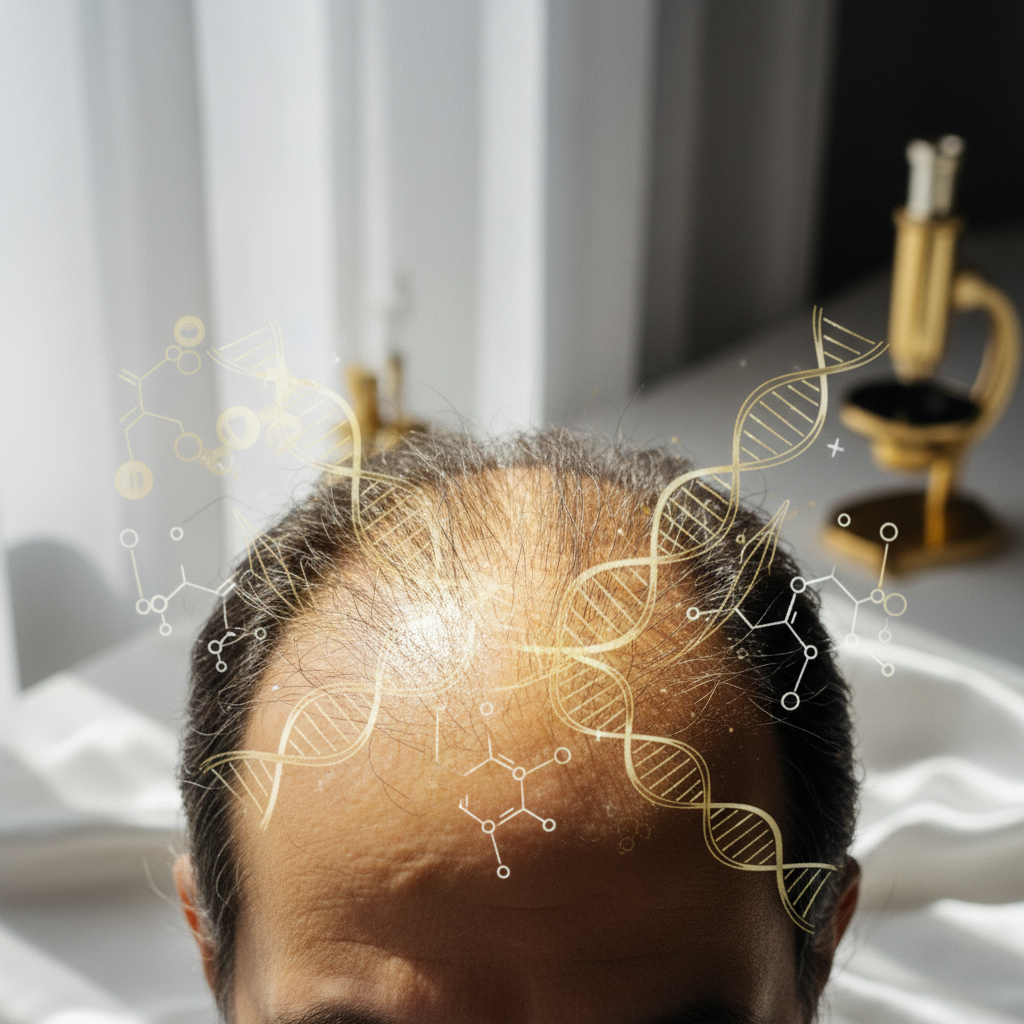
At the cellular level, the hormone testosterone circulates freely in the bloodstream. When it reaches the scalp tissue, it encounters an intracellular enzyme called 5-alpha reductase (primarily Type II in hair follicles). This enzyme converts testosterone into dihydrotestosterone (DHT), a far more potent androgen with roughly five times higher binding affinity for androgen receptors.
When DHT binds to androgen receptors located in the dermal papilla of genetically vulnerable follicles, it initiates a signalling cascade. This pathway alters gene expression, increasing transforming growth factor-beta (TGF-beta) and other inhibitory cytokines while downregulating growth factors such as vascular endothelial growth factor (VEGF). Consequently, the follicle enters a state of progressive miniaturisation.
Genetics determine where these sensitive receptors sit. In men, susceptible follicles cluster along the temples, frontal hairline, and crown (vertex). In women, diffuse sensitivity across the mid-frontal scalp preserves the frontal hairline while widening the central parting.
The biological mechanism of follicular miniaturisation
Follicular miniaturisation is the physical hallmark of pattern hair loss. A normal scalp hair moves through three primary phases: anagen (active growth lasting 2 to 7 years), catagen (transition lasting 2 to 3 weeks), and telogen (resting lasting 2 to 4 months).
Under the influence of DHT, the anagen phase progressively contracts. A growth phase that once lasted four years may diminish to two years, then one year, and eventually mere weeks. Because the hair shaft spends less time in the growth phase, it never achieves its full biological calibre or length.
Concurrently, the dermal papilla cell volume shrinks. The follicle produces a progressively finer, shorter fibre. Thick, pigmented terminal hairs degrade into fine, unpigmented vellus-like hairs. Eventually, the follicle produces fibres so small they cannot breach the scalp surface, though the follicle itself remains alive beneath the skin for many years.
| Feature | Androgenetic Alopecia | Telogen Effluvium | Alopecia Areata |
|---|---|---|---|
| Primary Root Cause | Polygenic trait plus DHT sensitivity | Systemic shock, illness, or deficiency | Autoimmune attack on hair bulb |
| Onset Speed | Gradual (months to decades) | Acute (6 to 12 weeks post-trigger) | Rapid (days to weeks) |
| Typical Pattern | Temples, crown, or central part | Diffuse shedding across entire scalp | Distinct, smooth, circular patches |
| Fibre Calibre | Progressive miniaturisation (thinning) | Normal fibre diameter, excessive shedding | Exclamation-point hairs at margins |
| Reversibility | Progressive without intervention | Usually self-resolving once trigger resolves | Unpredictable, often relapsing |
What the evidence does not show: common myths
Misinformation about androgenetic alopecia causes remains common in salons and popular media. Clinical dermatology has firmly debunked several persistent claims:
- Wearing hats restricts oxygen: Hair follicles receive oxygen and micronutrients via capillary beds in the subcutaneous dermis, not from room air. Hats do not suffocate follicles or trigger miniaturisation.
- Frequent shampooing causes baldness: Hairs shed in the shower were already detached in the telogen phase weeks earlier. Washing simply dislodges hairs that have reached the end of their cycle.
- Inheritance comes only from your mother's side: While the androgen receptor gene sits on the X chromosome inherited from mothers, genome-wide association studies have identified over 250 genetic loci on autosomes inherited from both parents that dictate risk.
- Poor scalp circulation is the sole root cause: Reduced microcirculation observed in balding scalps is a consequence of follicular shrinkage, not the initial trigger. As the follicle miniaturises, its metabolic demand drops, leading to secondary vascular reduction.
Secondary factors that can accelerate progression
While external lifestyle variables are not direct androgenetic alopecia causes, they can act as biological catalysts that accelerate hair thinning:
- Systemic oxidative stress: Chronic inflammation and high reactive oxygen species (ROS) in scalp tissue can trigger premature catagen entry and upregulate inflammatory cytokines.
- Nutritional deficiencies: Low serum ferritin (stored iron), vitamin D deficiency, and inadequate dietary protein impair the metabolic capacity of the hair matrix, worsening the visible effects of miniaturisation.
- Endocrine disruptions: In women, conditions like Polycystic Ovary Syndrome (PCOS) can elevate circulating free androgens, unmasking underlying genetic sensitivity much earlier in life.
- Severe psychological or physical stress: Elevated cortisol can provoke concurrent telogen effluvium, causing thousands of miniaturised hairs to shed simultaneously and rapidly reducing apparent density.
Supporting scalp and hair health: what you can do
While cosmetic routines cannot alter your DNA or permanently block internal hormonal pathways, an evidence-based care routine provides an optimal scalp environment to preserve existing hair:
- Maintain scalp cleanliness: Sebum contains traces of DHT and lipid peroxides. Cleansing regularly with a clarifying, scalp-focused shampoo removes build-up that can inflame follicular ostia.
- Target the scalp skin barrier: Use lightweight scalp serums that deliver invigorating botanicals, caffeine, and niacinamide. Caffeine has demonstrated in-vitro capacity to support follicular viability against testosterone-induced growth suppression.
- Minimise mechanical fibre breakage: Miniaturised fibres have a narrower diameter and lower tensile strength. Protect them using conditioning treatments that smooth the cuticle and reduce grooming friction.
- Incorporate gentle scalp massage: Standardised manual massage for 4 minutes daily has been shown in small peer-reviewed trials to increase hair thickness by inducing mechanical tension on dermal papilla cells.
For individuals seeking to maintain a clean, revitalised scalp environment, Watermans offers products formulated with natural botanical extracts, caffeine, rosemary, and biotin. These formulations are designed to support a balanced scalp microbiome and improve the appearance of hair density, working harmoniously alongside a professional haircare regimen.
When to seek medical advice
Because genetic thinning is progressive, early evaluation produces the best outcomes. Consult a registered trichologist or dermatologist if you observe:
- Receding temple angles or widening of the central parting over a 6 to 12 month timeframe.
- Noticeable discrepancy in hair shaft thickness across different zones of your head.
- Sudden, heavy shedding exceeding 100 to 150 hairs daily, which may signal a secondary issue like telogen effluvium.
- Scalp pain, itching, redness, or scaling, which can indicate scarring alopecia or inflammatory conditions requiring immediate clinical prescription treatments.
Frequently asked questions about Androgenetic Alopecia Causes
What are the primary Androgenetic Alopecia Causes in men compared to women?
The underlying Androgenetic Alopecia Causes are identical in both sexes: genetic susceptibility coupled with follicular androgen sensitivity. However, presentation differs due to hormone levels. Men have significantly higher circulating testosterone, leading to pronounced bitemporal recession and crown loss. Women maintain higher scalp aromatase levels, which converts androgens into oestrogens, resulting in diffuse thinning across the crown with a preserved frontal hairline.
Can wearing tight headwear cause androgenetic alopecia?
No. Tight headwear cannot cause androgenetic alopecia. Pattern loss requires a genetic predisposition and androgen interaction within the follicle. However, chronic physical tension from excessively tight hats, helmets, or hairstyles can cause traction alopecia, a completely different mechanical disorder that damages follicles through physical pulling rather than hormones.
Does high stress count among Androgenetic Alopecia Causes?
Stress is not one of the direct Androgenetic Alopecia Causes. Stress cannot alter your genetic androgen receptors or cause 5-alpha reductase to target follicles. Severe stress triggers telogen effluvium, an acute shedding event. However, if you already carry the genetics for pattern hair loss, a stress-induced shedding episode can unmask miniaturised hairs, making genetic loss suddenly noticeable.
Can diet reverse genetic hair loss?
A balanced diet cannot reverse genetic hair loss because nutrition does not modify the androgen receptor genes responsible for DHT sensitivity. However, severe deficiencies in iron, zinc, or protein can impair hair quality and accelerate visible thinning. Eating a nutrient-dense diet supports normal hair production alongside professional care.
Summary of genetic hair thinning
Understanding Androgenetic Alopecia Causes removes the mystery from pattern hair thinning. This widespread condition is not a failure of personal hygiene, a consequence of wearing hats, or an inevitable outcome from just one parent. It is an inherited, hormone-mediated biological process driven by DHT and polygenic receptor sensitivity.
Recognising the early signs of follicular miniaturisation gives you the power to take action early. Pairing an informed lifestyle and professional dermatological guidance with targeted scalp hygiene ensures your hair follicles have the best possible environment to thrive.
Sources and references
- British Association of Dermatologists. Guidelines for the management of alopecia areata and androgenetic alopecia, 2021.
- National Institute for Health and Care Excellence (NICE). Alopecia androgenetica: Clinical Knowledge Summaries, 2023.
- Piraccini, B.M., and Alessandrini, A. Androgenetic alopecia: present and future. Dermatologic Therapy, 2014.
- Heilmann-Heimbach, S., et al. Meta-analysis identifies novel risk loci and yields systematic insights into the biology of male-pattern baldness. Nature Communications, 2017.
- Trüeb, R.M. Molecular mechanisms of androgenetic alopecia. Experimental Gerontology, 2002.
- NHS. Hair loss: overview and common causes, 2023.
Find these ingredients in Watermans products
- Zinc: you will find this ingredient in our Hair Vitamins.
- Niacinamide: you will find this ingredient in our Hair Mask.