How to Treat Seborrhoeic Dermatitis: An Evidence-Based Scalp Guide
9 min read ·
Learn how to treat seborrhoeic dermatitis effectively using evidence-based antifungal washes, keratolytics, and smart maintenance habits for long-term scalp comfort.
Quick answer: Learning how to treat seborrhoeic dermatitis involves managing a chronic, relapsing inflammatory scalp condition driven by an overgrowth of Malassezia yeast and excess sebum. The most effective approach combines topical antifungal agents such as ketoconazole or ciclopirox, keratolytic washes containing salicylic acid to clear greasy flakes, and anti-inflammatory care during acute flare-ups. The primary limitation is that seborrhoeic dermatitis cannot be permanently cured; successful management requires consistent long-term maintenance to prevent recurring symptoms.
Key takeaways
- Seborrhoeic dermatitis is a chronic inflammatory disorder of sebum-rich skin, not an allergy or poor hygiene issue.
- The primary driver is an inflammatory immune response to free fatty acids produced when Malassezia yeasts metabolise natural scalp sebum.
- First-line medical treatment centres on topical antifungals (ketoconazole 2%, ciclopirox 1%) combined with gentle keratolytics.
- Scale build-up can create mechanical friction and diffuse telogen shedding, but the condition does not permanently damage follicles unless severe, untreated infection occurs.
- Long-term control relies on a maintenance schedule, often alternating targeted washes with mild, scalp-supporting daily cleansers.
How to Treat Seborrhoeic Dermatitis: what the evidence shows
Clinical guidelines from dermatological authorities confirm that topical antifungal agents provide the highest clearance rates for scalp seborrhoeic dermatitis. Clinical trials demonstrate that ketoconazole 2% shampoo used twice weekly for 2 to 4 weeks achieves remission in roughly 70% to 80% of patients. Ciclopirox olamine 1% shampoo exhibits comparable efficacy, offering both broad-spectrum antifungal activity and direct anti-inflammatory properties.
In addition to antifungals, keratolytic agents play a proven clinical role. Ingredients such as salicylic acid (typically 2% to 3%) break the desmosomal bonds between dead corneocytes, loosening stubborn, greasy scales so they wash away easily. Zinc pyrithione and selenium sulphide also show clear fungistatic and cytostatic effects, slowing cellular turnover on the epidermal surface.
For acute, severe inflammation accompanied by intense erythema and pruritus, short courses of mild to moderate topical corticosteroids (such as hydrocortisone 1% or betamethasone valerate 0.05%) or topical calcineurin inhibitors provide rapid relief. However, dermatologists restrict topical steroid application to 7 to 14 consecutive days to prevent skin atrophy, telangiectasia, or rebound flare-ups.
What the evidence does not show
Controlled research has not found that seborrhoeic dermatitis can be permanently eradicated with a single course of treatment. Because Malassezia is a normal commensal organism residing on all adult human skin, completely sterilising the scalp microflora is neither possible nor desirable.
The evidence also refutes common myths regarding diet and hygiene:
- Dietary intake of yeast, sugar, or dairy does not directly provoke fungal overgrowth in clinical trials, though extreme systemic deficiencies (such as severe zinc or B-vitamin shortages) can mimic seborrhoeic patterns.
- Vigorous physical scrubbing does not cure the condition. In fact, aggressive mechanical exfoliation ruptures the epidermal barrier, increasing inflammation and triggering compensatory sebum production.
- Applying rich, natural culinary oils such as olive oil or coconut oil is counterproductive. Studies show Malassezia species thrive on specific lipid chain lengths found in plant oils, which actively feeds the yeast population.
The biological mechanism behind the condition
Seborrhoeic dermatitis occurs at the intersection of three factors: active sebaceous glands, Malassezia colonisation, and individual barrier susceptibility.
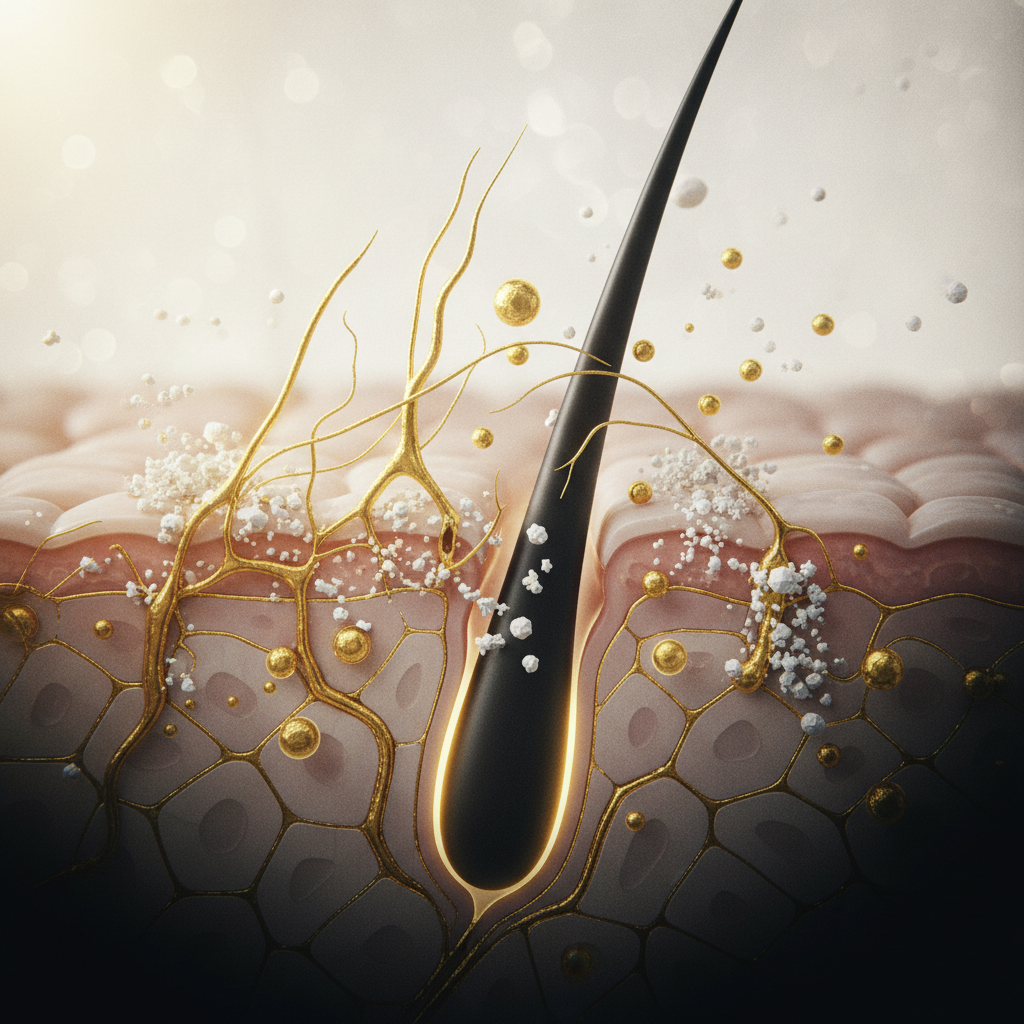
Sebaceous glands produce sebum rich in triglycerides, squalene, and wax esters. Commensal yeasts of the genus Malassezia (predominantly M. Restricta and M. Globosa) possess extracellular lipase enzymes. These lipases break down human sebum triglycerides, consuming the saturated fatty acids they require for survival.
This digestive process leaves behind unsaturated free fatty acids, particularly oleic acid and arachidonic acid. In susceptible individuals, these free fatty acids penetrate the stratum corneum, disrupting lipid organisation and increasing barrier permeability. The scalp responds with an inflammatory cascade, triggering hyperkeratosis (rapid, incomplete epidermal cell shedding), microvascular dilation (redness), and intense itching.
Signs and symptoms to look for
Seborrhoeic dermatitis presents with distinct clinical characteristics that separate it from simple dry scalp or atopic eczema:
- Greasy, yellowish scales: Flakes cling to the scalp and hair shafts, feeling waxy rather than powdery.
- Erythematous plaques: Pink to red patches form along the hairline, crown, and behind the ears. In darker skin tones, patches often appear hypopigmented or violaceous.
- Pruritus and burning: Scalp sensitivity ranges from mild itching to persistent, painful irritation.
- Follicular involvement: Thick crusts can wrap around emerging hair fibres, creating local inflammation.
- Associated facial scaling: Peeling frequently appears along the nasolabial folds, inner eyebrows, and beard area.
Comparing common active ingredients
Selecting the correct active ingredient depends on whether your immediate priority is eradicating yeast overgrowth, stripping scale, or calming acute redness.
| Active Ingredient | Primary Action | Typical Concentration | Best For | Application Frequency |
|---|---|---|---|---|
| Ketoconazole | Antifungal (ergosterol inhibitor) | 1% to 2% | Moderate to severe fungal load | 2 times weekly for 2 to 4 weeks |
| Ciclopirox Olamine | Broad-spectrum antifungal and anti-inflammatory | 1% | Active inflammation and yeast reduction | 2 to 3 times weekly |
| Salicylic Acid | Keratolytic (dissolves scale) | 2% to 3% | Thick, adherent, greasy crusts | 1 to 2 times weekly |
| Zinc Pyrithione | Fungistatic and cytostatic | 1% | Mild flaking and routine maintenance | 2 to 3 times weekly |
| Selenium Sulphide | Antifungal and cytostatic | 1% to 2.5% | Persistent scaling and rapid cell turnover | 1 to 2 times weekly |
| Topical Corticosteroids | Potent anti-inflammatory | Varies by class | Severe itching and painful erythema | Short pulses (max 1 to 2 weeks) |
Practical steps: a step-by-step scalp routine
Successfully managing this condition requires dividing your regimen into an active clearance phase and a long-term maintenance phase.
Phase 1: Active flare clearance (Weeks 1 to 3)
- Apply the medicated wash correctly: Wet the scalp thoroughly. Part the hair to deliver your prescribed or over-the-counter medicated wash directly to the skin, not just the hair lengths.
- Respect the contact time: Allow the active ingredient to sit on the scalp for 3 to 5 minutes before rinsing. Rinsing immediately washes away the active compounds before they can penetrate the stratum corneum.
- Use lukewarm water: Scalding water strips protective barrier lipids and aggravates vascular flushing. Keep the temperature comfortable and lukewarm (around 37°C to 38°C).
- Condition the ends only: Antifungal shampoos can be drying to the hair shaft. Apply conditioning treatments exclusively from mid-lengths to ends to keep the scalp free from heavy conditioning polymers.
Phase 2: Long-term maintenance (Ongoing)
Once erythema and scaling resolve, abruptly stopping all treatment often triggers a relapse within weeks.
- Taper treatment frequency: Reduce the medicated antifungal wash to once weekly or once every two weeks.
- Integrate a gentle daily cleanser: On alternate wash days, use a pH-balanced (pH 5.0 to 5.5), sulphate-free shampoo that clears excess sebum without stripping the moisture barrier.
- Dry the scalp thoroughly: Yeasts flourish in warm, humid environments. Never wrap wet hair in a damp towel for extended periods or sleep with wet roots; blow-dry the scalp on a low or cool heat setting.
Supporting scalp vitality: cosmetic care
While active pathology demands targeted antimicrobial and anti-inflammatory agents, daily hair vitality depends on maintaining a balanced environment around the follicle. Chronic scaling and inflammation can lead to secondary telogen effluvium, where hairs shed prematurely due to physical irritation.
Watermans provides non-medicinal cosmetic haircare formulated to support this overall environment. Watermans GrowMe Shampoo is formulated with caffeine, biotin, rosemary, and niacinamide to cleanse the scalp of surface debris while promoting stronger-feeling, fuller-looking hair. When managing a chronic condition, pairing clinical washes with balanced daily cleansers ensures hair fibres remain resilient against mechanical breakage while the scalp remains clean and refreshed.
When the cause may be something else
Several distinct dermatological issues produce scalp flaking and redness, and misdiagnosis is common.
- Scalp Psoriasis: Features thick, silvery-white, circumscribed plaques that extend beyond the hairline. The scales are dry rather than greasy and bleed in pinpoint droplets if removed (Auspitz's sign).
- Atopic Dermatitis (Eczema): Characterised by dry, cracked skin and intense itching, typically accompanied by eczema on the flexural creases of the elbows and knees, with little to no excess sebum.
- Tinea Capitis: A true dermatophyte fungal infection seen more frequently in children. It invades the hair shaft itself, leading to patchy alopecia with broken "black dot" hairs.
- Contact Dermatitis: An allergic reaction to hair dyes (such as paraphenylenediamine), fragrances, or preservatives, presenting with burning and acute micro-vesicles following product exposure.
When to seek medical advice
Consult a GP, dermatologist, or registered trichologist if:
- Over-the-counter antifungal shampoos show no noticeable improvement after 3 to 4 weeks of regular use.
- Erythema spreads beyond the scalp into facial skin, the neck, or the eyelids.
- The scalp develops yellow crusting, weeping fluid, or extreme tenderness, which points to a secondary bacterial infection (Staphylococcus aureus).
- Flaking is accompanied by patchy, sudden hair loss or scarred bald patches.
Frequently asked questions about How to Treat Seborrhoeic Dermatitis
Can natural oils help treat seborrhoeic dermatitis?
No. Using natural plant oils like olive, argan, or coconut oil often worsens the condition. Malassezia yeasts rely on external lipids to thrive, consuming fatty acids with carbon chain lengths between C11 and C24. Applying pure vegetable oils effectively feeds the organism, triggering more inflammatory by-products, intensified scaling, and increased itching.
How often should I wash my hair if I have this condition?
Most dermatologists recommend washing the scalp daily or every other day during an active flare. Frequent washing mechanically removes oxidised sebum, inflammatory cytokines, and loose scale, reducing the food supply available to Malassezia. Once symptoms calm down, washing 2 to 4 times weekly is typically sufficient for maintenance.
Does seborrhoeic dermatitis cause permanent hair loss?
Seborrhoeic dermatitis does not cause permanent scarring hair loss. However, intense itching can lead to physical scratching, damaging delicate hair roots and causing hair breakage. Furthermore, severe scalp inflammation can push follicles prematurely into the telogen resting phase, resulting in temporary, diffuse hair shedding that recovers once scalp health returns.
What is the best strategy for how to treat seborrhoeic dermatitis long term?
The most reliable strategy for how to treat seborrhoeic dermatitis over the long term is a proactive maintenance routine. After initial clearance with a targeted antifungal such as ketoconazole, scale back use to once weekly. Pair this with a gentle, non-irritating regular wash, manage physiological stress, and avoid heavy styling waxes on the scalp.
Managing your scalp health
Understanding how to treat seborrhoeic dermatitis requires recognising that while the condition is chronic, it is entirely manageable with the right therapeutic steps. By targeting Malassezia overgrowth with proven antifungal washes, clearing stubborn crusts with keratolytics, and preserving the delicate skin barrier, you can keep visible flaking and discomfort under control. Prioritise consistency over aggressive scrubbing, protect your hair fibres from stress, and consult a medical professional whenever symptoms fail to respond.
Sources and references
- British Association of Dermatologists. Guidelines for the management of seborrhoeic dermatitis. British Journal of Dermatology, 2019.
- National Institute for Health and Care Excellence (NICE). Seborrhoeic dermatitis: Clinical Knowledge Summaries, 2022.
- Borda, L. J., & Wikramanayake, T. C. Seborrheic Dermatitis and Dandruff: A Comprehensive Review. Journal of Clinical and Investigative Dermatology, 2015.
- Dawson, T. L. Malassezia globosa and restricta: Breakthrough Understanding of the Etiology and Treatment of Dandruff and Seborrheic Dermatitis through Whole-Genome Analysis. Journal of Investigative Dermatology Symposium Proceedings, 2007.
- Gupta, A. K., & Versteeg, S. G. Topical Treatment of Facial Seborrheic Dermatitis: A Systematic Review. American Journal of Clinical Dermatology, 2017.
Find these ingredients in Watermans products
- Zinc: you will find this ingredient in our Hair Vitamins.
- Oleic Acid: you will find this ingredient in our Camellia & Black Castor Hair & Body Oil.
- Niacinamide: you will find this ingredient in our Hair Mask.