How to Treat Dry Damaged Hair: An Evidence-Based Guide
8 min read ·
Learn how to treat dry damaged hair using evidence-based methods. Discover how cuticles, lipids, and proteins restore resilience, shine, and soft texture.
Quick answer: Knowing how to treat dry damaged hair starts with understanding that hair fibres are non-living biological structures that cannot biologically heal once structural proteins degrade. To manage dry, brittle strands effectively, you must reduce cuticle friction, replenish lost surface lipids (particularly 18-methyleicosanoic acid), and reinforce weakened internal keratin bonds using specialised cosmetic conditioning agents and film-forming humectants. While split ends require trimming, targeted topical regimens significantly reduce fibre friction, boost elasticity, and prevent further mechanical snap.
Key takeaways
- Hair is biologically non-living; treatment focuses on cosmetic restoration, friction reduction, and cuticle protection rather than biological cellular repair.
- Chemical processing and excessive thermal styling strip away the protective f-layer (18-MEA), leaving the hair porous and prone to moisture loss.
- Hydrolysed proteins, ceramides, and panthenol temporarily patch structural deficits within the cuticle and cortex.
- True split ends (trichoptilosis) cannot be permanently glued together and ultimately require physical trimming to prevent tears travelling up the shaft.
- Always distinguish between hair breakage along the strand and genuine follicular hair shedding at the root.
How to Treat Dry Damaged Hair: what the evidence shows
When stylists and cosmetic scientists evaluate how to treat dry damaged hair, they rely on proven cosmetic chemistry rather than myths of cellular regeneration. A healthy hair shaft possesses an intact outer cuticle covered by an ultra-thin lipid monolayer known as the f-layer, composed predominantly of 18-methyleicosanoic acid (18-MEA). This layer renders healthy hair naturally hydrophobic (water-repellent) and smooth.
Chemical treatments such as bleaching, permanent dyeing, and alkaline relaxers oxidise or strip this protective lipid barrier. When the f-layer disappears, the hair becomes hydrophilic, absorbing ambient water rapidly, swelling, and allowing critical moisture and internal proteins to leach away. Evidence published in cosmetic science journals demonstrates that conditioning formulations containing quaternary ammonium compounds (cationic surfactants), silicones, and hydrolysed vegetable or keratin proteins adhere electrostatically to these damaged, negatively charged sites. This reduces combing friction by up to 50 percent, smooths lifted cuticle scales, and creates a synthetic hydrophobic barrier that mimics natural 18-MEA.
Healthy Hair Fibre:
[ Hydrophobic 18-MEA Lipid Layer ] -> [ Flat Cuticle Scales ] -> [ Intact Keratin Cortex ]

Damaged Hair Fibre:
[ Stripped 18-MEA Layer (Negative Charge) ] -> [ Lifted/Broken Cuticles ] -> [ Exposed, Porous Cortex ]
What the evidence does not show
Popular marketing frequently claims that deep conditioning masks can permanently reverse chemical degradation or rebuild the hair shaft back to its virgin state. Peer-reviewed dermatological research does not support this.
Conditioning treatments deposit microscopic films across the hair surface and diffuse small peptides into the cortex. However, these benefits wash out over successive shampoos. Furthermore, cosmetic oils cannot "hydrate" hair on their own. Water hydrates the hair, while lipids and occlusives trap that moisture inside. Smothering dry hair in heavy raw oils without humectants or water-binding agents simply coats a parched fibre, often leading to dull build-up rather than improved elasticity.
The biological mechanisms behind dryness and damage
Hair damage occurs across three distinct physical levels:
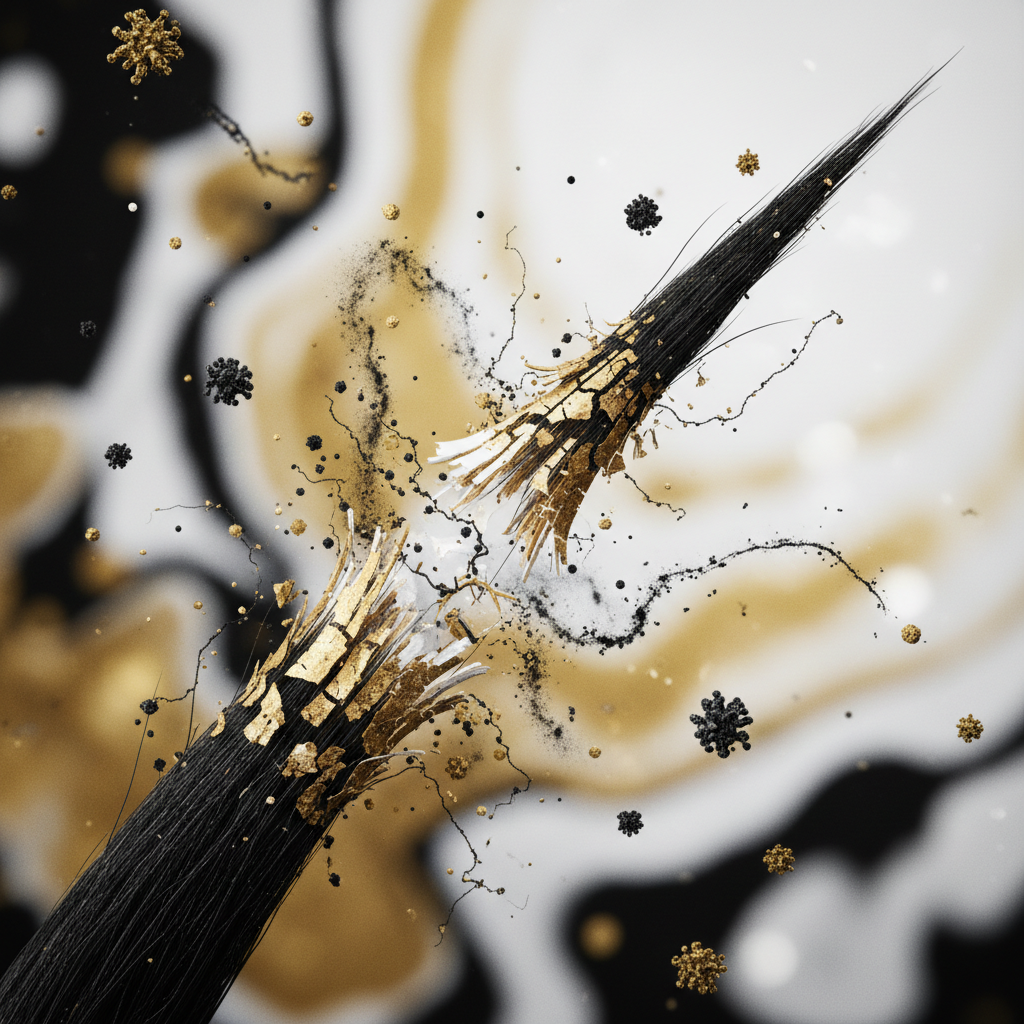
- The Cuticle (Surface Friction): The shingle-like outer layers lift due to alkaline pH shifts (such as ammonia in permanent tints) or mechanical abrasion from rough towel-drying and aggressive brushing. Lifted cuticles snag on neighbouring fibres, generating friction and tangles.
- The Cell Membrane Complex (CMC): This lipid-rich mortar holds cuticle layers together. Solvents, surfactants, and thermal tools melt or leach these intercellular lipids, making the cuticle brittle.
- The Cortex (Structural Strength): The inner core accounts for roughly 85 percent of the hair fibre's tensile strength, composed of alpha-keratin polypeptide chains linked by disulphide, hydrogen, and ionic bonds. High heat (above 185°C) and bleaching agents break these covalent disulphide bonds, leaving the fibre weak, hollowed, and prone to snapping under minimal tension.
Signs to look for: damage versus shedding
It is essential to identify whether your hair is experiencing mechanical breakage or shedding from the scalp.
- Fibre Breakage: Short, snapped pieces of hair without a white bulb at the end, often accompanied by ragged tips, split ends, and uneven length across the mid-lengths. This is mechanical damage.
- Follicular Shedding: Whole, full-length strands found on your brush or shower drain bearing a tiny white bulb (the keratinised root sheath) at one tip. This indicates normal telogen phase shedding or telogen effluvium, which is entirely distinct from fibre damage.
- Porosity Imbalance: Wet hair that feels gummy, stretches excessively without bouncing back, or dries in seconds due to severely open cuticle fissures.
| Damage Type | Primary Cause | Observable Symptom | Corrective Approach |
|---|---|---|---|
| Mechanical | Aggressive brushing, rough towels | Split ends, snapped mid-lengths | Microfibre towels, wide-tooth combs, slip agents |
| Thermal | Flat irons, curling wands (>185°C) | Bubble hair, melted tips, brittleness | Heat protectants, lower heat settings (<175°C) |
| Chemical | Bleach, ammonia dyes, perm salts | Extreme porosity, gummy texture | Protein masks, acidic pH sealers, trims |
| Environmental | UV radiation, chlorine, hard water | Fading, dry straw-like texture | Chelating cleansers, UV filters, leave-in serums |
Practical steps: what you can do
To restore manageability and prevent further fracture, implement these evidence-backed habits:
1. Rebalance pH with an acidic regimen
Virgin hair sits naturally at an acidic pH between 4.5 and 5.5. Alkaline shampoos swell the cuticle and disrupt the scalp mantle. Select balanced, sulphate-free cleansers and acidic conditioners (pH 4.0 to 5.0) that prompt raised cuticle scales to flatten tightly against the hair shaft.
2. Introduce targeted hydrolysed proteins
Look for formulations incorporating hydrolysed wheat, soy, or keratin proteins with low molecular weights (under 1,500 Daltons). These micro-peptides temporarily penetrate small fissures in the cortex, boosting tensile strength and water retention. Pair protein treatments with emollient conditioners to avoid protein stiffness.
3. Minimize thermal degradation
Thermal tools set above 185°C cause keratin denaturation and convert internal moisture into steam pockets within the fibre (bubble hair deformity). Always apply a film-forming heat protectant containing polymers like polyquaternium-55 or dimethiconol, which disperse heat evenly across the shaft. Keep straighteners moving smoothly rather than clamping down on one spot.
4. Adjust your mechanical handling
Hair swells and weakens by up to 30 percent when saturated with water, making wet hair exceptionally vulnerable to traction. Never tear a fine-tooth brush through wet strands. Apply a slippery leave-in detangler, use a wide-tooth comb starting at the ends, and swap heavy cotton towels for a smooth microfibre wrap.
5. Schedule regular micro-trims
Cosmetic products can temporarily seal a split end via polymer adhesion, but the bond fails under friction and washing. The only permanent fix for trichoptilosis is cutting 5 to 10 millimetres above the split to stop the tear from propagating up the shaft.
When the cause may be something else
If your hair appears chronically brittle, dry, and lacklustre despite gentle handling and rich conditioning, the underlying culprit may be external water mineralisation or internal metabolic factors:
- Hard Water Mineral Build-up: High concentrations of calcium and magnesium salts (often above 180 mg/L in hard water zones) bind to damaged keratin sites, crystallising inside the cuticles. This makes hair feel stiff and repels conditioning ingredients. A chelating shampoo containing disodium EDTA or citric acid removes these mineral films.
- Nutritional and Systemic Factors: Severe iron deficiency (low ferritin), thyroid dysregulation (hypothyroidism), and low dietary protein intake directly compromise keratin quality during matrix cell proliferation in the hair follicle. If brittle hair is accompanied by diffuse shedding or fatigue, consult a GP for blood profiling.
Supporting hair vitality with Watermans
When managing compromised hair, supporting the scalp environment while reinforcing fragile strands is vital. Watermans offers carefully formulated solutions developed to keep hair feeling resilient and looking healthy. Watermans GrowMe Shampoo delivers a sulphate-free, nutrient-rich cleanse featuring biotin, rosemary extract, niacinamide, and hydrolysed lupin protein to support hair strength without stripping essential moisture.
To boost conditioning and detangling slip, Watermans ConditionMe Conditioner utilises cholesterol, caffeine, and softening shea butter to hydrate parched cuticles and minimise brushing friction. For targeted scalp care, Watermans Grow More Elixir provides a leave-in blend of active botanicals designed to nourish the scalp environment, promoting fuller-looking, robust hair that can resist everyday wear and tear.
Frequently asked questions about How to Treat Dry Damaged Hair
What is the most effective way regarding how to treat dry damaged hair at home?
The most reliable strategy regarding how to treat dry damaged hair combines gentle handling, sulphate-free acidic cleansing, and regular deep conditioning. Reduce washing frequency to 2 or 3 times weekly, always detangle with a wide-tooth comb on wet hair saturated with conditioner, avoid heat settings over 175°C, and use a leave-in serum to shield against environmental abrasion.
Can split ends be repaired without cutting them off?
No, split ends cannot be permanently repaired. Some cosmetic formulations containing cross-linking polymers temporarily glue split fibres together until the next wash, but mechanical handling will reopen the split. Trimming the damaged tip away remains the only permanent method to stop the fissure from travelling further up the strand.
How often should I apply a deep conditioning protein treatment?
Apply a hydrolysed protein treatment once every 1 to 2 weeks for moderately damaged hair, or once weekly for chemically bleached fibres. Overusing protein without balancing it with emollient moisture can make fibres feel stiff and brittle. Monitor your hair's elasticity; when it regains bounce and softness, reduce treatment frequency.
Does cold water really close the hair cuticle?
Cold water has minimal physiological effect on cuticle scales. Cuticle alignment is predominantly controlled by product pH, moisture balance, and surface lipids, not water temperature. While rinsing with cool water does no harm, relying on an acidic conditioner (pH 4.0 to 5.0) is what genuinely smooths the outer cuticle scales flat.
Summary: managing your hair care journey
Mastering how to treat dry damaged hair requires patience, scientific understanding, and consistent, protective habits. Because hair lacks living cells to regenerate itself, caring for weathered strands means preserving existing keratin, minimising heat and chemical exposure, and shielding fragile fibres with replenishing lipids and proteins. By pairing micro-trims with pH-balanced, nutrient-dense products, you can significantly diminish friction, curb breakage, and maintain soft, vibrant, and resilient hair.
Sources and references
- British Association of Dermatologists. Hair Breakage and Cosmetic Hair Damage. 2022.
- Robbins, C. R. Chemical and Physical Behavior of Human Hair. 5th Edition, Springer, 2012.
- Gavazzoni Dias, M. F. Hair Cosmetics: An Overview. International Journal of Trichology, 2015.
- Marsh, J. M., et al. Role of internal lipids in hair health and condition. Journal of Cosmetic Science, 2018.
- National Institute for Health and Care Excellence (NICE). Alopecia and Hair Loss Assessment Guidelines. 2021.
Find these ingredients in Watermans products
- Niacinamide: you will find this ingredient in our Hair Mask.
- Shea Butter: you will find this ingredient in our Curly Hair Conditioner.