Transepidermal Water Loss Hair: The Science of Scalp Barrier Health
9 min read ·
Understand the science of Transepidermal Water Loss Hair dynamics. Learn how scalp barrier dehydration triggers inflammation, hair breakage, and excess shedding.
Quick answer: Transepidermal water loss hair interactions refer to how moisture evaporation across the scalp's epidermal barrier directly impacts follicular health, cuticle integrity, and hair quality. When the scalp barrier degrades, elevated evaporation triggers micro-inflammation, disrupts sebum balance, and deprives emerging hair fibres of critical hydration. This leads to brittle strands, heightened friction, and increased breakage. However, transepidermal water loss itself does not cause true genetic hair loss (androgenetic alopecia), which remains governed by systemic dihydrotestosterone (DHT) sensitivity and internal follicular signalling.
Key takeaways
- Transepidermal water loss (TEWL) is the passive diffusion of water through the skin's stratum corneum into the atmosphere.
- Elevated scalp TEWL compromises the epidermal barrier, causing inflammation that can undermine follicular stability and accelerate telogen shedding.
- Dehydrated hair shafts suffer from lifted cuticles, reducing elasticity and causing physical fibre breakage, which is distinct from follicular hair loss.
- Environmental stressors, harsh anionic surfactants, and heat styling alter the scalp's natural lipid ratio (cholesterol, ceramides, and fatty acids).
- Restoring barrier function involves gentle, pH-balanced cleansing (pH 4.5 to 5.5) alongside physiological humectants and barrier-reinforcing emollients.
Transepidermal Water Loss Hair: what the evidence shows
Research into transepidermal water loss hair mechanics shows that the scalp possesses a unique epidermal landscape compared to the rest of the body. The scalp has higher follicular density, active sebaceous glands, and a high cell turnover rate. Stratum corneum barrier integrity is measured objectively through TEWL in grams per square metre per hour (g/m²/h). A healthy scalp barrier registers lower baseline water loss, retaining hydration within deeper dermal layers where follicles anchor.
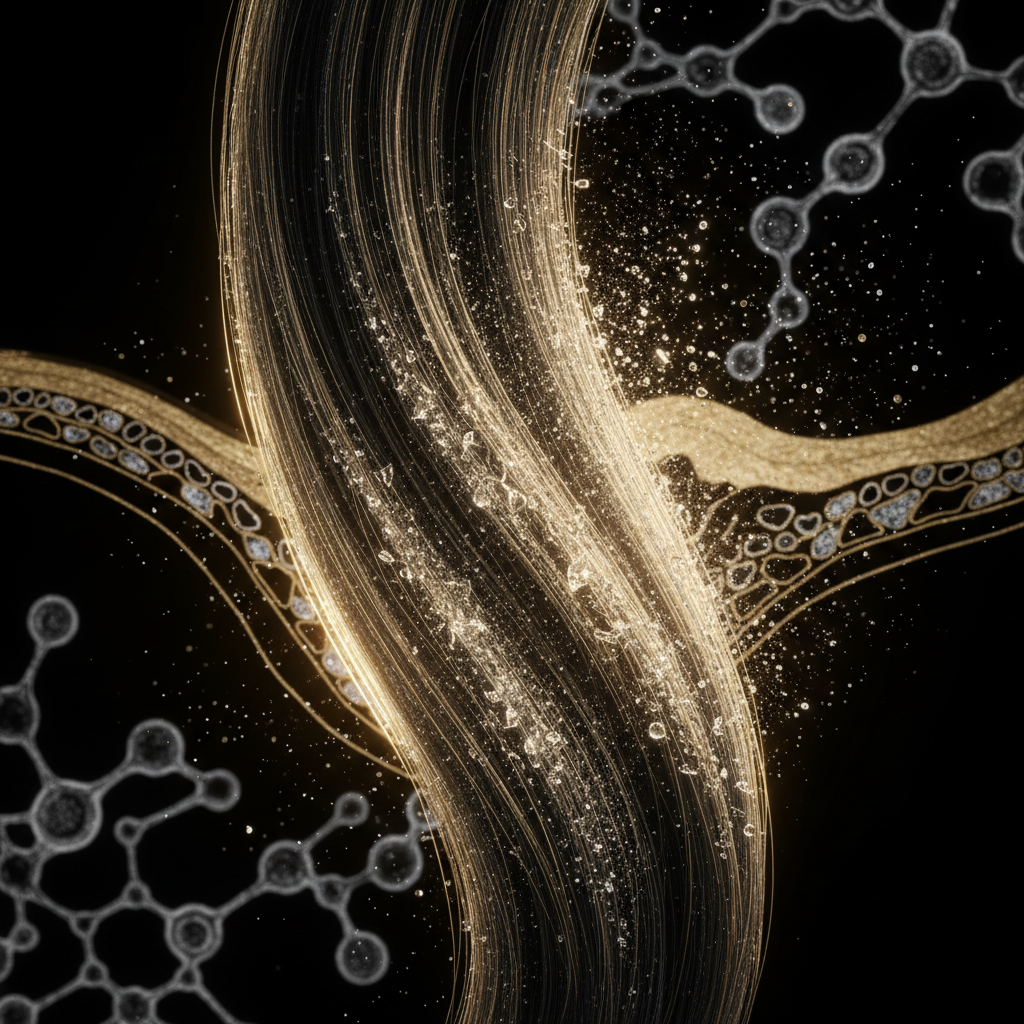
Clinical dermatological literature demonstrates that when scalp barrier permeability increases, water leaves the stratum corneum too rapidly. This dehydration destabilises the balance between cutaneous lipids, natural moisturising factors (NMFs), and the resident scalp microbiome. Without sufficient bound hydration, desquamation enzymes falter. This creates visible flaking, micro-fissures, and pruritus (itching).
Crucially, ongoing barrier disruption promotes the release of pro-inflammatory cytokines such as interleukin-1 alpha (IL-1α). Studies published in the International Journal of Trichology and dermatological barrier reviews confirm that sustained low-grade scalp inflammation disrupts the hair follicle's normal cycle, potentially pushing sensitive anagen (growth phase) follicles prematurely into the telogen (shedding) phase.
What the evidence does not show
It is critical to separate the physiological reality of barrier dysfunction from common commercial myths. The evidence does not show that elevated scalp TEWL directly causes pattern baldness or androgenetic alopecia. Pattern hair loss stems from follicle-specific genetic sensitivity to 5-alpha reductase and dihydrotestosterone (DHT), not atmospheric dehydration.
Furthermore, hair fibres themselves do not undergo "trans-epidermal" water loss because dead, cornified hair shafts lack an epidermis. While people often search for moisture loss across both skin and hair strands under one umbrella, a hair fibre experiences simple cuticular moisture evaporation. Cosmetic treatments that correct scalp TEWL cannot alter your genetically determined hair density, nor will an ultra-hydrated scalp prevent hereditary hair thinning on its own.
The mechanism: scalp barrier to fibre structure
Understanding how water leaves the scalp and affects growing strands requires looking at two biological structures: the epidermal stratum corneum and the hair shaft cuticle.
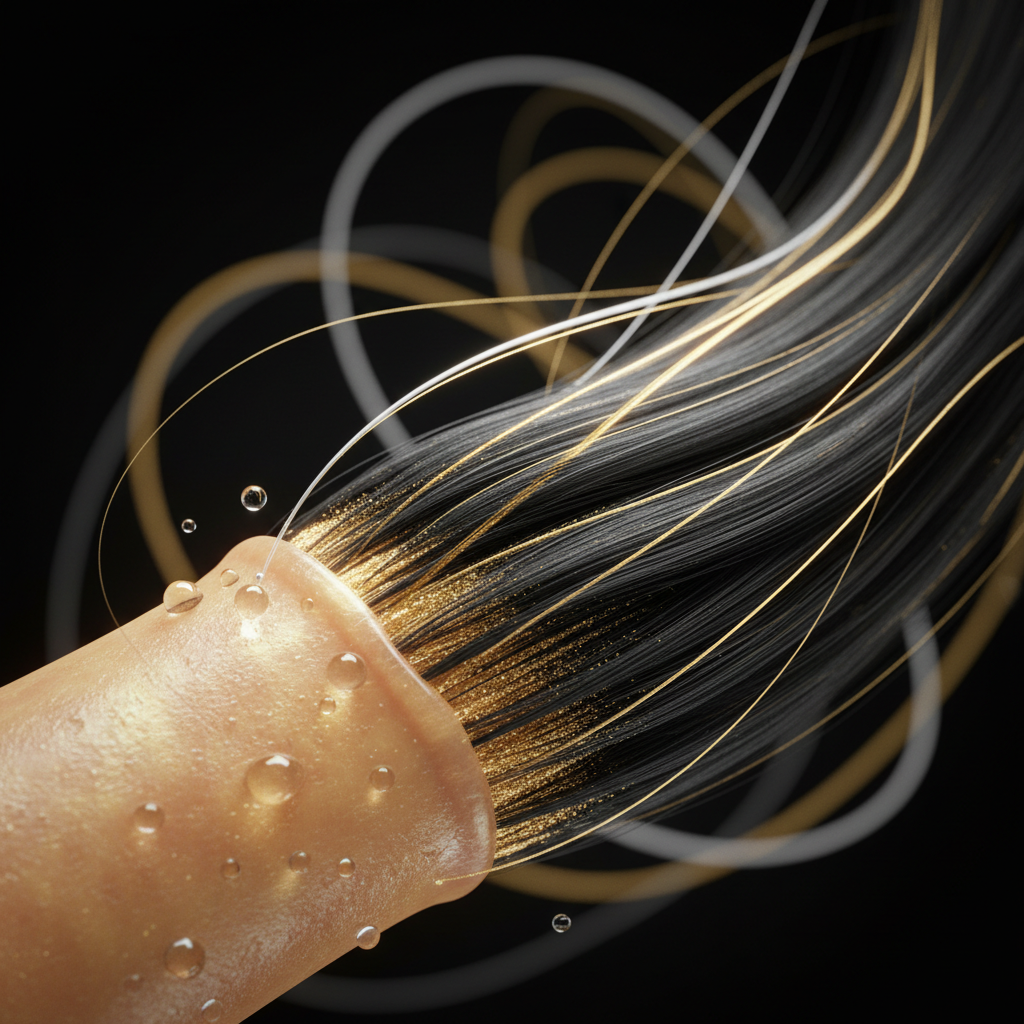
The scalp's stratum corneum relies on a "brick and mortar" architecture. Corneocytes (dead keratinised cells) form the bricks, surrounded by a lipid matrix consisting of approximately 50% ceramides, 25% cholesterol, and 15% free fatty acids. This lipid envelope slows water evaporation. When you strip these lipids away using alkaline soaps or excessive thermal heat, the mortar dissolves. TEWL rates rise significantly, leaping from normal baseline levels of 5 to 10 g/m²/h to upwards of 25 to 30 g/m²/h.
+-------------------------------------------------------+
| Healthy Scalp (Low TEWL: 5-10 g/m²/h) |
| [Corneocyte] - [Lipid Mortar: Ceramides/Acids] |
| --> Water retained in deep dermis & follicle bulbs |
| --> Cuticles flat, smooth, flexible hair fibre |
+-------------------------------------------------------+
 vs
+-------------------------------------------------------+
| Compromised Scalp (High TEWL: 20-30+ g/m²/h) |
| [Corneocyte] [Stripped Lipids / Gaps / Cracks] |
| --> Rapid water evaporation & cytokine release |
| --> Cuticles flared, brittle cortex, fibre breakage |
+-------------------------------------------------------+
As water departs, the emerging hair fibre suffers structural consequences. A dehydrated follicle root develops within an inflamed environment, producing a hair fibre with weaker keratin cross-linking and a less cohesive cuticle layer. When hair fibres lose internal moisture, cuticular scales flare open. This increases inter-fibre friction, tangling, and cortical vulnerability, turning manageable hair into dry, snap-prone strands.
The signs of scalp barrier breakdown
Elevated water loss produces both sensory symptoms on the scalp and structural symptoms along the hair shaft. Because these issues develop gradually, they are often misdiagnosed as generic dandruff.
- Persistent scalp tightness: A dry, pulling sensation immediately or shortly after washing, signalling immediate surface dehydration.
- Fine, non-greasy flaking: Powdery, white flakes resulting from poor desquamation, contrasting with oily, sticky seborrhoeic scales.
- Increased hair breakage: Short hair fragments lacking a bulb or root, frequently found on clothing or hairbrushes.
- Fibre dullness and rough texture: Raised hair cuticles scatter light rather than reflecting it, leading to a coarse, lacklustre appearance.
- Pruritus and micro-erythema: Low-level itching accompanied by slight, diffuse scalp redness driven by sub-clinical inflammation.
Comparing scalp dehydration and related conditions
Understanding whether barrier impairment, dry hair, or microbial imbalance is the dominant problem helps pinpoint the correct intervention.
| Characteristic | High Scalp TEWL (Dehydrated Barrier) | Cuticular Dryness (Fibre Dehydration) | Seborrhoeic Dermatitis |
|---|---|---|---|
| Primary Location | Scalp stratum corneum | Mid-lengths and ends of hair | Sebum-rich areas of scalp |
| Direct Cause | Stripped lipids, low relative humidity, surfactant damage | Chemical processing, heat styling, lack of conditioning | Malassezia yeast overgrowth metabolising sebum |
| Scale Appearance | Fine, dry, powdery white flakes | None (hair produces no flakes) | Thick, greasy, yellowish plaques |
| Impact on Hair | Possible telogen shedding from inflammation | Physical breakage, split ends, loss of elasticity | Shedding triggered by severe fungal inflammation |
| Standard TEWL Level | Significantly elevated (>20 g/m²/h) | Not applicable to dead fibre | Variable; often elevated secondarily |
| Target Treatment | Barrier repair, physiological lipids, humectants | Emollient oils, leave-in sealants, thermal shields | Anti-fungal actives (e.g., ketoconazole, piroctone olamine) |
What you can do to restore balance
Halting excessive water evaporation requires an integrated approach that shields both the scalp epidermis and the emerging hair shaft.
First, adjust your cleansing habits. Avoid harsh, high-pH detergents that denature skin proteins and dissolve structural lipids. Opt for cleansers formulated within a physiological pH range of 4.5 to 5.5. This preserves the acid mantle, an essential biochemical layer that regulates enzymatic exfoliation and curbs pathogen growth. Wash with lukewarm water rather than hot water, as temperatures above 40°C rapidly melt sebum and protective lipids.
Second, apply humectants paired with sealants. Humectants such as glycerin, hyaluronic acid, and panthenol (pro-vitamin B5) attract ambient water and pull moisture from deeper dermal beds into the epidermis. However, using humectants in dry environments without a protective seal can accelerate dehydration. Pair them with biomimetic emollients like squalane, jojoba oil, or ceramide-infused formulas that seal surface micro-tears and trap water within the tissue.
Third, adjust your mechanical and environmental habits. Run an indoor humidifier if winter heating or dry air drops ambient relative humidity below 40%. Lower the heat settings on blow dryers and keep the nozzle at least 15 centimetres away from your scalp to avoid acute thermal damage to the epidermal barrier.
Support from Watermans
When formulating products for vulnerable hair and stressed scalps, maintaining scalp barrier equilibrium is paramount. Watermans focuses on comprehensive scalp and follicle care by blending gentle cleansing agents with targeted botanical and nutritional ingredients.
Formulas like Watermans GrowMe Shampoo and ConditionMe Conditioner deliver vital hydration directly to the scalp without relying on aggressive, stripping detergents. Infused with ingredients such as biotin, rosemary extract, allantoin, and hydrolysed lupin protein, these formulations support the scalp's natural surface integrity, soothe irritated tissues, and improve the tensile resilience of dry, brittle strands. By creating an optimal, balanced scalp environment, they help minimise mechanical breakage and foster healthier-looking, thicker-feeling hair.
When the cause may be something else
If persistent scalp dryness and hair thinning do not improve after four to six weeks of gentle barrier care, the root cause may run deeper than surface transepidermal water loss.
Diffuse hair shedding that occurs across the entire scalp without obvious barrier distress points toward telogen effluvium. This is typically triggered by physiological shocks such as severe emotional stress, major surgery, nutritional deficiencies (like low ferritin or zinc), or hormonal shifts following childbirth.
Similarly, progressive thinning concentrated at the crown, temples, or central parting indicates androgenetic alopecia, an internal follicular condition driven by genetics and hormones rather than atmospheric dryness. Autoimmune conditions such as alopecia areata or lichen planopilaris involve the body's immune cells directly targeting the hair follicle, requiring targeted medical therapy rather than surface hydrators.
When to seek professional advice
Seek guidance from a GP, board-certified dermatologist, or qualified trichologist under the following circumstances:
- The scalp exhibits intense erythema (deep redness), open sores, yellow crusting, or painful swelling.
- Shedding exceeds 100 to 150 hairs daily for longer than two consecutive months.
- You observe patchy hair loss, sudden circular bald spots, or scarring on the scalp skin.
- Over-the-counter barrier balms and moisturising shampoos fail to relieve burning or severe itching.
- Hair breaks close to the scalp surface across wide sections of the head.
Frequently asked questions about Transepidermal Water Loss Hair
What is the connection between transepidermal water loss hair health and shedding?
Elevated transepidermal water loss compromises the scalp barrier, leaving it susceptible to environmental irritation and microbial imbalance. This triggers sub-clinical inflammation around the upper follicle. Sustained micro-inflammation can cause premature termination of the anagen growth phase, nudging hair into telogen effluvium (shedding). Resolving this barrier defect helps normalise the natural growth environment.
Can high transepidermal water loss cause permanent hair loss?
No. High transepidermal water loss does not cause permanent follicular destruction or genetic pattern baldness. While extreme, untreated barrier disorders can lead to inflammation that accelerates temporary shedding or causes fibre breakage, the underlying stem cells of the follicle remain viable once barrier equilibrium is restored.
How do you measure scalp transepidermal water loss?
Trichologists and dermatologists use an instrument called a tewameter or evaporimeter. The probe contains dual humidity and temperature sensors that measure the rate of water vapour diffusion coming off a specific patch of scalp skin. Healthy readings typically hover between 5 and 15 g/m²/h, while values exceeding 20 g/m²/h confirm compromised barrier function.
Does drinking more water fix scalp transepidermal water loss?
Systemic hydration is essential for cellular turnover, but simply drinking more water will not fix elevated TEWL if your surface lipid barrier is damaged. If your skin lacks ceramides and fatty acids, internal water evaporates straight into the air. Topical barrier repair with lipids, physiological pH cleansers, and humectants is necessary to trap moisture effectively.
Preserving your barrier and your hair
Managing transepidermal water loss hair challenges requires recognising that hair fibre vitality begins with scalp skin integrity. When the scalp's lipid barrier falters, water escapes freely, paving the way for dehydration, inflammatory stress, and fragile, brittle hair shafts prone to premature breakage.
By replacing harsh, high-pH cleansers with restorative formulas, supplying functional humectants, and protecting the scalp from chemical and thermal extremes, you preserve critical moisture reserves. A healthy epidermal barrier provides the balanced biological foundation required to minimise unnecessary shedding, prevent avoidable hair breakage, and support resilient, vibrant growth over the long term.
Sources and references
- International Journal of Trichology. "Scalp Condition Impacts Hair Growth and Retention via Oxidative Stress." 2018.
- Journal of the European Academy of Dermatology and Venereology. "The Skin Barrier: Anatomy, Physiology, and Mechanics." 2020.
- British Journal of Dermatology. "Scalp Hydration, Transepidermal Water Loss and Follicular Dynamics in Humans." 2019.
- National Institute for Health and Care Excellence (NICE). "Alopecia: Summary of Evidence and Management Pathways." 2021.
Find these ingredients in Watermans products
- Zinc: you will find this ingredient in our Hair Vitamins.
- Panthenol (Provitamin B5): you will find this ingredient in our Heat Protection Spray.