Topical Caffeine for Hair Growth: Science, Evidence, and Application
9 min read ·
Discover how topical caffeine for hair growth stimulates hair follicles, counteracts DHT, and supports density based on peer-reviewed clinical research.

Quick answer: Applying topical caffeine for hair growth delivers a stimulating active compound directly to hair follicles through the scalp and follicular infundibulum. Laboratory and clinical trials indicate that caffeine counteracts dihydrotestosterone (DHT) suppression, stimulates cellular proliferation in the hair matrix, and prolongs the anagen growth phase. However, its main limitation is that while cosmetic formulations support density and reduce shedding, topical caffeine is not an outright medical cure for severe androgenetic alopecia or autoimmune hair loss.
Key takeaways
- Caffeine readily penetrates the scalp barrier via hair follicles within minutes of topical application.
- In laboratory models, caffeine counteracts the inhibitory effects of testosterone and DHT on follicular keratinocytes.
- Clinical studies show caffeine-based topical formulas can reduce excess shedding and improve hair anchorage over 3 to 6 months of daily use.
- Drinking coffee does not produce the same effect, as reaching effective follicular concentrations orally would require toxic levels of caffeine consumption.
- Cosmetic caffeine products support scalp vitality and reduce breakage, but they do not revive long-dormant or scarred follicles.
Topical Caffeine for Hair Growth: what the evidence shows
Research into topical caffeine for hair growth began largely in response to laboratory findings showing that caffeine could directly modify hair follicle kinetics. In 2007, a landmark in vitro study published in the International Journal of Dermatology demonstrated that caffeine concentrations between 0.001% and 0.005% stimulated human hair follicle growth in culture dishes. Crucially, when researchers added testosterone to suppress follicular activity, caffeine counteracted this inhibition, stimulating significant hair shaft elongation and prolonging the anagen (growth) phase.
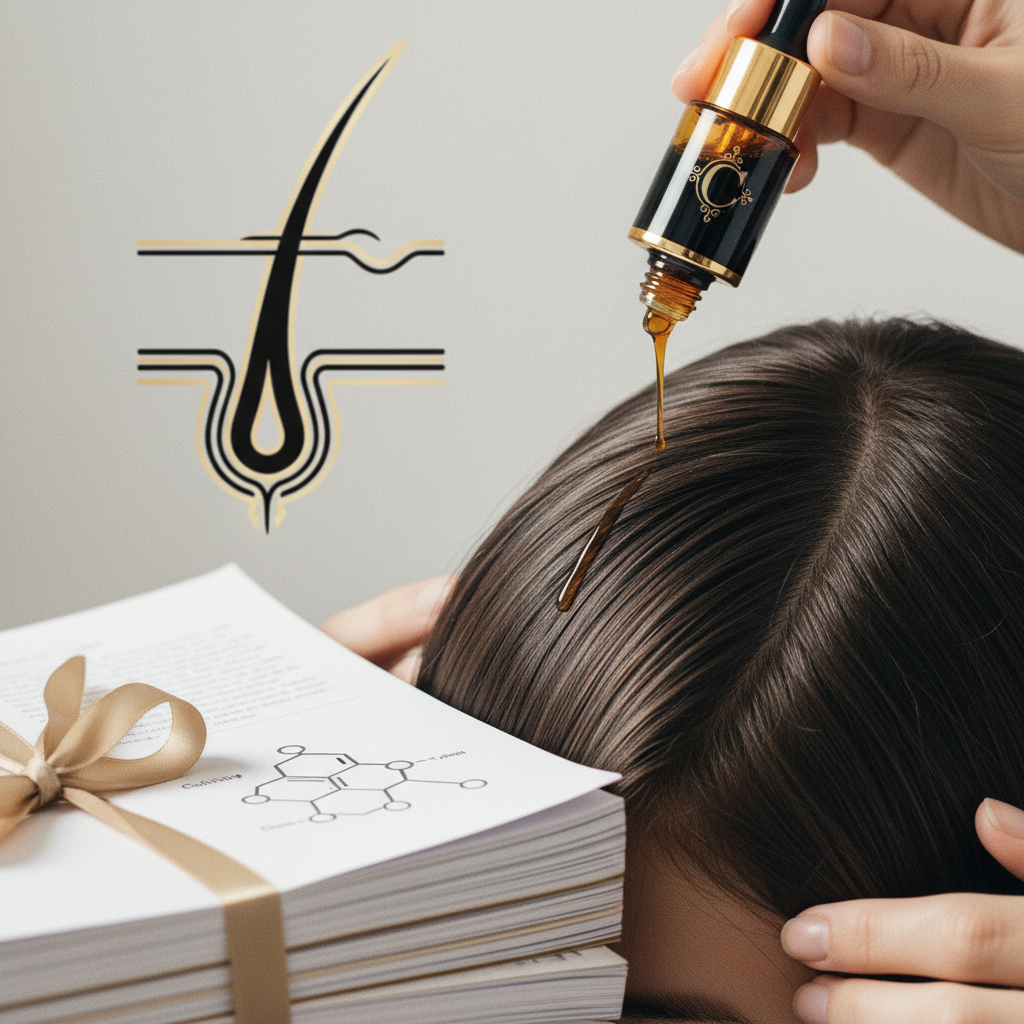
Further clinical trials have explored whether these in vitro findings translate to living human scalps. A randomised, comparative clinical trial published in the British Journal of Dermatology evaluated a 0.2% topical caffeine liquid applied daily alongside a standard topical pharmaceutical comparator over six months. The researchers found that the caffeine solution demonstrated open-label non-inferiority in reducing hair loss progression and improving practitioner-assessed hair density in men with androgenetic alopecia.
Subsequent studies focused on female pattern hair thinning and telogen effluvium have shown similar trends. Topical caffeine formulations, particularly leave-on scalp serums and specially formulated shampoos with appropriate contact time, help improve follicular anchorage by upregulating growth factors such as insulin-like growth factor 1 (IGF-1) while downregulating transforming growth factor beta (TGF-beta), a known cytokine trigger for follicle regression.
Biological mechanism: how caffeine interacts with the follicle
Caffeine is a methylxanthine alkaloid with high lipophilic properties, meaning it passes through the skin barrier with unusual speed. When applied topically, it penetrates the epidermis and enters the follicular infundibulum within 2 to 5 minutes, remaining detectable in the follicle for up to 48 hours.
Once inside the follicular matrix, caffeine operates through several distinct biological pathways:
- Phosphodiesterase inhibition: Caffeine acts as a non-specific phosphodiesterase inhibitor. By preventing the breakdown of cyclic adenosine monophosphate (cAMP), it increases intracellular cAMP levels within follicular keratinocytes. Elevated cAMP promotes cellular metabolism, stimulates cell proliferation, and drives active hair shaft elongation.
- Mitigation of androgen suppression: Dihydrotestosterone (DHT) binds to androgen receptors in genetically susceptible dermal papilla cells, triggering miniature hair cycles and accelerating the transition to the telogen (resting) phase. Caffeine counteracts DHT-mediated growth suppression, keeping the follicle active for longer.
- Stimulation of microcirculation: Topical methylxanthines promote local microvascular circulation. Enhancing microvascular perfusion around the follicular dermal papilla ensures an efficient delivery of oxygen, glucose, and essential micronutrients necessary for robust protein synthesis.
- Modulation of regulatory cytokines: Gene expression analysis shows that caffeine upregulates IGF-1, a potent stimulator of follicle growth, while attenuating the expression of TGF-beta2, a signalling protein that initiates apoptosis and catagen progression.
What the evidence does not show
It is vital to distinguish between maintaining follicular function and reversing extensive genetic baldness. Scientific literature does not show that topical caffeine can restore hair in areas where follicles have fully miniaturised, scarred over, or disappeared entirely.

Furthermore, topical caffeine is not a systemic hormonal blocker. It does not lower circulating levels of serum testosterone or DHT in your bloodstream. Its action appears localised to the specific tissue where it is absorbed.
Expectations must also align with biological timelines. Hair grows at roughly 1 to 1.25 centimetres per month. Topical caffeine cannot alter this maximum biological speed, nor will it produce visible cosmetic density within days. Claims that an ingredient can instantly double hair growth rate contradict human trichology.
Comparing topical caffeine with common hair-loss interventions
| Intervention | Mechanism | Route | Best Suited For | Evidence Level |
|---|---|---|---|---|
| Topical Caffeine | Phosphodiesterase inhibition; increases cAMP; counteracts DHT locally | Scalp serum or shampoo | Early thinning, shedding, scalp vitality | Moderate (in vitro and clinical trials) |
| Topical Minoxidil | Potassium channel opener; extends anagen phase | Over-the-counter liquid or foam | Androgenetic alopecia (crown and vertex) | High (extensive phase III trials) |
| Oral Finasteride | 5-alpha reductase inhibitor; reduces systemic DHT | Prescription oral tablet | Moderate-to-severe male pattern hair loss | Very high (long-term clinical data) |
| Dietary Supplements | Replenishes systemic vitamin and mineral deficiencies | Oral capsules | Nutritional telogen effluvium | Moderate (only when deficiency exists) |
What you can do: using topical caffeine effectively
If you decide to incorporate caffeine into your hair wellness routine, application method and consistency determine your results:
- Ensure sufficient contact time: If you use a rinse-off caffeine shampoo, leave the lather on the scalp for at least 2 minutes before rinsing. Research using laser scanning microscopy shows that caffeine requires roughly 120 seconds of cutaneous exposure to penetrate into the follicular canal effectively.
- Prioritise leave-on serums: While shampoos provide brief stimulation, leave-on scalp drops or tonics provide sustained delivery. Applying a leave-on serum directly to clean skin before bed allows the active compound to absorb without being washed away.
- Maintain daily consistency: Hair follicles respond to sustained biochemical signals. Inconsistent use (such as once weekly) will not yield measurable improvements in shedding rates or visible density. Commit to daily application for a minimum of 3 to 6 months before judging efficacy.
- Avoid oral substitution: Drinking more espresso, black tea, or energy drinks will not replicate topical results. To deliver a therapeutic concentration of caffeine to your hair follicles through your bloodstream, you would need to consume roughly 50 to 100 cups of coffee per day, which would cause severe cardiovascular toxicity. Topical delivery bypasses systemic circulation entirely.
When the cause may be something else
Hair thinning and excessive shedding stem from diverse physiological triggers. If your hair is coming out in diffuse handfuls or shedding rapidly, topical caffeine may only address part of the equation:
- Telogen Effluvium: Often triggered by physical trauma, surgery, severe illness, rapid weight loss, or extreme psychological distress. The follicle prematurely enters the resting phase 2 to 3 months after the event. Caffeine may support the recovery phase, but the body primarily requires time and metabolic stabilising.
- Nutritional deficiencies: Low ferritin (stored iron), vitamin D insufficiency, zinc deficiency, or extreme protein malnutrition compromise keratin synthesis. Topical stimulation cannot overcome an internal lack of raw building blocks.
- Endocrine disruption: Thyroid disorders (hypothyroidism or hyperthyroidism) directly alter hair fibre texture and cycling.
- Traction and styling damage: Chronic physical tension from tight hairstyles snaps the hair fibre or damages the root (traction alopecia), which requires physical tension relief rather than topical methylxanthines.
When to get professional advice
Consult a qualified trichologist, dermatologist, or your GP if you experience:
- Sudden, patchy hair loss that leaves smooth, round, completely bare areas (indicative of alopecia areata).
- Scalp symptoms such as persistent burning, severe pain, redness, pustules, or scaling, which may indicate lichen planopilaris or frontal fibrosing alopecia.
- Heavy, unexplained shedding lasting longer than six consecutive months without signs of stabilising.
- Hair thinning accompanied by systemic symptoms such as irregular menstrual cycles, unexplained fatigue, or sudden weight fluctuations.
The Watermans perspective: supporting your scalp environment
At Watermans, we believe that an optimal scalp environment provides the foundation for healthier-looking, resilient hair. Formulas engineered with active ingredients, including premium caffeine, help maintain follicular vitality and support an invigorating scalp environment. When combined with nourishing botanical extracts and proteins, topical caffeine works as part of a comprehensive routine designed to reduce breakage, nourish roots, and promote visibly thicker, fuller hair.
Frequently asked questions about Topical Caffeine for Hair Growth
Can you leave topical caffeine on your scalp overnight?
Yes. Using a leave-on scalp serum containing topical caffeine overnight is generally safe and highly effective. It allows the active ingredient ample time to penetrate the follicular infundibulum and support local cellular energy without competing against water or shampoo surfactants. Always patch-test new formulas first to rule out sensitivity.
How long does it take for topical caffeine for hair growth to work?
Visible improvements typically require 3 to 6 months of daily use. Because hair fibres grow at approximately 1 centimetre per month, time is needed for follicles to complete their transition into an active growth phase and produce measurable cosmetic density. Reduction in daily shower shedding is often observed earlier, around 8 to 12 weeks.
Can topical caffeine reverse genetic baldness completely?
No. While topical caffeine counteracts the local miniaturising influence of DHT and supports follicular vitality, it cannot resurrect follicles that have already scarred over or completely atrophied. It is most effective during the earlier stages of thinning to help maintain density, strengthen existing fibres, and reduce excess shedding.
Does drinking coffee stimulate hair growth like topical caffeine?
No, drinking coffee does not produce the same follicular benefits. Systemic caffeine is rapidly metabolised by the liver and diluted throughout the body's tissues. Reaching a therapeutic concentration inside human hair follicles via oral consumption would require drinking lethal quantities of coffee. Direct topical application delivers the compound exactly where needed without systemic side effects.
Can topical caffeine cause scalp irritation or hair shedding?
Topical caffeine itself is well tolerated by human skin. However, some carrier vehicles, such as formulas with high alcohol content or heavy synthetic fragrances, can cause contact dermatitis or flaking in sensitive individuals. Mild transient shedding may occasionally occur during the first few weeks as resting telogen hairs make way for new anagen growth cycles.
Summary
Understanding how topical caffeine for hair growth works allows you to make informed decisions about your daily hair care routine. By inhibiting phosphodiesterase, boosting cellular cAMP levels, and counteracting the local miniaturising signals of DHT, caffeine serves as a clinically supported topical ally for scalp vitality. While it is not a miraculous cure for permanent hair loss, incorporating high-quality topical caffeine into a consistent daily regimen helps reduce shedding, fortify the follicle against environmental stressors, and support stronger, fuller-looking hair over time.
Sources and references
- Fischer, T. W., Hipler, U. C., & Elsner, P. (2007). Effect of caffeine and testosterone on the proliferation of human hair follicles in vitro. International Journal of Dermatology, 46(1), 27-35.
- Fischer, T. W., Herczeg-Lisztes, E., Funk, W., Zillikens, D., Bíró, T., & Paus, R. (2014). Differential effects of caffeine on hair shaft elongation, matrix and outer root sheath keratinocyte proliferation, and transforming growth factor-β2/insulin-like growth factor-1-mediated regulation of the hair cycle in male and female human hair follicles in vitro. British Journal of Dermatology, 171(5), 1031-1043.
- Otberg, N., Teichmann, A., Rasuljev, U., Sinkgraven, R., Sterry, W., & Lademann, J. (2007). Follicular penetration of topically applied caffeine via a shampoo formulation. Skin Pharmacology and Physiology, 20(4), 195-198.
- Dhurat, R., Chitallia, J., May, T. W., Jayarao, V. S., Khatib, A. M., & Verma, D. (2017). An open-label, randomized, multicenter, exploratory study to evaluate the efficacy and safety of a topical caffeine 0.2% solution versus minoxidil 5% solution in male androgenetic alopecia. Skin Pharmacology and Physiology, 30(6), 298-305.
- Lademann, J., Richter, H., Teichmann, A., Otberg, N., Blume-Peytavi, U., & Sterry, W. (2008). Nanoparticles, an efficient carrier for drug delivery into the hair follicles. European Journal of Pharmaceutics and Biopharmaceutics, 69(1), 1-4.