Thermal Protectants in Modern Haircare: Science, Mechanism, and Best Practice
8 min read ·
Learn how Thermal Protectants in Modern Haircare shield the cuticle, prevent keratin denaturation, and reduce heat breakage with science-backed styling methods.
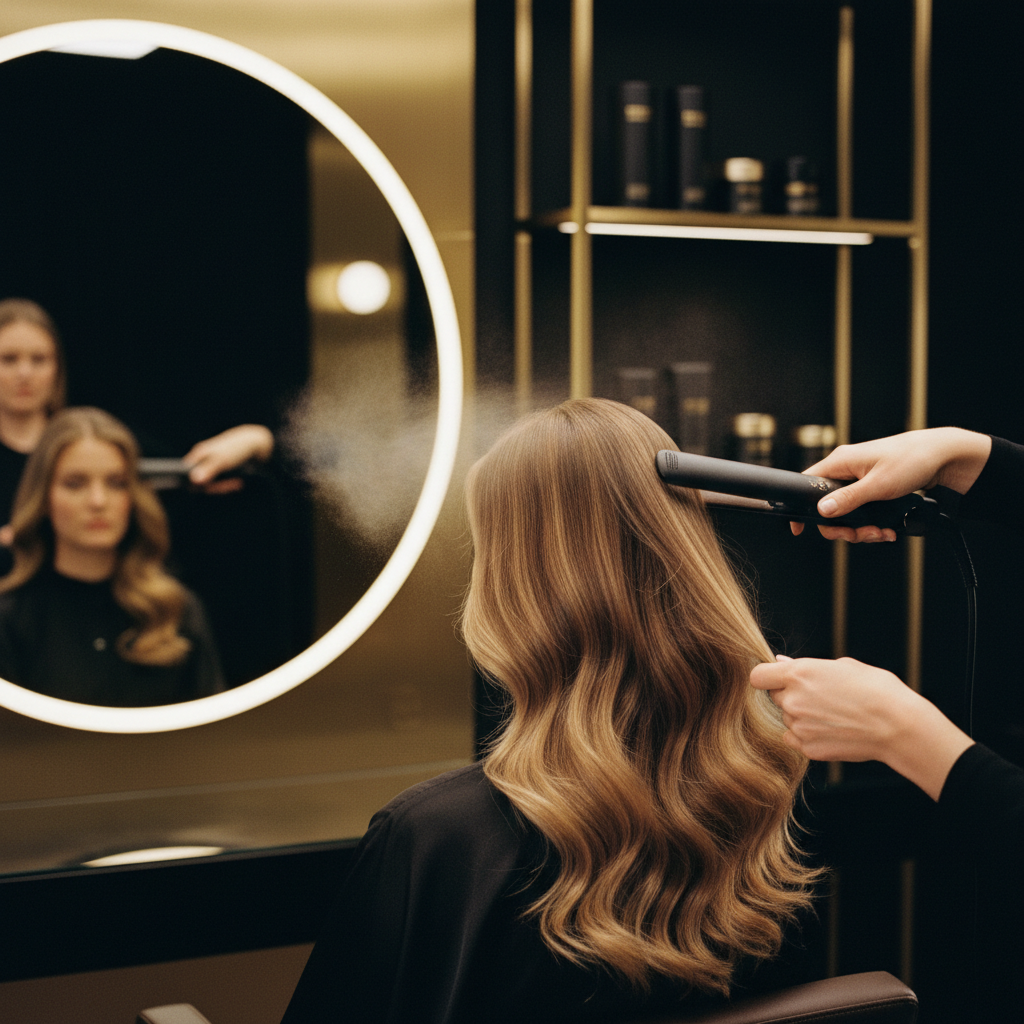
Quick answer: The role of Thermal Protectants in Modern Haircare is to form a sacrificial barrier over the cuticle, slowing heat transfer, distributing high temperatures evenly, and retaining critical internal moisture during heat styling. Formulated with silicones, polymers, and conditioning proteins, modern products reduce structural keratin denaturing and surface lipid degradation by up to roughly 50 percent. However, their main limitation is that no thermal protectant provides absolute immunity; excessive temperatures or prolonged exposure still cause irreversible fibre breakdown and severe mechanical breakage.
Key takeaways
- Heat styling tools reach temperatures between 150°C and 230°C, which rapidly denatures hair keratin and strips the cuticle of its protective 18-methyl eicosanoic acid (18-MEA) lipid layer.
- Thermal protectants act as thermal buffers, using specialised polymers and silicones to conduct heat more slowly and distribute it across the fibre surface.
- Applying a protectant reduces moisture flash-off, split ends, and surface cracking, but it does not completely prevent thermal degradation under extreme heat.
- Hair breakage from heat damage happens along the hair shaft and is structurally distinct from hair shedding or follicular hair loss.
- Layering wet-to-dry protectants before blow-drying and dry-finish protectants before using flat irons or curling wands offers the highest measured level of thermal defence.
Thermal Protectants in Modern Haircare: what the evidence shows
Independent cosmetic science and published investigations in the Journal of Cosmetic Science reveal that Thermal Protectants in Modern Haircare deliver measurable, reproducible reductions in thermal stress. When an unprotected hair strand encounters a heated ceramic plate at 200°C, the water within the cortex evaporates explosively. This rapid steam expansion creates micro-cavities within the cortex, known clinically as bubble hair, alongside severe longitudinal cracking along the cuticle scales.
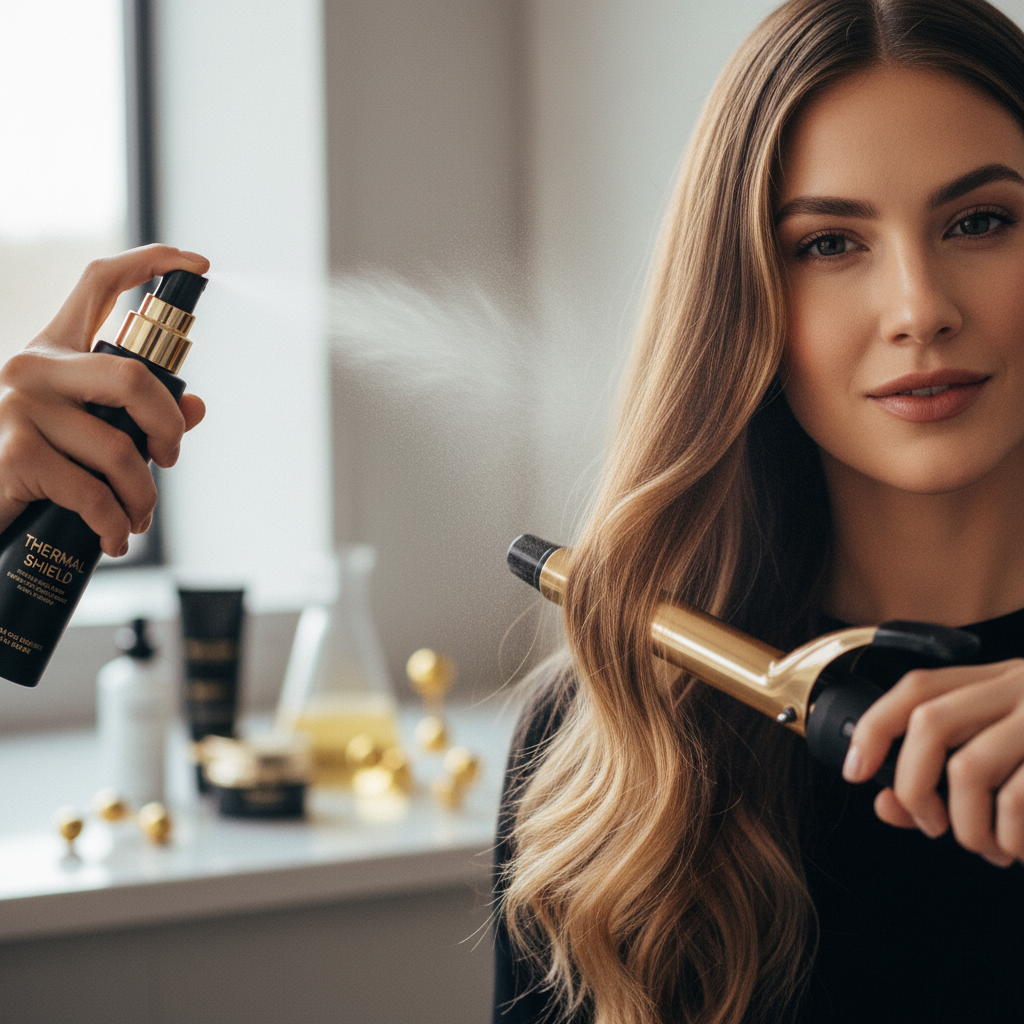
Laboratory testing demonstrates that formulations combining dimethicone, amodimethicone, polyquaternium polymers, and hydrolysed wheat proteins mitigate this structural shock in three distinct ways:
- Thermal conduction dampening: Polymers with low thermal conductivity insulate the shaft, softening the temperature spike that hits the cortex.
- Moisture moderation: By sealing the outer layer, these ingredients slow the rate of moisture loss, preventing rapid boiling of free water in the hair matrix.
- Surface friction reduction: Silicones lower friction between styling plates and the cuticle, minimising the mechanical shearing that pulls away lifted, heat-softened cuticle scales.
Spectroscopic analyses confirm that while heat still degrades the cuticular structure, strands treated with modern protectants retain significantly more tensile strength, display less protein leaching during subsequent washing, and maintain better colour retention than untreated hair.
Mechanisms of thermal damage on human hair
Understanding how protectants function requires examining what heat does to the hair fibre across different temperature bands:
- 100°C to 120°C: Free water bound to the hair fibre evaporates rapidly. If hair is damp during high-heat flat ironing, boiling steam ruptures the cortex and causes irreversible bubble hair deformities.
- 140°C to 160°C: The protective 18-MEA lipid layer that coats the cuticle oxidises and degrades. The hair loses its natural hydrophobicity, becoming porous, frizzy, and prone to tangles.
- 160°C to 190°C: The alpha-keratin helical structures within the cortex begin to unwind and denature into disordered beta-keratin. The fibre permanently loses its natural elasticity and tensile strength.
- Above 200°C: Tryptophan and other amino acids undergo chemical decomposition and oxidation. Cuticle tiles melt together, crack, or flake off entirely, exposing the delicate cortical cells beneath.
Thermal protectants act as sacrificial shields against these temperature milestones. The polymer film absorbs the initial blast of heat, decomposing or vaporising in place of your hair's native structural lipids.
| Ingredient Class | Common Examples | Primary Protective Mechanism | Best Application Stage |
|---|---|---|---|
| Volatile Silicones | Cyclopentasiloxane, Disiloxane | Spreads heat-shielding active ingredients evenly, evaporates without weight | Damp hair prior to rough blow-drying |
| Conditioning Silicones | Dimethicone, Amodimethicone | High thermal stability, wraps cuticles in a heat-resistant lubricating shield | Damp or dry hair before iron styling |
| Cationic Polymers | Polyquaternium-55, Polyquaternium-37 | Adheres electrostatically to damaged negative sites, creates a thermal shield | Damp hair prior to any heat styling |
| Hydrolysed Proteins | Hydrolysed wheat, soy, or silk protein | Penetrates minor fissures, helps bind moisture inside the cortex | Pre-styling leave-in sprays and creams |
| Natural Seed Oils | Argan oil, Crambe Abyssinica oil | Fatty acid barrier, lubricates surface plates to eliminate snagging | Dry hair, strictly below 180°C |
What the evidence does not show
Thermal protectants are frequently misunderstood as absolute heat shields. The scientific literature makes several critical boundaries clear:
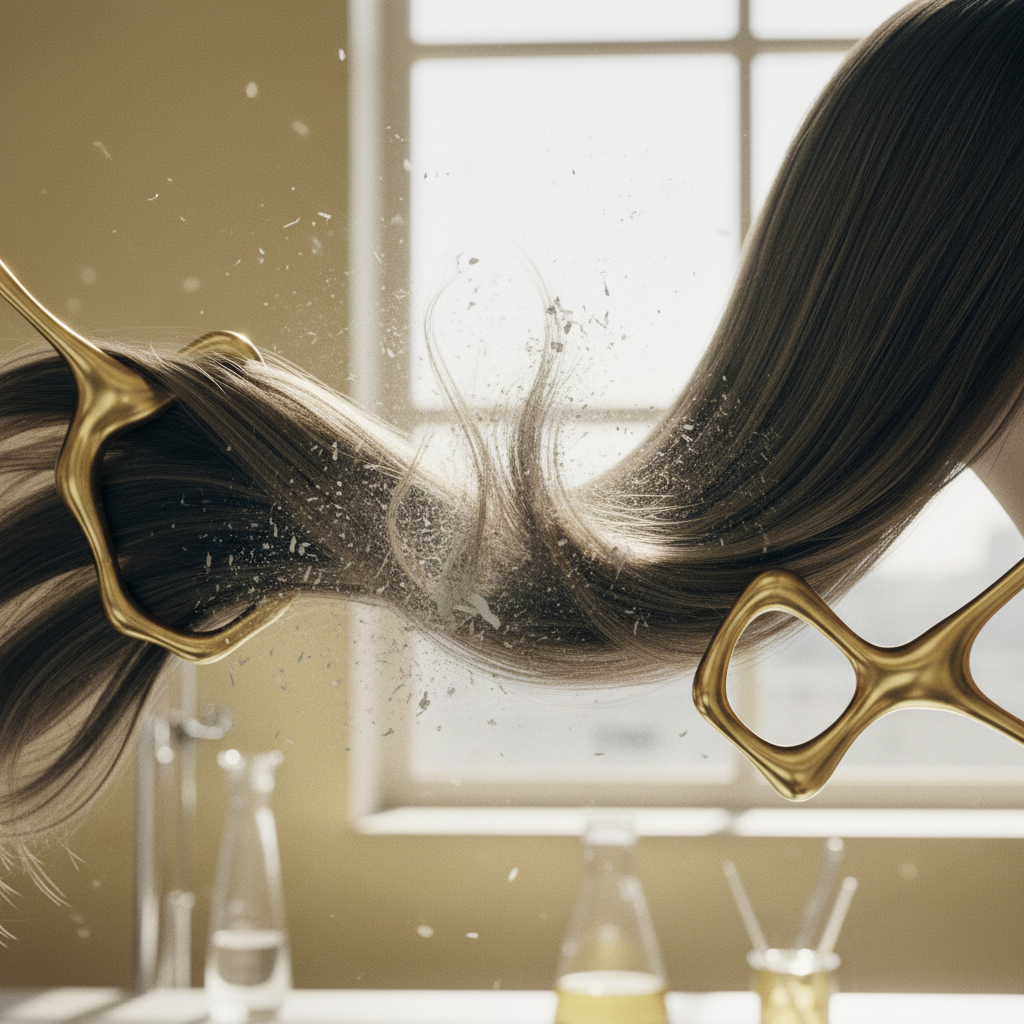
- No product provides 100 percent protection: Thermal protectants lessen structural harm by roughly 30 to 50 percent; they do not neutralise heat entirely. Extreme temperatures will still break peptide bonds.
- They cannot repair dead fibres: Once heat melts or fractures the cuticle, no cosmetic formulation can truly restore original virgin biology. Protectants preserve intact hair; they cannot re-grow damaged keratin.
- They do not turn oils into safe shields at high heat: Applying raw vegetable oils before using a 220°C straightener can fry the cuticle. Pure oils lack the engineered polymer film formation required to dissipate heat effectively at extreme temperatures.
- They have no influence on hair loss: Thermal protectants work entirely on the non-living fibre shaft. They do not alter follicle cycling, nor do they prevent shedding or genetic alopecia.
Signs of thermal damage vs other hair issues
Stylists and consumers frequently confuse heat damage with biological shedding or chemical processing. Recognising the distinct characteristics of heat-damaged hair ensures you choose the correct corrective routine:
- Thermal breakage: Short, snapped pieces of hair without a white bulb at the tip, split ends that travel upwards in multiple branches, and a rough, sandpaper-like texture along the mid-lengths and ends.
- Chemical damage: Gummy, stretchy fibres that snap when wet, usually accompanied by complete cuticle loss from bleaching or alkaline relaxing.
- Follicular shedding: Full-length hairs dropping out with a distinct white keratin bulb at the root (telogen effluvium). Heat protectants will not stop shedding, as shedding originates beneath the scalp.
Best practices for applying thermal protectants
To achieve maximum protection, technique matters just as much as formulation. Follow these evidence-based steps:
- Towel dry thoroughly first: Applying liquid protectants to dripping-wet hair dilutes the active polymer concentration, sharply reducing its heat-insulating performance.
- Section the hair before application: Spritzing protectant over the top canopy leaves the under-layers completely exposed. Divide hair into at least four quadrants to guarantee uniform distribution.
- Match the base to the tool: Use water-based sprays and conditioning lotions before blow-drying. When transitioning to dry flat-ironing or curling, select dry aerosol protectants or light, silicone-rich serums to avoid boiling residual moisture on the tool's hot plates.
- Respect the critical temperature ceiling: Keep hot tools under 185°C. Studies show that denaturation rates accelerate dramatically above this threshold, outstripping the buffering capacity of even the most sophisticated polymer matrices.
- Never straighten damp hair: If you hear sizzling or see rising steam while running a flat iron down a section, stop immediately. That sound is internal moisture boiling through the cell membrane complex.
Supporting structural integrity: the Watermans approach
While thermal protectants defend the hair shaft during styling, lasting resilience also relies on maintaining optimal scalp vitality and healthy fibre growth from the start. Watermans designs formulations centred on nourishing the scalp environment and supporting fibre strength. Incorporating targeted, nutrient-dense products into your wash routine reinforces the hair's natural defences against everyday physical stress, complementing the external shielding provided by your leave-in styling protectants.
Frequently asked questions about Thermal Protectants in Modern Haircare
How do Thermal Protectants in Modern Haircare prevent split ends?
Thermal Protectants in Modern Haircare prevent split ends by lowering friction between hot styling plates and the hair fibre, while establishing a polymer barrier that locks in internal moisture. This barrier keeps the cuticle scales lying flat and intact, which stops the cortex from drying out, unravelling, and splitting under high heat.
Can I use natural oils instead of a thermal protectant?
Natural oils are not an effective substitute for dedicated thermal protectants. While some plant oils have relatively high smoke points, they do not create the structured, heat-dissipating polymer film required to shield hair from 180°C to 230°C styling tools. Using pure oils can actually cause cuticle blistering if the oil heats beyond its stability limits.
Do thermal protectants weigh down fine or thin hair?
Thermal protectants do not have to weigh down fine hair if you choose the right delivery system. Lightweight sprays containing volatile silicones (like cyclomethicone) or weightless polyquaterniums offer strong thermal buffering and then evaporate cleanly, leaving behind a microscopic protective shield without grease or heavy residue.
Does thermal protectant work on dry hair before curling?
Yes, but you should only use an alcohol-based aerosol or lightweight, dry silicone-based protectant on dry hair. Water-based sprays add moisture back into dry strands; touching a hot iron to that dampness can flash-boil the water within the cortex, causing severe internal blistering and rapid breakage.
Preserving fibre health in heat styling
Adopting Thermal Protectants in Modern Haircare is an essential technical requirement for anyone using heated appliances on their hair. By acting as thermal shock absorbers and moisture preservers, modern protectants substantially reduce cuticle lifting, protein breakdown, and mechanical snapping. When paired with sensible temperature settings below 185°C and a consistent hair-wellness routine, these formulations keep your strands resilient, smooth, and structurally sound through every styling session.
Sources and references
- Journal of Cosmetic Science: "Thermal analysis of hair treated with heat styling appliances and protective formulations"
- International Journal of Cosmetic Science: "The impact of heat on human hair keratin and surface lipids"
- Society of Cosmetic Chemists: Monograph on polymer and silicone film formers in heat protection
- British Association of Dermatologists: Clinical overview of hair shaft abnormalities and bubble hair
Find these ingredients in Watermans products
- Argan Oil: you will find this ingredient in our Hair Growth Shampoo.