Thermal Heat Damage and Hair Fibre Repair: What the Science Explains
8 min read ·
Learn the science behind Thermal Heat Damage and Hair Fibre Repair, exploring protein denaturation, bubble hair, thermal thresholds, and real conditioning fixes.
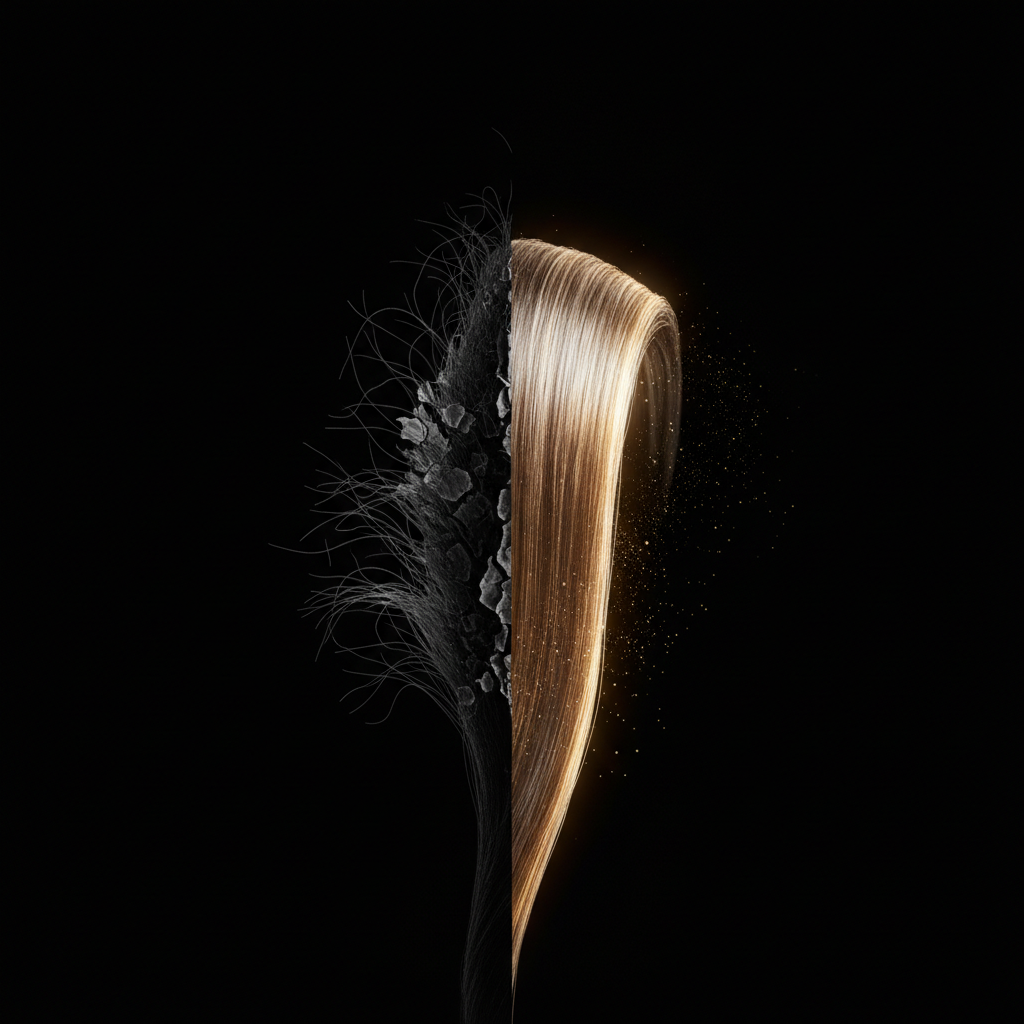
Quick answer: Understanding Thermal Heat Damage and Hair Fibre Repair begins with a biological reality: hair is non-living tissue, meaning biological cellular regeneration cannot occur once keratin denatures. Thermal styling tools exceeding 150°C strip protective cuticular lipids, vaporise internal water, and degrade structural alpha-keratin into disordered beta-keratin. True physiological repair is impossible; cosmetic intervention relies on synthetic bond builders, hydrolysed proteins, and conditioning agents that temporarily patch structural voids, reduce friction, and prevent catastrophic fibre fracture.
Key takeaways
- Excessive styling temperatures above 150°C systematically degrade the cuticle, break disulphide bonds, and cause internal keratin denaturation.
- Biological regeneration does not exist for hair fibres; cosmetic "repair" refers to structural reinforcement, film-forming protection, and temporary cross-linking.
- Moisture trapped inside the cortex boils rapidly when heated above 100°C, causing "bubble hair" and irreversible brittleness.
- Heat protectants work by slowing thermal transfer and lowering friction, reducing cuticle lifting by up to 50 percent.
- Distinguishing between heat-induced breakage along the shaft and genuine follicular hair shedding is critical for choosing the correct treatment.
Thermal Heat Damage and Hair Fibre Repair: what the evidence shows
When we investigate Thermal Heat Damage and Hair Fibre Repair, research reveals clear chemical thresholds where hair structure shifts from stable to compromised.
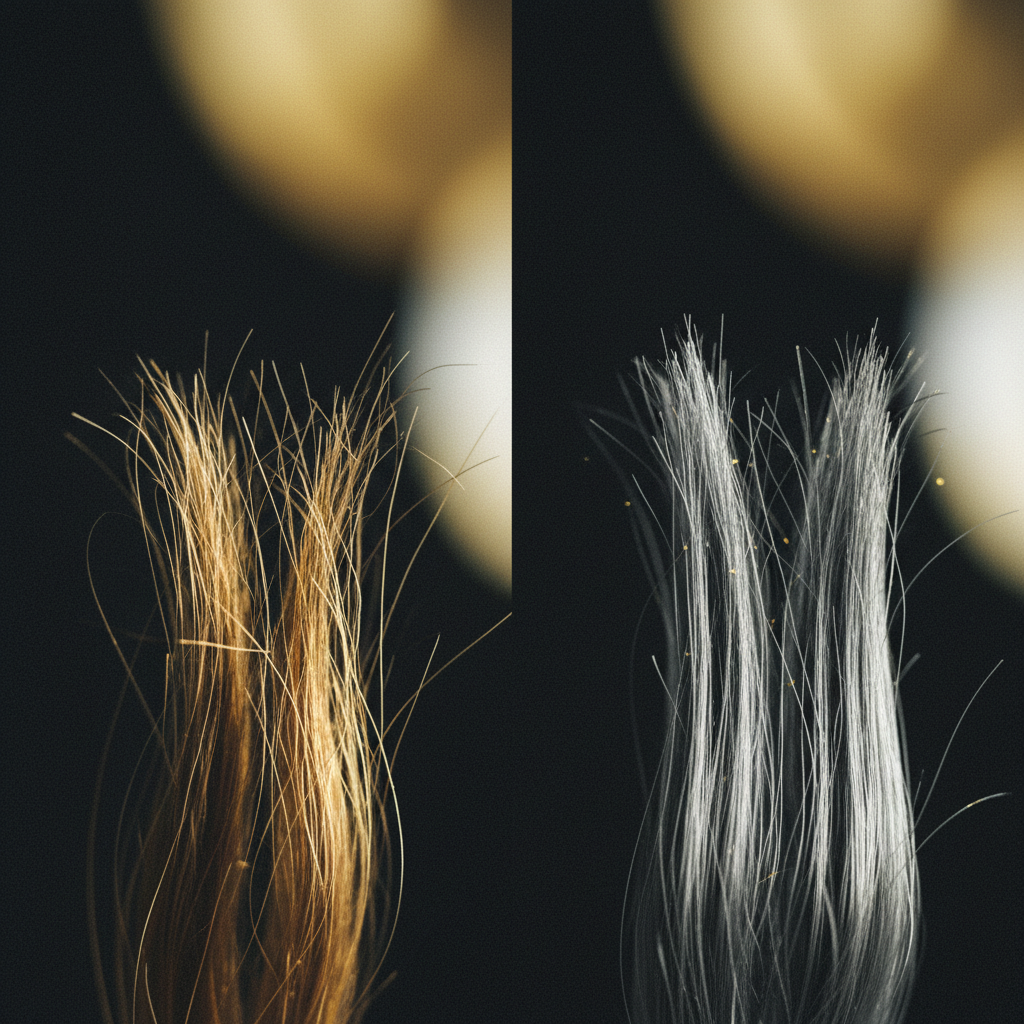
Hair consists of roughly 85 to 90 percent keratin protein, 10 to 12 percent water, and 1 to 3 percent structural lipids, primarily 18-methyleicosanoic acid (18-MEA). When exposed to heated appliances like flat irons, curling wands, or concentrated blow dryers, this architecture undergoes predictable stages of breakdown:
- Lipid erosion (below 140°C): Heat strips the exterior 18-MEA lipid layer from the cuticle. This layer provides natural hydrophobicity and slip. Once lost, cuticle scales flare, friction increases, and moisture escapes rapidly.
- Moisture expansion and "bubble hair" (100°C to 160°C): Applying high heat to damp or insufficiently dried hair turns internal water into steam instantly. This steam expands within the cortex, forming micro-cavities known clinically as bubble hair, which fractures under minimal mechanical stress.
- Protein denaturation (above 155°C): Alpha-helical keratin proteins begin to unfold into unorganised beta-sheet structures. This transition causes permanent loss of fibre elasticity.
- Cystine decomposition (above 180°C to 230°C): Covalent disulphide bonds oxidise into cysteic acid. At 230°C, extreme carbonisation and melting of the cuticle surface occur, leaving the cortex exposed and brittle.
Cosmetic repair technology cannot rebuild the original cellular architecture. However, evidence shows that targeted cosmetic ingredients can seal lifted cuticles, bridge broken bonds, and replenish lost tensile strength to prevent further splitting.
| Styling Temperature Range | Structural Effect on Hair Fibre | Physical Consequence | Cosmetic Reversibility |
|---|---|---|---|
| Below 140°C | Stripping of surface 18-MEA lipid layer | Rough texture, increased porosity, static | High (restored via conditioning lipids) |
| 140°C to 180°C | Softening of keratin matrix, mild cuticle lifting | Dullness, reduced elasticity, tangling | Moderate (restored via protein conditioners) |
| 180°C to 215°C | Alpha-to-beta keratin shift, cystine oxidation | Extreme brittleness, split ends, loss of curl pattern | Low (requires bond builders and regular trims) |
| Above 215°C | Cuticle melting, severe cortex voiding, carbonisation | Transverse shaft breakage, bubble hair deformity | None (irreversible structural failure; must cut) |
The biomechanics of cosmetic fibre repair
Because the hair shaft contains no living cells or blood supply, true biological healing cannot happen. Cosmetic chemists instead rely on functional mimicry.
Bond building and cross-linking
Small molecules capable of diffusing through the cuticle into the cortex can form covalent, ionic, or hydrogen bonds between broken polypeptide chains. By cross-linking free cysteine residues or ionic groups, these agents increase the tensile force required to snap the fibre. They do not reconstruct original biology, but they restore measurable mechanical resistance.
Hydrolysed proteins and amino acids
Hydrolysed wheat, soy, or keratin proteins (molecular weights between 150 and 5,000 Daltons) penetrate superficial cuticular cracks. Larger proteins form a flexible, protective film over the shaft, smoothing irregular edges, while smaller peptide fragments nestle into the matrix to retain cosmetic moisture.
Cationic conditioners and silicones
Heat damage leaves the fibre with an abnormally high negative electrical charge due to cysteic acid formation. Cationic conditioning agents (such as polyquaterniums and behentrimonium chloride) bond electrostatically to these damaged negative sites, reducing combing friction and smoothing lifted cuticle shingles.
Signs of thermal damage to watch for
Thermal injury presents along the length of the fibre, distinguishing it from hormonal or scalp-based conditions:
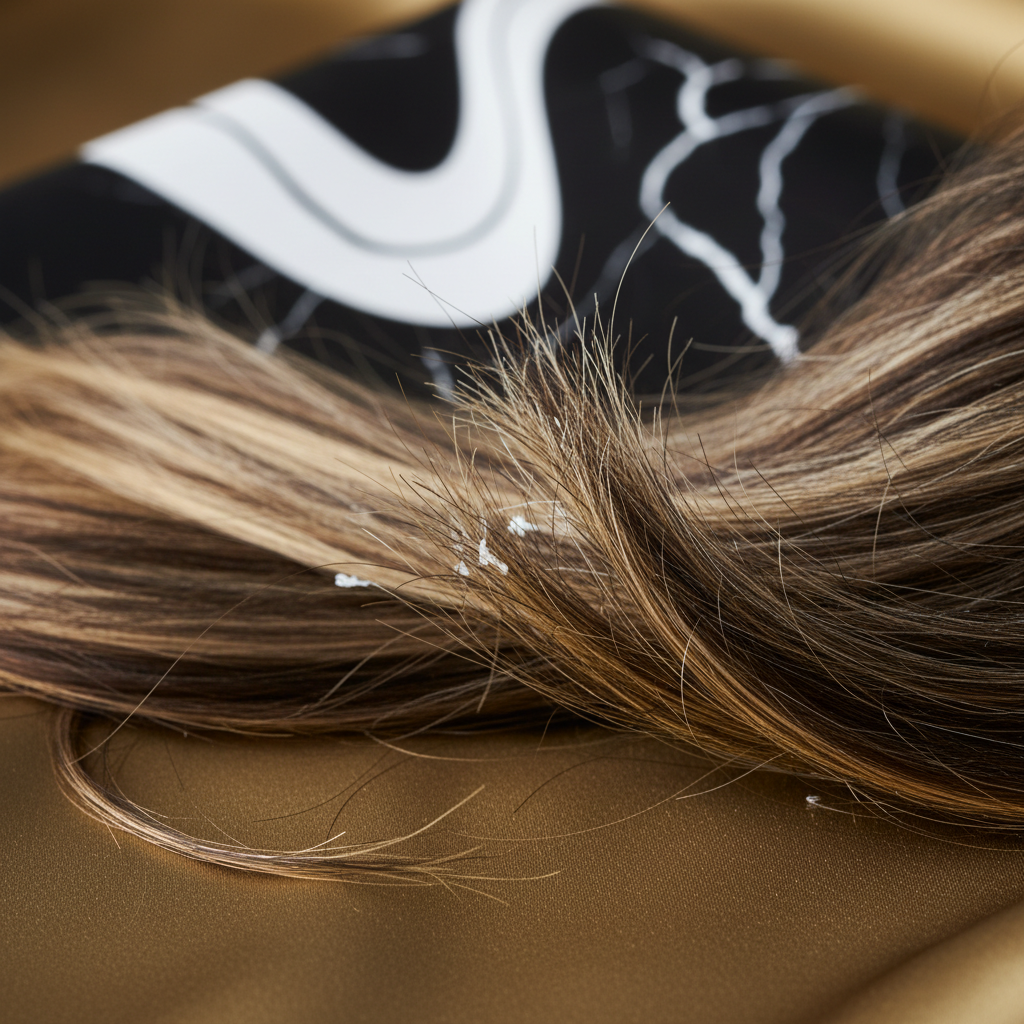
- Trichorrhexis nodosa: Microscopic swellings or white nodes visible along the hair shaft where the cortex has collapsed. The hair bends and fractures cleanly at these points.
- Loss of natural curl elasticity: Thermal denaturation alters the structural geometry of keratin, causing wavy or afro-textured hair to lose its spring and hang straight in patches.
- Fibre rigidity and "straw" feel: The total depletion of internal moisture and surface lipids causes the hair to feel dry, stiff, and unyielding.
- High porosity: Damaged cuticles drink up water instantly but lose it just as fast, leaving the hair frizzy in humid conditions and slow to dry uniformly.
When breakage is mistaken for hair loss
A common clinical point of confusion is mistaking heat-induced fibre breakage for follicular hair loss.
If you find short, jagged fragments on your shoulders, pillowcase, or bathroom floor without a small white bulb attached to the end, you are experiencing shaft fracture from structural damage, not follicular shedding. Conversely, hairs shed from the root (such as in telogen effluvium or androgenetic alopecia) will feature an intact bulb and measure the full length of your hair strand. Heat tools do not cause telogen effluvium unless severe scalp burns occur, but they can dramatically thin hair density through mid-shaft breakage.
Corrective actions: mitigating and repairing heat damage
Minimising thermal harm involves precise habit adjustments and protective chemistry:
- Never iron wet or damp hair: Ensure hair is 100 percent dry before flat-ironing to avoid internal moisture boiling and subsequent bubble hair deformities.
- Employ thermal protectants universally: Formulations containing copolymer films, quaternised silicones, or panthenol distribute heat evenly and reduce peak temperature shocks across the cortex.
- Calibrate tool temperature: Keep appliances below 180°C whenever possible. Fine, chemically treated, or bleached fibres should stay below 150°C.
- Adopt protein-rich conditioning: Weekly treatments combining hydrolysed proteins and biomimetic lipids restore surface hydrophobicity and seal damaged cuticle margins.
- Regular trimming: Once a split end forms (trichoptilosis), the fissure will migrate upward along the cortex. Trimming broken ends halts progressive tearing.
Supporting distressed hair with targeted care
When thermal styling leaves hair fragile, dull, or snapping, shifting to a routine focused on moisture retention and scalp vitality is essential.
Watermans provides nourishing formulations designed to support the appearance of resilient, fuller-looking hair. While topical shampoos cannot biologically reverse melted keratin, formulas like Watermans Grow Me deliver restorative ingredients, including hydrolysed lupin protein, biotin, and rosemary, which fortify the feel of thinning, breakage-prone hair. Complementing this with Watermans Condition Me conditioner provides vital moisture, smoothing lifted cuticles and reducing the mechanical friction that causes heat-compromised fibres to snap.
When to consult a professional
If hair breaks continually despite ceasing thermal styling and applying protein treatments, consult a certified trichologist or dermatologist. A professional evaluation using dermoscopy can determine whether chemical over-processing, genetic fibre vulnerabilities, or nutritional deficiencies are compounding the structural breakdown.
Frequently asked questions about Thermal Heat Damage and Hair Fibre Repair
Can Thermal Heat Damage and Hair Fibre Repair products permanently fix split ends?
No. Split ends represent a complete structural detachment of the cortex and cuticle. Repair serums, bond builders, and silicones act as temporary adhesives that glue split fibres together until your next wash. The only permanent solution for split ends is cutting them off with clean shears.
What is the maximum safe temperature for styling hair?
Most healthy hair fibres can tolerate temperatures up to 180°C for brief intervals if a heat protectant is present. Fine, grey, or bleached hair degrades at lower thresholds and should not be exposed to styling tools set above 150°C.
How do heat protectants actually work?
Heat protectants form a thin protective barrier with low thermal conductivity over the hair shaft. This barrier slows heat transfer into the cortex, spreads heat evenly, and reduces moisture loss, while smoothing down the cuticle to reduce friction from the styling tool.
Does thermal damage stop hair from growing from the scalp?
No. Thermal tools applied down the hair shaft do not impact the dermal papilla inside the follicle. Your hair continues to grow from the root at its normal rate, but excessive breakage along the shaft can make it appear as though your hair has stopped growing.
Moving forward with heat care and fibre maintenance
Navigating Thermal Heat Damage and Hair Fibre Repair requires realistic expectations grounded in structural science. While science cannot resurrect denatured keratin, intelligent thermal management and modern hair chemistry can seal lifted cuticles, preserve structural moisture, and prevent cosmetic breakage. By lowering your iron temperatures, drying thoroughly before styling, and incorporating fortifying protein-lipid care, you can preserve the integrity and strength of your hair over the long term.
Sources and references
- Journal of Cosmetic Science: "Thermal analysis of hair using differential scanning calorimetry" (2004)
- International Journal of Trichology: "Hair shaft abnormalities: A systematic review of physical and chemical damage" (2011)
- Journal of the Society of Cosmetic Chemists: "Effect of heat on hair cuticle and internal structure" (1998)
- British Association of Dermatologists: "Hair breakage, trichorrhexis nodosa and physical hair weathering" (2020)
Find these ingredients in Watermans products
- Biotin: you will find this ingredient in our Hair Growth Shampoo.