Preventing Breakage During Styling: The Complete Guide
8 min read ·
Learn how to protect your hair with our evidence-based guide on Preventing Breakage During Styling, covering thermal limits, detangling tools, and tension.
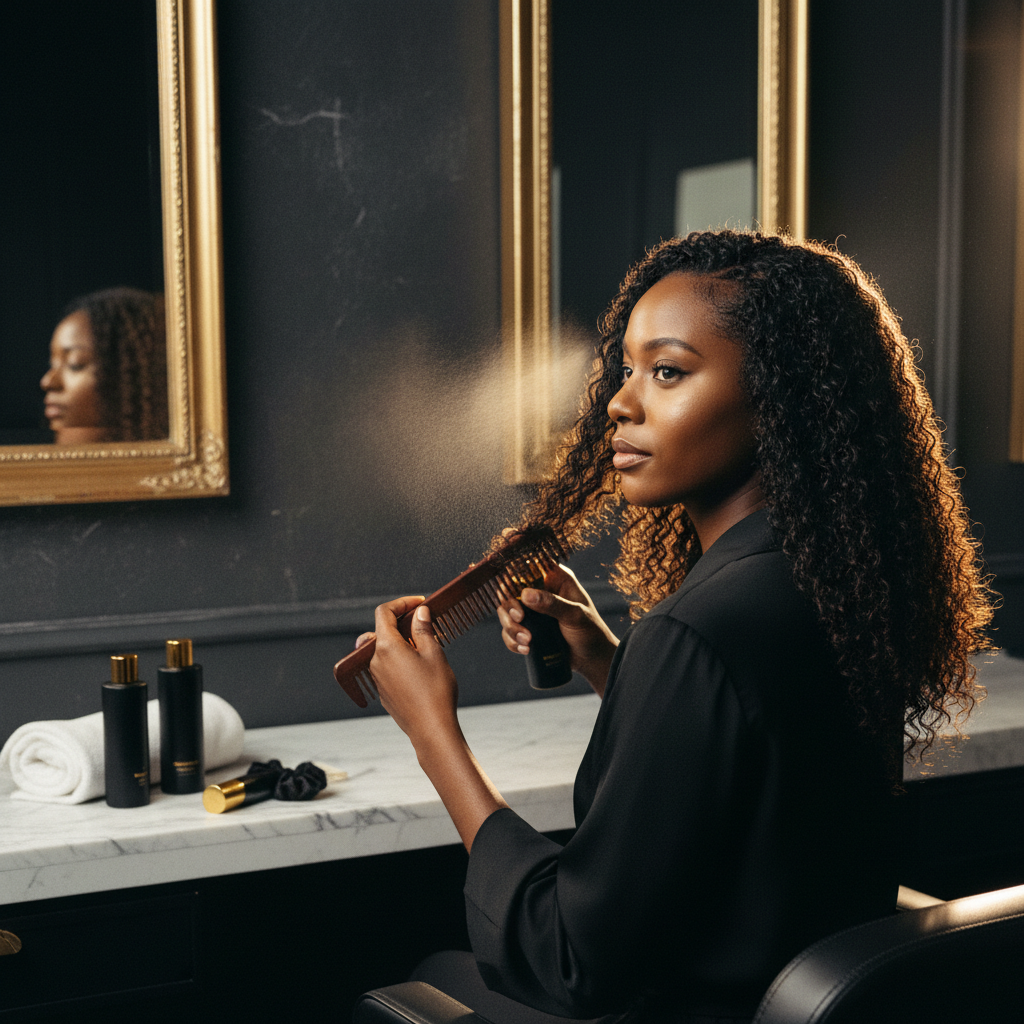
Quick answer: Preventing breakage during styling requires minimising mechanical friction, controlling thermal exposure, and preserving the internal protein structure of the hair shaft. Hair fibres are most vulnerable when wet or overheated, as moisture weakens hydrogen bonds and heat degrades keratin. Successful prevention relies on using wide-tooth tools on conditioned hair, applying heat protectants below 180°C, and avoiding excessive tension. However, styling adjustments cannot reverse existing split ends; damaged fibres must be trimmed to stop fractures travelling upward.
Key takeaways
- Mechanical force from tight elastics, rough brushing, and dense combs is the leading cause of styling snaps.
- Hair fibres can stretch up to 30% beyond their dry length when wet, but their tensile strength drops significantly, making wet hair prone to tearing.
- Thermal tools strip moisture, denature alpha-keratin into beta-keratin, and cause structural cracks above 180°C to 200°C.
- Slip is your strongest defence: leave-in conditioners and natural lipid coatings reduce tool friction by up to 60%.
- Breakage is not follicular shedding; it leaves behind fractured, uneven shafts without the white bulb seen in telogen hairs.
Preventing Breakage During Styling: what the evidence shows
Preventing breakage during styling depends primarily on protecting the cuticle, the protective outermost layer of overlapping scales. According to peer-reviewed research published in the Journal of Cosmetic Science, mechanical grooming stresses the hair cuticle through repetitive abrasive contact. When you run a comb or brush through tangles, friction lifts the cuticle scales. Once these scales chip away, the underlying cortex loses its protective shield, leading to mid-shaft fractures.
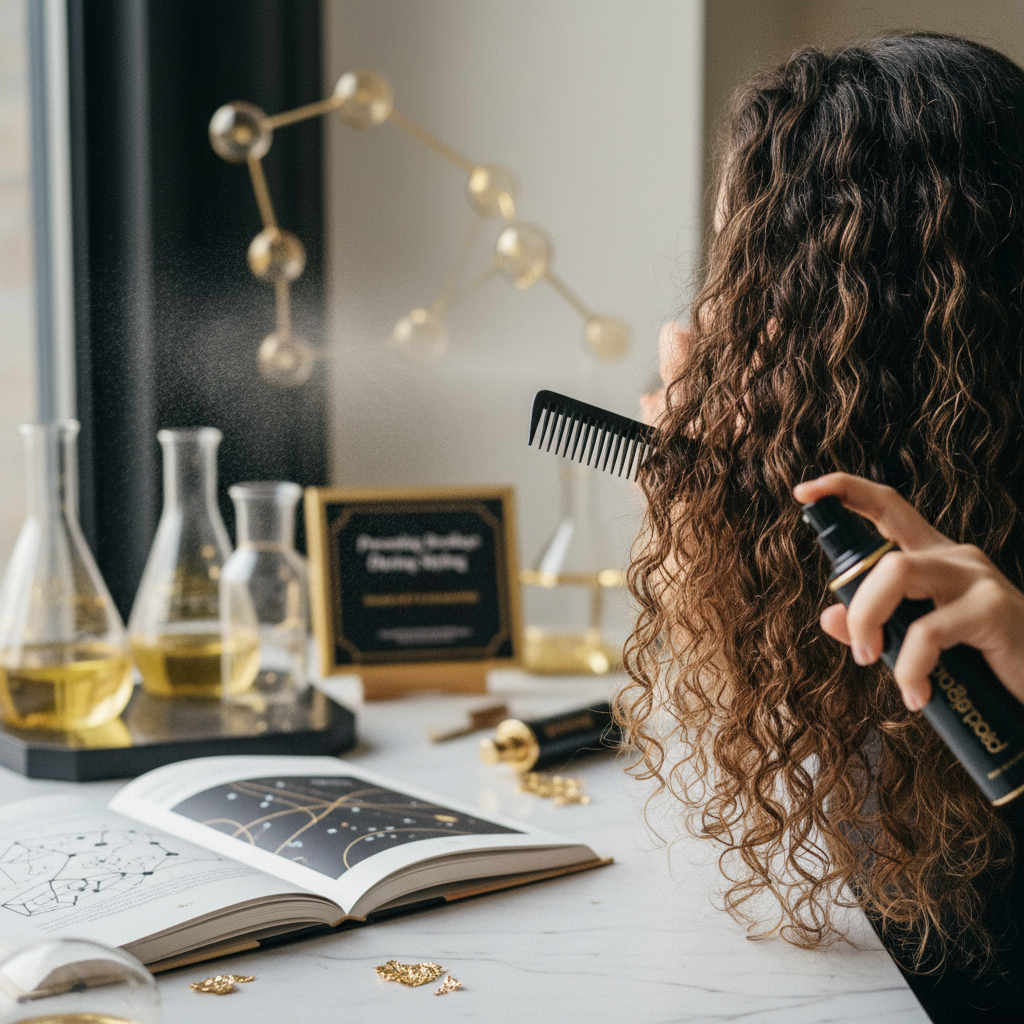
Evidence demonstrates that the moisture state of the hair dictates its mechanical resilience. Wet hair swells, absorbing up to 30% of its dry weight in water. This process temporarily breaks the hydrogen bonds that give the hair shaft its structural stiffness. While wet hair gains elasticity, its overall tensile strength decreases. Applying high-tension styling, such as tight ponytails or brisk brushing on dripping wet hair, easily exceeds the fibre's elastic limit, snapping the cortex.
Thermal styling presents an equally documented hazard. Controlled studies reveal that temperatures exceeding 180°C cause the cuticular lipids (specifically 18-methyleicosanoic acid, or 18-MEA) to degrade. At 215°C to 230°C, the hair's cortical keratin structurally denatures. When moisture trapped within the cortex vaporises too rapidly, it expands into microscopic voids, a condition known clinically as bubble hair. Using verified heat protectants creates a low-conductivity barrier that slows heat transfer and reduces cuticle degradation.
The mechanical mechanisms behind hair fractures
To avoid hair fibre failure, you must understand the specific physical forces exerted during styling:
- Tensile stress: This occurs when you pull hair tightly against resistance, such as pulling a brush through a dense knot or securing a rigid elastic band. If the pull exceeds the hair's yield point, the cortex snaps.
- Shear and torsional stress: Twisting sections tightly during braiding, rolling, or round-brush blow-drying forces cuticular layers to slide against one another. Excessive twisting fractures the intercellular cement.
- Frictional abrasion: Backcombing or running fine-toothed plastic combs down dry, untreated strands strips the outer F-layer. The resulting roughness increases inter-fibre friction, compounding tangle formation on subsequent passes.
| Styling Practice | Primary Stress Type | Structural Impact | Safer Evidence-Based Alternative |
|---|---|---|---|
| Brushing dripping wet hair | Tensile stress | Over-stretches weakened hydrogen bonds; snaps wet fibres | Detangle damp hair saturated with conditioner using wide-tooth tools |
| Flat ironing unshielded hair (>200°C) | Thermal degradation | Denatures keratin; causes cuticle blistering and bubble hair | Keep tools between 150°C and 180°C; apply silicone or polymer protectant |
| Securing tight ponytails with rubber bands | Mechanical compression & shear | Strips cuticle scales at the tie point; causes localised mid-shaft breakage | Use satin or silk scrunchies; rotate the placement of the hair tie |
| Dry backcombing / teasing | Frictional abrasion | Reverses natural cuticle overlap; strips the protective F-layer | Build root volume using light texturising sprays and directional blow-drying |
| Rough towel-rubbing | Micro-abrasion & tension | Dislodges cuticle cells; accelerates matting and knotting | Gently squeeze or blot moisture using a smooth microfibre cloth |
Recognising the signs of styling breakage
Telling the difference between normal shed cycles and mechanical breakage is straightforward once you examine the fallen strands:

- Missing bulb: A naturally shed hair includes a tiny, hard white bulb (the telogen club) at the root end. Breakage fragments lack this bulb and feature sharp, split, or frayed ends.
- Short fragments in the sink: Finding numerous tiny pieces of hair (1 to 5 cm) on your shoulders or bathroom counter points directly to mechanical snapping during styling.
- Frayed "halo" layers: Uneven, frizzy layers sitting around the crown or hairline often indicate where styling tools or tight clips exert the greatest mechanical tension.
- Rough texture along the shaft: Running your fingers from root to tip should feel smooth. If you encounter tiny notches, beads, or rough bumps, the shaft is suffering from trichorrhexis nodosa, a classic sign of physical styling trauma.
Best practices for avoiding damage during daily styling
Protecting hair integrity does not mean abandoning your styling routine entirely. Adopting evidence-based techniques safeguards the cuticle throughout the process.
Master the detangling sequence
Never force a comb downwards from root to tip through dry hair. Always start at the tips, working through the bottom two inches before moving upward to the mid-lengths. Work in small, manageable sections. Applying a detangling spray or light leave-in conditioner provides lubricity, reducing the mechanical force required to glide tools through the hair.
Respect the temperature ceiling
Keep heated styling tools under 180°C whenever possible. For fine or chemically processed hair, temperatures between 140°C and 160°C provide sufficient styling efficiency without scorching the outer layer. Never apply flat irons or curling wands to damp hair; the steam created inside the shaft expands violently, creating irreversible fractures. Ensure hair is completely dry before introducing hot iron plates.
Rethink accessories and tension
Metal-clasped elastics and exposed rubber bands act like tiny saws against the hair shaft. Switch to seamless elastics, soft spiral coils, or silk scrunchies. When wearing protective styles, braids, or updos, ensure your scalp feels relaxed. Stinging, pulling, or visible red bumps around follicles signal that tension is too high, risking both shaft breakage and traction alopecia.
When breakage stems from internal or chemical factors
While rough styling causes substantial breakage, weakened hair fibres are frequently primed for damage by chemical or environmental stressors beforehand:
- Bleaching and chemical relaxing: Alkaline chemicals lift the cuticle scales and break disulphide bonds to alter tone or structure. If over-processed, the cortex loses up to 50% of its native tensile strength, making breakage almost inevitable during standard styling.
- Severe nutritional gaps: Protein malnutrition, iron deficiency anaemia, or severe zinc shortfalls impair keratin synthesis in the matrix. The emerging hair fibre has a thinner diameter and lower structural resistance to everyday tension.
- Systemic health conditions: Thyroid irregularities can alter hair texture, rendering shafts brittle and unusually dry.
If you experience diffuse thinning, sudden scalp tenderness, or hair snapping despite exceptionally gentle handling, consult a dermatologist or trichologist. They can perform a trichoscopy or pull test to rule out underlying systemic or follicular conditions.
Supporting hair fibre resilience with Watermans
Alongside careful styling habits, maintaining hair hydration and a healthy scalp environment creates the ideal foundation for strong hair fibres.
Watermans Grow Me Shampoo and Condition Me Conditioner work together to support fibre resilience and improve manageability. The formula incorporates hydrolysed lupin protein, biotin, caffeine, and natural oils like argan. When applied, these conditioning agents coat the hair shaft, smoothing lifted cuticles and replenishing surface slip. By reducing mechanical resistance during brushing and combing, this targeted care helps lower the day-to-day friction that leads to mid-shaft snaps.
Frequently asked questions about Preventing Breakage During Styling
Can leave-in conditioner assist in Preventing Breakage During Styling?
Yes. Leave-in conditioners coat the hair fibre with cationic polymers, fatty alcohols, and emollients. These ingredients flatten cuticles and dramatically reduce inter-fibre friction. By lowering the drag force of brushes and combs, leave-in formulas minimise the mechanical strain that snaps weakened strands during wet or dry styling.
Is it better to detangle hair wet or dry?
For straight to wavy hair, detangling slightly damp or dry hair pre-treated with light slip is generally safest, as dry hair possesses higher tensile strength. For tight curls and coily textures (types 3 and 4), detangling should only be done wet and saturated with conditioner, which provides the lubrication needed to avoid snapping coiled strands.
Can split ends be glued back together by styling products?
No cosmetic product can permanently mend split ends. Certain polishes and serums use polymers to temporarily seal cracked cuticles until the next wash. However, the fracture remains structurally compromised. The only permanent resolution is trimming the split ends away to prevent the crack from travelling up the shaft.
How tight is too tight for protective styles?
A style is too tight if it gives you a headache, pulls at your scalp, or causes small bumps around the hairline. Tension should never be painful. High tension strains the hair shaft at the root, leading to breakage and putting you at risk of traction alopecia over time.
Summary
Preventing breakage during styling comes down to minimising excessive mechanical friction, lowering heat exposure, and maintaining surface slip. Hair is a delicate, non-living fibre that cannot biologically repair itself once fractured; every point of stress accumulates over time. By detangling gently from ends to roots, respecting thermal limits, and choosing low-friction accessories, you protect your hair's structural integrity and keep strands intact.
Sources and references
- Journal of Cosmetic Science: Chemical and Physical Behavior of Human Hair, Robbins, C. R., 2012.
- International Journal of Trichology: Hair Cosmetics: An Overview, Gavazzoni Dias, M. F., 2015.
- Skin Appendage Disorders: The Impact of Thermal Styling on Hair Fiber Integrity, Lee, Y. Et al., 2011.
- British Journal of Dermatology: Hair Breakage and Traction Alopecia: Mechanical Factors in Hair Damage, 2017.
Find these ingredients in Watermans products
- Zinc: you will find this ingredient in our Hair Vitamins.