Heat Damage in Hair: The Science, Signs, and Practical Management
9 min read ·
Learn how Heat Damage in Hair alters keratin proteins, weakens the hair shaft, and causes breakage. Discover real evidence-based solutions and prevention methods.
Quick answer: Heat Damage in Hair occurs when elevated temperatures from styling tools alter the structural keratin proteins, melt protective lipid barriers, and vaporise internal moisture within the hair shaft. Thermal tools operating above 150°C break disulphide and hydrogen bonds, resulting in dryness, rough texture, loss of curl pattern, and mechanical breakage along the fibre. The main limitation is that hair is non-living tissue: once heat alters the protein matrix, the structural damage is permanent and cannot be biologically reversed, requiring mechanical trimming and protective management.
Key takeaways
- Structural damage begins at temperatures as low as 140°C, with severe, irreversible degradation of keratin occurring above 200°C.
- Applying heat to damp or wet hair causes "bubble hair", where rapidly boiling water inside the cortex forms permanent internal voids that fracture the fibre.
- Heat damage represents physical hair breakage along the shaft; it does not originate in the follicle and does not cause true hair loss or alopecia.
- Silicone-based and polymer-based thermal protectants reduce heat conduction and distribute thermal stress, but they cannot provide 100% protection against extreme temperatures.
- Once the internal alpha-helix keratin structure denatures into disordered beta-sheet configurations, cosmetic conditioners can only temporarily patch the surface, not repair the internal bond architecture.
Heat Damage in Hair: what the evidence shows
Research published in cosmetic science and textile journals shows that thermal styling tools directly compromise the physical integrity of the hair shaft. Hair consists primarily of fibrous proteins called keratins, organised into an outer protective cuticle and an inner structural cortex. When you apply temperatures commonly generated by flat irons, curling wands, and high-heat hair dryers (typically 160°C to 230°C), several distinct physical transformations occur.
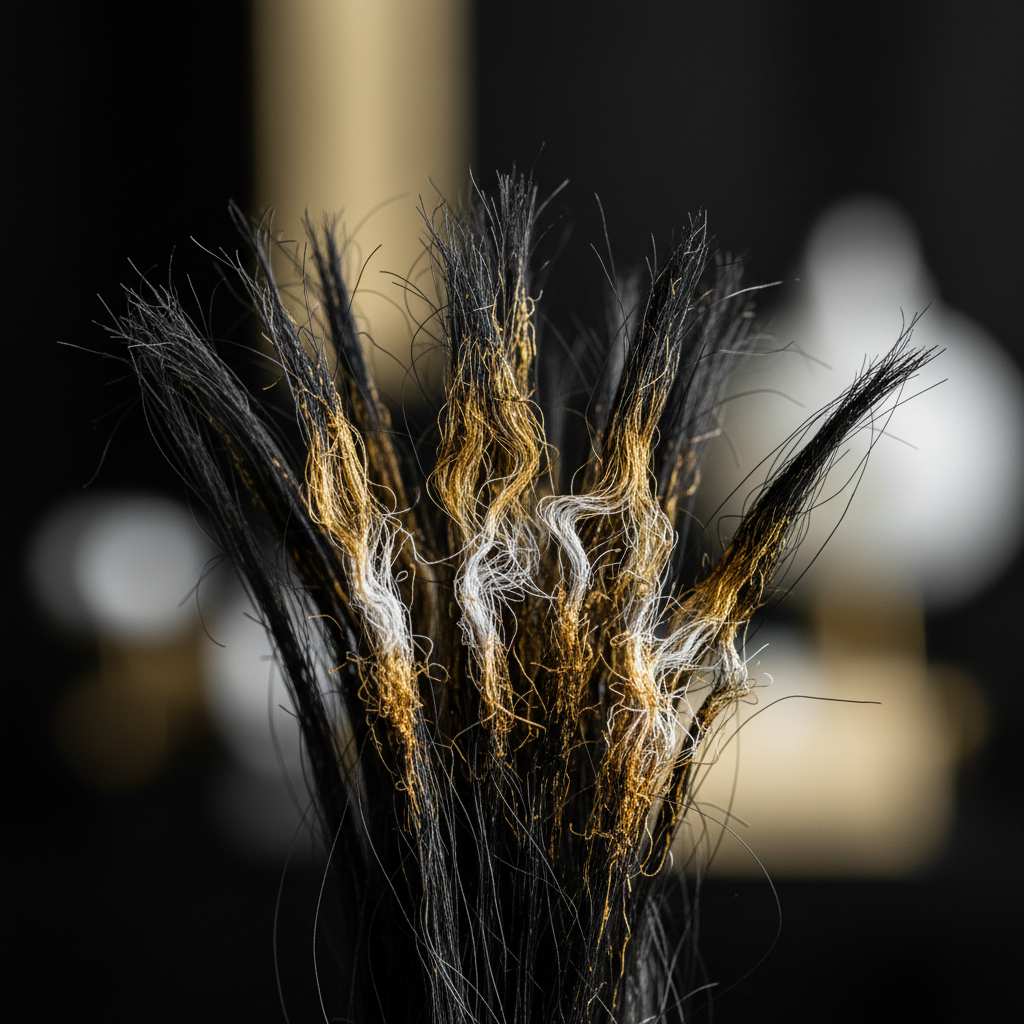
Below 140°C, thermal exposure primarily drives away surface and free water. However, between 140°C and 160°C, the protective 18-methyleicosanoic acid (18-MEA) lipid layer that coats the cuticle begins to decompose. This lipid layer acts as natural waterproofing, giving hair its hydrophobic properties. Once stripped, the hair becomes hydrophilic, absorbing ambient humidity rapidly and tangling easily.
Between 160°C and 190°C, structural keratin begins to undergo thermal denaturation. The tightly coiled alpha-helices untwist into disordered beta-sheet structures. Above 200°C, structural disulphide bonds crack, cystine degrades into cysteic acid, and melanin pigments oxidize, causing noticeable colour fading and brassiness. Repeated thermal exposure creates microscopic cracks, leading directly to cuticle chipping, split ends, and sudden fibre breakage.
The physical mechanisms of thermal breakdown
To understand thermal trauma, you need to examine the three physical layers of the hair fibre and how each responds to intense heat.
1. Cuticle lifting and cracking
The outermost layer consists of overlapping scales made of hard keratin. Extreme heat causes these scales to buckle, lift, and curl at the edges. When the edges curl, the hair loses its smooth surface, preventing light from reflecting uniformly. This gives the hair a dull, matte appearance. As styling tools glide over lifted cuticles, mechanical friction shears the scales off entirely, exposing the delicate cortex beneath.
2. Moisture flash and bubble hair
When you apply a heated iron to hair that still contains excess water, the liquid trapped within the cortex vaporises instantaneously. Because steam occupies significantly more volume than liquid water, it expands violently against the cell walls. This phenomenon, known clinically as "bubble hair deformity", creates microscopic hollow cavities inside the hair fibre. These bubbles cause severe localised thinning, making the hair snap under the slightest tension.
3. Protein denaturation in the cortex
The cortex accounts for roughly 85% to 90% of the total strength and elasticity of the hair fibre. It contains long polypeptide chains held together by hydrogen bonds, salt bridges, and covalent disulphide bonds. Heat breaks the temporary hydrogen bonds immediately (which allows you to reshape your hair into curls or straight styles). However, sustained temperatures above 185°C permanently degrade the covalent disulphide bonds. When these break, the hair permanently loses its elastic recovery, meaning stretched hair will no longer bounce back to its original shape.
| Temperature Range | Structural Effect on Hair Fibre | Visual and Sensory Signs |
|---|---|---|
| Up to 140°C | Moisture evaporation; temporary hydrogen bond release | Dry surface, temporary shape change |
| 140°C to 160°C | 18-MEA lipid breakdown; minor cuticle curling | Mild frizz, reduced natural shine, rough feel |
| 160°C to 190°C | Alpha-to-beta keratin transition; initial protein breakdown | Loss of elasticity, split ends, reduced curl definition |
| Above 200°C | Disulphide bond cleavage; melanin degradation; melting of matrix | Severe breakage, white bulbous ends, brassy discolouration |
Identifying the signs of heat trauma
Thermal trauma manifests differently depending on your natural hair texture, but common characteristics include:
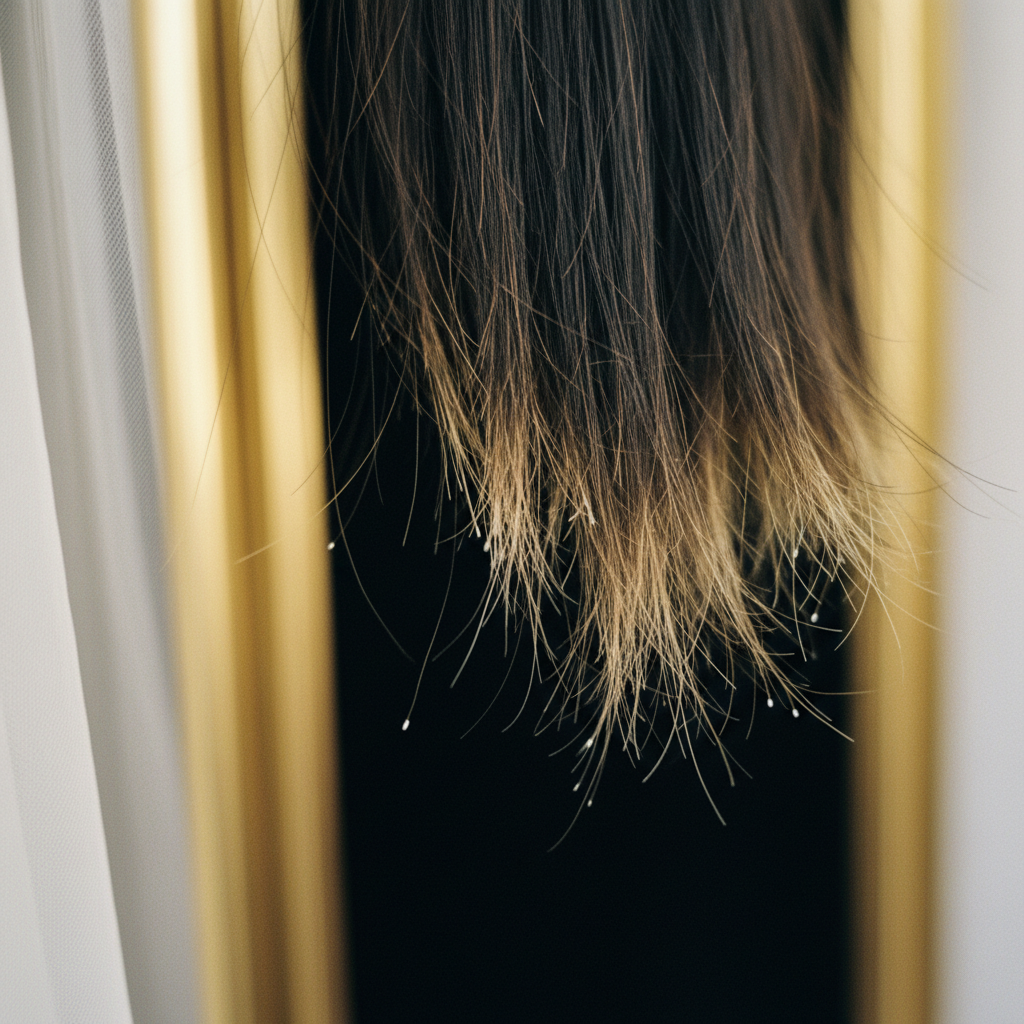
- Altered curl patterns: Wavy, curly, or coily hair appears limp, loose, or irregularly straight at the mid-lengths and ends.
- Loss of elasticity: When you pull a wet strand gently, healthy hair stretches up to 30% and bounces back; heat-degraded hair snaps immediately or remains permanently stretched and limp.
- Chronic dryness and porosity: Hair drinks up moisture and conditioners instantly but feels parched, brittle, and dry again within hours.
- White dots at fibre ends (Trichorrhexis nodosa): Small white specks appear along the shaft, marking points where the cortex has fractured internally before snapping off completely.
- Excessive tangling: Without a smooth, intact cuticle layer, individual hair fibres catch against each other like velcro.
What the evidence does not show
There is no evidence that Heat Damage in Hair causes direct follicular damage or medical hair loss conditions like androgenetic alopecia or alopecia areata. Hair follicles sit beneath the scalp skin, insulated from ambient tool temperatures unless you physically burn your scalp skin with a direct contact injury.
Breakage along the shaft is often confused with root shedding. When damaged hair snaps off at the mid-shaft, you may notice small fragments falling onto your clothes or into the sink, but the root remains intact in the follicle. Furthermore, cosmetic formulations claiming to "repair broken bonds permanently" or "reverse heat damage" cannot rebuild the original biological architecture of the hair fibre. Hydrolysed proteins, plant oils, and synthetic polymers can coat cracks, reinforce existing bonds temporarily, and smooth down cuticles, but they cannot make non-living dead keratin biologically new again.
Corrective steps and thermal protection
Because structural damage is permanent, managing thermal exposure focuses on mitigation, protection, and selective trimming.
Adjust your temperature settings
Never use high-heat settings unnecessarily. Fine, chemically treated, or bleached hair should never encounter temperatures above 150°C to 160°C. Medium or coarse hair should rarely require temperatures exceeding 180°C. Only very thick, resistant textures require higher temperatures, and even then, exposure must be brief.
Always ensure hair is completely dry
Never use flat irons or curling tongs on damp or wet hair. Wait until the hair is 100% dry to the touch to prevent internal boiling and the creation of bubble hair cavities.
Apply heat protectants correctly
Heat protectant sprays and serums work by depositing a protective barrier over the cuticle, typically using silicones (such as dimethicone or amodimethicone), polyquaternium polymers, or specialised copolymers. These ingredients have low thermal conductivity, meaning they slow the rate of heat transfer from the tool to the hair fibre. They also smooth the cuticle surface, reducing mechanical friction from styling plates.
Structural trimming
The only true cure for split ends and fractured fibres caused by extreme heat is a professional trim. Removing the split ends prevents the cracks from propagating upward toward the root, preserving the remaining healthy hair shaft.
Supporting compromised hair with Watermans
When managing hair compromised by excessive heat, reducing mechanical friction and nourishing the scalp environment are essential steps. Watermans offers formulations developed to support hair resilience and strand condition.
The Grow Me Shampoo and Condition Me Conditioner range features hydrolysed lupin protein, biotin, rosemary extract, niacinamide, and argan oil. The hydrolysed proteins help temporarily fill microscopic gaps in lifted cuticles, reducing porosity and improving tensile resistance against everyday mechanical brushing. While topical cosmetics cannot rebuild fully denatured disulphide bonds inside the cortex, regular use of targeted conditioning agents improves surface slip, helps detangle fragile fibres, and prevents avoidable mechanical breakage while new hair grows out from the scalp.
When the cause may be something else
If you notice excessive shedding where the entire hair strand falls out with a white bulb attached at the root, heat is not the culprit. True hair shedding indicates biological processes within the hair follicle:
- Telogen Effluvium: Sudden shedding triggered by physical trauma, illness, severe stress, or nutrient deficiencies.
- Chemical processing damage: Bleaching, perms, and chemical relaxers cleave chemical bonds through chemical oxidation or alkaline swelling, presenting symptoms identical to heat damage.
- Mechanical friction: Aggressive brushing, tight elastics, and rough towel drying can snap hair shafts even without heat.
Consult a trichologist or dermatologist if you notice sudden patchy hair thinning, significant scalp irritation, or increased shedding directly from the root.
Frequently asked questions about Heat Damage in Hair
Can Heat Damage in Hair be reversed with deep conditioning?
No, Heat Damage in Hair cannot be reversed biologically because hair consists of non-living keratin fibres that lack cellular regeneration. Deep conditioning treatments, protein masks, and bond-building formulations provide significant cosmetic improvements by smoothing the cuticle, restoring lipid barriers, and patching porous sections. However, they are temporary treatments that wash out over time. The only permanent solution for severely fractured ends is trimming.
What temperature causes permanent heat damage?
Permanent structural degradation begins between 160°C and 190°C, where the alpha-keratin helices denature into disordered structures. At temperatures of 200°C and above, covalent disulphide bonds degrade and melanin decomposes. Styling tools should ideally stay below 180°C, and below 160°C for bleached or chemically altered hair.
How do I know if my hair is heat damaged or just dry?
Dry hair lacks surface moisture and natural sebum, but it retains its natural curl pattern, elasticity, and uniform strength once conditioned. Heat-damaged hair, by contrast, suffers from internal structural breakdown. It displays altered or limp curl patterns, snaps easily under light tension, tangles persistently, and often features split ends or tiny white fractures along the hair shaft that do not resolve with conditioning alone.
Does a heat protectant prevent all thermal damage?
No. Heat protectants significantly reduce damage by slowing heat conduction and reducing surface friction, but they do not eliminate it entirely. Studies indicate that quality thermal protectants reduce thermal degradation by approximately 30% to 50%. Relying on protectants while repeatedly applying styling tools at 230°C will still cause cumulative structural damage over time.
Conclusion
Understanding Heat Damage in Hair requires recognising that hair fibres cannot heal themselves once structural keratin proteins denature and disulphide bonds break. By keeping styling tool temperatures below 180°C, ensuring hair is completely dry before applying irons, consistently using quality heat protectants, and scheduling regular trims, you can protect the integrity of your hair and maintain resilient, healthy-looking lengths.
Sources and references
- Society of Cosmetic Chemists, "Thermal degradation of hair protein and lipid components", Journal of Cosmetic Science, 2011.
- International Journal of Cosmetic Science, "Investigation of the effect of thermal styling tools on human hair fibre", 2014.
- British Journal of Dermatology, "Bubble hair: clinical and microscopic features of an acquired hair shaft abnormality", 1994.
- Journal of the Society of Cosmetic Chemists, "The effects of heat on hair keratin structure and physical properties", 2004.
Find these ingredients in Watermans products
- Biotin: you will find this ingredient in our Hair Growth Shampoo.
- Niacinamide: you will find this ingredient in our Hair Mask.