Thermal Heat Damage and Hair Fibre Protection: The Science of Styling Safely
8 min read ·
Learn the science behind Thermal Heat Damage and Hair Fibre Protection, from keratin breakdown to lipid loss, plus proven ways to shield your hair from hot tools.
Quick answer: Understanding Thermal Heat Damage and Hair Fibre Protection is essential for maintaining tensile strength, cuticle integrity, and moisture balance when styling with hot tools. Excessive heat alters the structural alpha-keratin inside the hair cortex and melts the protective surface lipid layer. While heat protectants significantly reduce surface friction and distribute thermal energy evenly, their protection has physical limits. They cannot completely prevent internal protein degradation or moisture flash when hair is repeatedly exposed to temperatures above 185°C.
Key takeaways
- Thermal tools above 150°C begin degrading surface lipids, while temperatures exceeding 185°C cause irreversible denaturation of cortical alpha-keratin.
- Heat protectants work by slowing thermal transfer, buffering direct surface contact, and lowering styling friction.
- Wet hair heated rapidly experiences "bubble hair deformity", where trapped moisture vaporises violently, hollowing out the cortex.
- Thermal damage cannot be biologically healed, as the hair fibre is non-living tissue; management focuses on prevention, lubrication, and synthetic restructuring.
- Adjusting iron temperature, using silicone- or polymer-based barriers, and ensuring hair is bone-dry before flat-ironing minimise severe mechanical breakage.
Thermal Heat Damage and Hair Fibre Protection: what the evidence shows
Scientific research into Thermal Heat Damage and Hair Fibre Protection demonstrates that heat changes both the chemical bonds and the physical architecture of the hair shaft. Hair consists primarily of fibrous proteins called keratin, bound together by disulphide bonds, hydrogen bonds, and salt bridges. Surrounding these proteins is an outer protective shield of overlapping cuticle scales coated in 18-methyleicosanoic acid (18-MEA), a naturally occurring lipid layer that renders hair hydrophobic.
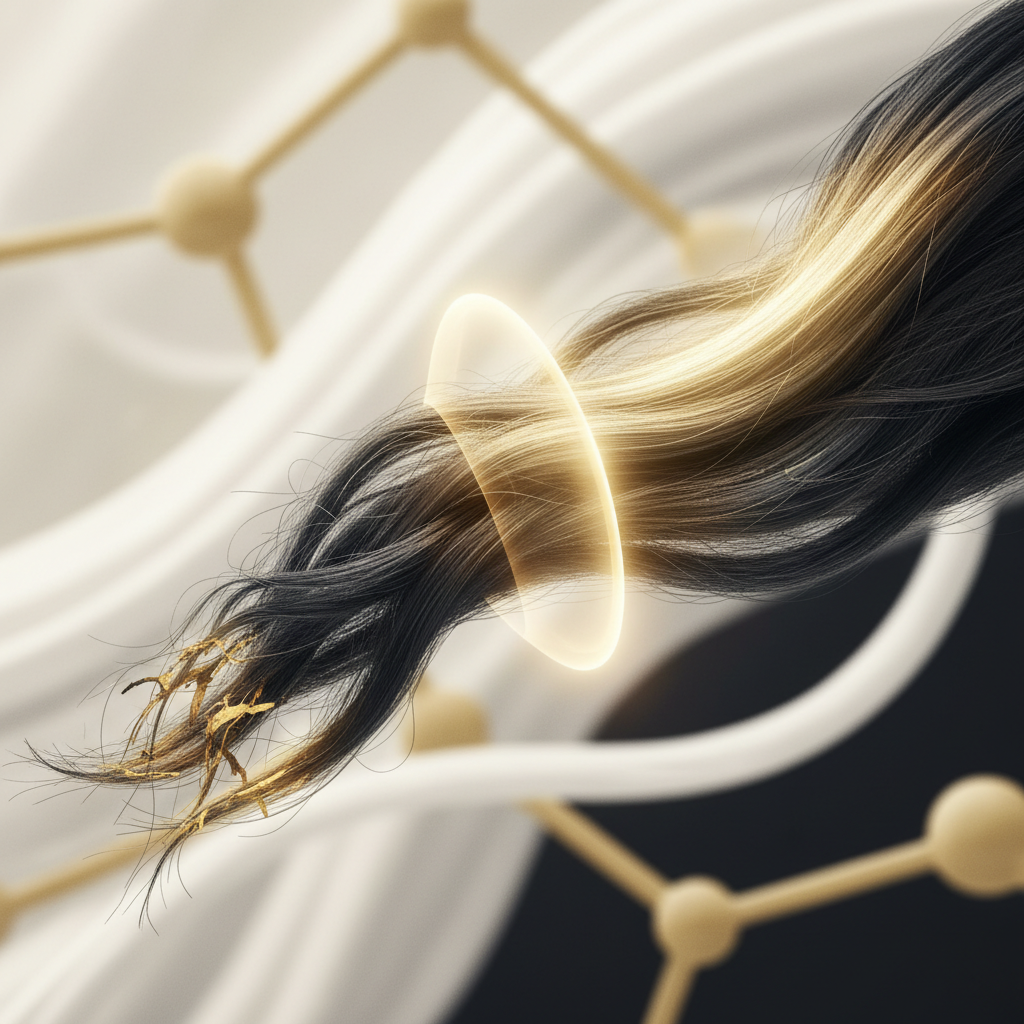
When you apply thermal tools such as straighteners, curling wands, or blow dryers, heat strips this natural lipid boundary. Controlled laboratory tests using differential scanning calorimetry (DSC) show that alpha-keratin begins to denature between 155°C and 230°C, depending on the moisture content and chemical history of the fibre. Dry keratin undergoes structural transition at roughly 220°C to 235°C, but wet or damp keratin denatures at significantly lower thresholds, sometimes as low as 140°C to 150°C.
Thermal protectant formulations mitigate this destruction. Studies published in cosmetic science literature show that products containing polymers like polyquaternium-55, dimethicone, and hydrolysed proteins reduce thermal transfer rates. By forming a thin, insulating film over the cuticular surface, these ingredients disperse the heat shock, smooth out rough edges, and cut down the mechanical drag of hot plates. However, cosmetic chemists consistently note that no topical formulation provides 100 percent defence against high heat.
The physical and chemical mechanisms of thermal breakdown
To protect hair, you must first understand how heat degrades the fibre at a molecular level.
Lipid loss and cuticle lift
The outermost layer of the cuticle relies on 18-MEA for water repellency and low friction. Temperatures generated by modern styling tools easily exceed 200°C. At this level, surface lipids are stripped away rapidly. Deprived of its hydrophobic coating, the cuticle becomes porous, readily absorbing ambient humidity, which leads to frizz, and lifting outward. Lifted cuticle edges catch against neighbouring strands, drastically increasing friction and mechanical breakage during combing.
Keratin denaturation and disulphide cleavage
Inside the cortex, keratin molecules adopt a tightly coiled, spring-like shape known as an alpha-helix. Heat uncoils these proteins into an unorganised, flattened beta-sheet structure. This phase transition directly reduces the fibre's tensile strength and elasticity. Extended or repeated heat exposure oxidises cystine (the primary amino acid responsible for cross-linking disulphide bonds) into cysteic acid, leaving the fibre permanently weakened, brittle, and prone to transverse fracture.
The bubble hair effect
When hair contains liquid water and encounters hot irons operating at 170°C to 230°C, that water boils instantly. The rapid conversion from liquid to steam produces explosive expansion inside the cortex. This phenomenon, known clinically as "bubble hair", creates microscopic cavities along the shaft. These hollow pockets compromise the structural integrity of the fibre, causing it to snap under minimal mechanical tension.
Comparing thermal thresholds and structural impact
The table below outlines how increasing temperature bands affect the internal and external structures of human hair fibres.
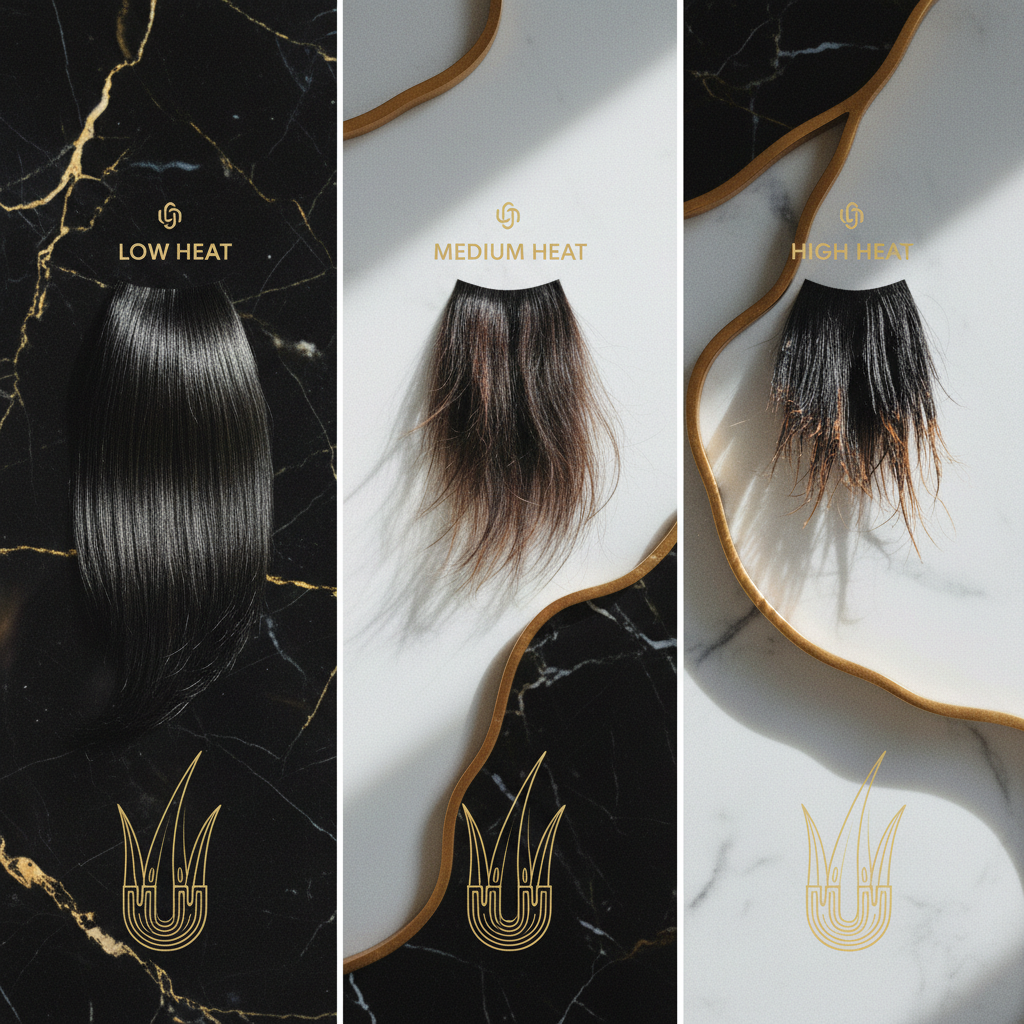
| Temperature Range | Structural Effects on Fibre | Visual and Tactile Results | Level of Protectant Efficacy |
|---|---|---|---|
| Below 140°C | Minimal lipid disruption; temporary hydrogen bond reformation. | Soft finish, styled shape, natural shine preserved. | High; lightweight silicones or polymers offer strong buffering. |
| 140°C to 175°C | Surface 18-MEA lipid degradation begins; mild cuticle lifting. | Slight dryness, minor loss of surface lustre over time. | High to moderate; film-forming polymers dramatically reduce friction. |
| 175°C to 200°C | Alpha-keratin denaturation begins; cystine oxidation; moisture flash. | Loss of elasticity, split ends, increased roughness. | Moderate; slows heat conduction but cannot prevent all protein stress. |
| Above 200°C | Severe keratin melting; cuticle scale cracking; structural collapse. | Extreme brittleness, snapping, permanent curl loss, fried texture. | Low; cosmetic films cannot stop cortical structural alteration at this heat. |
Recognising the signs of thermal breakdown
Identifying heat damage early prevents progressive fibre loss along the length of the strand. Common indicators include:
- Tricorrhexis nodosa: Tiny white dots visible along the hair shaft where the cortex has fragmented and flared outwards like two brooms pushed together.
- Loss of natural curl pattern: Wavy, curly, or coily hair appears limp, loose, or irregularly straight in sections that receive the highest heat.
- Rapid moisture loss: Hair dries exceptionally fast after washing because the compromised cuticle can no longer regulate water retention.
- Friction and tangling: Strands cling to one another and form persistent knots due to cracked, jagged cuticle edges.
- Colour degradation: Dyed and natural pigments oxidise under high temperatures, causing cosmetic colours to fade prematurely or blondes to develop a brassy yellow tint.
Practical strategies for hair fibre protection
Mitigating heat damage requires a combination of disciplined styling habits and strategic product layering.
- Dry before you clamp: Never use flat irons or curling wands on damp hair. Allow the hair to air-dry completely or use a blow dryer on low-to-medium heat before applying high-temperature direct tools.
- Cap your tool temperatures: Keep styling irons below 185°C. For fine, bleached, or fragile hair, set tools between 150°C and 165°C. Thick, coarse fibres rarely need more than 185°C to achieve shape retention if proper tension is applied.
- Apply barrier polymers systematically: Distribute your thermal protectant evenly across damp or dry hair, working section by section with a wide-tooth comb. Look for formulations containing dimethiconol, amodimethicone, or copolymer complexes designed for heat dispersion.
- Minimise repeat passes: Glide your styling tool down each section in one continuous, controlled movement. Dragging a hot plate over the same piece of hair three or four times compounds cortical damage exponentially.
- Incorporate lipid-replenishing conditioners: Use rinse-out conditioners and leave-in serums rich in fatty acids and smoothing agents to artificially mimic the missing 18-MEA barrier.
When the cause may be something else
Not all breakage or dryness stems from thermal appliances. Chemical services like bleaching, permanent tinting, and chemical relaxing break disulphide bonds chemically, producing symptoms identical to severe heat damage. Environmental factors, such as high ultraviolet radiation exposure and swimming in chlorinated or hard water, also degrade surface proteins and strip lipids. Furthermore, if you are noticing hair shedding from the root rather than snapping along the shaft, the underlying driver is biological (such as telogen effluvium or androgenetic alopecia) rather than thermal styling.
Supporting compromised hair with Watermans
When hair fibres are compromised by repeated heat exposure, everyday maintenance becomes about mitigating breakage and nurturing the scalp environment. The Watermans Grow Me range was developed to support overall hair vitality through purposeful cosmetic formulation. Featuring ingredients such as biotin, rosemary extract, caffeine, and hydrolysed lupin protein, Watermans Grow Me Shampoo and Conditioner strengthen the feel of brittle strands, improve tactile manageability, and support a healthier-looking scalp. While topical shampoos cannot reconstruct denatured alpha-keratin back to its original state, gentle, non-stripping cleansing helps preserve existing fibre moisture, reducing mechanical friction during styling.
Frequently asked questions about Thermal Heat Damage and Hair Fibre Protection
Can a thermal protectant completely prevent heat damage?
No cosmetic formulation can eliminate 100 percent of heat damage. Thermal protectants act as buffers that reduce surface friction, slow down heat transfer, and seal cuticular gaps. However, if styling tools operate above 185°C, or if plates are repeatedly clamped down the same section, thermal energy will inevitably penetrate and denature the internal keratin structure.
Does blow-drying cause more damage than flat-ironing?
Blow-drying generally causes less structural damage than flat-ironing because the air stream diffuses heat, maintaining fibre temperatures lower than direct-contact metal or ceramic plates. However, holding a dryer nozzle directly against wet hair can cause severe surface cracking and cuticle bubble deformities.
Can thermally damaged hair be repaired?
Hair fibres are biologically dead structures and cannot heal or regenerate. Split ends, broken bonds, and denatured keratin cannot be permanently reverted to their virgin state. Treatments containing silicones, vegetable proteins, and bond-building agents can temporarily patch cuticular gaps and improve tensile strength, but trimming off severely damaged ends is the only permanent solution.
How does the concept of Thermal Heat Damage and Hair Fibre Protection apply to wet hair?
The relationship between Thermal Heat Damage and Hair Fibre Protection is most critical when hair contains moisture. Water significantly lowers the temperature at which keratin denatures. Applying flat irons to wet hair turns trapped moisture into steam instantly, causing internal micro-explosions known as bubble hair deformity, which permanently destroys structural integrity.
What is the maximum safe temperature for daily styling?
For daily or frequent styling, aim to keep tools below 150°C to 160°C. Reserving temperatures of 175°C to 185°C for occasional styling significantly lowers the risk of cystine bond degradation and permanent cuticle erosion.
Summary
Managing Thermal Heat Damage and Hair Fibre Protection demands an evidence-based approach to styling routines, product chemistry, and temperature discipline. High heat compromises the natural lipid barrier, uncoils alpha-keratin, and oxidises essential amino acids inside the hair cortex. While high-performance thermal protectants and nourishing care routines buffer the blow, prevention remains the primary defence. Respecting thermal boundaries, allowing hair to dry thoroughly before using irons, and using adequate protective barriers will keep your hair fibres resilient, flexible, and structurally sound.
Sources and references
- Journal of Cosmetic Science, "Thermal degradation of hair keratin", 2004.
- International Journal of Trichology, "Bubble hair: A condition caused by thermal styling devices", 2011.
- Society of Cosmetic Chemists, "The effects of heat on hair structure and the protective role of cosmetic ingredients", 2018.
- Robbins, C. R., Chemical and Physical Behavior of Human Hair, 5th ed., Springer, 2012.
Find these ingredients in Watermans products
- Biotin: you will find this ingredient in our Hair Growth Shampoo.