Bond Repair Treatments: Scientific Mechanisms and Fibre Recovery
9 min read ·
Discover how Bond Repair Treatments rebuild fractured disulphide links inside damaged hair fibres, their real mechanical limits, and how to use them safely.
Quick answer: Bond Repair Treatments are targeted cosmetic formulations designed to reinforce chemically fractured bonds, particularly disulphide and hydrogen links, inside the hair fibre cortex. By utilizing reactive cross-linking agents or biomimetic peptides, modern Bond Repair Treatments temporarily restore tensile strength, elasticity, and cohesion to bleached, relaxed, or heat-compromised strands. However, their primary limitation is that they do not permanently regenerate living biological tissue. They are wash-out or progressive structural reinforcements that require ongoing application to maintain integrity against daily grooming abrasion.
Key takeaways
- Hair fibres rely on three distinct chemical junctions: covalent disulphide bonds, ionic salt bridges, and electro-sensitive hydrogen bonds.
- Chemical bleaching, permanent wave processing, and alkaline straightening actively cleave disulphide cross-links, forming irreversible cysteic acid and weakening the cortex.
- Modern bond-building technologies work by cross-linking shattered cysteine residues, delivering small-chain biomimetic peptides, or infusing bio-compatible carboxylic acids into the cortical matrix.
- Bond repair formulations target hair breakage along the shaft; they do not alter follicular genetics, speed biological growth, or treat pattern hair loss (alopecia).
- Overuse without adequate moisture balance can produce rigid, brittle strands prone to snapping under mechanical tension.
- Maintenance requires combining structural bond rebuilders with surface-smoothing lipid conditioners and gentle, sulphate-free cleansing.
Bond Repair Treatments: what the evidence shows
Peer-reviewed cosmetic chemistry shows that Bond Repair Treatments fundamentally differ from traditional conditioning agents. Standard conditioners coat the exterior cuticle with silicones, quaternary ammonium compounds, or natural oils to lower wet-comb friction. In contrast, true bond rebuilders employ low-molecular-weight chemistries small enough to penetrate past the outer cuticle and into the hair's fibrous cortex.
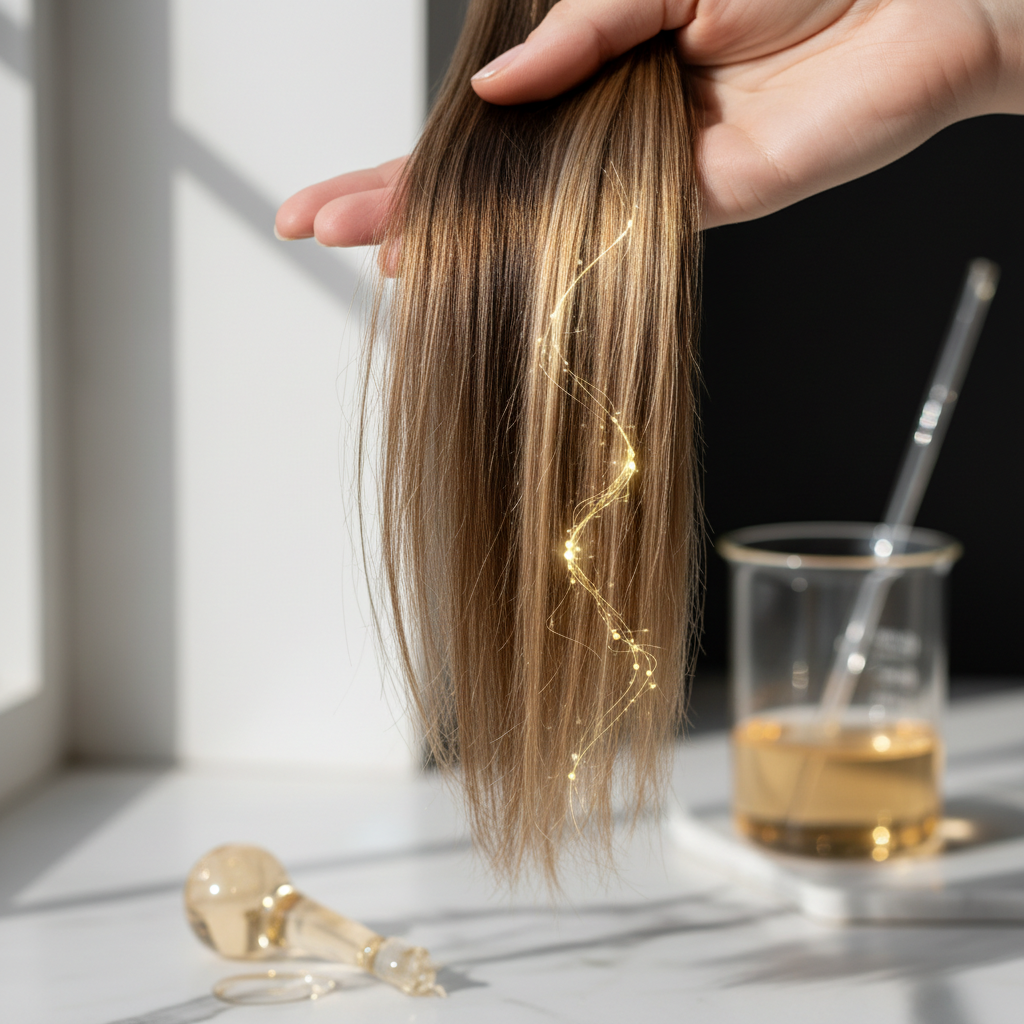
Research published in the International Journal of Cosmetic Science confirms that chemical processes such as bleaching oxidize natural cysteine residues into cysteic acid. This oxidation permanently strips the cortex of its natural disulphide architecture, reducing tensile strength and leaving hair porous and vulnerable to breakage. Bond-building molecules (such as bis-aminopropyl diglycol dimaleate, maleic acid copolymers, and specific oligopeptides) provide cross-linking support.
Tensile testing on single hair fibres demonstrates that strands treated with validated bond builders withstand higher breaking loads and demonstrate improved stress-strain recovery compared to untreated, bleached controls. These formulations physically bridge broken protein networks or deposit resilient scaffolding within cortical fissures, significantly reducing mechanical fibre breakage during brushing and washing.
What the evidence does not show
It is vital to separate cosmetic fibre reinforcement from cellular regeneration. Evidence does not show that Bond Repair Treatments can:
- Permanently weld the hair back into its virgin biological state. As treated hair is washed, exposed to UV radiation, and mechanically styled, cross-linked bridges slowly degrade and wash away.
- Treat hair loss at the follicle level. Breakage along the shaft is often confused with root shedding. Bond rebuilders act exclusively on dead, keratinised fibres and have zero pharmacological influence on the dermal papilla, miniaturising follicles, or biological hair density.
- Eliminate split ends permanently. While cross-linkers temporarily seal jagged cuticles and fractured ends, physical shear damage eventually forces the fibre apart again. Trimming remains the only permanent remedy for structural splits.
- Prevent all chemical processing damage. Incorporating a bond builder directly into bleach powder or relaxer reduces the net reduction in tensile strength, but oxidative damage still occurs. It is not an absolute barrier against over-processing.
The molecular mechanism: how bonds break and rebuild
Hair is composed primarily of keratin, a fibrous structural protein stabilized by three types of chemical bonds:
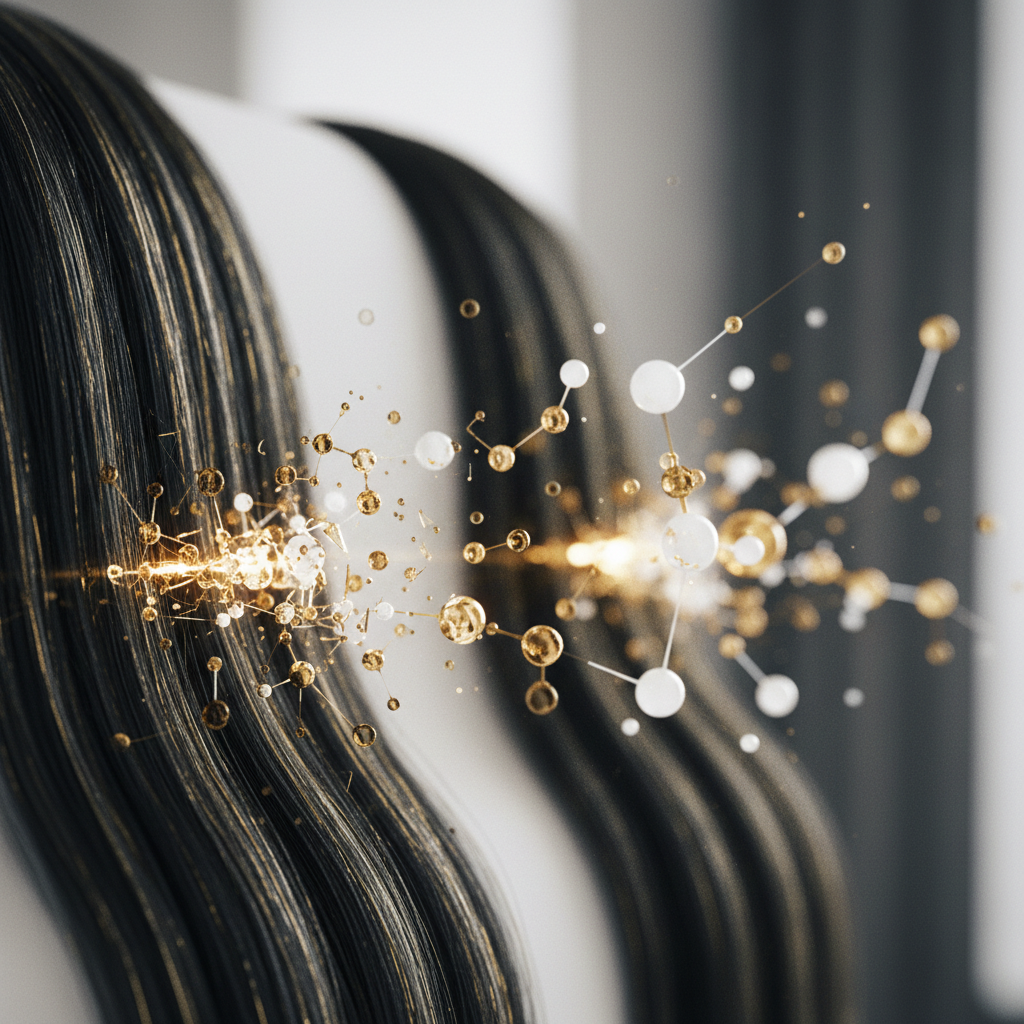
- Disulphide bonds: Covalent links between two sulphur atoms from separate cysteine amino acids. These provide the fibre with elasticity, tensile strength, and permanent shape. They break primarily via chemical bleaching, alkaline relaxers, perm solutions, and extreme heat above 215 degrees Celsius.
- Salt bridges (ionic bonds): Weak electrostatic attractions between positive amino groups and negative carboxyl groups. These are highly pH-dependent and fracture whenever hair is exposed to strong acids or bases outside the natural hair pH window of 4.5 to 5.5.
- Hydrogen bonds: Abundant physical bonds formed between adjacent peptide chains. Extremely weak individually, they break effortlessly with water immersion or daily humidity, resetting when dry.
Intact Hair (Cortex) Oxidative Chemical Processing Bond Repair Treatment Applied
 [Cys-S] - [S-Cys] ===========================> [Cys-S] - [Bridge] - [S-Cys]
(Strong disulphide bond) [Cys-SO3H] [Cys-SO3H] (Artificial cross-link stabilizes
 (Weak cysteic acid residue) the fractured cortical matrix)
Modern cross-linking technologies insert an active molecule possessing two reactive functional groups. One end bonds with an exposed, cleaved sulphur atom on a damaged protein strand, while the opposite end binds to a neighbouring available site. Biomimetic peptides use a sequence-specific approach, lodging inside the keratin chain via ionic and hydrogen affinities to structurally mimic the natural polypeptide backbone.
Comparison: Bond repair technologies vs traditional treatments
| Feature | Bond Repair Treatments | Traditional Conditioners | Protein / Keratin Masks |
|---|---|---|---|
| Primary Target | Internal cortical protein bonds | Exterior cuticle layers (F-layer) | Cuticular gaps & outer cortex |
| Active Mechanism | Chemical cross-linking / small peptides | Electrostatic coating & hydrophobic lipids | High-molecular-weight protein deposition |
| Molecular Size | Very low (penetrates past cuticle) | Medium to high (surface action) | Variable; often too large for deep entry |
| Primary Benefit | Rebuilt tensile strength & elasticity | Reduced friction, shine, detangling | Temporary surface patching, rigidity |
| Duration | Several washes (progressive) | 1 to 2 washes | 1 to 3 washes |
| Overuse Risk | Fibre stiffness or brittle snapping | Heavy buildup, weighed-down hair | Protein overload; stiff, brittle strands |
Signs of bond breakdown in your hair
Recognising when hair suffers from structural bond disruption prevents further catastrophic degradation:
- Loss of wet elasticity: Healthy hair stretches up to 30% of its length when wet and snaps back to original form. Severely bond-damaged hair either stretches endlessly like wet chewing gum before disintegrating or snaps immediately under the slightest tension.
- Persistent porosity: Hair absorbs water instantly, takes hours to air-dry, and feels like rough sponge when damp.
- Diffuse mechanical breakage: Finding short, fractured hair pieces on your shoulders, pillow, or bathroom sink that lack a white bulb at the root (indicating breakage, not shedding).
- Colour fading and patchy uptake: Chemically altered strands fail to hold oxidative dye pigments evenly because the porous cortex cannot trap the molecules.
- Texture distortion: Curls and waves lose their spring, pattern definition, and uniform bounce, presenting as limp, frizzy, or flattened sections.
How to integrate bond repair into your routine
To extract maximum efficacy from these formulas without triggering structural rigidity, adhere to these guidelines:
- Pre-cleanse with a clarifying wash: Heavy silicones, styling waxes, and mineral deposits from hard water block active bond molecules from penetrating the cuticle. Use a chelating or clarifying wash prior to applying your bond rebuilder.
- Observe wet hair application: Most internal cross-linking treatments require slightly damp hair to swell the cuticle slightly and allow active chemistry to disperse throughout the cortex. Towel-dry gently; hair should be damp, not dripping.
- Respect contact times: Chemical cross-linking is time-dependent. Allow treatments to sit for the manufacturer-specified duration (typically 10 to 30 minutes). However, leaving them on overnight offers diminishing returns and risks macerating the cuticle through prolonged water retention.
- Follow with balanced hydration: Bond builders restore internal tensile structure, not external suppleness. Always seal the cuticle afterwards with an emollient-rich, pH-balanced conditioner to restore the natural lipid barrier.
- Calibrate frequency by chemical exposure: Heavily bleached or chemically straightened hair benefits from weekly treatments. Moderately heat-styled or coloured hair requires treatment every 2 to 3 weeks. Virgin, healthy hair rarely requires intensive bond-building interventions.
When the issue is not bond damage
Do not mistake all hair concerns for fractured cortex bonds. If your hair is falling out from the root in clumps, accompanied by white keratin bulbs at the end of the strands, this is follicular hair shedding (telogen effluvium) or pattern hair loss (androgenetic alopecia).
Similarly, chronic dry scalp, flaking, or itchiness stems from microbial imbalances (like Malassezia proliferation) or disrupted epidermal barrier function, which Bond Repair Treatments cannot alleviate. Using bond rebuilders on hair that simply lacks hydration can also backfire: overloading a protein-depleted strand without replenishing moisture leaves the fibre stiff, inflexible, and increasingly prone to snapping.
Professional salon guidance: when to see a specialist
If your hair exhibits severe chemical burning from overlapping bleach, relaxer-induced cuticle loss, or gummy dissolution when wet, pause all home chemical treatments immediately.
A licensed professional colourist or trichologist can perform precise elasticity testing, run diagnostic wet-stretch assessments, and execute controlled in-salon protocols with concentrated cross-linking actives. Furthermore, if excessive shedding persists beyond three months, consult a dermatologist or trichologist to rule out internal nutritional deficiencies, thyroid irregularities, or follicular inflammatory conditions.
Supporting overall hair health with Watermans
While targeted bond repair rebuilds the physical shaft, resilient hair starts with a flourishing scalp environment and strong fibre nutrition. Watermans approaches hair wellness by addressing the entire lifecycle of the hair.
Using gentle, sulphate-free formulas such as Watermans Grow Me Shampoo ensures that recovering, chemically fragile cuticles are not stripped of their protective lipids during cleansing. Infused with biotin, rosemary extract, caffeine, and niacinamide, it nurtures the scalp micro-environment and fortifies the root. Pairing such daily foundational care with specialized structural treatments ensures that as new, healthy fibres emerge, existing lengths retain the strength, vitality, and balance required to resist mechanical wear.
Frequently asked questions about Bond Repair Treatments
Can Bond Repair Treatments reverse bleach damage permanently?
No, Bond Repair Treatments cannot permanently reverse bleach damage. Bleaching destroys natural disulphide links by converting cysteine into cysteic acid, an irreversible chemical change. Bond rebuilders deposit artificial cross-links and biomimetic peptides inside the cortex, temporarily restoring tensile strength and elasticity. However, these synthetic bridges slowly degrade over time and wash away with continuous cleansing, requiring periodic reapplication to preserve fibre integrity.
How often should you use Bond Repair Treatments?
Usage frequency depends directly on the degree of chemical and thermal trauma. For heavily bleached, highlighted, or chemically straightened strands, use a treatment once every 7 to 10 days. For hair exposed primarily to regular blow-drying or moderate heat styling, once every two to three weeks is sufficient. Overusing structural treatments without adequate moisturising conditioners can cause fibres to feel rigid and brittle.
Do Bond Repair Treatments help with hair thinning at the scalp?
Bond Repair Treatments do not treat hair thinning, genetic alopecia, or scalp-level shedding. They act purely as cosmetic reinforcements along the external, non-living hair shaft to prevent fibre breakage and splitting. If hair is shedding directly from the scalp with the root bulb intact, the issue relates to follicular cycles, hormones, or systemic health, which structural hair treatments cannot alter.
What is the difference between protein treatments and bond repair?
Traditional protein treatments deposit large hydrolyzed protein fragments (like wheat or keratin) onto the cuticular surface and outer cortex to fill structural voids temporarily. Bond repair utilizes much smaller, reactive chemical agents or specialized peptides that penetrate deeper into the internal cortex. Instead of simply packing cracks, bond treatments actively cross-link or mimic internal molecular chains, restoring structural tensile elasticity.
Final perspectives on hair integrity
Navigating modern cosmetic chemistry allows individuals to push aesthetic boundaries while minimizing structural compromise. Bond Repair Treatments represent a notable advance in hair science, shifting the paradigm from superficial silicone masking to active cortical reinforcement. When utilized with a clear understanding of their biological limitations, alongside dedicated moisture management and gentle scalp care, these formulations provide a vital line of defence against chemical and thermal breakage.
Sources and references
- International Journal of Cosmetic Science: "Chemical and physical changes in hair caused by bleaching", 2018.
- Journal of the Society of Cosmetic Chemists: "The tensile properties of human hair fibres", 2015.
- Robbins, C. R.: Chemical and Physical Behavior of Human Hair, 5th ed., Springer, 2012.
- British Journal of Dermatology: "Mechanisms of hair fibre fracture and weathering", 2019.
- Cosmetics: "Proteins and peptides in haircare formulations: Penetration and mechanical efficacy", 2021.
Find these ingredients in Watermans products
- Niacinamide: you will find this ingredient in our Hair Mask.