Telogen Effluvium vs Alopecia: Biological Differences and Diagnosis
10 min read ·
Understand the differences in Telogen Effluvium vs Alopecia. Learn the biological mechanisms, distinct symptoms, diagnostic tests, and proven paths to recovery.
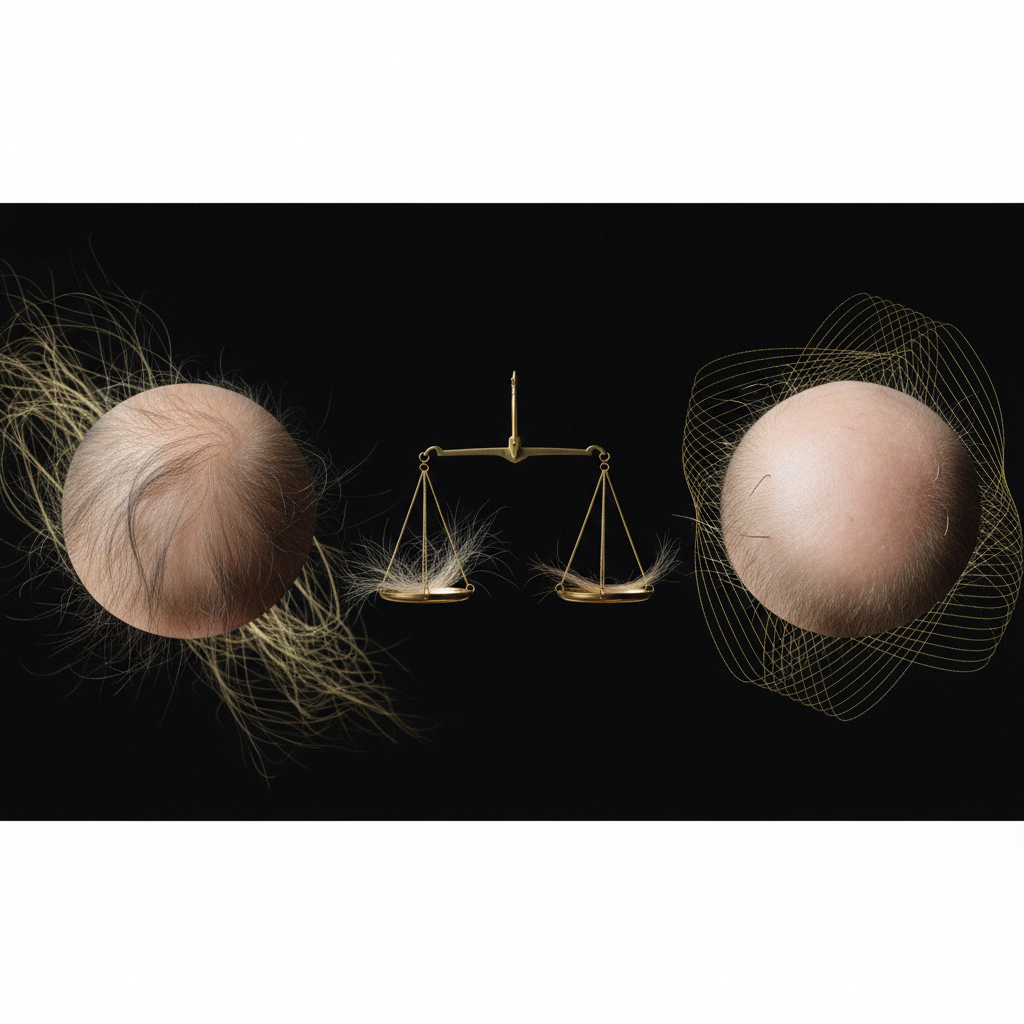
Quick answer: Comparing Telogen Effluvium vs Alopecia comes down to distinguishing reactive shedding from progressive or autoimmune hair loss. Telogen effluvium is a temporary, diffuse shedding episode triggered by physiological or psychological stress, resolving once the trigger clears. Alopecia describes diverse hair loss disorders, including androgenetic alopecia (genetic follicle miniaturisation) and alopecia areata (autoimmune patchy loss). The main limitation is diagnostic overlap: chronic shedding can unmask early androgenetic alopecia, requiring clinical dermoscopy or blood panels to distinguish them accurately.
Key takeaways
- Telogen effluvium involves accelerated hair shedding where up to 30 to 50 percent of scalp hairs prematurely enter the telogen resting phase.
- Alopecia is a broad medical term encompassing conditions like androgenetic alopecia, alopecia areata, and scarring (cicatricial) alopecias.
- Shedding in telogen effluvium is diffuse across the entire scalp, whereas alopecia frequently presents in distinct patterns, patches, or receding margins.
- Follicles remain intact and capable of cycling normally in telogen effluvium once the underlying trigger resolves.
- A clinical hair pull test, dermoscopy, and relevant blood tests (such as ferritin, thyroid profile, and vitamin D) help differentiate between the two conditions.
Telogen Effluvium vs Alopecia: what the evidence shows
Understanding Telogen Effluvium vs Alopecia requires looking closely at follicular biology. Human scalp hair cycles through three primary phases: anagen (active growth lasting 2 to 7 years), catagen (transition lasting 2 to 3 weeks), and telogen (resting lasting 2 to 4 months), followed by exogen (shedding). On a healthy scalp, roughly 85 to 90 percent of follicles remain in anagen, with only 10 to 15 percent in telogen. Normal physiological shedding accounts for 50 to 100 hairs per day.
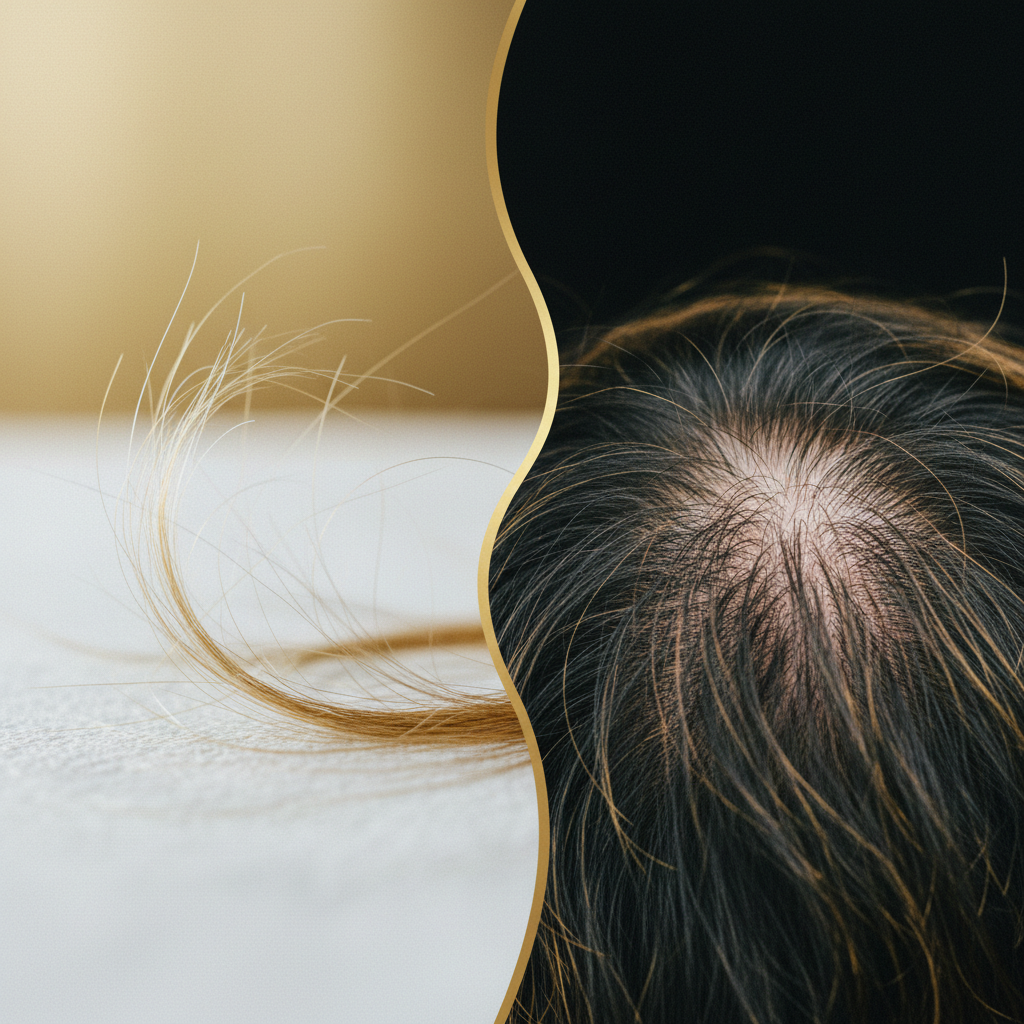
In acute telogen effluvium, an acute physiological shock halts anagen prematurely. This shock prompts a significant cohort of follicles (often 30 percent or more) to shift rapidly into catagen and telogen. Because the telogen phase naturally lasts approximately 2 to 4 months, the visible shedding begins roughly 60 to 90 days after the inciting event. Common triggers include high fever, severe infection, major surgery, rapid weight loss, childbirth (telogen gravidarum), nutritional deficiencies, or severe psychological stress.
Alopecia, by contrast, operates through entirely different mechanisms depending on the subtype:
- Androgenetic alopecia (pattern hair loss): This condition is driven by genetic sensitivity to dihydrotestosterone (DHT). DHT binds to androgen receptors in susceptible follicles, progressively shortening anagen and causing follicular miniaturisation. Terminal hairs transform into fine, vellus-like hairs over successive cycles, creating visible thinning rather than sudden, heavy shedding.
- Alopecia areata: This is an organ-specific autoimmune condition where the immune privilege of the anagen hair follicle collapses. CD8+ T cells cluster around the follicular bulb, halting growth and causing rapid hair loss in discrete, smooth, circular patches.
- Cicatricial (scarring) alopecia: Conditions such as lichen planopilaris and frontal fibrosing alopecia involve sustained inflammation that permanently destroys follicular stem cells within the bulge region, replacing follicles with fibrous scar tissue.
| Diagnostic Feature | Telogen Effluvium | Androgenetic Alopecia | Alopecia Areata |
|---|---|---|---|
| Primary Mechanism | Premature transition of anagen hairs into telogen | DHT-driven progressive follicular miniaturisation | Autoimmune attack on anagen hair bulbs |
| Onset | Sudden, typically 2 to 3 months post-trigger | Gradual, subtle thinning over years | Rapid appearance of isolated bald spots |
| Pattern | Diffuse thinning across the entire scalp | Vertex, crown, or frontal hairline recession | Well-defined round or oval patches |
| Follicle Status | Follicles remain intact and fully cycling | Miniaturised follicles producing finer fibres | Intact follicles temporarily halted |
| Daily Shedding | Highly elevated (often 200 to 400+ hairs/day) | Normal to slightly elevated shedding rates | Variable; exclamation-mark hairs at margins |
| Prognosis | High likelihood of full spontaneous recovery | Progressive without targeted clinical management | Variable; spontaneous regrowth or relapsing |
What the evidence does not show
The clinical literature cautions against several common misconceptions when evaluating shedding against pattern loss.
First, heavy daily shedding does not automatically mean you are going bald. Telogen effluvium produces alarming amounts of hair in brushes, shower drains, and on clothing, but it does not destroy follicular machinery. The follicle bulb remains alive beneath the scalp surface.
Second, cosmetic hair products do not trigger telogen effluvium or systemic alopecia. Shampoos, conditioners, and styling aids act on the non-living hair shaft outside the follicular canal. While harsh chemical processing or physical tension can cause mechanical breakage or traction alopecia, standard topical haircare cannot shock the internal biological clock of the follicle into telogen.
Third, taking high doses of over-the-counter hair vitamins will not halt telogen effluvium unless a genuine clinical deficiency exists. Indiscriminate supplementation with nutrients like vitamin A, selenium, or high-dose vitamin E can actually worsen shedding or cause systemic toxicity.
The mechanism: why follicles behave differently
The structural difference between these conditions lies in follicular capacity. In telogen effluvium, the hair matrix ceases proliferation abruptly, prompting the hair shaft to form a characteristic white keratinised bulb (a club hair). When a new anagen hair eventually begins growing beneath it months later, it pushes the resting club hair out of the follicle. The emerging fibre retains its original thickness, calibre, and pigment.

In androgenetic alopecia, miniaturisation alters the follicle's structural architecture. Each abbreviated hair cycle produces a smaller papilla and a narrower dermal sheath. Consequently, the newly formed hair shaft has a reduced diameter, lower tensile strength, and reduced melanin content. Dermoscopic examination (trichoscopy) reveals hair diameter diversity exceeding 20 percent across the affected zones, which is the hallmark of pattern miniaturisation rather than uniform shedding.
In alopecia areata, inflammatory lymphocytic infiltrates disrupt the melanin-producing matrix cells. Trichoscopy typically demonstrates yellow dots (sebum and keratin debris in distended follicular openings), black dots (cadaverised hairs fractured at the scalp surface), and pathognomonic "exclamation mark" hairs, which are tapered at the proximal end near the skin surface.
Signs to look for: how to tell them apart
A systematic visual assessment helps pinpoint whether you are experiencing telogen shedding or an alopecia subtype:
- Check the shed hair bulb: Shed hairs from telogen effluvium present a small, white, solid bulb at the root end, confirming it completed the telogen cycle. Broken hairs from cosmetic damage lack this bulb entirely.
- Examine your part width: Telogen effluvium creates a feeling of reduced ponytail volume and mild, even widening of the central part across the whole head, including the sides (parietal) and back (occipital). Androgenetic alopecia selectively widens the central parting line while sparing the occipital region.
- Look at the frontal hairline: Recession at the temples or forehead points toward androgenetic alopecia or frontal fibrosing alopecia. Pure telogen effluvium almost never alters the geographical margin of the anterior hairline.
- Inspect scalp margins: Isolated, smooth circular zones without erythema or scale strongly indicate alopecia areata. Any erythema, follicular plugging, perifollicular scale, or visible absence of follicular ostia (pores) warns of scarring alopecia.
What you can do to support recovery
For telogen effluvium, clinical recovery hinges on identifying and resolving the initial physiological trigger. Because hairs entered the telogen resting phase months earlier, no intervention will instantly stop shedding that is already underway. Patience and physiological support are paramount.
- Confirm blood markers: Request a laboratory panel checking serum ferritin (aiming for levels above 50 ug/L to support optimal anagen proliferation), complete blood count, thyroid-stimulating hormone (TSH), free T4, serum zinc, and 25-hydroxyvitamin D.
- Maintain nutritional adequacy: Ensure adequate dietary protein intake (roughly 0.8 to 1.2 grams per kilogram of body weight) and caloric stability. Extreme caloric restriction is a proven trigger for prolonged telogen shed.
- Minimise physical stress: Use wide-tooth combs, avoid aggressive heat styling, and refrain from tight hairstyles that add mechanical tension to vulnerable roots.
- Support the scalp environment: Keep the scalp clean and free of sebum accumulation, dead keratinocytes, and inflammatory microbial overgrowth, which can exacerbate follicular stress.
Supporting the scalp environment with Watermans
When addressing shedding or diffuse thinning, maintaining an optimal scalp environment helps support the hair fibres as they emerge. Watermans Grow Me Shampoo and Condition Me Conditioner are formulated to nourish the scalp surface without harsh sulphates. Featuring evidence-backed cosmetic ingredients such as biotin, rosemary extract, caffeine, niacinamide, and argan oil, the system cleanses the follicular ostia, improves hair fibre softness, and reduces mechanical breakage along the lengths. While cosmetic products do not treat medical conditions such as androgenetic alopecia or autoimmune alopecia areata, keeping the scalp clean, hydrated, and calm provides the best possible physical foundation for normal hair growth.
When the cause may be something else
Hair shedding and hair thinning can arise from overlapping or concurrent factors:
- Chronic Telogen Effluvium (CTE): When diffuse shedding persists beyond 6 months without obvious bald patches, it may represent chronic telogen effluvium. CTE frequently affects middle-aged women, runs a fluctuating course over years, and requires detailed investigation to rule out subtle thyroid dysregulation or systemic illness.
- Anagen Effluvium: Distinct from telogen shedding, this involves the abrupt cessation of cell division in the anagen matrix due to toxic insults like chemotherapy or heavy metal poisoning. Hairs fracture inside the canal within 1 to 3 weeks of exposure, often shedding up to 90 percent of scalp hair.
- Traction Alopecia: Prolonged mechanical tension from tight braids, extensions, or ponytails causes localised inflammation around the follicle, ultimately leading to mechanical shedding and permanent follicle destruction along the margins if unaddressed.
When to seek professional advice
Consult a GP, dermatologist, or qualified trichologist if:
- Shedding continues at high volume for more than 4 to 6 months.
- Hair loss appears in distinct bald patches or asymmetrical circles.
- You experience scalp symptoms like burning, tenderness, pruritus, scaling, or visible redness.
- The hairline is actively receding or eyebrows are thinning.
- Shedding is accompanied by unexplained weight loss, fatigue, menstrual irregularities, or joint pain.
Frequently asked questions about Telogen Effluvium vs Alopecia
Can telogen effluvium turn into androgenetic alopecia?
Telogen effluvium cannot genetically transform into androgenetic alopecia. However, a severe episode of telogen shedding can unmask latent androgenetic alopecia that was already genetically programmed. When the shed telogen hairs fall out, the newly emerging hairs in androgen-sensitive zones may return thinner and miniaturised, making pre-existing pattern hair loss suddenly noticeable.
How do dermatologists diagnose Telogen Effluvium vs Alopecia?
Dermatologists differentiate Telogen Effluvium vs Alopecia using clinical history, a hair pull test, and trichoscopy. Trichoscopy reveals whether hair follicle diameters vary significantly (miniaturisation characteristic of pattern loss), show exclamation mark hairs (characteristic of alopecia areata), or demonstrate uniform shaft diameters with empty follicles (typical of telogen effluvium). Blood tests and scalp biopsies are used if diagnostic ambiguity remains.
How long does telogen effluvium shedding usually last?
Acute telogen effluvium shedding generally lasts between 3 and 6 months. Once the underlying physiological stressor (such as illness, nutrient deficiency, or hormonal fluctuation) is resolved, the follicular cycle resets. Noticeable regrowth typically appears within 3 to 6 months following the cessation of heavy shedding, though long hair lengths take years to regain full density.
Is hair loss from telogen effluvium permanent?
Telogen effluvium is almost always fully reversible. Because the follicular stem cells located in the bulge region remain undamaged, the follicle maintains its full capacity to re-enter anagen and produce thick, terminal hair shafts once normal physiological balance is restored. Permanent loss occurs only if a misdiagnosed scarring alopecia is present.
Balancing clarity and care
Navigating the differences between Telogen Effluvium vs Alopecia brings vital reassurance during distressing periods of hair loss. Recognising that acute shedding is typically a temporary, self-limiting reaction to systemic strain helps prevent premature panic. By obtaining an accurate clinical diagnosis, evaluating systemic biomarkers, and nurturing the scalp with gentle, evidence-based care, you can address the root cause and support healthy hair cycling over the long term.
Sources and references
- British Association of Dermatologists. Telogen Effluvium: Patient Information Leaflet. 2021.
- National Institute for Health and Care Excellence (NICE). Alopecia androgenetica - clinical knowledge summary. 2022.
- Malkud, S. Telogen Effluvium: A Review. Journal of Clinical and Diagnostic Research, 2015.
- Asghar, F. Et al. Telogen Effluvium: A Review of the Etiology, Investigation, and Management. Clinical, Cosmetic and Investigational Dermatology, 2020.
- Messenger, A. G. Et al. British Association of Dermatologists' guidelines for the management of alopecia areata. British Journal of Dermatology, 2012.
Find these ingredients in Watermans products
- Niacinamide: you will find this ingredient in our Hair Mask.