Sulphate-Free Shampoos Explained: Science, Ingredients, and Scalp Health
9 min read ·
Sulphate-Free Shampoos Explained: discover how mild surfactants protect hair cuticles, retain colour, and maintain a calm, balanced scalp barrier.
Quick answer: With Sulphate-Free Shampoos Explained, these formulations replace aggressive synthetic detergents like sodium lauryl sulphate with gentler surfactants derived from coconut, glucose, or amino acids. They cleanse sebum and dirt without excessively stripping natural lipids or disrupting the scalp acid mantle. However, their primary limitation is reduced degreasing capacity. They may struggle to remove heavy silicones, mineral oils, or stubborn styling residues, occasionally requiring a clarifying wash to prevent product build-up.
Key takeaways
- Sulphate-free shampoos clean using milder surfactants such as glucosides, taurates, and isethionates rather than harsh alkyl sulphates.
- They preserve the protective lipid barrier of both the hair shaft and the stratum corneum, helping retain artificial colour and natural moisture.
- People with sensitive scalps, contact dermatitis, dry hair, or chemically treated curls benefit most from these gentler systems.
- Sulphate-free does not mean chemical-free; surfactants are still required to bind water to oil and rinse away dirt.
- Swapping to a sulphate-free wash will not stop genetic hair loss, because androgenetic alopecia is driven by internal hormones rather than your choice of cleanser.
Sulphate-Free Shampoos Explained: what the evidence shows
When having Sulphate-Free Shampoos Explained by cosmetic scientists, the core focus is surfactant chemistry. Traditional shampoos rely on strong anionic detergents, predominantly sodium lauryl sulphate (SLS) and sodium laureth sulphate (SLES). These molecules have a lipophilic tail that binds to oils and a hydrophilic head that binds to water, allowing sebum, styling residue, and daily grime to be emulsified and rinsed down the drain.
The issue lies in the aggressiveness of that cleansing action. SLS has a high critical micelle concentration and penetrates deep into the outer lipid matrix of the hair cuticles. Peer-reviewed dermatological studies confirm that SLS damages stratum corneum proteins, leading to trans-epidermal water loss (TEWL) and scalp barrier disruption.
Sulphate-free formulas substitute these harsh detergents with milder anionic, amphoteric, or non-ionic alternatives. Common replacements include:
- Sodium Cocoyl Isethionate: A gentle anionic surfactant derived from coconut fatty acids, known as "baby foam" for its low irritation potential.
- Cocamidopropyl Betaine: An amphoteric surfactant that boosts foam stability while moderating the harshness of other cleansing agents.
- Decyl Glucoside and Coco-Glucoside: Non-ionic plant sugars that clean effectively without disrupting hair proteins or scalp pH.
- Sodium Lauroyl Sarcosinate: An amino acid-derived cleanser that provides dense lather and thorough cleansing without strip-mining the scalp's moisture.
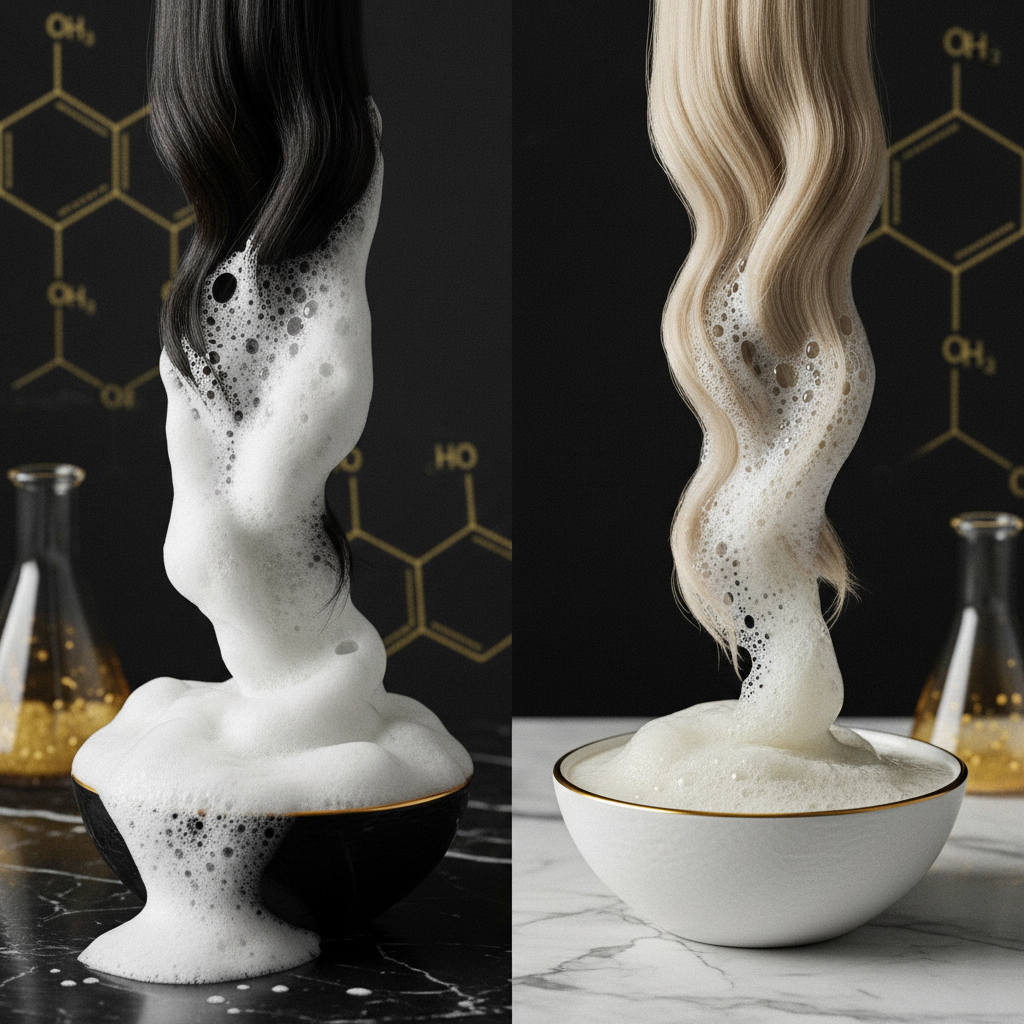
Because these alternative molecules are larger and possess lower protein-denaturing potential, they leave the epicuticle intact. Research shows this directly reduces artificial colour fade, as rough, swollen cuticles allow dye molecules to escape rapidly during washing.
What the evidence does not show
The clean beauty market has generated several persistent myths regarding sulphate cleansers. It is essential to separate chemical reality from marketing alarmism.
First, standard cosmetic sulphates do not cause systemic toxicity or cancer. Extensive toxicological reviews conducted by the Cosmetic Ingredient Review (CIR) Expert Panel and independent safety authorities confirm that SLS and SLES are safe for human use in rinse-off products when properly formulated.
Second, switching to a sulphate-free formula does not cure or reverse follicular hair loss. Conditions such as androgenetic alopecia (pattern hair loss) are driven by genetics and dihydrotestosterone (DHT), while telogen effluvium is triggered by physiological stress, illness, or nutritional deficits. Shampoos work solely on the scalp surface and hair shaft. A harsh shampoo can cause mechanical hair breakage along brittle fibres, but it does not cause follicles to atrophy.
Finally, sulphate-free shampoos do not eliminate the need for washing or naturally "rebalance" your oil glands to stop producing sebum. Sebaceous gland activity is primarily dictated by internal androgens, not by your lather.
Surfactant comparison: traditional vs sulphate-free
Understanding surfactant classification helps stylists and consumers read an ingredient list with confidence.
| Surfactant Type | Common Examples | Cleansing Power | Irritation Potential | Best For |
|---|---|---|---|---|
| Alkyl Sulphates | Sodium Lauryl Sulphate (SLS), Ammonium Lauryl Sulphate (ALS) | Very High | High | Deep clarifying, removing heavy petrolatum and insoluble silicones |
| Alkyl Ether Sulphates | Sodium Laureth Sulphate (SLES) | High | Moderate | Regular cleansing; milder than SLS due to ethoxylation |
| Isethionates | Sodium Cocoyl Isethionate (SCI) | Moderate to High | Very Low | Daily use, sensitive skin, coloured hair, dry scalps |
| Glucosides | Decyl Glucoside, Coco-Glucoside, Lauryl Glucoside | Moderate | Extremely Low | Ultra-sensitive scalps, baby shampoos, delicate or fragile hair |
| Betaines | Cocamidopropyl Betaine, Coco-Betaine | Mild to Moderate | Low | Secondary surfactant to boost lather and soften stronger detergents |
| Sarcosinates | Sodium Lauroyl Sarcosinate, Sodium Cocoyl Sarcosinate | Moderate to High | Low | Balanced cleansing with rich lather for fine or easily weighed-down hair |
How sulphate-free formulas protect the hair fibre
The physical architecture of a hair strand relies on overlapping keratin scales called cuticles, sealed together by the cell membrane complex (CMC). The CMC is rich in essential lipids, notably 18-methyleicosanoic acid (18-MEA).
When you apply a high-pH or harsh alkyl sulphate cleanser, water penetrates the hair fibre, causing the cortex to swell. SLS dissolves surface lipids and strips away the 18-MEA protective layer. Once 18-MEA is lost, the cuticle scales lift, friction between hair strands increases, and moisture evaporates freely. The result is dullness, static, tangles, and elevated mechanical breakage during brushing.
Sulphate-free cleansers are typically formulated closer to the natural pH of human hair and scalp, which sits comfortably between 4.5 and 5.5. Because the surfactant molecules are gentler, they leave the CMC and 18-MEA largely undisturbed. The cuticle scales remain flat and compact. This preserved structure reflects light evenly, retains internal hydration, and protects chemically coloured molecules locked within the cortex.
Signs you should switch to a sulphate-free routine
Your hair and scalp will generally reveal when an existing shampoo is too aggressive. Common indications include:
- A tight, itchy, or stinging scalp immediately after stepping out of the shower.
- Flaking that is dry, white, and powdery rather than greasy (often misdiagnosed as dandruff, but actually scalp xerosis caused by barrier damage).
- Rapid colour loss, particularly with semi-permanent, red, or pastel fashion shades, within two to three washes.
- Persistent frizzy hair, rough ends, and unmanageable tangles despite using a rinse-out conditioner.
- Defined curls and waves that lose their natural clump pattern and become dry or puffy.
What to do: maximising results with sulphate-free cleansers
Transitioning away from sulphates requires minor adjustments in washing technique. Because mild surfactants do not lift oils instantaneously, they require more physical assistance and water to work effectively.
- Saturate completely: Wet your hair thoroughly for at least two minutes with warm water before applying shampoo. Mild surfactants rely heavily on water to disperse across the scalp.
- Emulsify in your palms: Rub the shampoo between wet hands with a splash of water to activate the lather before working it into your scalp.
- Focus on the roots: Massage the formulation firmly into the scalp with your fingertips for a full 60 seconds. Do not pile your lengths onto your head; the lather rinsing down will adequately cleanse the mid-lengths and ends.
- Consider a double cleanse: If you wash your hair infrequently or use leave-in styling products, wash twice. The first pass breaks down excess sebum, while the second produces a luxurious, functional lather.
- Clarify periodically if needed: If you regularly use water-insoluble silicones, heavy butters, or waxes, use a gentle clarifying wash every 3 to 4 weeks to eliminate build-up.
When the cause may be something else
If your scalp remains inflamed, scaly, or shedding heavily after switching to a sulphate-free shampoo, the issue is unlikely to be your cleanser.
Seborrhoeic dermatitis, for example, is caused by an overgrowth of Malassezia yeast feeding on scalp sebum. Switching to an ultra-gentle, oil-rich sulphate-free shampoo can sometimes worsen seborrhoeic dermatitis by failing to remove enough sebum. In this scenario, medical cleansers containing ketoconazole, ciclopirox olamine, or zinc pyrithione are required.
Similarly, if you notice widespread thinning, a widening parting, or excess shedding on your pillow, consult a professional. Diffuse thinning often stems from iron deficiency, thyroid dysfunction, hormone shifts, or autoimmune activity rather than your shampoo.
When to seek professional advice
Visit a GP or registered trichologist if you encounter:
- Severe redness, weeping crusts, or bleeding on the scalp.
- Persistent scaling that resists both gentle shampoos and over-the-counter anti-dandruff solutions.
- Sudden, patchy hair shedding (smooth round bald patches).
- Follicular pustules, burning pain, or permanent scarring around the roots.
A dermatologist can perform a scalp biopsy, patch testing for surfactant allergies, or blood tests to accurately diagnose underlying disorders.
The Watermans perspective on gentle cleansing
Watermans formulates its products with scalp health at the forefront, recognising that hair grows best when the skin barrier remains balanced, calm, and hydrated. Rather than relying on aggressive detergents that strip away essential surface lipids, Watermans uses milder cleansing systems enriched with functional ingredients like biotin, caffeine, argan oil, and rosemary. This evidence-based approach ensures that the scalp is thoroughly cleansed of dirt and environmental pollutants while preserving the delicate acid mantle, reducing fibre breakage, and maintaining an optimal environment for healthy hair growth.
Frequently asked questions about Sulphate-Free Shampoos Explained
Do sulphate-free shampoos lather as well as traditional shampoos?
Sulphate-free shampoos often produce a creamier, denser micro-foam rather than the voluminous bubbles of SLS. Secondary surfactants like cocamidopropyl betaine generate plenty of lather, but you may need extra water to build it. A lack of giant bubbles does not mean your hair is not getting clean.
Are Sulphate-Free Shampoos Explained as suitable for very oily hair?
When Sulphate-Free Shampoos Explained are considered for very oily hair, results vary. Those with active sebaceous glands may find very mild cleansers leave roots feeling limp after 24 hours. A well-balanced sulphate-free formula containing sarcosinates or isethionates cleanses oil thoroughly without stimulating reactive dryness.
Can a sulphate-free shampoo help prevent hair breakage?
Yes. Harsh cleansers lift the hair cuticles and strip the protective 18-MEA lipid layer, leaving fibres dry, porous, and prone to snapping during detangling. Gentle cleansers preserve these lipids, keeping hair supple and lowering mechanical breakage caused by brushing and styling.
Will sulphate-free shampoo cause scalp build-up?
It can if you use heavy styling products, water-insoluble silicones, or petrolatum. Mild surfactants struggle to lift heavy polymers. If you use leave-in styling aids, pair your gentle routine with an occasional clarifying wash to ensure the scalp pores remain completely clear.
The verdict on modern cleansing
With Sulphate-Free Shampoos Explained from a biochemical perspective, the decision to avoid harsh detergents comes down to your personal hair structure and scalp sensitivity. Moving away from harsh alkyl sulphates protects the fragile lipid matrix of your hair, preserves cosmetic colour investments, and defends the scalp from trans-epidermal moisture loss. While those dealing with heavy oiliness or product accumulation may occasionally need stronger cleansing, switching to a well-formulated, gentle surfactant system remains an effective way to maintain healthier-looking hair and a resilient scalp.
Sources and references
- Cosmetic Ingredient Review (CIR) Expert Panel. "Final Report on the Safety Assessment of Sodium Lauryl Sulfate and Ammonium Lauryl Sulfate." International Journal of Toxicology, 1983.
- D'Souza, P., & Rathi, S. K. "Shampoo and Conditioners: What a Dermatologist Should Know?" Indian Journal of Dermatology, 2015.
- Gavazzoni Dias, M. F. "Hair Cosmetics: An Overview." International Journal of Trichology, 2015.
- Robbins, C. R. Chemical and Physical Behavior of Human Hair. 5th ed., Springer, 2012.
- Trüeb, R. M. "Shampoos: Ingredients, benefits and adverse effects." Journal of the German Society of Dermatology, 2007.
Find these ingredients in Watermans products
- Zinc: you will find this ingredient in our Hair Vitamins.