Sulphate Free Shampoos vs Conventional Surfactants: The Evidence-Based Guide
9 min read ·
Compare Sulphate Free Shampoos vs Conventional Surfactants. Learn the chemistry, evidence on cuticle health, scalp barriers, and how to choose the right wash.
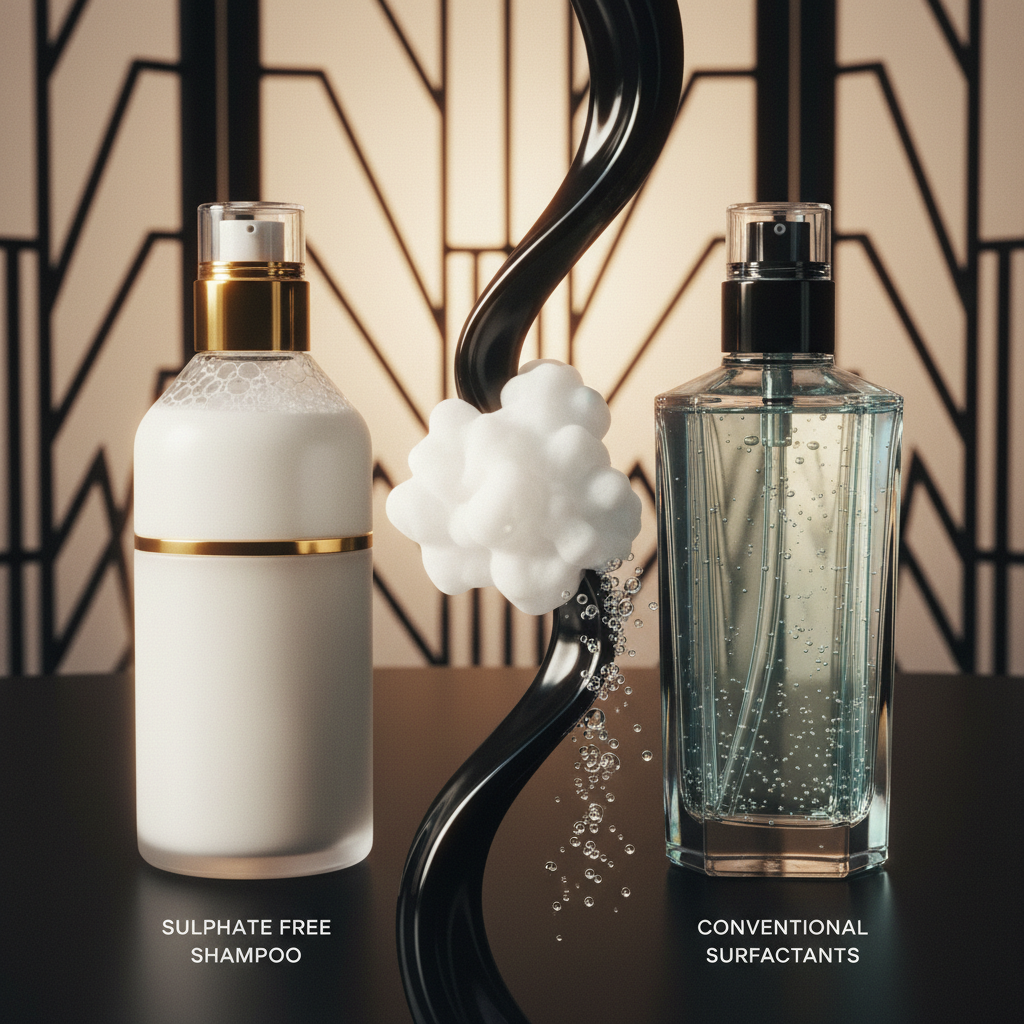
Quick answer: The debate between Sulphate Free Shampoos vs Conventional Surfactants centres on balancing cleaning efficiency with cuticle and scalp barrier preservation. Conventional sulphates like sodium lauryl sulphate offer powerful degreasing but can strip lipids, causing dryness or colour fade. Sulphate-free alternatives rely on gentler cleansing agents that preserve moisture and minimise scalp irritation. However, sulphate-free formulas may struggle to remove heavy silicones, mineral oils, or severe sebum buildup without a secondary clarifying wash.
Key takeaways
- Conventional surfactants provide deep cleansing and high foam volume, which suits oily scalps and removes non-water-soluble styling residues.
- Sulphate-free alternatives preserve natural surface lipids, making them ideal for colour-treated, bleached, curly, dry, or chemically processed hair.
- Neither sulphate nor sulphate-free formulas cause permanent hair loss; true follicular shedding or thinning stems from internal hormonal, medical, or genetic drivers.
- Excessive degreasing from harsh surfactants can cause cuticle wear, dry scalp irritation, and mechanical hair breakage along the shaft.
- Mild surfactants often produce a creamier, lower foam and may require thorough mechanical distribution to cleanse effectively.
Sulphate Free Shampoos vs Conventional Surfactants: what the evidence shows
When examining Sulphate Free Shampoos vs Conventional Surfactants, dermatological and cosmetic science reveals a clear trade-off between cleansing power and barrier disruption. Surfactants (surface-active agents) possess a hydrophilic head that bonds with water and a lipophilic tail that bonds with sebum, dirt, and cosmetic oils.
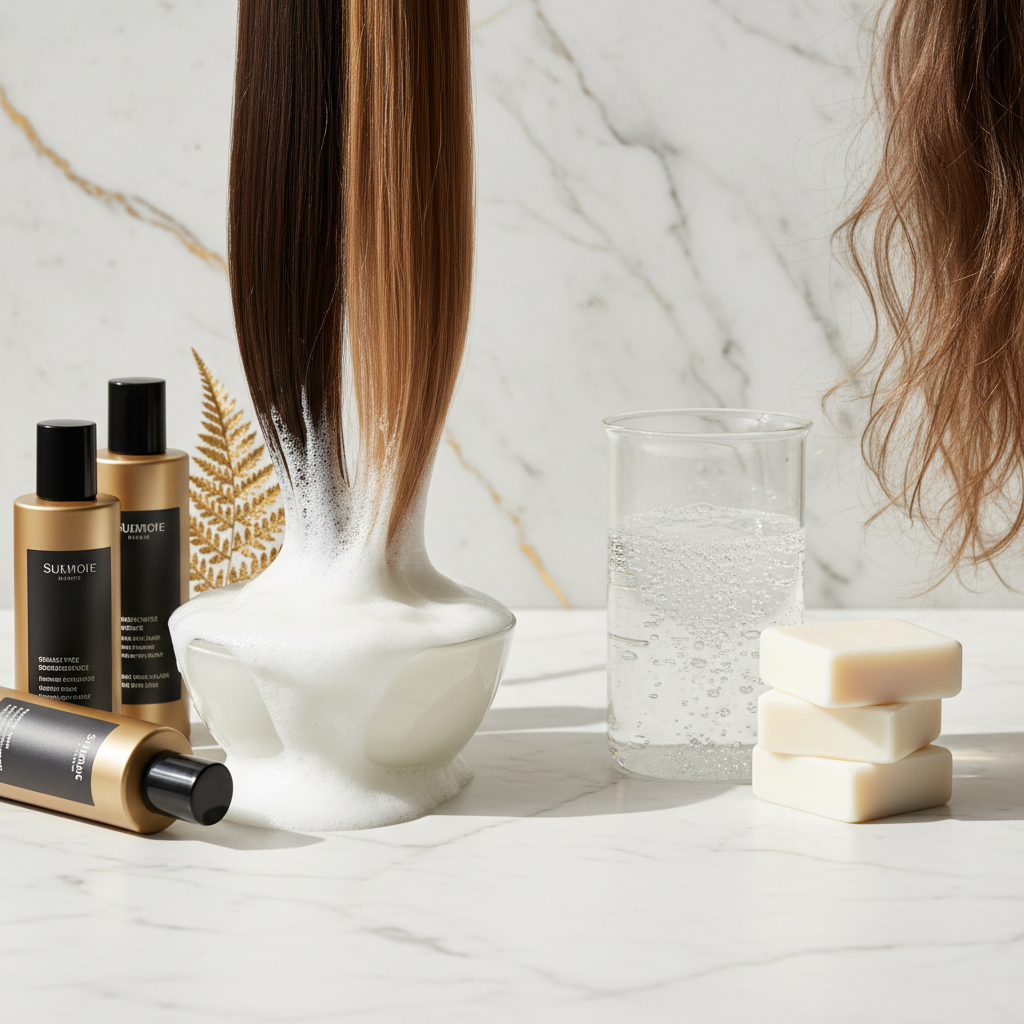
Conventional surfactants belong primarily to the alkyl sulphate and alkyl ether sulphate families. Sodium lauryl sulphate (SLS) is an anionic surfactant known for strong detergency and high lather. Because SLS has a small molecular structure and a high critical micelle concentration, it penetrates the stratum corneum of the scalp and the outer hair cuticle readily. Studies published in the International Journal of Cosmetic Science show that repeated use of pure SLS strips away structural intercellular lipids (such as ceramides and 18-methyleicosanoic acid), leading to transepidermal water loss on the scalp and cuticle swelling on the fibre.
To temper this aggressiveness, cosmetic chemists developed sodium laureth sulphate (SLES). SLES undergoes ethoxylation, which increases molecular size and reduces harshness while maintaining exceptional foaming and lipid-solubilising properties.
Sulphate-free shampoos replace these compounds with alternative classes of surfactants:
- Isethionates (such as sodium cocoyl isethionate): derived from coconut fatty acids, known for mildness and a dense, luxurious lather.
- Glucosides (such as coco-glucoside, decyl glucoside): non-ionic surfactants made from plant sugars and alcohols, providing extremely low irritation profiles.
- Betaines (such as cocamidopropyl betaine): amphoteric surfactants that act as secondary cleansers to improve foam stability while reducing overall formula irritation.
- Sulphonates (such as sodium C14-16 olefin sulphonate): technically sulphate-free, though chemically closer to traditional sulphates in cleansing strength.
Clinical testing shows that true sulphate-free formulas cause significantly less protein denaturation on the skin surface. They preserve artificial hair dye molecules inside the cortex by preventing excessive lifting of the cuticle scales during washing.
Comparing cleansing systems
| Feature | Conventional Surfactants (e.g., SLS, SLES) | Sulphate-Free Surfactants (e.g., Isethionates, Glucosides) |
|---|---|---|
| Primary Cleansing Power | High; rapidly solubilises heavy oils, sebum, and silicones | Moderate to gentle; cleanses without stripping natural oils |
| Cuticle Swelling | Greater swelling (can lift cuticle scales if pH is alkaline) | Low; preserves cuticle alignment and smooth texture |
| Colour Retention | Can accelerate artificial dye fading through deep cuticle penetration | Superior colour preservation over repeated washes |
| Scalp Barrier Impact | Higher risk of transepidermal water loss and tightness | Preserves stratum corneum hydration and natural lipid barrier |
| Foam Characteristics | Rapid, voluminous, airy bubbles | Dense, creamy, micro-foam (glucosides may produce lower foam) |
| Best Suited For | Heavy oil production, swimmer hair, strong product buildup | Dry hair, curls, waves, bleached strands, sensitive scalps |
What the evidence does not show
Cosmetic discourse frequently generates unfounded alarm. Peer-reviewed toxicological assessments, including comprehensive reviews by the Cosmetic Ingredient Review (CIR) Expert Panel, confirm that conventional sulphates do not cause cancer, systemic toxicity, or endocrine disruption when used in cosmetic rinses.
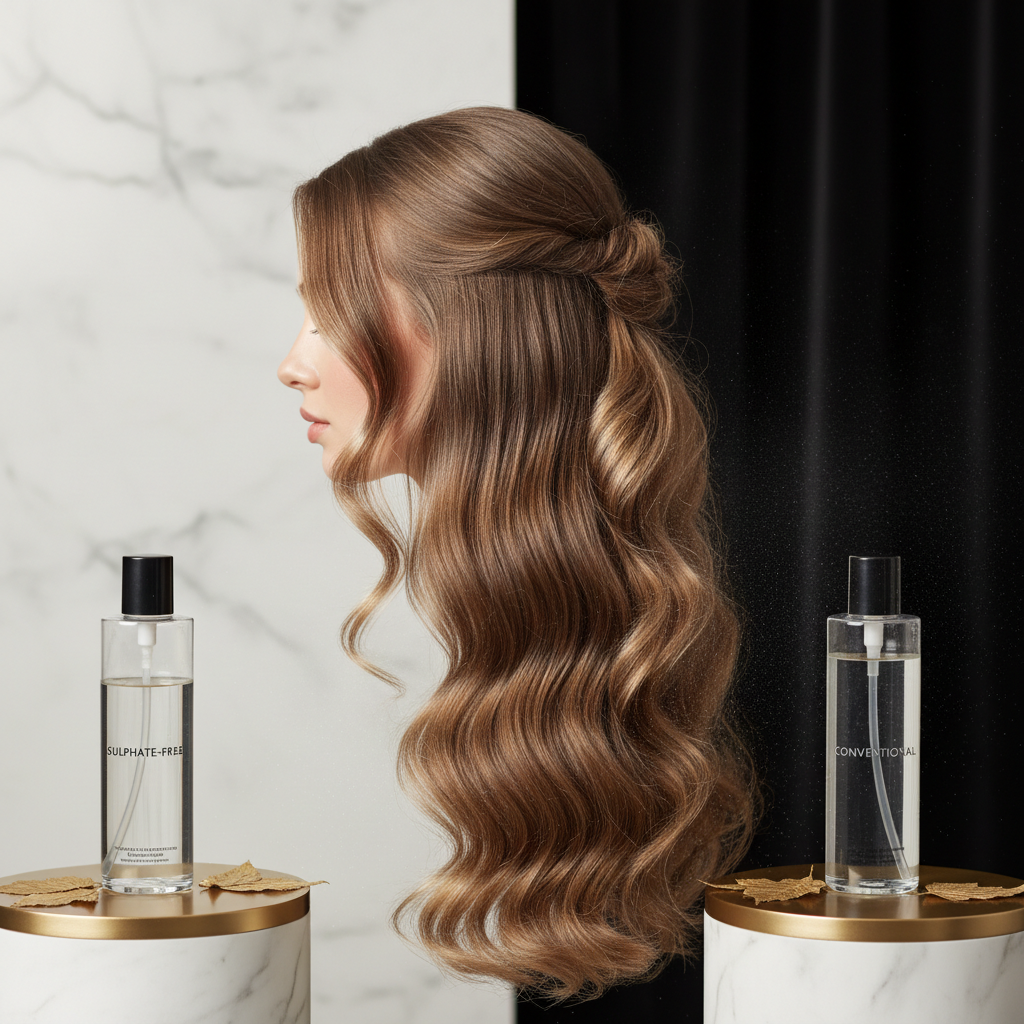
Crucially, the evidence does not show that conventional sulphates cause hair loss (alopecia). Hair loss involves the follicular cycle beneath the skin, regulated by genetics, dihydrotestosterone (DHT), autoimmune triggers, or nutritional deficiencies. A harsh surfactant can strip the scalp and cause contact dermatitis or surface dryness, and it can weaken the hair shaft leading to mechanical breakage, but it does not shut down the dermal papilla or force hair follicles into premature telogen shedding.
Similarly, sulphate-free shampoos are not automatic guarantees of healthy hair. A poorly formulated sulphate-free product can leave stubborn sebum, dead skin cells, and pollution particulates on the scalp. Chronic buildup creates an environment where Malassezia yeasts thrive, potentially triggering seborrhoeic dermatitis.
The mechanism of cleansing and fibre integrity
Hair fibres carry a slightly negative electrical charge, which increases when damaged or bleached. When water touches the hair, the shaft absorbs moisture and swells. The natural pH of the hair and scalp sits between 4.5 and 5.5.
Conventional surfactants, particularly when formulated at a neutral or slightly alkaline pH (above 6.5), increase cuticle friction. When you scrub your scalp, the combined chemical action of the surfactant and the physical agitation can chip or break open the protective outer scale layers (epicuticle and exocuticle). Once the lipid layer (18-MEA) is eroded, hair becomes porous, hydrophilic, rough to the touch, and prone to tangling and breakage.
Sulphate-free surfactants form larger, more complex micellar aggregates in water. These larger structures cannot slip as easily between the cells of the skin or penetrate deep beneath the hair cuticle scales. Consequently, cleansing happens predominantly on the outermost surface, lifting excess grime without dislodging essential structural lipids.
What you can do: choosing the right approach
Selecting your shampoo framework should depend on your scalp type, hair condition, and styling habits:
- Assess your scalp first: If you produce noticeable sebum within 12 hours of washing, or if you work in dusty environments, a balanced formula using milder ether sulphates (like SLES) or high-cleansing sulphate alternatives (like sodium C14-16 olefin sulphonate) may serve you best.
- Protect fragile fibres: If you have bleached, heat-damaged, naturally coiled, or porous hair, switch to a sulphate-free routine based on isethionates or glucosides. This preserves delicate elasticity and prevents split ends.
- Master the double wash: If you use sulphate-free shampoos, apply a small amount to break surface tension, rinse, and then apply a second small amount. The second lather will foam substantially more and clean more evenly.
- Clarify periodically: If you use silicone-heavy serums or hair sprays, introduce a clarifying shampoo once every 2 to 4 weeks to reset the hair canvas without causing chronic daily dryness.
The Watermans perspective on gentle cleansing
Watermans shampoos are formulated around the principle of scalp wellness without harsh chemical aggression. By selecting premium, hair-supportive surfactant bases combined with energising natural botanicals (including caffeine, rosemary, and biotin), Watermans products maintain the scalp barrier while delivering active nourishment directly to the roots. This balanced approach cleanses away excess sebum and environmental residue while preserving the essential moisture required to prevent mechanical hair breakage.
When the cause may be something else
If your scalp remains persistently flaky, itchy, red, or sore regardless of whether you choose sulphate or sulphate-free formulations, the cause is rarely the surfactant alone:
- Seborrhoeic dermatitis: Driven by an inflammatory reaction to the yeast Malassezia. It requires targeted anti-fungal agents such as ketoconazole, zinc pyrithione, or piroctone olamine, not simply swapping surfactant categories.
- Scalp psoriasis: An autoimmune condition causing rapid skin cell turnover, presenting as silvery plaques that require medical management.
- Allergic contact dermatitis: Often triggered by fragrances, botanical extracts, or specific preservatives (such as methylisothiazolinone), rather than the cleansing surfactant itself.
- Follicular thinning or shedding: If you notice diffuse shedding across the scalp (telogen effluvium) or widening of your parting (androgenetic alopecia), consult a trichologist, dermatologist, or your GP. Surfactants do not alter the internal biological cycle of follicular growth.
Frequently asked questions about Sulphate Free Shampoos vs Conventional Surfactants
Do sulphate-free shampoos clean your hair as well as conventional ones?
Yes, sulphate-free shampoos effectively remove everyday sweat, environmental dirt, and normal sebum. They rely on modern, mild surfactants such as glucosides and isethionates. However, they dissolve heavy petrolatum, heavy styling waxes, and insoluble silicones more slowly than conventional surfactants, which may occasionally require a more focused, clarifying wash.
Can conventional surfactants cause hair breakage?
Yes. Conventional surfactants like sodium lauryl sulphate (SLS) can strip the protective 18-MEA lipid layer and natural oils from the hair cuticle. This leaves the outer layer of the fibre brittle and porous, significantly increasing friction during brushing and leading to snapping and mechanical breakage along the shaft.
Does a sulphate-free shampoo stop hair colour from fading?
When comparing Sulphate Free Shampoos vs Conventional Surfactants, sulphate-free formulas are proven to prolong colour life. Because they cause less swelling of the cuticle scales during washing, water-soluble dye pigments stay trapped inside the cortex rather than leeching out into your wash water.
Why do some sulphate-free shampoos feel like they do not lather?
Non-ionic surfactants, such as decyl or lauryl glucoside, naturally form different micelle structures that create a smaller, creamier foam rather than big, airy bubbles. Lather volume is purely aesthetic; a shampoo does not need billowing foam to bind to grease and wash it away clean.
Will switching to sulphate-free clear up my dry scalp?
If your dry scalp was caused by surfactant-induced barrier disruption and moisture loss, switching to a milder, sulphate-free cleanser often restores normal hydration levels. However, if your flaking is caused by fungal activity, such as seborrhoeic dermatitis, you will need active anti-dandruff ingredients rather than just a mild surfactant base.
A balanced approach to shampoo selection
Navigating the choices between Sulphate Free Shampoos vs Conventional Surfactants comes down to understanding your hair's physical properties rather than falling for marketing rhetoric. Conventional surfactants remain effective tools for clearing heavy grease and stubborn product residues, but their high detergency can strip delicate cuticles. Sulphate-free cleansers provide a protective, barrier-friendly alternative that safeguards hair elasticity, moisture, and cosmetic colour. Matching the cleansing intensity to your scalp biology and hair condition ensures you maintain a clean scalp without sacrificing structural fibre strength.
Sources and references
- Cosmetic Ingredient Review (CIR) Expert Panel. "Final Report on the Safety Assessment of Sodium Lauryl Sulfate and Ammonium Lauryl Sulfate." International Journal of Toxicology, 1983.
- D'Souza, P., & Rathi, S. K. "Shampoo and Conditioners: What a Dermatologist Should Know?" Indian Journal of Dermatology, 2015.
- Robbins, C. R. Chemical and Physical Behavior of Human Hair. 5th ed., Springer, 2012.
- Evans, T., & Wickett, R. R. Practical Modern Hair Science. Allured Business Media, 2012.
- Trüeb, R. M. "Shampoos: Ingredients, benefits and adverse effects." Journal of the European Academy of Dermatology and Venereology, 2001.
Find these ingredients in Watermans products
- Zinc: you will find this ingredient in our Hair Vitamins.