Sulphate Free Shampoo Science: The Evidence Behind Gentle Cleansing
9 min read ·
Discover the real Sulphate Free Shampoo Science: how surfactants work, cuticle lipid preservation, colour protection, and what evidence actually confirms.
Quick answer: The core premise of Sulphate Free Shampoo Science centers on surfactant chemistry. Traditional sulphates like sodium lauryl sulphate are aggressive anionic detergents that lift sebum efficiently but also strip essential structural lipids from the hair cuticle and irritate the scalp barrier. Sulphate-free formulas substitute these with milder amphoteric, non-ionic, or gentler anionic surfactants. While they cause less cuticle swelling and colour fading, their main limitation is reduced cleansing power on heavy silicone buildup, which can leave residue if hair is not thoroughly rinsed.
Key takeaways
- Traditional sulphate surfactants efficiently remove grease but can strip the hair fibre of protective 18-methyleicosanoic acid (18-MEA) and intercellular lipids.
- Sulphate-free alternatives, such as sodium cocoyl isethionate and coco-glucoside, possess a lower critical micelle concentration, making them significantly gentler on the scalp barrier.
- Cosmetic colour retention improves notably with sulphate-free formulas because they minimise cuticle swelling during washing.
- Sulphates do not cause follicular hair loss or genetic alopecia, though chronic irritation from harsh detergents can exacerbate inflammatory shedding.
- Individuals using water-insoluble styling polymers or heavy silicones may experience product buildup when using only mild sulphate-free cleansers.
Sulphate Free Shampoo Science: what the evidence shows
Research into surfactant dynamics reveals that the chemical structure of a cleanser determines how deeply it penetrates the stratum corneum and the hair cuticle. In Sulphate Free Shampoo Science, the primary distinction is the head group of the surfactant molecule.
Sulphated surfactants, such as sodium lauryl sulphate (SLS) and sodium laureth sulphate (SLES), carry a negatively charged sulphate head that creates strong electrostatic interactions with keratin proteins. When SLS binds to hair keratin, it induces protein denaturation and strips away 18-MEA, the primary hydrophobic lipid bound to the outermost epicuticle layer. This lipid loss leaves the hair cuticle porous, rough, and prone to friction-induced snapping.
In contrast, sulphate-free alternatives rely on different surfactant families:
- Isethionates (e.g., Sodium Cocoyl Isethionate): Mild anionic surfactants that cleanse without stripping surface lipids, widely recognized for their skin compatibility.
- Glucosides (e.g., Decyl Glucoside, Coco-Glucoside): Non-ionic surfactants derived from renewable plant sugars. They carry no electrical charge, meaning they do not bind strongly to hair keratin or disrupt structural proteins.
- Betaines (e.g., Cocamidopropyl Betaine): Amphoteric surfactants that carry both positive and negative charges. They soften the harshness of other cleansing agents and reduce irritation potential.
- Amino acid surfactants (e.g., Sodium Lauroyl Sarcosinate, Sodium Cocoyl Glutamate): Gentle cleansers that match the natural acidic mantle of the scalp, usually between pH 4.5 and 5.5.
Clinical dermatology studies regularly use a 1 to 2 percent SLS solution as a standard benchmark to intentionally provoke contact dermatitis in patch testing. SLES is chemically ethoxylated to be milder, but both can compromise the lipid bilayer of sensitive scalps. Peer-reviewed formulation research shows that sulphate-free blends cause significantly lower transepidermal water loss (TEWL) on the scalp, preserving the barrier function and reducing redness, flaking, and itching.
| Surfactant Category | Common Examples | Cleansing Power | Irritation Potential | Cuticle Swelling Risk |
|---|---|---|---|---|
| Alkyl Sulphates | Sodium Lauryl Sulphate (SLS), Ammonium Lauryl Sulphate | Very High | High | High |
| Alkyl Ether Sulphates | Sodium Laureth Sulphate (SLES) | High | Moderate | Moderate |
| Isethionates | Sodium Cocoyl Isethionate (SCI) | Moderate to High | Very Low | Low |
| Alkyl Glucosides | Decyl Glucoside, Coco-Glucoside | Moderate | Extremely Low | Minimal |
| Amphoterics | Cocamidopropyl Betaine | Mild to Moderate | Low | Minimal |
| Amino Acid Surfactants | Sodium Cocoyl Glutamate, Sodium Lauroyl Sarcosinate | Moderate | Very Low | Low |
What the evidence does not show
Public discourse around shampoo ingredients often contains misinformation. It is important to separate scientific consensus from marketing myths.
First, sulphates do not cause genetic hair loss, androgenetic alopecia, or irreversible follicle death. Hair shedding occurs deep within the dermal papilla, regulated by hormones, genetics, and systemic health. Surface detergents do not penetrate deeply enough to alter the hair growth cycle under normal usage conditions.
Second, sulphates are not inherently toxic or carcinogenic at cosmetic concentrations. Both the Cosmetic Ingredient Review (CIR) Expert Panel and the Scientific Committee on Consumer Safety (SCCS) have repeatedly assessed SLS and SLES, confirming they are safe when formulated for rinse-off applications. The issue with sulphates is cuticle weathering, lipid depletion, and skin barrier disruption, not systemic toxicity.
Finally, "sulphate-free" does not automatically mean "natural" or "irritation-free". A poorly balanced sulphate-free formula containing high levels of sensitising fragrance or unbuffered acids can cause more scalp dermatitis than a mild, well-buffered sulphate blend.
Mechanisms: cuticle lipid depletion and colour degradation
To understand why sulphate-free cleansing protects hair condition, you must examine the cuticular envelope. The hair fibre is enveloped in a hydrophobic mono-layer of fatty acids.
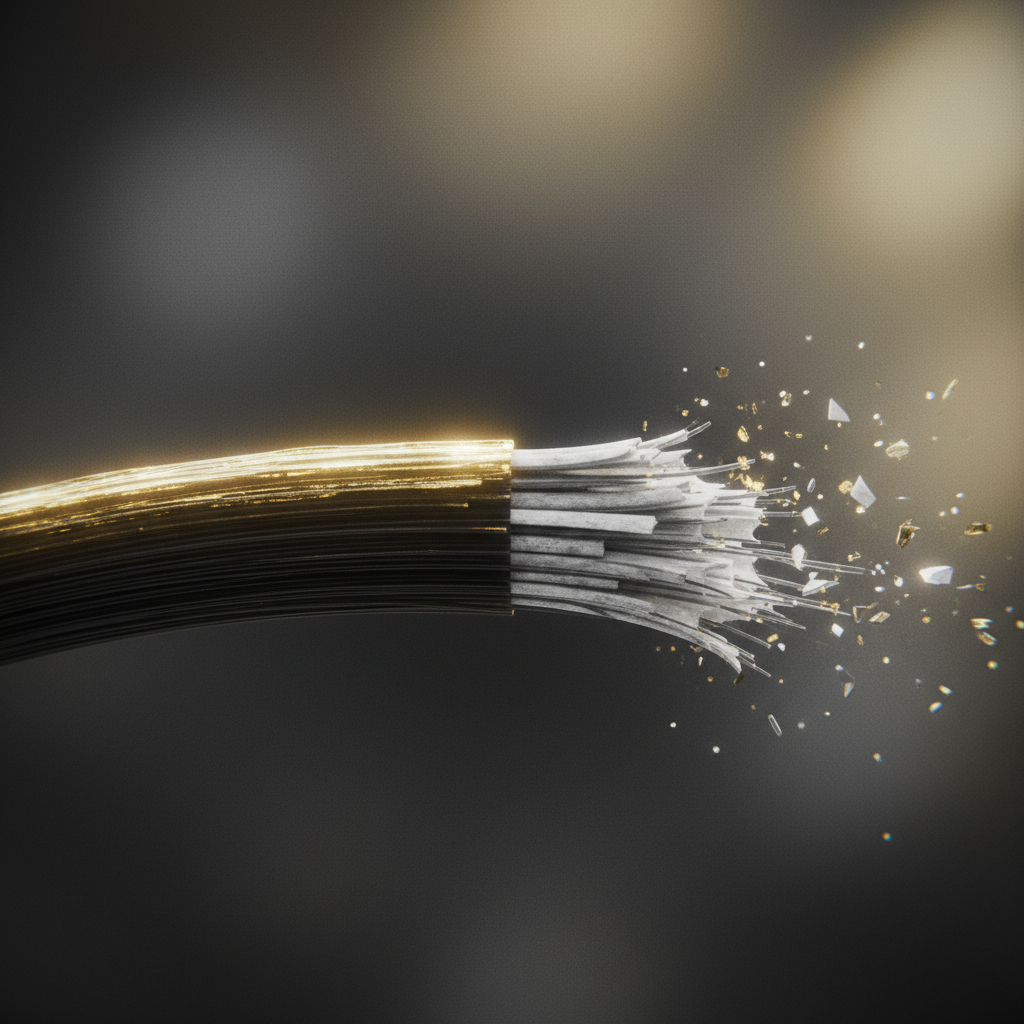
When you wash your hair in water with an alkaline or harsh anionic surfactant, the hair shaft swells. Water enters the cortex, pushing up the overlapping scales of the cuticle. Strong sulphates dissolve the free fatty acids and ceramides holding these cuticle cells together. Over repeated wash cycles, this process leads to:
- Cuticle flaking and chipping: Without intercellular cement, cuticle scales snap off during combing, exposing the internal cortex.
- Accelerated colour fading: Cosmetic hair dyes sit inside the cortex. Every time the cuticle swells excessively under harsh detergents, dye pigments wash out into the rinse water. Sulphate-free shampoos reduce this swelling, helping the cuticle lay flat and locking artificial pigments in place for longer.
- Moisture dysregulation: Stripped hair becomes hygroscopic, absorbing atmospheric humidity rapidly, which creates frizz and dullness.
Signs your hair needs a sulphate-free routine
Your hair and scalp provide clear physical indicators when a surfactant system is too aggressive for your hair type:
- Post-wash tightness: If your scalp feels tight, itchy, or "squeaky" within an hour of washing, your natural sebum barrier has been stripped.
- Immediate mid-shaft tangling: Hair that knots severely during rinsing usually has disrupted cuticles caused by lipid loss.
- Dullness and rough texture: Running your fingers from root to tip feels coarse, indicating that the cuticle scales are raised.
- Rapid colour loss: Permanent or semi-permanent hair colour that fades significantly within two to three weeks of salon application.
- Increased breakage along the shaft: Brittle, snapping ends that shed short fragments without white hair bulbs attached.
How to use sulphate-free shampoos effectively
Because sulphate-free surfactants do not foam as aggressively, people often make the mistake of using too much product or failing to cleanse properly. Follow these steps for the best results:
- Saturate the hair completely: Non-ionic and amphoteric surfactants require plenty of water to create micelles and lift debris. Drench your hair with warm water for at least 60 seconds before applying shampoo.
- Emulsify in your palms first: Rub the shampoo between wet hands to spread the surfactants before working it into your scalp.
- Focus solely on the scalp: Massage the formula directly onto the scalp with your fingertips. Do not scrub the mid-lengths and ends; the suds that rinse through are sufficient to cleanse the hair shaft without friction.
- Double cleanse if you wash infrequently: If you wash your hair once or twice a week, perform two lighter cleanses rather than one heavy application. The first wash breaks down surface oils, while the second cleanses the scalp surface thoroughly.
When the issue is not your shampoo
If you switch to a gentle cleansing regimen and continue to experience persistent issues, the root cause may lie elsewhere.
Flaking accompanied by sticky, yellowish scales and redness is often seborrhoeic dermatitis, an inflammatory response to an overgrowth of Malassezia yeast. In this scenario, ultra-mild sulphate-free formulas might not lift excess sebum adequately, inadvertently worsening the yeast overgrowth. Medicated cleansers containing zinc pyrithione, ketoconazole, or piroctone olamine are typically required.
Similarly, if you notice excessive shedding where whole hairs come out with a distinct white bulb at the root, you are experiencing follicular shedding (such as telogen effluvium) rather than hair breakage. Surfactants cannot cause or resolve systemic shedding, which is linked to nutritional deficiencies, hormonal shifts, thyroid conditions, or severe physiological stress.
Professional care with Watermans
When formulating high-performance products, the goal is to remove dirt and environmental residue without compromising the scalp microbiome or the structural integrity of the hair shaft. Watermans approaches hair wellness by using carefully balanced, sulphate-free surfactant systems. By pairing mild cleansing agents with targeted botanical extracts, caffeine, and scalp-conditioning actives, Watermans cleansers maintain optimal moisture balance. This reduces mechanical breakage during styling and supports a balanced environment for healthy hair growth.
Frequently asked questions about Sulphate Free Shampoo Science
Does Sulphate Free Shampoo Science prove that sulphates cause hair loss?
No. Sulphate surfactants do not penetrate the dermal papilla or disrupt follicular cycles to cause alopecia. However, they can dry out the hair fibre, leading to mechanical breakage that people often mistake for hair loss. Severe chronic irritation from harsh detergents may also disturb the scalp environment.
Why do sulphate-free shampoos produce less lather?
Sulphate molecules have small, polar head groups that pack tightly at the air-water interface, generating voluminous, airy bubbles rapidly. Sulphate-free alternatives have bulkier molecular structures that form looser micelles. Lather volume is purely a sensory attribute and does not reflect cleansing efficiency.
Can sulphate-free shampoos remove silicone buildup?
Mild sulphate-free cleansers effectively remove water-soluble silicones and natural oils, but they struggle to break down heavy, non-volatile silicones like dimethicone over time. If you use styling products with insoluble silicones, you may need an occasional clarifying wash to avoid polymer buildup.
Are sulphate-free formulas better for colour-treated hair?
Yes. Sulphate-free cleansers cause significantly less swelling of the hair cuticle during washing. By keeping the protective cuticle scales flat and intact, these formulas reduce the amount of artificial colour pigment that escapes into rinse water.
Scientific perspective on gentle cleansing
Understanding Sulphate Free Shampoo Science allows you to make evidence-based decisions about your daily routine. Moving away from aggressive cleansing agents is not about following cosmetic fear-mongering; it is about respecting the biological architecture of your scalp and hair. By swapping harsh detergents for skin-compatible surfactants, you protect the hair's natural lipid envelope, improve colour longevity, and foster a healthy environment for your hair.
Sources and references
- Cosmetic Ingredient Review (CIR) Expert Panel. "Final Report on the Safety Assessment of Sodium Lauryl Sulfate and Ammonium Lauryl Sulfate." International Journal of Toxicology, 1983.
- Scientific Committee on Consumer Safety (SCCS). "Opinion on Sodium Laureth Sulfate." European Commission, 2010.
- Robbins, Clarence R. Chemical and Physical Behavior of Human Hair. 5th ed., Springer-Verlag, 2012.
- Draelos, Zoe Diana. "Shampoos, conditioners, and camouflages." Dermatologic Clinics, 2013.
- Evans, Trefor, and R. Randall Wickett, editors. Practical Modern Hair Science. Allured Business Media, 2012.
Find these ingredients in Watermans products
- Zinc: you will find this ingredient in our Hair Vitamins.