Shampoo & Conditioner: An Overview
4 min read ·
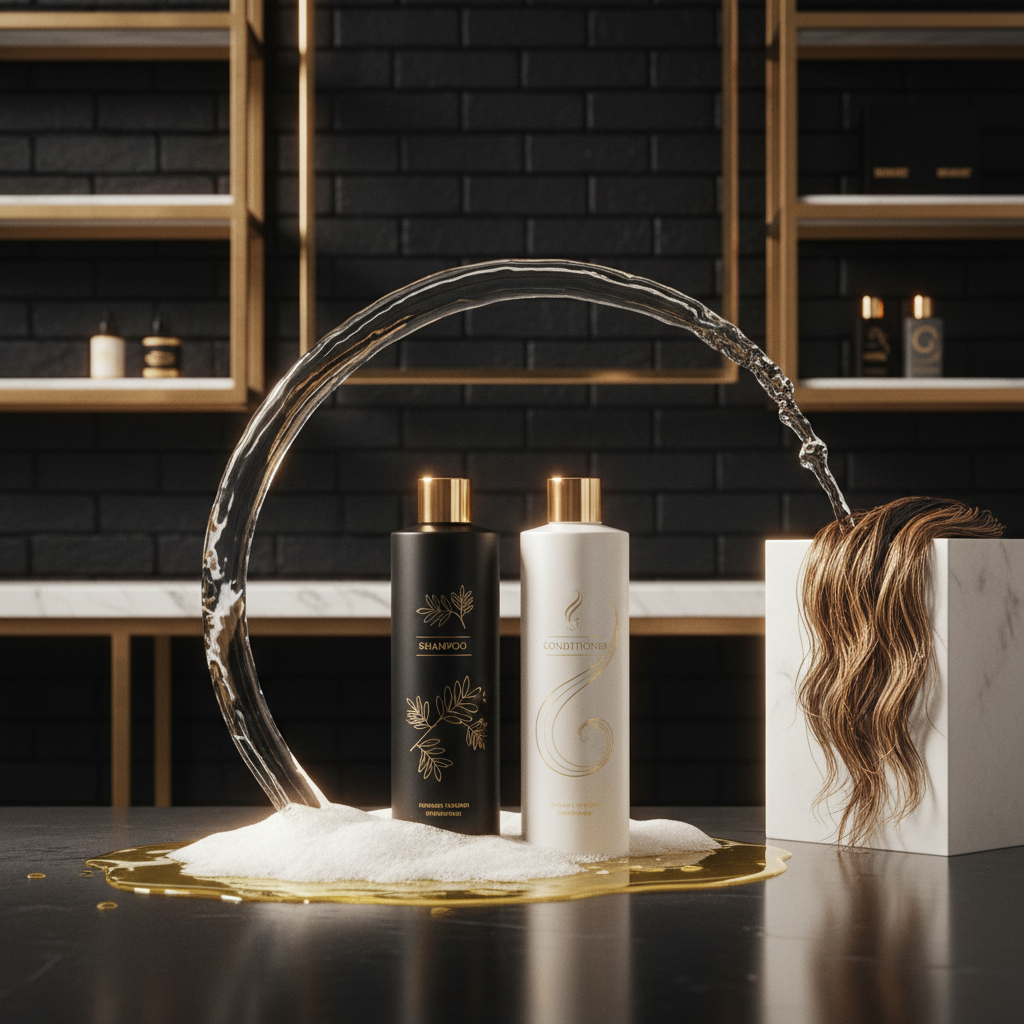
Shampoo cleanses the hair and scalp, while conditioner moisturizes and protects the hair fibre.
The Fundamentals of Hair Cleansing
Shampoo and conditioner are foundational to hair care, working in tandem to maintain hair and scalp health. Understanding their distinct functions and proper application is key to achieving desired hair outcomes.
Shampoo: Cleansing the Hair and Scalp
Shampoo's primary role is to cleanse by removing dirt, oil (sebum), product buildup, and environmental pollutants from the hair and scalp. This cleansing action is achieved through surfactants, which are amphiphilic molecules containing both a hydrophilic (water-loving) head and a lipophilic (oil-loving) tail. The lipophilic tails attach to oil and dirt particles, while the hydrophilic heads allow these complexes to be rinsed away with water.
Types of Surfactants
Surfactants are categorized by their ionic charge:
- Anionic Surfactants: The most common type, effective at cleansing but can sometimes be perceived as stripping. Examples include Sodium Lauryl Sulfate and Sodium Laureth Sulfate.
- Amphoteric Surfactants: Milder than anionic surfactants, often used in conjunction with them or in gentler formulations. Examples include Cocoamidopropyl Betaine.
- Non-ionic Surfactants: Very mild, often used to boost foam or thicken formulations. Examples include Decyl Glucoside.
pH of Shampoo
The pH of shampoo typically ranges from 4.5 to 6.5, which is slightly acidic. This acidity helps to keep the hair cuticle, the outermost layer of the hair shaft, closed and smooth, contributing to shine and reducing frizz. A highly alkaline shampoo (pH 8+) can cause the cuticle to open, leading to increased friction, tangling, and potential damage.
How Shampoo Works
When shampoo is applied, the surfactants emulsify the oils and dirt. Mechanical action, through massaging the scalp, helps to lift these impurities, which are then rinsed away with water. While some lather is generally associated with effective cleansing, the amount of foam does not directly correlate with cleansing power; it is more of a sensory experience provided by foam boosters.
Conditioner: Moisturizing and Protecting
Conditioner follows shampoo to replenish moisture, detangle, and improve the hair's texture and manageability. While shampoo primarily focuses on cleansing, conditioner focuses on hydrating and repairing.
Key Ingredients in Conditioner
Conditioners utilize various ingredients to achieve their effects:
- Cationic Surfactants: Unlike shampoo's anionic surfactants, conditioners often use cationic (positively charged) surfactants like Behentrimonium Chloride or Cetrimonium Chloride. Hair, especially when damaged, carries a slight negative charge. The positive charge of cationic surfactants allows them to bind to the hair, smoothing the cuticle and reducing static electricity.
- Emollients: Oils and fatty alcohols (e.g., Cetyl Alcohol, Stearyl Alcohol) that provide a softening and smoothing film on the hair surface, enhancing flexibility and shine.
- Humectants: Ingredients like Glycerin or Panthenol attract and retain moisture from the environment, helping to hydrate the hair.
- Proteins: Hydrolyzed proteins (e.g., Hydrolyzed Wheat Protein) can temporarily patch damaged areas on the hair shaft, providing strength and reducing breakage.
pH of Conditioner
Conditioners typically have a lower pH than shampoos, often ranging from 3.5 to 5.5. This acidic pH helps to further seal the hair cuticle, locking in moisture and making the hair appear smoother and shinier.
How Conditioner Works
Conditioner ingredients adhere to the hair shaft, forming a protective layer. This layer reduces friction between hair strands, making detangling easier. It also smooths the cuticle, improving light reflection and thus enhancing shine. Some conditioners are formulated to penetrate the hair shaft, providing deeper hydration and repair.
Application Techniques
Shampoo: Apply to wet hair, focusing on the scalp. Gently massage to create a lather, then rinse thoroughly. A second shampoo may be beneficial for very oily hair or to remove heavy product buildup.
Conditioner: After rinsing shampoo, gently squeeze excess water from the hair. Apply conditioner from the mid-lengths to the ends, avoiding the scalp unless specifically formulated for scalp conditioning. Leave on for the recommended time (typically 1-5 minutes), then rinse thoroughly with cool or lukewarm water.
Common Shampoo and Conditioner Formulations
| Type of Product | Primary Benefit | Target Hair Type |
|---|---|---|
| Volumizing | Adds body and lift | Fine, limp hair |
| Moisturizing / Hydrating | Replenishes moisture, reduces dryness | Dry, coarse, or chemically treated hair |
| Clarifying | Deep cleanse, removes buildup | All hair types, used periodically |
| Strengthening | Reduces breakage, improves elasticity | Damaged, brittle, or weakened hair |
| Colour-Safe | Protects hair colour from fading | Colour-treated hair |
| Scalp-focused | Addresses specific scalp concerns (e.g., oiliness, dandruff) | Oily scalp, dry scalp, dandruff |
| Heat Protectant | Shields hair from heat styling damage | Hair frequently styled with heat tools |
Choosing the appropriate shampoo and conditioner depends on individual hair type, scalp condition, lifestyle, and styling practices. Frequent washing with harsh shampoos can strip natural oils, while infrequent washing can lead to buildup and scalp issues. Establishing a routine that balances cleansing and conditioning is crucial for optimal hair health.
For those seeking to promote thicker, fuller-looking hair, specific formulations are available. Products like Watermans Hair Growth Shampoo & Conditioner are designed to stimulate the scalp and nourish hair from the root, enhancing the hair growth cycle and improving overall hair density and appearance.
Find these ingredients in Watermans products
- Panthenol (Provitamin B5), you will find this ingredient in our Heat Protection Spray.